Quick Verdict: A Sport Hybrid, Not a Plug-In
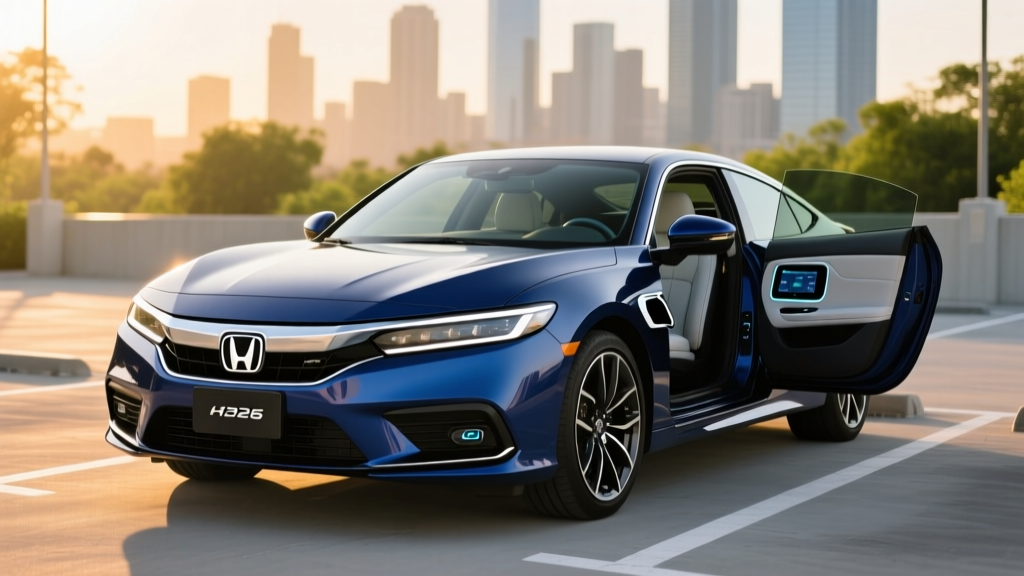
The 2026 Honda Prelude returns as a two-door sport coupe built on the Civic platform, powered exclusively by Honda's two-motor hybrid system. It is a conventional hybrid (HEV) — not a plug-in hybrid (PHEV) — meaning you never plug it in. The gasoline engine and regenerative braking handle all battery charging internally. For buyers seeking a stylish, efficient coupe that sips fuel in the city without range anxiety or charging logistics, the Prelude occupies a distinct niche between the Civic Hybrid sedan and full-electric alternatives.
HEV vs. PHEV — Which Is the Prelude?
| Feature | Conventional Hybrid (HEV) | Plug-In Hybrid (PHEV) |
|---|---|---|
| Plug in to charge? | No | Yes |
| Battery size | ~1.0–1.5 kWh | ~12–20 kWh |
| Electric-only driving | Brief low-speed assist | 20–45 miles typical |
| Federal tax credit (§30D) | No | Up to $7,500 (if eligible) |
| Prelude 2026 | ✔ This vehicle | ✘ Not offered |
Fuel Economy: EPA Ratings and Real-World MPG
Honda targets efficiency alongside sporty driving dynamics with the Prelude's fourth-generation two-motor hybrid system. Based on Honda's published preliminary specifications and the system's behavior in the mechanically similar Civic Hybrid, here is what buyers should expect:
| Metric | Preliminary EPA Estimate | Real-World Expectation |
|---|---|---|
| City MPG | 50 MPG | 48–53 MPG (hybrids often exceed EPA city) |
| Highway MPG | 45 MPG | 40–44 MPG (sustained 70+ mph driving) |
| Combined MPG | 48 MPG | 44–49 MPG depending on driving mix |
Conventional hybrids like the Prelude typically outperform their EPA city estimates in stop-and-go traffic, where the electric motor handles most propulsion and regenerative braking recaptures energy. Highway driving, especially above 70 mph, relies more heavily on the gasoline engine and aerodynamic drag, pulling real-world numbers below the sticker. In cold weather (below 32°F), expect a 5–10% reduction as the engine runs more frequently for cabin heat and battery warm-up.
Powertrain: Two-Motor Hybrid System
The 2026 Prelude uses Honda's latest two-motor hybrid architecture, pairing a 2.0-liter Atkinson-cycle four-cylinder engine with two electric motors integrated into the transmission housing. This is the same fundamental system found in the Accord Hybrid and Civic Hybrid, retuned for the Prelude's sportier character.
| Specification | 2026 Honda Prelude |
|---|---|
| Engine | 2.0L Atkinson-cycle 4-cylinder |
| Electric Motors | Dual-motor hybrid system |
| Combined System Horsepower | ~200 HP (preliminary) |
| Combined System Torque | ~232 lb-ft (preliminary) |
| Transmission | e-CVT (direct-drive with lock-up clutch) |
| Drivetrain | Front-wheel drive |
| 0–60 mph (estimated) | ~7.0 seconds |
| Battery Type | Lithium-ion, ~1.1 kWh |
| Plug-In Capable? | No — conventional HEV |
Honda's e-CVT is not a traditional belt-and-pulley CVT. It uses a direct-drive arrangement where the propulsion motor drives the wheels, the generator motor manages engine load, and a lock-up clutch connects the engine directly at highway cruising speeds for efficiency. The result is smooth, linear acceleration without the rubber-band feel associated with older CVTs. In Sport mode, the system simulates stepped gear shifts for a more engaging driving experience.
Pricing, Trims, and Tax Credit Eligibility
Honda has positioned the Prelude as an affordable sport coupe. Based on Honda's announced preliminary pricing:
- Prelude (base): ~$30,000 MSRP
- Prelude Touring: ~$34,000 MSRP (adds leather, premium audio, wireless charging)
Federal Tax Credit: Not Eligible
Because the 2026 Honda Prelude is a conventional hybrid (HEV) and not a plug-in hybrid or battery-electric vehicle, it does not qualify for the IRS §30D Clean Vehicle Credit. That credit — worth up to $7,500 — applies only to vehicles with a battery capacity of at least 7 kWh that can be plugged in to charge. The Prelude's small hybrid battery (~1.1 kWh) and lack of a charge port place it outside §30D eligibility entirely. For the latest rules on income caps, MSRP limits, and battery-sourcing requirements for eligible vehicles, consult the IRS Clean Vehicle Credit page.
Some states offer their own incentives for efficient hybrids, though these are less common than EV or PHEV rebates. Check your state's energy or environmental agency for current programs.
Battery Warranty, Lifespan, and Replacement Cost
Hybrid battery longevity remains a top concern for buyers switching from conventional gas cars. Honda's track record with its two-motor system — now in its fourth generation — is strong, with widespread real-world evidence of batteries lasting well beyond 150,000 miles with minimal degradation.
Honda Hybrid Battery Warranty
- Coverage: 8 years / 100,000 miles (10 years / 150,000 miles in CARB states including CA, NY, MA, and others)
- What's covered: Battery capacity loss below a defined threshold, cell failure, and hybrid system components
- Replacement cost (out of warranty): Approximately $2,000–$3,500 for the hybrid battery pack, plus labor
The Prelude's hybrid battery is significantly smaller and less stressed than a full EV battery pack. It operates in a narrow state-of-charge window (roughly 40–80%) managed by the vehicle's thermal and charge management systems, which dramatically reduces degradation. Unlike EV batteries, which may lose 10–15% capacity over a decade, hybrid batteries in Honda's system have proven remarkably durable. The Honda owner's manual and warranty guide details exact coverage terms by state.
Who Should Choose the Prelude Hybrid?
Pros
- 50 MPG city — exceptional for a sport coupe
- No plug-in charging required — works with existing gas-station infrastructure
- ~450+ miles total range on a single tank
- Sport-tuned chassis with responsive two-motor acceleration
- Lower purchase price than comparable PHEVs or EVs
- Proven Honda hybrid reliability with strong warranty
Cons
- No electric-only driving range (not a PHEV)
- No federal tax credit eligibility
- Two-door coupe limits rear-seat practicality
- FWD only — no AWD option for snow-belt buyers
- Hybrid battery still a long-term cost consideration (though low-risk)
Decision Framework: Prelude vs. PHEV vs. Full EV
- Choose the Prelude (HEV) if: You want maximum fuel efficiency without changing your refueling habits, lack access to home or workplace charging, drive long highway routes regularly, or want a sport coupe under $35,000.
- Choose a PHEV (e.g., Toyota Prius Prime) if: You have home Level 2 charging, your daily commute is under 40 miles (covering most trips on electricity), and you want the option of gas-free daily driving with road-trip flexibility.
- Choose a full EV (e.g., Tesla Model 3, Hyundai Ioniq 6) if: You have reliable home charging, want zero tailpipe emissions, qualify for the $7,500 federal credit, and are comfortable with public DC fast charging for road trips.
Reliability and Ownership Costs
Honda's hybrid powertrain has been in continuous production since the early 2000s, and the two-motor system specifically has powered the Accord Hybrid, CR-V Hybrid, and Civic Hybrid with strong reliability records. The Prelude's powertrain carries no exotic or unproven components. Routine maintenance is minimal — no timing belt (chain-driven), regenerative braking extends pad life significantly, and the e-CVT has no belts or pulleys to replace.
Insurance premiums for the Prelude should track closely with the Civic Si and other sport compacts. According to industry averages, expect annual insurance costs in the $1,400–$1,800 range depending on your profile. Fuel savings versus a comparable gas-only sport coupe (averaging 28 MPG combined at $3.40/gallon) amount to roughly $600–$800 per year at 12,000 miles annually.
Frequently Asked Questions
How many MPG does the 2026 Honda Prelude hybrid get?
Honda targets approximately 50 MPG city, 45 MPG highway, and 48 MPG combined (preliminary EPA estimates). Real-world city driving often exceeds the EPA estimate thanks to the electric motor's dominance at low speeds, while sustained highway driving above 70 mph may yield 40–44 MPG.
Is the 2026 Honda Prelude a plug-in hybrid?
No. The Prelude is a conventional hybrid (HEV). It cannot be plugged in and has no electric-only driving range. The small lithium-ion battery charges entirely through the gasoline engine and regenerative braking.
Does the Honda Prelude qualify for any tax credit?
The Prelude does not qualify for the federal §30D Clean Vehicle Credit, which requires a plug-in vehicle with at least 7 kWh of battery capacity. Some states may offer minor incentives for high-efficiency hybrids, but these vary by jurisdiction. Consult your state's energy office or a tax professional for specifics.
How long will the Prelude's hybrid battery last?
Honda covers the hybrid battery for 8 years/100,000 miles (10 years/150,000 miles in CARB states). Real-world data from Honda's two-motor hybrid system shows batteries routinely lasting 150,000–200,000+ miles with minimal degradation, thanks to the narrow charge window and thermal management. Out-of-warranty replacement runs approximately $2,000–$3,500.
How does the Prelude compare to the Civic Hybrid?
Both share Honda's two-motor hybrid system and similar efficiency. The Prelude is a two-door coupe with sport-tuned suspension and styling, while the Civic Hybrid is a four-door sedan with more rear-seat and cargo practicality. MPG figures are comparable, with the Civic Hybrid potentially edging ahead slightly due to its sedan aerodynamics. Choose the Prelude for style and driving engagement; choose the Civic Hybrid for practicality.
What is the total driving range on a full tank?
With an estimated 12.4-gallon fuel tank and 48 MPG combined, the Prelude should deliver approximately 590 miles of total range — comparable to or exceeding most gas-only vehicles and eliminating any range anxiety.