Quick Verdict: A 54-MPG Compact That Doesn't Ask You to Plug In
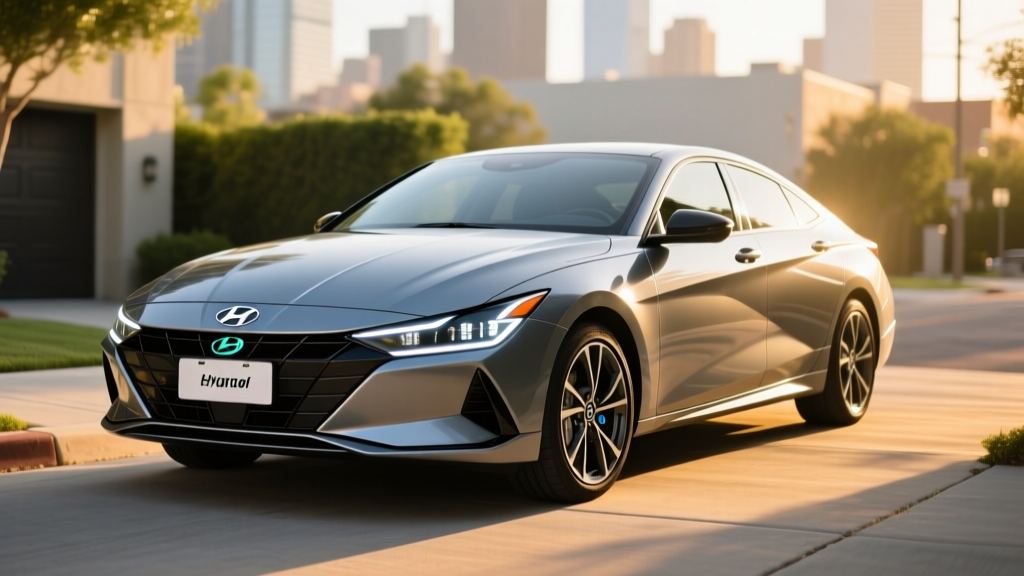
The 2023 Hyundai Elantra Hybrid is a conventional hybrid electric vehicle (HEV) — meaning it recharges its small battery through regenerative braking and its gasoline engine, never from a wall outlet. For buyers who want maximum fuel economy without changing their refueling habits, the Elantra Hybrid delivers an EPA-estimated 54 MPG combined (53 city / 56 highway) in Blue trim, making it one of the most efficient non-plug-in sedans on the road. Priced from roughly $24,550 before destination, it undercuts most rivals on cost while offering a 10-year/100,000-mile hybrid battery warranty that should silence longevity concerns.
This is not a plug-in hybrid (PHEV). There is no electric-only driving range, no charge port, and no federal EV tax credit eligibility. What you get instead is a proven, low-complexity hybrid system that sips fuel in stop-and-go traffic and requires zero lifestyle adjustment. Below, we break down every spec, compare real-world MPG to the EPA sticker, and help you decide whether the Elantra Hybrid, a PHEV, or a full battery-electric vehicle (BEV) is the right call for your commute.
EPA Fuel Economy and Real-World MPG
| Trim | City MPG | Highway MPG | Combined MPG | Annual Fuel Cost* |
|---|---|---|---|---|
| Blue | 53 | 56 | 54 | ~$950 |
| SEL / Limited | 49 | 52 | 50 | ~$1,050 |
*Based on 15,000 miles/year at $3.40/gallon regular unleaded, per fueleconomy.gov.
The Blue trim's 54 MPG combined figure is exceptional. The SEL and Limited trims drop to 50 MPG combined because of larger 17-inch alloy wheels, additional weight from leather seats and more equipment, and slightly different transmission tuning. Even at 50 combined, the Elantra Hybrid outperforms the Toyota Corolla Hybrid (50 combined on LE AWD) and the Honda Insight (now discontinued, rated 52 combined).
Powertrain: How the Elantra Hybrid Makes Its Power
| Specification | Detail |
|---|---|
| Engine | 1.6L GDI 4-cylinder Atkinson cycle |
| Engine Output | 104 HP / 109 lb-ft torque |
| Electric Motor | 32 kW (43 HP) permanent-magnet synchronous |
| Combined System Output | 139 HP / 195 lb-ft torque |
| Transmission | 6-speed dual-clutch automatic (DCT) |
| Drivetrain | Front-wheel drive |
| Hybrid Battery | 1.32 kWh lithium-ion polymer |
| 0–60 MPH | ~8.4 seconds |
| Fuel Tank | 11.4 gallons |
| Total Range (est.) | ~615 miles (Blue trim) |
Unlike Toyota's planetary-gear hybrid system (e-CVT), Hyundai uses a 6-speed dual-clutch transmission. The result is a more natural, stepped acceleration feel — you won't find the rubber-band "drone" that some drivers dislike in CVT-equipped hybrids. The trade-off is that low-speed transitions can feel slightly less smooth than a Toyota system, though Hyundai's calibration has improved significantly over earlier generations.
The 1.32 kWh battery is small — far too small for electric-only highway driving. It does, however, enable brief electric-only movement at low speeds (parking lots, stoplights) and provides the energy buffer for regenerative braking. This battery recharges entirely from the engine and braking; there is no plug.
HEV vs. PHEV vs. BEV: Which Powertrain Fits You?
| Factor | HEV (Elantra Hybrid) | PHEV (e.g., Prius Prime) | BEV (e.g., Ioniq 6) |
|---|---|---|---|
| Plug-in Required? | No | Yes (for EV range) | Yes (always) |
| Electric-Only Range | None (EV mode at low speed only) | 25–44 miles typical | 250–360+ miles |
| Combined MPG / MPGe | 50–54 MPG | 48–52 MPG (gas) / 114–127 MPGe (EV) | 117–140 MPGe |
| Home Charging Needed? | No | Recommended (Level 2, ~4 hrs) | Essential (Level 2, 7–10 hrs) |
| Federal Tax Credit (§30D) | Not eligible | Up to $7,500 (if sourcing rules met) | Up to $7,500 (if sourcing rules met) |
| Starting MSRP Range | $24,550–$29,000 | $33,000–$40,000 | $37,500–$52,000 |
| Best For | No home charging access; long highway commutes | Short EV commute + road-trip flexibility | Home charging + mostly under 250 mi/day |
- Choose the Elantra Hybrid (HEV) if: You rent or live where home charging is impossible, your commute is long and highway-heavy, or you simply want excellent fuel economy with zero behavior change.
- Choose a PHEV if: You can install a Level 2 charger at home, your daily commute is under 40 miles round-trip (running mostly on electricity), but you still want gas-engine flexibility for road trips.
- Choose a full BEV if: You have reliable home charging, your daily driving is under 250 miles, and you want the lowest per-mile fuel cost, minimal maintenance, and eligibility for the full federal tax credit.
Pricing by Trim and Tax Credit Eligibility
| Trim | MSRP (2023) | Key Features |
|---|---|---|
| Blue | $24,550 | 16" alloys, 8" touchscreen, wireless CarPlay/Android Auto, SmartSense ADAS suite |
| SEL | $26,700 | 17" alloys, heated front seats, proximity key, blind-spot monitoring |
| Limited | $28,950 | Leather, 10.25" digital cluster + nav, Bose audio, highway driving assist |
Federal tax credit: The 2023 Elantra Hybrid is a conventional HEV and does not qualify for the IRS §30D Clean Vehicle Credit. That credit applies only to plug-in vehicles (PHEVs and BEVs) that meet battery-sourcing and critical-mineral requirements, MSRP caps ($55,000 for sedans), and buyer income limits ($150,000 single / $300,000 joint). See current rules at irs.gov.
Some states and utilities offer separate rebates for hybrids, though these are far less common than EV incentives. Check your state energy office or local utility for current programs — amounts and availability vary widely by jurisdiction.
Reliability, Battery Warranty, and Replacement Costs
Hyundai's hybrid system has proven reliable across multiple model years. The 1.32 kWh battery is far less stressed than a BEV pack — it never sees deep discharge cycles, operates in a narrow state-of-charge window, and is actively thermally managed. Most hybrid batteries in modern vehicles last well beyond 150,000 miles before meaningful capacity loss.
If replacement is needed out of warranty: A new OEM hybrid battery for the Elantra Hybrid typically runs $2,000–$3,500 including labor at a dealership. Independent hybrid specialists may offer refurbished packs for $1,200–$2,000. For context, this is a fraction of BEV battery replacement costs ($8,000–$20,000+), and the smaller hybrid pack is simpler to swap.
The Elantra Hybrid's 6-speed DCT has been generally reliable, though some owners of earlier Hyundai hybrids reported occasional shudder during low-speed engagement. Hyundai addressed most of these issues with software updates and clutch-pack revisions for the 2023 model year. Checking for open recalls and TSBs at nhtsa.gov is always smart on a used purchase.
Driving Impressions, Interior, and Smart Safety Tech
The Elantra Hybrid rides on Hyundai's K3 platform, delivering a composed, slightly firm ride that handles highway expansion joints well. Steering is light but reasonably precise. The 139 combined horsepower won't thrill anyone, but 195 lb-ft of torque (available low in the rev range thanks to the electric motor) makes city merging and passing feel adequate. Expect a 0–60 mph time around 8.4 seconds — a full two seconds slower than the turbocharged Elantra N Line, but perfectly acceptable for the efficiency-focused buyer.
Inside, the cabin is a strong point for the segment. The Blue trim's 8-inch touchscreen supports wireless Apple CarPlay and Android Auto. SEL and Limited trims add a 10.25-inch infotainment display with navigation, though note that using the larger screen drops wireless phone projection — you'll need a USB cable. Rear seat space is generous for the compact class, with 38.0 inches of legroom. The trunk holds 14.2 cubic feet — typical for the segment, and the hybrid battery is packaged under the rear seats so cargo space is uncompromised versus the gas-only Elantra.
Standard SmartSense driver-assistance features include forward collision-avoidance assist with pedestrian detection, lane-keeping assist, lane-following assist, driver attention warning, and automatic high beams. The Limited trim adds Highway Driving Assist (HDA), which combines adaptive cruise control with lane-centering on divided highways. HDA is an SAE Level 2 system — it requires continuous driver supervision and does not make the vehicle self-driving.
Total Cost of Ownership: 5-Year Estimate
| Cost Category | Elantra Hybrid (Blue) | Gas Elantra (2.0L) | Annual Savings vs. Gas |
|---|---|---|---|
| Fuel (15k mi/yr, $3.40/gal) | ~$4,750 (5 yr) | ~$7,550 (5 yr, 33 MPG) | ~$560/year |
| Maintenance (5 yr est.) | ~$2,200 | ~$2,400 | ~$40/year |
| Insurance (avg.) | ~$6,500 | ~$6,200 | -$60/year |
| Depreciation (est. 5 yr) | ~$11,000 | ~$10,500 | -$100/year |
| 5-Year Total (est.) | ~$24,450 | ~$26,650 | ~$440/year net savings |
The hybrid premium over the gas Elantra SEL (~$2,500 at MSRP) typically pays for itself in fuel savings within 3.5 to 4.5 years at current gas prices. Higher gas prices accelerate payback; lower prices extend it. Insurance costs are marginally higher for the hybrid due to its slightly higher replacement value, but the difference is small.
Pros and Cons
- Class-leading 54 MPG combined (Blue trim)
- No plugging in — zero lifestyle change
- 10-year/100,000-mile hybrid battery warranty
- Strong standard ADAS suite across all trims
- Natural-feeling DCT vs. CVT drone
- Under $25K starting price
- Spacious rear seat and uncompromised trunk
- No federal tax credit eligibility
- Modest 139 HP — slowest in the lineup
- SEL/Limited drop to 50 MPG combined
- No AWD option (unlike Corolla Hybrid)
- 10.25" screen drops wireless CarPlay/Android Auto
- Road noise noticeable on coarse pavement
- DCT can hesitate slightly from a stop
Frequently Asked Questions
How many MPG does the 2023 Elantra Hybrid get?
The Blue trim achieves an EPA-estimated 53 city / 56 highway / 54 combined MPG. The SEL and Limited trims are rated at 49 city / 52 highway / 50 combined. Real-world testing typically shows 50–55 MPG for Blue and 46–51 MPG for higher trims in mixed driving.
Does the Elantra Hybrid need to be plugged in?
No. The 2023 Elantra Hybrid is a conventional hybrid (HEV). Its 1.32 kWh battery recharges through regenerative braking and the gasoline engine. There is no charge port. If you want plug-in capability with electric-only range, you would need a PHEV such as the Toyota Prius Prime or Hyundai Tucson PHEV.
Does the 2023 Elantra Hybrid qualify for a federal tax credit?
No. The IRS §30D Clean Vehicle Credit applies only to plug-in electric vehicles (PHEVs and BEVs) that meet battery sourcing, MSRP, and buyer income requirements. Conventional hybrids like the Elantra Hybrid do not qualify. Some state or utility incentives may apply — check local programs.
How long will the hybrid battery last and what does replacement cost?
Hyundai covers the hybrid battery for 10 years or 100,000 miles. In practice, modern hybrid batteries routinely last 150,000+ miles due to their shallow charge cycles and thermal management. If replacement is needed out of warranty, expect $2,000–$3,500 at a dealer or $1,200–$2,000 from an independent hybrid specialist.
How does the Elantra Hybrid compare to the Toyota Corolla Hybrid?
The Corolla Hybrid LE offers 50 MPG combined and available AWD (at 47 MPG combined), which the Elantra Hybrid lacks. The Elantra Hybrid Blue beats it on fuel economy (54 vs. 50 combined), offers a more engaging DCT transmission, and provides a longer warranty (10/100k vs. Toyota's 10/150k on hybrid battery but 3/36k bumper-to-bumper). Both are strong choices — pick the Corolla if you need AWD, the Elantra if you want maximum MPG and interior space.
Is the 2023 Elantra Hybrid a good choice for high-mileage commuters?
Yes. At 54 MPG combined and with a 615-mile estimated total range, the Elantra Hybrid is ideal for commuters covering 30,000+ miles per year. The fuel savings over a comparable gas vehicle add up to roughly $1,100–$1,400 annually at 30,000 miles/year and $3.40/gallon. The 10-year powertrain warranty also provides peace of mind for high-mileage accumulation.
Sources: EPA fueleconomy.gov, IRS §30D Clean Vehicle Credit, Hyundai Motor America specifications. Pricing reflects 2023 MSRP at launch; used-market pricing may vary. Tax credit and incentive rules are subject to change — consult a tax professional for eligibility.