Quick Verdict: A Practical Three-Row Hybrid That Delivers
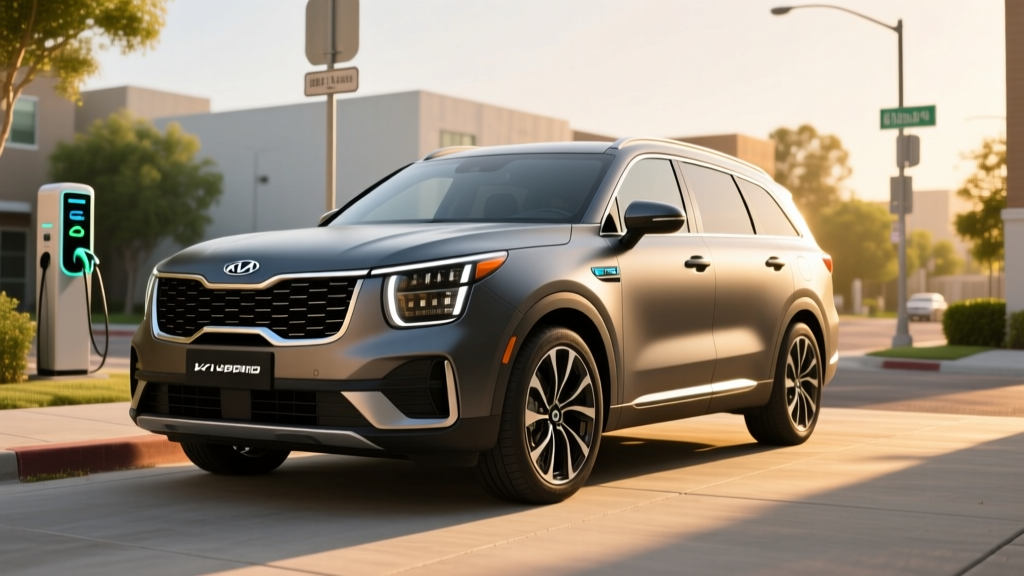
The 2021 Kia Sorento Hybrid arrived as a ground-up redesign, pairing a 1.6-liter turbocharged engine with a 44-kW electric motor for a combined 227 horsepower. With EPA ratings of 39 city / 35 highway / 37 combined MPG, it slots into a narrow competitive set: one of very few hybrid crossovers offering three rows of seating. For buyers who need family hauling capability without the fuel cost of a body-on-frame SUV, the Sorento HEV makes a compelling case — but it's not without trade-offs in highway efficiency and third-row practicality.
Now several years into its lifecycle, the 2021 model year represents a proven platform with established reliability data. Here's what the numbers actually look like when you move past the brochure.
| Spec | Value |
|---|---|
| EPA Fuel Economy | 39 city / 35 highway / 37 combined MPG |
| Powertrain | 1.6L turbo I4 + 44-kW electric motor |
| Combined Output | 227 hp / 258 lb-ft torque |
| Transmission | 6-speed automatic (no CVT) |
| Drivetrain | AWD standard |
| Battery | 1.49 kWh lithium-ion (self-charging HEV) |
| Seating | 6 passengers (3 rows) |
| Cargo (behind 3rd row) | 12.6 cu ft |
| Towing Capacity | 2,000 lbs |
| 0-60 mph | ~7.8 seconds |
| Original MSRP (S trim) | $35,290 |
| Original MSRP (EX trim) | $39,490 |
Fuel Economy: EPA Ratings vs. Real-World MPG
The EPA rates the 2021 Sorento Hybrid at 39 MPG city, 35 MPG highway, and 37 MPG combined. These figures come from fueleconomy.gov and apply to both the S and EX trims, since both share the same powertrain and AWD configuration.
| Driving Scenario | EPA Rating | Real-World Expectation |
|---|---|---|
| City | 39 MPG | 37–42 MPG (hybrids often exceed EPA in stop-and-go) |
| Highway | 35 MPG | 30–34 MPG (aerodynamic drag + AWD parasitic loss) |
| Combined | 37 MPG | 33–38 MPG (varies with driving mix) |
| Cold Weather (below 32°F) | — | 28–33 MPG (engine runs more for cabin heat) |
Why real-world city MPG can beat the sticker: Conventional hybrids recapture energy through regenerative braking, which is maximized in stop-and-go traffic. If your commute involves frequent low-speed stops, expect to see 40+ MPG regularly. Highway driving is the Sorento HEV's weaker suit — the turbocharged engine works harder at sustained speeds, and the relatively small 1.49 kWh battery provides minimal electric assist above 45 mph.
Cold-weather reality: Like all hybrids, the Sorento's engine must run more frequently in winter to maintain cabin heat and keep the catalytic converter warm. Expect a 15–20% fuel economy penalty in sustained sub-freezing temperatures. This is normal hybrid behavior, not a defect.
HEV vs. PHEV: Which Sorento Is Right for You?
Kia offered the 2021 Sorento in both conventional hybrid (HEV) and plug-in hybrid (PHEV) variants. They share the same 1.6L turbo engine but differ significantly in electric capability.
| Attribute | Sorento HEV (Hybrid) | Sorento PHEV (Plug-In) |
|---|---|---|
| Battery Size | 1.49 kWh | 13.8 kWh |
| Electric-Only Range | None (motor assists only) | 32 miles (EPA) |
| Combined Horsepower | 227 hp | 261 hp |
| Electric Motor | 44 kW | 66.9 kW |
| EPA Combined MPG / MPGe | 37 MPG | 79 MPGe (elec+gas) / 35 MPG (gas only) |
| Plugs In? | No — self-charging | Yes — Level 1 or Level 2 |
| Level 2 Charge Time (0-100%) | N/A | ~3 hours 25 min (at 3.3 kW) |
| DC Fast Charging | N/A | Not supported |
| AWD | Standard | Standard |
| Original Base MSRP | $35,290 | $49,990 |
Choose the HEV if: You don't have access to home or workplace charging, you want lower upfront cost, and you primarily need fuel-efficient family transport without plugging in. The conventional hybrid requires zero behavioral change — you fuel it like any gas car.
Choose the PHEV if: You can charge at home (Level 2), your daily commute is under 30 miles round-trip, and you want to drive mostly on electricity during the week while retaining gas-engine range for weekend trips. The 32-mile electric range covers most errands and school runs without the engine starting.
Important PHEV charging note: The Sorento PHEV's 3.3 kW onboard charger means Level 2 replenishment takes about 3.5 hours. There is no DC fast-charge capability — this is typical for PHEVs, whose smaller batteries don't justify the cost and weight of DC hardware. A standard 120V household outlet (Level 1) will fully recharge the battery overnight in roughly 10–11 hours.
Powertrain Deep Dive: Turbo Four Meets Electric Motor
The 2021 Sorento Hybrid uses Kia's Smartstream 1.6-liter turbocharged four-cylinder, producing 178 hp and 195 lb-ft of torque on its own. A 44-kW (59 hp) electric motor is sandwiched between the engine and the 6-speed automatic transmission, bringing total system output to 227 hp and 258 lb-ft.
Notably, Kia chose a conventional 6-speed automatic rather than the CVT or e-CVT found in competitors like the Toyota Highlander Hybrid. This gives the Sorento HEV a more natural driving feel — you get real gear shifts instead of the rubber-band drone associated with CVTs. The trade-off is slightly less seamless electric-to-gas blending, though most drivers won't notice.
The AWD system is standard on all Sorento Hybrid trims. It uses a torque-vectoring rear axle that can disconnect when not needed to reduce drivetrain losses. This contributes to the respectable highway MPG figure, though it still falls short of FWD-only hybrid competitors.
Pricing, Trim Levels, and Tax Credit Eligibility
The 2021 Sorento Hybrid launched in two trims:
- S Hybrid: $35,290 MSRP — includes 17-inch alloy wheels, 10.25-inch touchscreen, wireless Apple CarPlay/Android Auto, heated front seats, and Kia's full suite of ADAS features (forward collision avoidance, blind-spot monitoring, lane-keeping assist, rear cross-traffic alert).
- EX Hybrid: $39,490 MSRP — adds leather seats, panoramic sunroof, power liftgate, 12.3-inch digital instrument cluster, highway driving assist, and 19-inch wheels.
Federal Tax Credit Status
The 2021 Sorento HEV (conventional hybrid) does not qualify for the federal §30D clean vehicle tax credit. Under current IRS rules, only battery-electric vehicles (BEVs) and plug-in hybrids (PHEVs) with sufficient battery capacity are eligible — conventional self-charging hybrids are excluded.
The 2021 Sorento PHEV was eligible for up to $7,500 in federal tax credits when new, but the §30D credit is available only to the original purchaser of a new vehicle. If you're buying a used 2021 Sorento PHEV today, the used clean vehicle credit (§25E) may apply: up to $4,000 or 30% of the sale price (whichever is less), provided the vehicle is sold for $25,000 or less, you purchase from a licensed dealer, and your income falls within IRS caps ($75,000 single / $150,000 married filing jointly). Always confirm eligibility with a tax professional before relying on credit amounts.
§25E Used Clean Vehicle Credit Checklist (for used Sorento PHEV):
- Sale price must be $25,000 or less
- Buyer AGI must not exceed $75K (single) / $150K (married filing jointly)
- Must purchase from a licensed dealer (private-party sales excluded)
- Credit equals 30% of sale price, max $4,000
- Vehicle must have been previously titled (i.e., not new)
Reliability, Battery Warranty, and Long-Term Costs
Kia backs the 2021 Sorento Hybrid's battery and hybrid-specific components with a 10-year / 100,000-mile warranty, which is among the longest in the segment. The basic vehicle warranty covers 5 years / 60,000 miles, and the powertrain warranty extends to 10 years / 100,000 miles.
2021 Kia Sorento Hybrid — Warranty Coverage
- Hybrid Battery: 10 years / 100,000 miles
- Hybrid Components (inverter, motor): 10 years / 100,000 miles
- Powertrain: 10 years / 100,000 miles
- Basic Bumper-to-Bumper: 5 years / 60,000 miles
Battery replacement cost: If the hybrid battery fails outside warranty, replacement typically runs $2,000–$4,000 including parts and labor at a Kia dealer. However, the 1.49 kWh HEV battery is small and under relatively low stress compared to a full EV pack. Hybrid batteries from Korean manufacturers have shown strong longevity — many Toyota and Kia hybrids surpass 150,000 miles on the original battery with minimal degradation.
Real-world reliability data: The 2021 Sorento Hybrid has generally earned average-to-above-average reliability marks. The IIHS named it a Top Safety Pick when equipped with specific headlights, and NHTSA awarded it a 5-star overall safety rating. Common owner complaints center on the dual-clutch transmission variant (not used on the hybrid) and some early-build infotainment glitches, neither of which affects the HEV powertrain directly.
Who Should Buy the Sorento Hybrid — And Who Should Look Elsewhere
The 2021 Kia Sorento Hybrid is right for you if:
- You need three rows of seating but don't want to pay minivan or large-SUV fuel costs
- You lack home charging access and can't use a plug-in hybrid or EV
- Your driving is predominantly city and suburban (where hybrid MPG shines)
- You value a conventional automatic transmission over a CVT
- You want a long hybrid battery warranty for peace of mind
Look elsewhere if:
- You primarily drive highway miles — the Toyota Highlander Hybrid's 35/35/35 MPG is more balanced, and the Toyota Sienna hybrid achieves 36 MPG combined with more cargo room
- You need genuine adult-sized third-row seating — the Sorento's third row is best for children
- You want electric-only daily driving — consider the Sorento PHEV (32-mile range) or a full BEV like the Kia EV6
- You tow more than 2,000 lbs — the Sorento HEV's towing capacity is modest for a three-row SUV
Pros
- 39 MPG city is excellent for a three-row AWD SUV
- 10-year / 100,000-mile hybrid battery warranty
- Conventional 6-speed automatic feels natural
- Generous standard safety tech (ADAS suite on all trims)
- Competitive pricing vs. Highlander Hybrid and Santa Fe Hybrid
Cons
- Highway MPG drops to 35 — below some competitors
- Third row is tight; best suited for children
- 12.6 cu ft cargo behind third row is limited
- No DC fast charging on PHEV variant
- Cold-weather MPG penalty is noticeable (15–20%)
Frequently Asked Questions
How many MPG does the 2021 Kia Sorento Hybrid get?
The EPA rates it at 39 MPG city, 35 MPG highway, and 37 MPG combined. In real-world city driving with frequent stops, owners commonly report 38–42 MPG. Highway driving at 70+ mph tends to yield 30–34 MPG.
Does the Sorento Hybrid need to be plugged in?
No. The conventional Sorento HEV is a self-charging hybrid. Its small 1.49 kWh battery recharges through regenerative braking and the gasoline engine. You never plug it in — just fill it with gas like any other car. Only the Sorento PHEV variant requires plugging in.
How far can the Sorento PHEV go on electric only?
The 2021 Sorento PHEV has an EPA-rated 32 miles of electric-only range. In mild weather at city speeds, some drivers squeeze out 35+ miles. In cold weather or at highway speeds, expect 24–28 miles before the gas engine engages.
Is the 2021 Sorento Hybrid reliable?
Yes, with caveats. The hybrid powertrain itself — the 1.6L turbo, electric motor, and 6-speed automatic — has proven durable. The 10-year / 100,000-mile hybrid battery warranty provides strong protection. Most reported issues relate to infotainment software in early-build models, not the drivetrain.
What does it cost to replace the hybrid battery?
Out-of-warranty replacement runs approximately $2,000–$4,000 at a Kia dealership. Given the small 1.49 kWh capacity and conservative charge/discharge cycles, hybrid battery failure before 150,000 miles is uncommon. The 10-year warranty covers most original owners entirely.
Does the 2021 Sorento Hybrid qualify for a tax credit?
The conventional HEV does not qualify for any federal tax credit. The PHEV variant originally qualified for up to $7,500 under §30D when purchased new. Today, a used Sorento PHEV may qualify for the §25E used clean vehicle credit (up to $4,000), subject to income limits, sale price caps, and dealer-purchase requirements. Consult a tax professional for your specific situation.
How does the Sorento Hybrid compare to the Toyota Highlander Hybrid?
The Highlander Hybrid rates at 35/35/35 MPG — slightly lower in the city but better on the highway. The Highlander offers a more usable third row and higher towing capacity (3,500 lbs) but costs more and uses a CVT. The Sorento HEV wins on city efficiency and warranty length; the Highlander wins on space and highway balance.
Final Assessment: A Smart Niche Pick for Hybrid Families
The 2021 Kia Sorento Hybrid occupies a specific lane: affordable, fuel-efficient, three-row family transport for drivers who can't or won't plug in. Its 39 MPG city rating is genuinely impressive for an AWD vehicle with six seats, and the 10-year hybrid warranty removes the biggest long-term ownership concern. If your driving skews urban and suburban and you need occasional third-row use, this is one of the most cost-effective ways to move a family without burning through a tank every week. For highway-heavy commuters or those who need regular full-capacity seating, the Highlander Hybrid or a minivan hybrid may serve better — but at a higher price of entry.