Quick Verdict: The 2021 Escape Hybrid at Five Years Old
Five model years out, the 2021 Ford Escape Hybrid has settled into its reputation as a competent, fuel-sipping compact SUV — but not a flawless one. With an EPA-rated 41 MPG city in the front-wheel-drive configuration and a proven 2.5-liter Atkinson-cycle powertrain shared with the Toyota RAV4 Hybrid's architecture (via the joint venture), the Escape Hybrid delivers on efficiency. Reliability has been mixed: the hybrid system itself has proven durable, while certain build-quality and transmission-related complaints have surfaced in owner forums and NHTSA filings. For used-EV shoppers cross-shopping electrified compact SUVs in 2026, the Escape Hybrid remains a strong value play — especially since the conventional hybrid (HEV) version requires zero lifestyle change from a gas car.
| Spec | HEV (FWD) | HEV (AWD) | PHEV (FWD only) |
|---|---|---|---|
| Powertrain | 2.5L I4 + electric motor | 2.5L I4 + electric motor | 2.5L I4 + electric motor |
| Combined HP | 200 hp | 200 hp | 221 hp |
| EPA City / Hwy / Combined | 44 / 37 / 41 MPG | 43 / 37 / 40 MPG | 105 MPGe (combined) |
| Electric-Only Range (PHEV) | N/A | N/A | 37 miles |
| Total Range (PHEV) | N/A | N/A | ~520 miles |
| Battery Capacity (PHEV) | 1.1 kWh (self-charging) | 1.1 kWh (self-charging) | 14.4 kWh usable |
| DC Fast Charging | No | No | No (Level 2 AC only) |
| Level 2 Charge Time (PHEV) | N/A | N/A | ~3.5 hours at 240V / 3.3 kW |
| 0-60 mph (est.) | ~7.8 sec | ~8.1 sec | ~7.5 sec |
| Original MSRP (base) | ~$29,305 | ~$30,805 | ~$33,075 |
| Hybrid Battery Warranty | 8 yr / 100,000 mi | 8 yr / 100,000 mi | 8 yr / 100,000 mi |
HEV vs PHEV: Which 2021 Escape Electrified Model Are We Talking About?
Ford sold the 2021 Escape in two distinct electrified flavors, and confusing them is the single most common mistake shoppers make. Here is the hard line:
Conventional Hybrid (HEV)
The Escape Hybrid is a self-charging system. You never plug it in. A 1.1 kWh lithium-ion battery captures energy from regenerative braking and the engine, then deploys it to assist acceleration and enable brief electric-only motoring at low speeds. The result is dramatically improved city MPG without any charging infrastructure or behavior change. Available in FWD and AWD.
Plug-In Hybrid (PHEV)
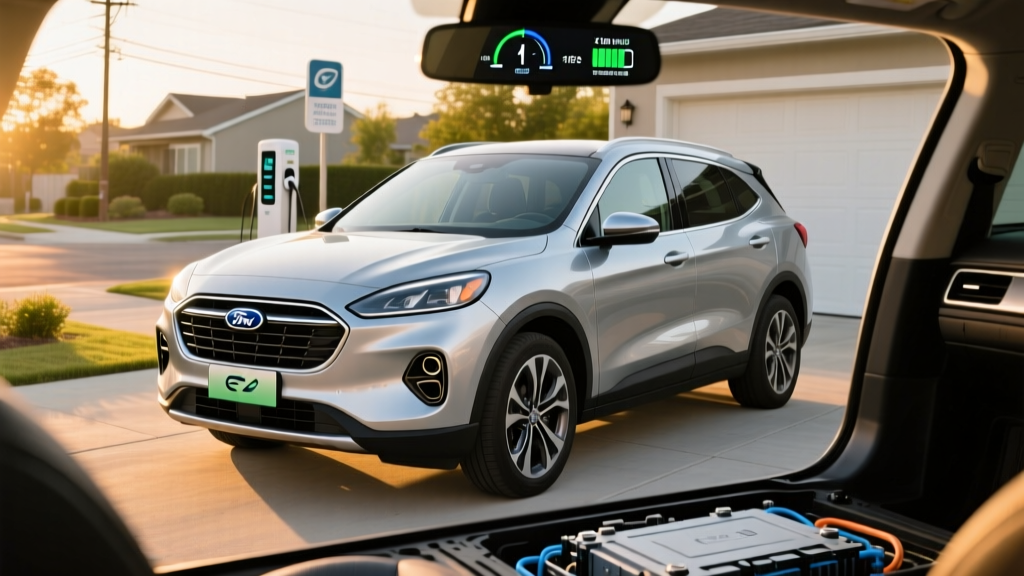
The Escape PHEV carries a much larger 14.4 kWh battery and a more powerful electric motor, enabling 37 miles of pure electric driving before the gas engine kicks in. You charge it via a standard J1772 port — a full charge takes about 3.5 hours on a 240V Level 2 outlet. It cannot DC fast charge. The PHEV is FWD only and was offered in SEL and Titanium trims.
For the 2021 model year, the HEV was the volume seller and the more versatile choice (AWD availability). The PHEV appealed to commuters with short daily drives and home-charging access. Both share the same 2.5L Atkinson-cycle four-cylinder, but the PHEV's combined output is 221 hp versus the HEV's 200 hp.
Fuel Economy: EPA Sticker vs Real-World MPG
| Configuration | City | Highway | Combined |
|---|---|---|---|
| HEV FWD | 44 MPG | 37 MPG | 41 MPG |
| HEV AWD | 43 MPG | 37 MPG | 40 MPG |
| PHEV (charge-depleting) | 105 MPGe combined (electric + gas) | ||
| PHEV (gas only, battery depleted) | 40 MPG combined | ||
Source: EPA fueleconomy.gov
Real-world reality check: Like most hybrids, the Escape HEV tends to exceed its EPA city rating in stop-and-go traffic — regenerative braking recovers energy that a gas car wastes as heat. Owners routinely report 43–46 MPG in urban driving. Highway efficiency is the weak point: at 70+ mph sustained speeds, the engine does most of the work alone, and real-world highway MPG often drops to 33–35 MPG. Cold weather (below 35°F) further reduces efficiency by 10–15% due to engine warm-up cycles and reduced battery performance. In mixed suburban driving, expect a realistic combined average of 38–40 MPG for the FWD model.
For the PHEV, the 37-mile electric range is achievable in mild weather with moderate speeds. In cold conditions, expect 28–32 miles of electric-only range before the engine fires up. Once the battery depletes, the PHEV operates as a conventional hybrid at roughly 40 MPG combined.
Reliability Track Record: What Five Years of Data Tells Us
The 2021 Escape Hybrid's reliability story has two chapters — the hybrid powertrain and everything else around it.
The Hybrid Powertrain: Proven and Durable
The 2.5L Atkinson-cycle engine paired with Ford's eCVT (electronically controlled continuously variable transmission) is a mature design. This powertrain architecture, refined across multiple Ford and Lincoln models (including the Maverick Hybrid and Lincoln Corsair Grand Touring), has not shown systemic failure patterns. The eCVT uses a planetary gearset rather than a belt or chain, eliminating a common failure point in traditional CVTs. The electric motor-generators are sealed, brushless units with no scheduled maintenance.
Non-Powertrain Concerns
NHTSA complaint data for the 2021 Escape Hybrid includes reports related to:
- Build quality: Wind noise around the A-pillar, rattling interior trim panels, and misaligned liftgates — carryover complaints from the 2020 redesign year.
- 12V battery drain: Some owners reported parasitic drain on the 12-volt auxiliary battery (not the hybrid traction battery), causing no-start conditions after the vehicle sat for extended periods. This is an electrical-system issue, not a hybrid-system defect.
- Infotainment glitches: SYNC 3 screen freezes and Bluetooth disconnections, largely addressed through software updates.
Check NHTSA vehicle safety and complaint data for the full record. As of 2026, there have been no hybrid-specific recalls targeting the 2021 Escape Hybrid's traction battery or inverter.
Consumer Ratings Context
Across major reliability aggregators, the 2021 Escape Hybrid scores average to slightly above average for its class. It trails the Toyota RAV4 Hybrid — the segment benchmark — but generally outperforms the Hyundai Tucson Hybrid and Kia Sportage Hybrid of the same vintage in long-term powertrain confidence.
Battery Warranty, Lifespan, and Replacement Cost
Hybrid Battery Warranty
8 years / 100,000 miles (whichever comes first) — federally mandated minimum for hybrid and EV components. In California Air Resources Board (CARB) states, the warranty extends to 10 years / 150,000 miles.
The warranty covers capacity loss below a defined threshold (typically 60–70% of original capacity) and defects in the battery pack, inverter, and associated control modules.
Expected lifespan: Ford's hybrid batteries are designed to last the life of the vehicle under normal use. Real-world data from earlier Ford Fusion Hybrids (2010–2019) shows most packs retaining 85–90% capacity at 150,000 miles. The 2021 Escape's lithium-ion pack benefits from improved thermal management over Ford's earlier nickel-metal-hydride designs.
Out-of-warranty replacement cost (2026 estimate):
- HEV battery pack: $2,500–$3,800 (parts + labor at a Ford dealer). The HEV pack is relatively small (1.1 kWh), keeping replacement costs moderate.
- PHEV battery pack: $5,500–$8,000 (parts + labor). The 14.4 kWh pack is significantly larger and more expensive. Third-party hybrid specialists may offer refurbished packs for $3,500–$5,000.
For a 2021 model in 2026, most examples are still within the 8-year/100,000-mile warranty window (expiring no earlier than 2029 or upon reaching 100k miles). This is a major advantage when buying used — verify the vehicle's in-service date and odometer reading with a Carfax or Ford dealer lookup before purchase.
Does the 2021 Escape Hybrid Qualify for a Tax Credit?
Conventional HEV: No. The standard Escape Hybrid does not qualify for the federal §30D Clean Vehicle Credit. Conventional hybrids are not eligible under current IRS rules — the credit is reserved for plug-in vehicles (BEVs and PHEVs) meeting battery-capacity and sourcing requirements.
PHEV: The 2021 Escape PHEV originally qualified for a $6,843 federal tax credit when purchased new. However, buying a used 2021 Escape PHEV in 2026 may qualify you for the Used Clean Vehicle Credit (§25E), which offers up to $4,000 or 30% of the sale price (whichever is less) if:
- The sale price is $25,000 or less
- Your modified adjusted gross income is below $75,000 (single) / $112,500 (head of household) / $150,000 (joint)
- You purchase from a licensed dealer
- The vehicle is at least two model years old (the 2021 qualifies)
Verify current eligibility rules at IRS.gov §25E, as income caps and dealer reporting requirements apply. The credit can be transferred to the dealer as a point-of-sale discount.
Escape Hybrid vs PHEV vs Full EV: Which Fits You?
Choose the HEV (conventional hybrid) if:
- You have no access to home or workplace charging
- You want maximum MPG with zero behavior change
- You need AWD for snow or rough roads
- Your budget is tight and you want the lowest used-car price
- You drive more than 15,000 miles/year and want proven long-term simplicity
Choose the PHEV if:
- Your daily commute is under 35 miles round-trip
- You can install a Level 2 charger at home (240V outlet)
- You want electric-only daily driving but gas flexibility for road trips
- You qualify for the used-vehicle tax credit
- FWD is sufficient for your climate
Choose a full EV (like a used Mustang Mach-E or Ioniq 5) if:
- You have reliable home Level 2 charging
- Your typical daily drive is under 200 miles
- You want zero tailpipe emissions and minimal maintenance
- You're willing to plan around DC fast charging on road trips
- You want the lowest per-mile fuel cost (electricity vs gas)
The Escape PHEV occupies a genuine sweet spot for suburban commuters who aren't ready to commit to a full EV but want meaningful electric driving. The HEV is the pragmatic choice for drivers who simply want a fuel-efficient crossover without thinking about it.
Pros and Cons at a Glance
Pros
- 41 MPG combined (HEV FWD) — among the best in the compact SUV segment
- Hybrid battery still under factory warranty for most 2021 examples in 2026
- No plug-in required for HEV — zero lifestyle change from a gas car
- PHEV offers 37 miles of electric-only range for commute-friendly driving
- Comfortable ride quality and spacious rear seat for the class
- Competitive used pricing vs RAV4 Hybrid (which commands a premium)
Cons
- Highway MPG disappoints relative to city — expect 33-35 MPG at 70+ mph
- PHEV is FWD only — no AWD option for snow-belt buyers
- No DC fast charging on PHEV — Level 2 only at 3.3 kW
- Interior materials and noise insulation lag behind the RAV4 Hybrid and Tucson Hybrid
- eCVT drone under hard acceleration (common to all planetary-gearset hybrids)
- Cargo space slightly reduced vs gas Escape due to battery placement
Frequently Asked Questions
How many MPG does the 2021 Ford Escape Hybrid actually get?
The EPA rates the FWD Escape Hybrid at 44 city / 37 highway / 41 combined MPG. In real-world driving, owners typically see 43–46 MPG in city traffic and 33–35 MPG on the highway. Cold weather reduces these figures by 10–15%. A realistic year-round combined average is 38–40 MPG.
How far can the 2021 Escape PHEV go on electric only?
The EPA rates the Escape PHEV at 37 miles of electric-only range. In mild weather at moderate speeds, this is achievable. In cold conditions (below 35°F), expect 28–32 miles before the engine engages. After the battery depletes, the PHEV operates as a conventional hybrid at approximately 40 MPG combined.
Is the 2021 Ford Escape Hybrid reliable?
The hybrid powertrain (2.5L engine + eCVT + electric motors) has proven durable, with no systemic failure patterns after five years on the road. Non-powertrain issues include build-quality complaints (wind noise, trim rattles), 12V auxiliary battery drain, and SYNC 3 infotainment glitches. The hybrid-specific components remain under the 8-year/100,000-mile warranty for most 2021 examples as of 2026.
What does a hybrid battery replacement cost?
For the HEV's 1.1 kWh pack, expect $2,500–$3,800 at a Ford dealer. For the PHEV's 14.4 kWh pack, expect $5,500–$8,000 at a dealer, or $3,500–$5,000 from a third-party hybrid specialist using refurbished cells. Most 2021 examples are still under warranty in 2026.
Does the 2021 Escape Hybrid qualify for any tax credit?
The conventional HEV does not qualify for any federal tax credit. The PHEV, when purchased used from a dealer in 2026, may qualify for the §25E Used Clean Vehicle Credit of up to $4,000 (or 30% of the sale price, whichever is less), subject to income caps ($75k single / $150k joint) and a $25,000 maximum sale price. Confirm eligibility with your tax professional and the IRS.
How does the Escape Hybrid compare to the Toyota RAV4 Hybrid?
The RAV4 Hybrid (2021) is rated at 41/38/40 MPG (FWD) and offers standard AWD at 41/38/40 MPG — slightly better highway efficiency and AWD availability. The RAV4 also holds a reliability and resale-value edge. However, used RAV4 Hybrids command a significant price premium (often $3,000–$5,000 more than a comparable Escape Hybrid). The Escape is the value play; the RAV4 is the safe bet.
Can I charge the Escape PHEV at a public DC fast charger?
No. The 2021 Escape PHEV only accepts AC charging via its J1772 port at a maximum rate of 3.3 kW (Level 2). It cannot connect to DC fast chargers (CCS, NACS, or CHAdeMO). A full Level 2 charge takes approximately 3.5 hours. On a standard 120V household outlet (Level 1), a full charge takes roughly 10–11 hours.