If you've been watching fuel prices or eyeing electric vehicles but aren't ready to commit to a plug, you've probably asked: what's a hybrid car? The short answer is that a hybrid pairs a gasoline engine with an electric motor and a battery pack to improve fuel economy, reduce emissions, and in some cases deliver short-distance electric-only driving. But the longer answer matters far more for your wallet and your daily routine, because not all hybrids are created equal.
In 2026, the hybrid market spans two distinct categories — conventional hybrids (HEVs) and plug-in hybrids (PHEVs) — each with different battery sizes, charging requirements, range profiles, and tax credit eligibility. This guide cuts through the marketing and gives you the exact numbers you need to decide which type fits your driving pattern.
The Two Types of Hybrids: HEV vs PHEV
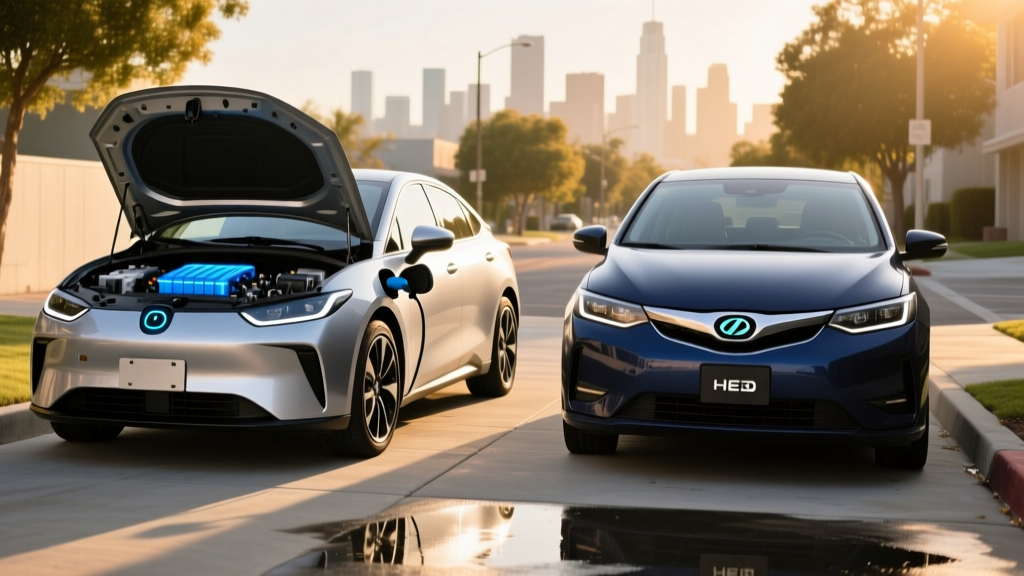
The single biggest mistake buyers make is lumping all hybrids together. A conventional hybrid (HEV) and a plug-in hybrid (PHEV) share the word "hybrid" but operate very differently day-to-day.
| Attribute | Conventional Hybrid (HEV) | Plug-in Hybrid (PHEV) |
|---|---|---|
| Plug-in charging required? | No — charges via engine and regenerative braking | Yes — plug in to unlock electric-only range |
| Battery capacity | 0.6–1.6 kWh (small) | 13–25+ kWh (large) |
| Electric-only driving | Minimal — assists at low speeds only | 25–50+ miles on battery alone |
| Fuel economy (gas mode) | 40–57 MPG combined typical | 25–40 MPG combined once battery depletes |
| MPGe (electric + gas combined) | N/A | 70–105 MPGe typical |
| Federal tax credit (§30D) | Not eligible | Up to $7,500 if requirements met |
| Home charging needed? | No | Recommended for full benefit |
| Price premium over gas model | $1,000–$3,000 | $4,000–$10,000 |
A conventional hybrid (HEV) never needs to be plugged in. Its small battery is recharged by the gasoline engine and by regenerative braking — capturing energy that would otherwise be lost during deceleration. The electric motor assists during acceleration and enables the engine to shut off at stops, cutting fuel consumption significantly in city driving. Think of it as a gas car that's been made substantially more efficient without changing your refueling habits.
A plug-in hybrid (PHEV) has a much larger battery that you charge from a wall outlet or charging station. This gives you a meaningful electric-only range — typically 25 to 50 miles — enough for most daily commutes without burning a drop of gasoline. Once the battery depletes, the vehicle seamlessly transitions to hybrid mode, operating like a conventional HEV with the gasoline engine. You get electric-car commuting during the week and gas-powered road-trip capability on weekends.
How Hybrid Powertrains Work: Real MPG Numbers
Fuel economy is the primary reason buyers choose hybrids, so let's look at actual EPA data across some of the most popular 2025–2026 models.
| Model | Type | City MPG | Highway MPG | Combined MPG | EV-Only Range | MPGe (PHEV) |
|---|---|---|---|---|---|---|
| Toyota Prius (LE) | HEV | 57 | 56 | 57 | — | — |
| Honda Accord Hybrid | HEV | 51 | 44 | 48 | — | — |
| Hyundai Tucson Hybrid | HEV | 38 | 38 | 38 | — | — |
| Toyota RAV4 Prime | PHEV | 40 (gas) | 36 (gas) | 38 (gas) | 42 mi | 94 |
| Chrysler Pacifica Hybrid | PHEV | 30 (gas) | 31 (gas) | 30 (gas) | 32 mi | 82 |
| Jeep Wrangler 4xe | PHEV | 20 (gas) | 20 (gas) | 20 (gas) | 22 mi | 49 |
Source: fueleconomy.gov, U.S. EPA. Figures reflect 2025–2026 model year data. MPGe (miles per gallon equivalent) measures total energy consumption in electric + gas mode for PHEVs.
Real-World MPG vs. EPA Stickers: What to Expect
Here's a nuance most buyers miss: conventional hybrids often beat their EPA city estimates in real-world driving, particularly in stop-and-go traffic where regenerative braking is most active. The Toyota Prius, for example, is rated at 57 MPG combined, and many owners report 55–60+ MPG in mixed city driving. This is the opposite of gas-only cars, which typically fall short of EPA city figures.
However, highway driving tells a different story. At sustained 70–80 mph speeds, the electric motor provides less assistance, and aerodynamic drag dominates. Expect highway fuel economy to land 3–6 MPG below the EPA sticker in most hybrids, particularly in the crossover and SUV segments.
For PHEVs, your real-world efficiency depends entirely on your charging habits. If you charge nightly and your commute falls within the electric-only range, you might use gasoline only a handful of times per month. Skip the charging, and you're driving a heavier, less-efficient conventional hybrid — the battery becomes dead weight.
PHEV Electric-Only Range and Charging Explained
If you're considering a PHEV, the electric-only range is the spec that matters most. Here's what current models deliver:
| Model | Battery (kWh) | EPA EV Range | Level 2 Charge Time | DC Fast Charge? |
|---|---|---|---|---|
| Toyota RAV4 Prime | 18.1 kWh | 42 miles | ~2.5 hours | No |
| Toyota Prius Prime | 13.6 kWh | 44 miles | ~4 hours | No |
| Jeep Wrangler 4xe | 17.3 kWh | 22 miles | ~2 hours | No |
| Chrysler Pacifica Hybrid | 16.0 kWh | 32 miles | ~2 hours | No |
| Hyundai Tucson PHEV | 13.8 kWh | 33 miles | ~1.75 hours | No |
A few critical points on PHEV charging:
- Level 1 (120V standard outlet): Most PHEVs can fully charge overnight on a regular household outlet in 5–12 hours, depending on battery size. This works for many owners with short commutes.
- Level 2 (240V): A dedicated home Level 2 charger cuts charging time to 1.5–4 hours. Installation typically costs $500–$2,000 depending on electrical panel proximity.
- DC fast charging: Most PHEVs do not support DC fast charging. The battery packs are too small to justify the added cost and weight of DC hardware. Plan on Level 1 or Level 2 only.
The total combined range — electric plus gasoline — is where PHEVs shine for road trips. The RAV4 Prime, for instance, delivers roughly 42 miles electric plus approximately 440 miles on its 14.5-gallon tank in hybrid mode, for a total range exceeding 480 miles without stopping.
Powertrain Performance: More Than Just Efficiency
Modern hybrids aren't the sluggish economy boxes they once were. The electric motor's instant torque fills in the low-RPM gap where gas engines are weakest, resulting in surprisingly strong acceleration.
| Model | Engine | Combined HP | 0–60 mph | Drivetrain |
|---|---|---|---|---|
| Toyota Prius (HEV) | 2.0L 4-cyl + motor | 196 hp | 7.2 sec | FWD / AWD |
| Toyota RAV4 Prime (PHEV) | 2.5L 4-cyl + 2 motors | 302 hp | 5.7 sec | AWD |
| Honda Accord Hybrid | 2.0L 4-cyl + 2 motors | 204 hp | 7.1 sec | FWD |
| Jeep Wrangler 4xe (PHEV) | 2.0L turbo + motor | 375 hp | 6.0 sec | 4WD |
| Hyundai Tucson Hybrid | 1.6L turbo + motor | 226 hp | 7.3 sec | AWD |
The RAV4 Prime's 302 combined horsepower and 5.7-second 0–60 time make it one of the quickest vehicles in the RAV4 lineup — a far cry from the perception that hybrid means slow. The Wrangler 4xe's 375 hp and 470 lb-ft of torque similarly outmuscle most gas-only Wrangler trims.
Pricing and Federal Tax Credit Eligibility
Hybrids carry a price premium over their gas-only equivalents, but the math often works out through fuel savings and, for PHEVs, potential tax credits.
| Model | Starting MSRP | Federal §30D Credit | Est. After-Credit Price |
|---|---|---|---|
| Toyota Prius (HEV) | $28,550 | Not eligible | $28,550 |
| Toyota Prius Prime (PHEV) | $33,475 | Up to $7,500* | ~$25,975* |
| Toyota RAV4 Prime (PHEV) | $44,515 | Up to $7,500* | ~$37,015* |
| Hyundai Tucson PHEV | $38,725 | Up to $7,500* | ~$30,725* |
| Chrysler Pacifica Hybrid | $51,095 | Up to $7,500* | ~$43,595* |
*Federal §30D credit eligibility requires meeting multiple criteria. Credit amounts vary based on battery sourcing and critical mineral requirements. See the IRS clean vehicle credits page for current rules.
§30D Tax Credit Requirements for PHEVs (2026)
- Battery capacity: Must have at least 7 kWh — most PHEVs qualify.
- MSRP caps: Vans/SUVs/pickups must be under $80,000; sedans under $55,000.
- Buyer income caps: Modified AGI must not exceed $150,000 (single), $225,000 (head of household), or $300,000 (joint).
- Final assembly: Vehicle must be assembled in North America.
- Critical minerals and battery components: Increasingly strict sourcing requirements phase in annually. The percentage of qualifying content determines whether you receive the full $7,500, a partial $3,750, or nothing.
- Point-of-sale transfer: As of 2024, eligible buyers can transfer the credit to the dealer for an immediate price reduction at purchase rather than claiming it on their tax return.
Important: Conventional hybrids (HEVs) do NOT qualify for the §30D federal tax credit. Only plug-in hybrids and full battery-electric vehicles are eligible. Some states offer additional rebates for PHEVs — check your state energy office for local programs.
Battery Reliability, Warranty, and Replacement Costs
Battery longevity is the number-one concern among hybrid buyers, and it's an area where the data is overwhelmingly reassuring. Toyota has been selling the Prius in the U.S. since 2000, and there are well-documented examples of original hybrid batteries lasting well past 200,000 miles. Modern hybrid battery packs use conservative charge/discharge windows — they never fully charge or fully deplete — which dramatically extends cell life.
Hybrid Battery Warranty Coverage (2026 Models)
| Manufacturer | Hybrid Battery Warranty | Capacity Retention Threshold |
|---|---|---|
| Toyota | 10 years / 150,000 miles | Below ~60–70% capacity |
| Honda | 8 years / 100,000 miles (10/150k in CARB states) | Varies by model |
| Hyundai / Kia | 10 years / 100,000 miles | Below ~70% capacity |
| Stellantis (Jeep/Chrysler) | 8 years / 100,000 miles | Below ~70% capacity |
| Ford | 8 years / 100,000 miles | Below ~70% capacity |
Warranty triggers when battery capacity drops below the stated threshold under normal use. Check your specific model's warranty booklet for exact terms.
Should a hybrid battery need replacement out of warranty, costs vary widely:
- HEV battery replacement: $2,000–$4,500 (smaller batteries, lower cost). The Prius battery, for instance, typically runs $2,500–$3,500 for a new OEM replacement.
- PHEV battery replacement: $6,000–$12,000+ (larger batteries, higher cost). The RAV4 Prime's 18.1 kWh pack is significantly more expensive than a conventional Prius pack.
- Refurbished/remanufactured options: Often available for 40–60% less than new OEM, particularly for older, high-volume models like the Prius.
In practice, widespread hybrid battery failures within the first 150,000 miles are rare. According to reliability data tracked by consumer testing organizations, Toyota and Honda hybrids consistently rank among the most reliable vehicles across all powertrain types. The hybrid system actually reduces wear on the gasoline engine (it runs fewer hours) and on the brake pads (regenerative braking handles much of the deceleration), which can lower overall maintenance costs.
Hybrid vs. PHEV vs. Full EV: Which Fits Your Life?
The right choice depends on three variables: your daily mileage, your charging access, and your road-trip frequency.
Choose a Conventional Hybrid (HEV) If:
- You don't have access to home or workplace charging
- Your daily driving is unpredictable and often exceeds 40 miles
- You want maximum MPG with zero behavior change
- You want the lowest purchase price among electrified options
- You live in an apartment or park on the street
Choose a Plug-in Hybrid (PHEV) If:
- You have reliable home Level 1 or Level 2 charging
- Your daily commute is under 30–40 miles round trip
- You want EV-like commuting but need gas flexibility for road trips
- You qualify for the §30D tax credit, narrowing the price gap
- You want to "try electric" without full commitment
Choose a Full Battery EV (BEV) If:
- You have reliable home charging and your daily driving is under 250 miles
- You want zero tailpipe emissions and the lowest per-mile fuel cost
- You're willing to plan around DC fast charging on road trips
- You want minimal maintenance — no oil changes, fewer moving parts
- Local charging infrastructure (or a Tesla Supercharger network membership) gives you confidence
A practical framework: calculate your weekly gasoline cost in a gas-only car, then compare. A Prius HEV at 57 MPG combined cuts fuel costs roughly in half versus a 28 MPG gas compact. A PHEV charged nightly can reduce gasoline consumption by 80–95% for commuters with short trips. A full EV eliminates gasoline entirely, replacing it with electricity at roughly $0.04–$0.15 per mile depending on local rates.
Frequently Asked Questions
How many MPG does a hybrid car actually get?
It depends on the model and your driving pattern. The most efficient conventional hybrids — like the 2026 Toyota Prius — achieve 57 MPG combined (EPA). Midsize sedans like the Honda Accord Hybrid deliver around 48 MPG combined, while hybrid SUVs like the Hyundai Tucson Hybrid land in the 35–38 MPG range. In real-world city driving, many hybrids meet or exceed their EPA city estimates thanks to aggressive regenerative braking. Highway-only driving at 75+ mph will yield 3–6 MPG below the EPA highway figure.
How far can a plug-in hybrid go on electric only?
Current 2026 PHEVs offer between 22 and 50+ miles of electric-only range. The Toyota Prius Prime leads at 44 miles, the RAV4 Prime delivers 42 miles, and the Chrysler Pacifica Hybrid provides 32 miles. This is enough to cover the average American's one-way commute (approximately 16 miles, per Census Bureau data) with room to spare — meaning many PHEV owners burn gasoline only on longer weekend trips.
Do conventional hybrids need to be plugged in?
No. Conventional hybrids (HEVs) charge their batteries entirely through the gasoline engine and regenerative braking. You fuel them exactly like a normal gas car — at a gas station. There is no plug, no charging cable, and no change to your refueling routine. Only plug-in hybrids (PHEVs) benefit from being connected to an external power source.
Is a hybrid car reliable, and what does a battery replacement cost?
Hybrids from major manufacturers (Toyota, Honda, Hyundai, Ford) have excellent long-term reliability records. Toyota's hybrid system in particular has been refined over 25+ years of production. Hybrid battery warranties run 8–10 years and 100,000–150,000 miles depending on the manufacturer. Out-of-warranty replacement costs $2,000–$4,500 for HEV batteries and $6,000–$12,000+ for PHEV batteries. Real-world failure rates within the warranty period are low, and many original batteries exceed 200,000 miles.
Does a hybrid qualify for a federal tax credit?
Conventional hybrids (HEVs) do not qualify for the federal §30D clean vehicle tax credit. Only plug-in hybrids (PHEVs) and full battery-electric vehicles (BEVs) are eligible, and even then, eligibility depends on MSRP caps, buyer income limits, battery component sourcing, and North American final assembly. Check the IRS clean vehicle credits page and consult a tax professional to confirm your eligibility before purchasing.
What is MPGe and how should I interpret it?
MPGe (miles per gallon equivalent) is the EPA's way of comparing a PHEV's total energy consumption — electricity plus gasoline — to a gas-only vehicle on a common scale. One gallon of gasoline contains approximately 33.7 kWh of energy, so MPGe converts electrical kWh consumption into a gasoline-equivalent figure. A PHEV rated at 94 MPGe (like the RAV4 Prime) is consuming energy at a rate equivalent to a 94 MPG gas car when operating in combined electric-gas mode. However, MPGe only tells part of the story — your actual efficiency depends on how often you drive in electric mode versus gas mode.
Will a hybrid save me money compared to a gas car?
Over a 5-year ownership period, a fuel-efficient HEV like the Prius can save $3,000–$5,000 in fuel costs versus a comparable gas-only compact, depending on your annual mileage and local gas prices. A PHEV charged nightly can save even more — potentially $5,000–$8,000 — particularly if your electricity rate is low and your commute is short. Factor in the higher purchase price of the hybrid, but also consider lower brake wear (regenerative braking extends pad life by 30–50%) and the potential §30D credit for PHEVs. Use the fueleconomy.gov vehicle comparison tool to run the numbers for your specific situation.