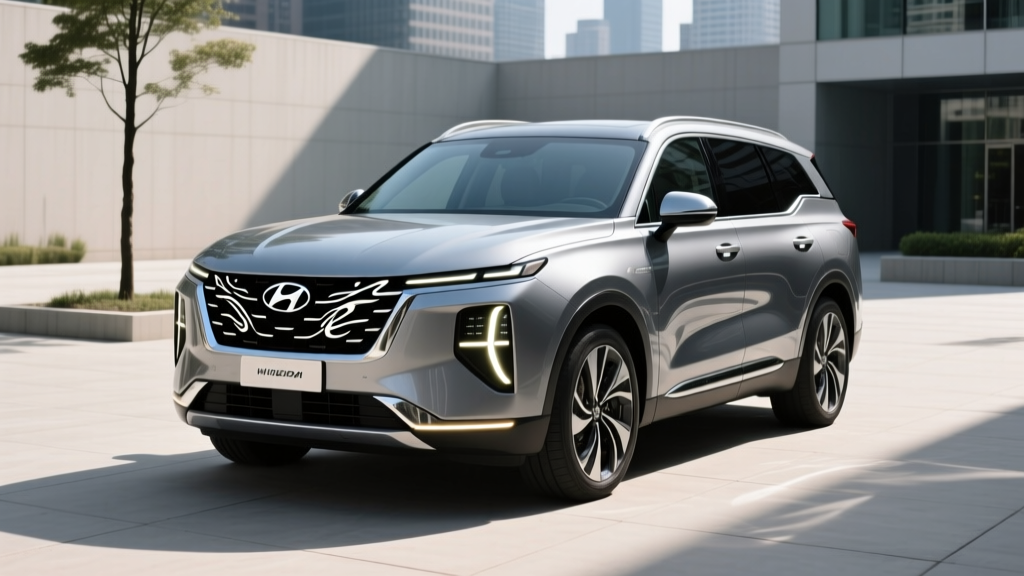
Quick Verdict: Is the Palisade Calligraphy Hybrid Worth the Premium?
The 2026 Hyundai Palisade Calligraphy Hybrid pairs a turbocharged 2.5-liter four-cylinder engine with two electric motors to deliver a combined 329 horsepower through Hyundai's hybrid-optimized all-wheel-drive system. As the range-topping trim, the Calligraphy Hybrid carries an MSRP of approximately $55,450 (including destination) — roughly $4,000 above the non-hybrid Calligraphy and $14,000 above the base hybrid SE. What you get in return is a three-row family hauler that achieves an EPA-estimated 27 MPG combined, with real-world city driving often exceeding that figure thanks to aggressive regenerative braking and low-speed electric-only operation.
For buyers who want a premium three-row SUV without range anxiety, home-charging infrastructure requirements, or the upfront cost of a full battery-electric vehicle, the Palisade Calligraphy Hybrid occupies a compelling middle ground. But if you have reliable home charging and a predictable commute, a plug-in hybrid or full EV may serve you better. Here's the complete breakdown.
HEV vs. PHEV: Which Palisade Hybrid Are We Talking About?
Important distinction: The 2026 Hyundai Palisade is offered as a conventional hybrid (HEV), not a plug-in hybrid (PHEV). This matters for your expectations:
| Feature | HEV (Conventional Hybrid) | PHEV (Plug-In Hybrid) |
|---|---|---|
| Plug-in charging required? | No — refuels with gas only | Yes — plug in to maximize EV range |
| Electric-only range | Less than 1 mile at low speeds | Typically 25–45 miles |
| Battery size | ~1.5–2.0 kWh (small buffer) | 13–25+ kWh |
| Federal tax credit (§30D) | Not eligible | Up to $7,500 (if eligible) |
| Home charger needed? | No | Recommended (Level 2) |
The Palisade Hybrid uses a small battery that charges exclusively through regenerative braking and the gasoline engine. You never plug it in. If Hyundai introduces a Palisade PHEV variant in the future, it would add plug-in capability and a larger battery — but as of the 2026 model year, the Palisade hybrid lineup is HEV-only.
Powertrain, Horsepower, and Performance
The 2026 Palisade Calligraphy Hybrid's powertrain centers on a turbocharged 2.5-liter inline-four engine paired with two electric motors — one integrated into the transmission and a second driving the rear axle for all-wheel traction. The combined system output is 329 horsepower, a meaningful upgrade over the non-hybrid Palisade's 287-hp V6.
| Specification | 2026 Palisade Calligraphy Hybrid |
|---|---|
| Engine | 2.5L turbocharged I-4 + dual electric motors |
| Combined Horsepower | 329 hp |
| Drivetrain | Hybrid AWD (e-AWD with rear motor) |
| Transmission | 6-speed automatic (hybrid-optimized) |
| 0–60 mph (est.) | ~7.0 seconds |
| Towing Capacity | 5,000 lbs (with factory tow prep) |
| Battery Type | Lithium-ion polymer, ~1.8 kWh |
| Seating | 7 passengers (2nd-row captain's chairs std. on Calligraphy) |
| Cargo Volume (behind 3rd row) | ~20.4 cu ft |
| Base MSRP (Calligraphy Hybrid) | $55,450 (incl. destination) |
The turbo-hybrid setup delivers strong low-end torque from the electric motors, making the Palisade feel responsive around town despite its roughly 4,700-pound curb weight. Highway passing power is adequate, though the engine note under hard acceleration is more functional than refined. The e-AWD system engages the rear motor automatically when slippage is detected or during hard acceleration — it's not a dedicated off-road system, but it handles rain, light snow, and gravel competently.
Fuel Economy: EPA Estimates vs. Real-World MPG
The EPA rates the 2026 Palisade Hybrid at the following fuel economy figures (AWD configuration):
| Driving Cycle | EPA Estimate | Real-World Expectation |
|---|---|---|
| City | 28 MPG | 29–32 MPG (hybrids often beat EPA in stop-and-go) |
| Highway | 26 MPG | 24–26 MPG (aerodynamic drag hurts at 70+ mph) |
| Combined | 27 MPG | 26–29 MPG (depends on driving mix) |
Why hybrids often exceed EPA in the city: Conventional hybrids like the Palisade recapture energy through regenerative braking every time you slow down, then use that stored electricity to launch from stops using the electric motor — the exact scenario where pure gas vehicles waste the most fuel. Owners who drive predominantly in urban or suburban traffic frequently report 29–31 MPG on the Palisade Hybrid's trip computer.
Highway reality check: At sustained speeds above 70 mph, the gasoline engine does nearly all the work. The small hybrid battery provides minimal assist, and the Palisade's boxy SUV shape creates significant aerodynamic drag. Expect 24–25 MPG on long interstate road trips, especially with a full load of passengers and cargo.
Cold-weather impact: In temperatures below freezing, expect a 5–10% reduction in fuel economy. The engine runs more frequently to generate cabin heat and maintain battery temperature. This is far less severe than the 20–30% range loss a full EV experiences in cold weather, but it's worth budgeting for if you live in northern climates.
According to fueleconomy.gov, the Palisade Hybrid's combined 27 MPG translates to an estimated annual fuel cost of approximately $2,150 (assuming 15,000 miles/year and $3.50/gallon regular unleaded). For comparison, the non-hybrid V6 Palisade AWD achieves 21 MPG combined, costing roughly $2,750 annually — a $600/year fuel savings with the hybrid.
Pricing, Trims, and Tax Credit Eligibility
The 2026 Hyundai Palisade Hybrid is available across four trims. The Calligraphy sits at the top:
| Trim | MSRP (AWD Hybrid) | Key Additions Over Previous Trim |
|---|---|---|
| SE Hybrid | ~$41,450 | Base hybrid with full safety suite, 12.3" display |
| SEL Hybrid | ~$44,950 | Heated 2nd row, wireless charging, power liftgate |
| Limited Hybrid | ~$49,950 | Leather, ventilated front seats, HUD, premium audio |
| Calligraphy Hybrid | ~$55,450 | Nappa leather, quilted door panels, ambient lighting, exclusive wheels, rear entertainment prep |
Federal Tax Credit: Does the Palisade Hybrid Qualify?
No. Under current IRS §30D rules, the federal clean vehicle credit of up to $7,500 applies only to plug-in electric vehicles (BEVs and PHEVs) that meet battery sourcing, critical minerals, MSRP caps, and buyer income requirements. The Palisade Hybrid is a conventional HEV — it has no plug-in capability and does not qualify for the §30D credit.
What about state incentives? Some states offer rebates or tax credits for conventional hybrids, but these are increasingly rare as incentive programs shift toward plug-in vehicles. Check your state's energy office or AFDC's state law database for current local programs. A few states still offer $500–$1,000 rebates for HEVs, but availability varies by jurisdiction and may be subject to funding exhaustion.
Battery Warranty, Reliability, and Replacement Cost
Hyundai Hybrid Battery Warranty: Hyundai covers the Palisade Hybrid's lithium-ion battery pack for 10 years or 100,000 miles (whichever comes first) under its hybrid/electric component warranty. In states that follow California Air Resources Board (CARB) emissions standards — including CA, NY, MA, NJ, CT, and several others — the hybrid battery warranty extends to 10 years or 150,000 miles.
What's covered: Battery capacity loss below a defined threshold (typically 60–70% of original capacity), cell failure, and hybrid system components including the electric motors, inverter, and hybrid control unit.
Real-world reliability data: Hyundai's hybrid systems have proven durable in long-term testing and owner surveys. The company has been building hybrid powertrains since the 2011 Sonata Hybrid, and failure rates for the battery pack and hybrid components are low relative to the industry. The 2.5-liter turbocharged engine is shared across Hyundai's lineup and has accumulated millions of miles in service.
Battery replacement cost (out of warranty): If the hybrid battery fails after the warranty period, replacement costs typically range from $2,500 to $4,500 including parts and labor at a Hyundai dealership. This is significantly less than a full EV battery replacement ($8,000–$20,000+) because the Palisade Hybrid's battery is small (~1.8 kWh) compared to a BEV's 60–100+ kWh pack. Independent hybrid shops can sometimes refurbish or replace individual cells for $1,500–$2,500.
Will the battery need replacement? Most hybrid batteries outlast the vehicle's useful life. Toyota and Hyundai hybrid packs routinely reach 150,000–200,000+ miles without significant degradation. The Palisade's battery management system keeps the pack in a conservative state-of-charge window (roughly 40–80%), which minimizes stress and extends cycle life. Plan for the battery to last the life of the vehicle under normal use.
Calligraphy-Specific Features: What the Top Trim Adds
The Calligraphy trim is Hyundai's luxury-tier offering, and the hybrid version includes everything from the Limited plus several premium upgrades:
- Nappa leather seating surfaces with quilted stitching and embossed headrests
- Exclusive 20-inch alloy wheels (aero-optimized design for hybrid efficiency)
- Premium headliner and suede-like pillar trim
- Ambient interior lighting with 64 color options
- Power-folding 3rd-row seats with cargo-area controls
- Digital key 2 (use your smartphone as the key fob)
- Remote smart parking assist (move the vehicle in/out of tight spots from outside)
- Highway Driving Assist 2 (HDA2) — Hyundai's Level 2 driver-assistance system with lane-centering, adaptive cruise, and lane-change assist
The Calligraphy Hybrid also includes Hyundai's full SmartSense safety suite: forward collision-avoidance assist, blind-spot monitoring with rear cross-traffic alert, rear occupant alert, and safe-exit assist. The Palisade earned an IIHS Top Safety Pick+ designation for the previous generation, and the 2026 redesign carries forward enhanced structural rigidity and updated crash-avoidance technology.
Who Should Buy the Palisade Calligraphy Hybrid?
Choose the Palisade Calligraphy Hybrid if:
- You need three rows and want to reduce fuel costs without changing your refueling habits
- You don't have access to home or workplace EV charging
- You regularly tow (up to 5,000 lbs) and want hybrid torque assist
- You want premium features without stepping into luxury-brand pricing ($65K+)
- You live in a region with extreme cold where EV range loss is a concern
Consider a full EV or PHEV instead if:
- You have reliable Level 2 home charging and a commute under 40 miles (a PHEV could cover your daily driving on electricity alone)
- You want to qualify for the $7,500 federal tax credit (requires a BEV or eligible PHEV)
- You drive primarily in the city and want to eliminate tailpipe emissions in your neighborhood
- You plan to keep the vehicle 10+ years and want the lowest possible operating cost (EVs win on maintenance and fuel)
Pros and Cons at a Glance
Pros
- 27 MPG combined is excellent for a 4,700-lb three-row SUV
- 329 hp hybrid powertrain feels responsive and refined
- No charging infrastructure needed — just fill up with gas
- 10-year/100,000-mile hybrid battery warranty
- Calligraphy trim rivals luxury SUVs at a $15K+ discount
- Real-world city MPG often exceeds EPA estimate
- 5,000-lb towing capacity maintained vs. non-hybrid
Cons
- $55,450 MSRP is steep for a Hyundai badge
- No federal tax credit eligibility (HEV, not PHEV/BEV)
- Highway MPG drops to ~24 under sustained 75+ mph driving
- Third row is tight for adults on long trips
- Turbo-four engine note is uninspiring under hard acceleration
- No plug-in hybrid option available (yet)
- Calligraphy trim not eligible for any current federal incentive
Frequently Asked Questions
How many MPG does the 2026 Palisade Calligraphy Hybrid get?
The EPA rates the Palisade Hybrid AWD at 28 MPG city, 26 MPG highway, and 27 MPG combined. Real-world city driving often yields 29–32 MPG thanks to regenerative braking, while sustained highway driving at 70+ mph typically returns 24–25 MPG.
Does the Palisade Hybrid need to be plugged in?
No. The Palisade Hybrid is a conventional HEV, not a plug-in hybrid. Its small battery charges through regenerative braking and the gasoline engine. You refuel it exclusively at gas stations, just like a conventional vehicle.
Is the Palisade Hybrid reliable?
Hyundai's hybrid systems have a strong reliability track record. The company offers a 10-year/100,000-mile hybrid battery warranty (10 years/150,000 miles in CARB states). Hybrid battery failure is rare, and most packs last 150,000–200,000+ miles without significant degradation.
What does it cost to replace the Palisade Hybrid battery?
Out-of-warranty replacement runs approximately $2,500–$4,500 at a dealership, including parts and labor. Independent hybrid specialists may offer refurbishment for $1,500–$2,500. However, most hybrid batteries outlast the vehicle and rarely need replacement.
Does the 2026 Palisade Hybrid qualify for any tax credit?
The Palisade Hybrid does not qualify for the federal §30D clean vehicle credit because it is a conventional HEV, not a plug-in vehicle. Some states may offer modest hybrid rebates ($500–$1,000), but these are becoming less common. Check your state's energy office for current programs.
How does the Palisade Hybrid compare to the Toyota Grand Highlander Hybrid?
The Toyota Grand Highlander Hybrid achieves a slightly higher EPA rating of approximately 34–36 MPG combined (depending on trim and FWD/AWD). However, the Palisade Calligraphy Hybrid offers a more premium interior at the top trim, more standard horsepower (329 vs. Toyota's 245 in the standard hybrid), and Hyundai's longer warranty coverage. The choice depends on whether you prioritize fuel economy (Toyota) or luxury features and power (Hyundai).
Can the Palisade Hybrid run on electric power alone?
Only at very low speeds (under ~25 mph) and for very short distances (a few hundred yards). The ~1.8 kWh battery is too small to sustain electric-only driving at meaningful speeds or distances. This is normal for conventional hybrids — the electric motor assists the engine rather than replacing it.