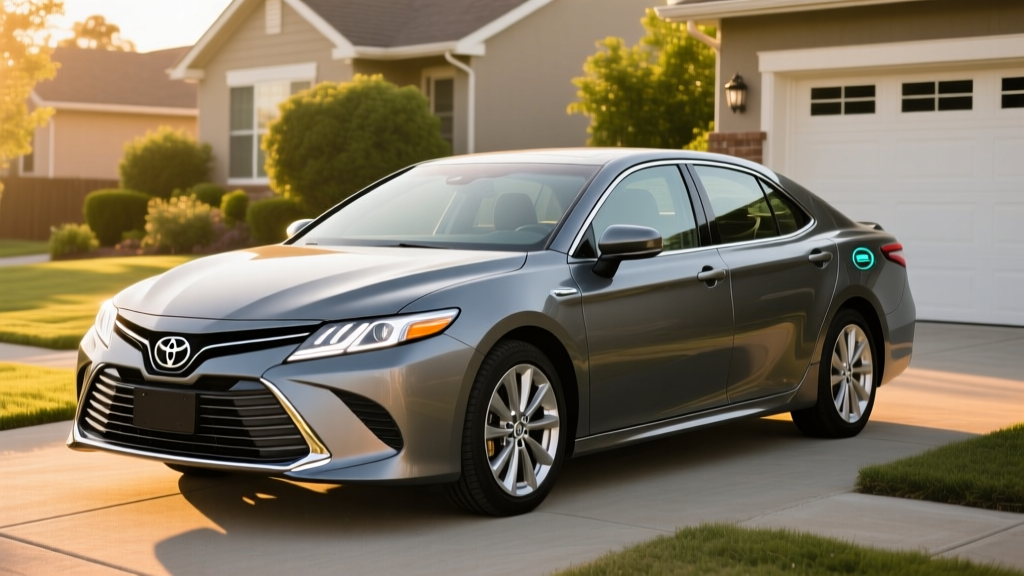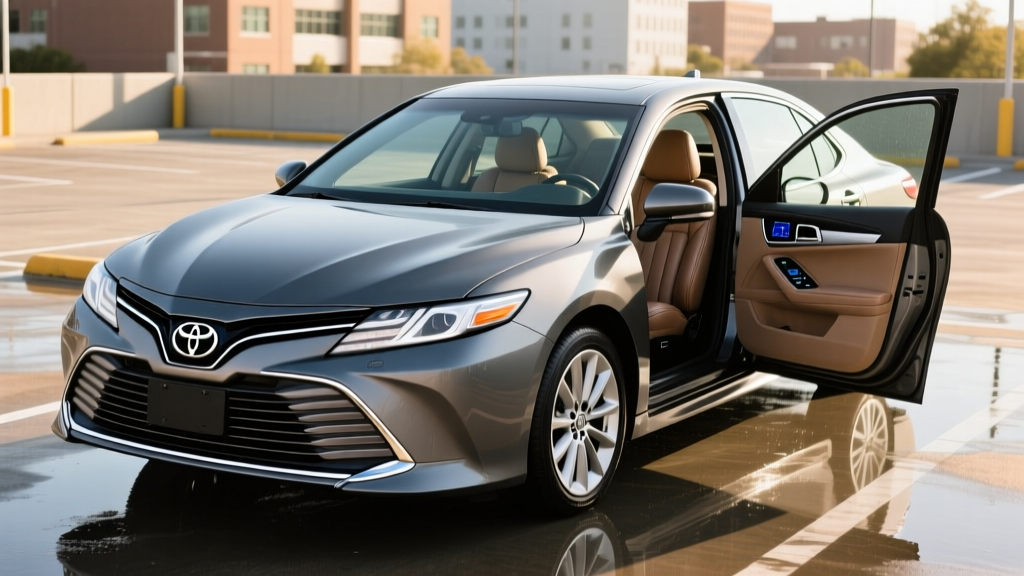
The 2015 Toyota Camry Hybrid XLE sedan occupies a specific niche in the used-car market: a midsize conventional hybrid (HEV) that prioritizes fuel economy and long-term reliability without requiring any change in driving or fueling habits. More than a decade after its release, this generation remains one of the most data-backed choices for buyers who want hybrid efficiency but aren't ready for plug-in ownership. This guide covers the exact specs, real-world fuel economy, battery longevity, and ownership economics you need to evaluate one today.
HEV vs PHEV: What the 2015 Camry Hybrid Actually Is
Before examining specs, it's critical to classify this vehicle correctly. The 2015 Camry Hybrid is a conventional hybrid electric vehicle (HEV), not a plug-in hybrid (PHEV). It cannot be plugged in, has no electric-only driving range to speak of, and generates all its electrical energy through regenerative braking and the gasoline engine. Toyota did offer a Camry-based plug-in in other markets, but the US-spec 2015 Camry Hybrid is strictly a self-charging HEV.
| Feature | 2015 Camry Hybrid (HEV) | Typical PHEV (e.g., RAV4 Prime) | Full BEV (e.g., Tesla Model 3) |
|---|---|---|---|
| Plug-in charging | No — never plugs in | Yes — Level 1/2 AC | Yes — Level 1/2/DC fast |
| Electric-only range | ~0.5 mi at very low speed | 25–42 mi typical | 250–360 mi (full battery) |
| Battery capacity | 1.6 kWh (NiMH) | 13–18 kWh (Li-ion) | 50–82 kWh (Li-ion) |
| Gasoline engine | 2.5L 4-cyl + electric motor | 2.5L 4-cyl + electric motor(s) | None |
| Fueling | Gas station only | Gas station + electrical outlet | Electrical outlet/charger only |
| Federal tax credit (new) | Not eligible (§30D is for PHEV/BEV only) | Up to $7,500 if eligible | Up to $7,500 if eligible |
This distinction matters for buyers cross-shopping used vehicles: if you want electric-only commuting, you need a PHEV or BEV. If you want set-and-forget efficiency with zero infrastructure requirements, the HEV architecture of the Camry Hybrid is the simpler path.
Fuel Economy: EPA Ratings and Real-World MPG
The 2015 Toyota Camry Hybrid XLE carries an EPA rating of 40 MPG city / 38 MPG highway / 40 MPG combined, according to fueleconomy.gov. The LE and SE trims share the same powertrain but differ slightly in weight and aerodynamics; the XLE's additional equipment adds roughly 70 lbs, which is already reflected in these figures.
| Driving Scenario | EPA Rating | Real-World Expectation |
|---|---|---|
| City (stop-and-go) | 40 MPG | 41–45 MPG (hybrids excel here) |
| Highway (70+ mph) | 38 MPG | 35–38 MPG (aero drag reduces regen advantage) |
| Combined | 40 MPG | 38–43 MPG depending on driving mix |
| Cold weather (below 30°F) | — | 33–37 MPG (engine runs more for cabin heat) |
Conventional hybrids like the Camry often exceed their EPA city rating in real-world stop-and-go driving because regenerative braking recovers energy that a gas car wastes as heat. Highway driving is the opposite: sustained speeds above 70 MPH reduce the hybrid system's advantage, and the 2.5L Atkinson-cycle engine operates closer to a conventional sedan's efficiency. In cold climates, expect a 10–15% MPG drop because the gasoline engine must run continuously to provide cabin heat — there is no heat pump in this generation.
Powertrain and Performance Specs
The 2015 Camry Hybrid pairs a 2.5-liter inline-four Atkinson-cycle gasoline engine with a permanent-magnet electric motor through Toyota's Hybrid Synergy Drive (an eCVT planetary gearset, not a belt-and-cone CVT). The system prioritizes smoothness and efficiency over acceleration.
| Specification | Value |
|---|---|
| Gasoline engine | 2.5L 4-cylinder Atkinson-cycle (156 hp / 156 lb-ft) |
| Electric motor | Permanent-magnet synchronous (105 kW / 141 hp) |
| Net system horsepower | 200 hp combined |
| Transmission | eCVT (planetary gearset) |
| 0–60 mph | ~7.6 seconds |
| Drivetrain | Front-wheel drive |
| Hybrid battery | 1.6 kWh nickel-metal hydride (NiMH), 204V nominal |
| Curb weight (XLE) | ~3,545 lbs |
| Fuel tank | 13.2 gallons |
| Total driving range | ~528 miles (at 40 MPG combined) |
The 200 net system horsepower figure reflects the combined output of engine and motor at the point where their power curves overlap — not a simple sum of peak ratings. Acceleration is adequate for merging and passing, though this is a comfort-oriented sedan, not a performance vehicle. The eCVT eliminates shift shock entirely, contributing to the XLE's refined driving character.
Hybrid Battery Longevity, Warranty, and Replacement Cost
Battery lifespan is the single most common concern for used hybrid buyers. The 2015 Camry Hybrid uses a nickel-metal hydride (NiMH) battery pack — a mature, well-understood chemistry that Toyota has deployed across millions of hybrids since the original Prius. NiMH is less energy-dense than modern lithium-ion but is exceptionally tolerant of the shallow charge-discharge cycles that hybrids use.
- Standard: 8 years / 100,000 miles (whichever comes first)
- CARB states (CA, NY, MA, and others): 10 years / 150,000 miles
- Coverage threshold: Battery capacity below ~60% of original or any cell/module failure
For a 2015 model, original factory warranty has expired as of 2023 (or 2025 in CARB states). Any remaining coverage would come from an extended warranty purchased separately.
Real-world battery lifespan data: Toyota's NiMH hybrid batteries routinely last 150,000–200,000+ miles before significant degradation. Taxi fleets and high-mileage owners regularly report 200,000+ miles on original packs. The hybrid system's battery management keeps the pack in a narrow state-of-charge window (roughly 40–80%), which dramatically reduces stress on the cells.
Replacement cost if the battery fails:
- OEM new battery from Toyota dealer: $2,500–$4,000 installed
- Refurbished/remanufactured pack: $1,000–$2,000 installed
- Individual module replacement (independent hybrid specialist): $300–$800 for a single failed module
Before purchasing a used 2015 Camry Hybrid, request a hybrid battery health check from a Toyota dealer or a hybrid-specialist shop. A scan tool can read individual module voltages and internal resistance — a pack with tightly matched modules is healthy, while wide voltage spreads signal impending failure. Also check for any open recalls on the vehicle via NHTSA.
Pricing, Trim Details, and Tax Credit Reality
The 2015 Camry Hybrid XLE originally carried an MSRP of approximately $29,905 (including destination). As a used vehicle in 2026, expect to pay between $11,000 and $17,000 depending on mileage, condition, and regional market — based on prevailing used-car pricing data.
| Trim (2015 Camry Hybrid) | Original MSRP | Typical 2026 Used Price (80K–120K mi) |
|---|---|---|
| LE | $27,295 | $10,000–$14,000 |
| SE | $28,495 | $11,000–$15,000 |
| XLE | $29,905 | $12,000–$17,000 |
Federal tax credit: The 2015 Camry Hybrid, as a conventional HEV, does not qualify for the IRS §30D Clean Vehicle Credit. That credit applies only to plug-in electric vehicles (PHEVs and BEVs) with sufficient battery capacity. There is no federal tax incentive for purchasing a used conventional hybrid. Some states may offer minor registration-fee reductions or HOV-lane access for hybrids, but these vary by jurisdiction — check your state's DMV for current rules.
The XLE trim specifically adds leather-trimmed seats, dual-zone automatic climate control, a 7-inch touchscreen with Entune Audio Plus, heated front seats, and an auto-dimming rearview mirror over the LE. It's the most comfort-focused trim in the Hybrid lineup.
Who Should Choose the 2015 Camry Hybrid vs a PHEV or Full EV
- 40 MPG combined with zero behavior change — no plugging in, no range planning
- Proven Toyota Hybrid Synergy Drive with exceptional long-term reliability data
- Low maintenance: no timing belt (chain-driven), regenerative braking extends pad life
- 528-mile total range between fill-ups
- XLE trim offers near-Lexus comfort at a used-economy price
- Strong parts availability and independent hybrid-shop support network
- No electric-only driving range — not eligible for EV tax credits or HOV perks in most states
- NiMH battery is heavier and less energy-dense than modern Li-ion
- eCVT drone under hard acceleration (common to Toyota hybrids of this era)
- Infotainment is dated by 2026 standards (no Apple CarPlay/Android Auto from factory)
- No DC fast charging capability (not applicable — HEV)
- Higher used prices than comparable non-hybrid Camrys (hybrid premium persists)
- Choose the 2015 Camry Hybrid if: You want maximum MPG with zero infrastructure change, drive 12,000+ miles/year in mixed city/highway conditions, and value proven reliability over cutting-edge tech.
- Choose a used PHEV (e.g., Prius Prime) if: You have home charging access, commute under 25 miles round-trip, and want some electric-only driving while keeping a gas backup for road trips.
- Choose a used BEV (e.g., Chevrolet Bolt, Tesla Model 3) if: You have reliable home Level 2 charging, want zero tailpipe emissions, can absorb higher insurance costs, and drive under 250 miles daily.
- Stick with a gas Camry if: You drive under 8,000 miles/year — the hybrid fuel savings won't offset the used-price premium at low mileage.
Ownership Costs: Fuel Savings vs a Gas Camry
At 40 MPG combined versus the gas-only 2015 Camry's 28 MPG combined, the hybrid saves roughly $600–$900 per year in fuel for a driver covering 15,000 miles annually (assuming $3.40/gallon regular unleaded). Over five years, that's $3,000–$4,500 in fuel savings. The used-price premium for the hybrid over a gas Camry of the same year and mileage is typically $1,500–$3,000, meaning the fuel savings usually pay back the premium within 2–4 years of average driving.
Maintenance costs are comparable to or slightly lower than the gas Camry. The hybrid system eliminates the conventional starter motor (the motor-generator starts the engine), regenerative braking extends brake pad life to 80,000–100,000+ miles, and the eCVT has no belts or clutches to replace. Oil changes remain at 10,000-mile intervals with 0W-20 synthetic.
Frequently Asked Questions
How many MPG does the 2015 Toyota Camry Hybrid XLE get?
The EPA rates it at 40 MPG city, 38 MPG highway, and 40 MPG combined. Real-world results typically range from 38–45 MPG depending on driving mix, with city driving often exceeding the EPA estimate thanks to regenerative braking. Cold weather can drop combined MPG to 33–37.
Does the 2015 Camry Hybrid need to be plugged in?
No. It is a conventional hybrid (HEV) that charges its 1.6 kWh NiMH battery entirely through regenerative braking and the gasoline engine. There is no plug, no charging port, and no electric-only driving range of practical significance.
How long does the hybrid battery last and what does replacement cost?
Toyota's NiMH hybrid batteries commonly last 150,000–200,000+ miles. A new OEM replacement costs $2,500–$4,000 installed at a dealer. Refurbished packs run $1,000–$2,000, and individual module replacement at a hybrid specialist can cost as little as $300–$800.
Does the 2015 Camry Hybrid qualify for any tax credit?
No. The IRS §30D Clean Vehicle Credit applies only to plug-in vehicles (PHEVs and BEVs). Conventional hybrids like this Camry do not qualify for federal tax credits. State-level incentives for HEVs are rare and vary by jurisdiction.
Is the 2015 Camry Hybrid reliable?
Yes. Toyota's Hybrid Synergy Drive is one of the most thoroughly validated powertrains in the industry. The eCVT has no wear-prone belts or friction clutches. The 2015 Camry received top ratings from IIHS and strong reliability scores across major consumer surveys. The primary risk on a used example is hybrid battery age — get a pre-purchase health scan.
How does this compare to a newer Camry Hybrid or a PHEV?
The 2025+ Camry Hybrid (fifth-generation hybrid system) achieves up to 51 MPG combined with a lithium-ion battery. If budget allows, a newer model delivers meaningfully better efficiency. If you want electric-only commuting, look at a used Toyota RAV4 Prime or Prius Prime (both PHEVs) — but expect higher used prices and the need for home charging access.