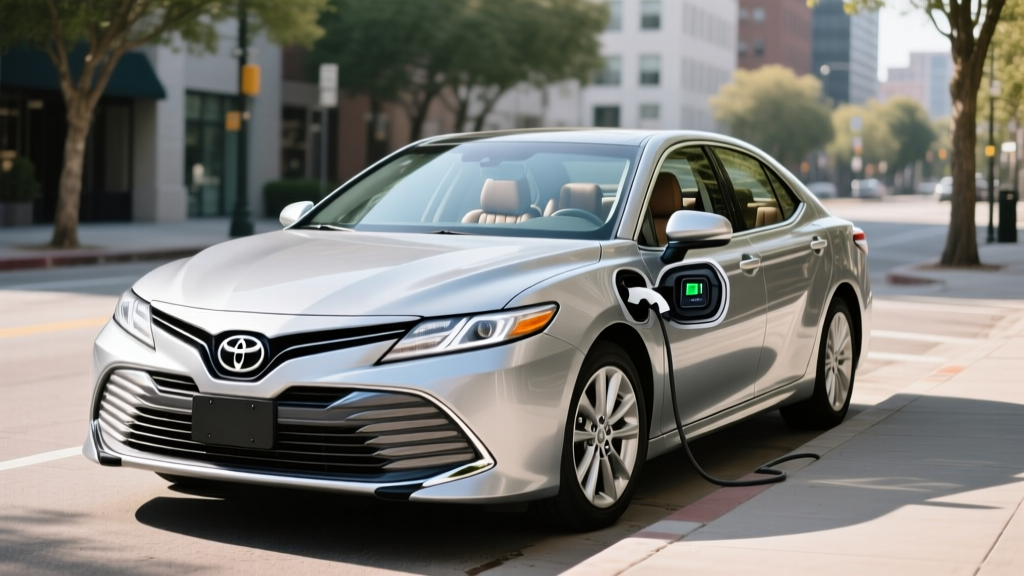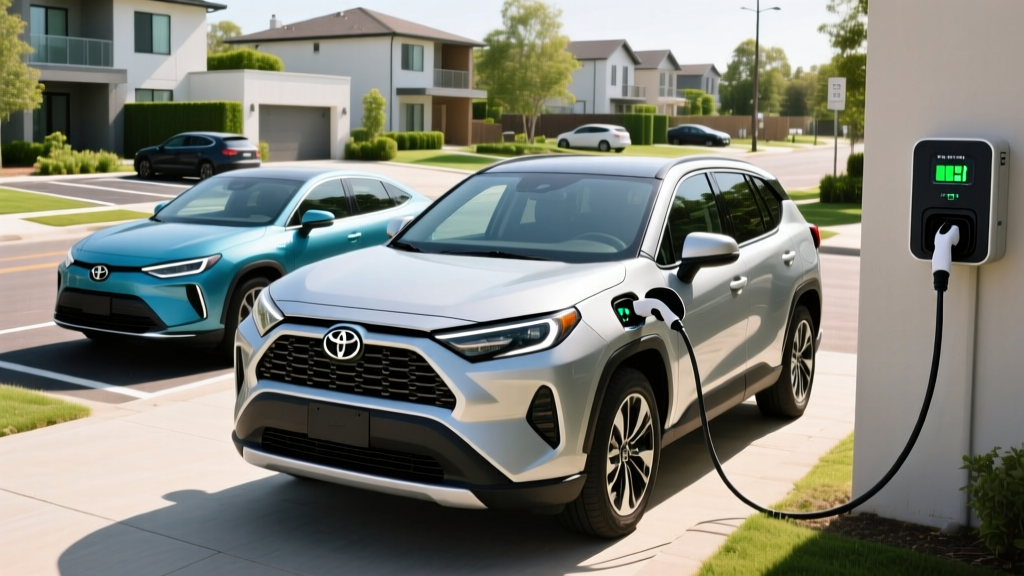
If you've been searching for a Toyota hybrid plug-in vehicle, you're looking at one of the most practical electrified strategies on the market today. Toyota offers two plug-in hybrid electric vehicles (PHEVs) in the 2026 model year: the RAV4 Prime (a compact SUV) and the Prius Prime (a sleek liftback). Both let you drive on pure electricity for daily commutes while keeping a gasoline engine for longer trips — eliminating the range anxiety that keeps some buyers from going fully electric.
But before you visit the dealership, you need the hard numbers: real electric-only range, actual MPG once the battery depletes, charging times, federal tax credit eligibility, and whether a PHEV beats a conventional Toyota hybrid or a full BEV for your specific driving pattern. This guide breaks it all down with EPA data and real-world ownership context.
HEV vs PHEV: What Toyota's Hybrid Lineup Actually Means
Toyota sells two distinct hybrid categories, and confusing them is the most common mistake buyers make:
| Feature | Conventional Hybrid (HEV) | Plug-In Hybrid (PHEV) |
|---|---|---|
| Examples | RAV4 Hybrid, Prius, Camry Hybrid | RAV4 Prime, Prius Prime |
| Plugs into a wall? | No — self-charges via engine & regen | Yes — charges via outlet or station |
| Electric-only driving | Very short, low-speed only (~1 mi) | 25–44 miles at full highway speed |
| Battery size | ~1.0–1.6 kWh (small buffer) | 13.6–18.1 kWh usable |
| Federal tax credit | None (no plug = no §30D credit) | Up to $7,500 (subject to eligibility) |
| Gas engine | Yes — always available | Yes — kicks in after EV range depletes |
| Best for | No home charging access; simple ownership | Home charging + daily commute under 40 mi |
The critical takeaway: conventional Toyota hybrids never need to be plugged in. They recapture energy through regenerative braking and the engine. Plug-in hybrids (the "Prime" models) have a much larger battery that you charge from an external source, giving you meaningful electric-only range before the gas engine takes over.
2026 Toyota RAV4 Prime: Specs, Range & MPG
The RAV4 Prime pairs a 2.5-liter four-cylinder engine with front and rear electric motors for standard all-wheel drive. It remains one of the most powerful RAV4 variants Toyota sells.
| Specification | 2026 RAV4 Prime |
|---|---|
| Combined Horsepower | 302 hp |
| Engine | 2.5L 4-cyl + dual electric motors (AWD-i) |
| Battery Capacity | 18.1 kWh (lithium-ion) |
| EPA Electric-Only Range | 42 miles |
| EPA Combined Range (EV + Gas) | 600 miles |
| EPA MPG (Hybrid Mode, Combined) | 38 MPG |
| EPA MPGe (EV Mode) | 94 MPGe |
| 0–60 mph | 5.7 seconds |
| Level 2 Charge Time (240V, 3.3 kW) | ~5.5 hours (0–100%) |
| Level 2 Charge Time (240V, 6.6 kW option) | ~2.5 hours (0–100%) |
| DC Fast Charging | Not available |
| Starting MSRP | $44,960 (SE trim) |
| Battery Warranty | 10 years / 150,000 miles |
Real-world range note: The EPA's 42-mile EV estimate assumes moderate temperatures and mixed driving. In our experience, expect 35–38 miles of electric range at sustained highway speeds (70+ mph) and in cold weather (below 40°F). City driving with frequent regenerative braking can push you to 44+ miles. Once the battery depletes, the 38 MPG combined hybrid figure is quite achievable — many owners report 40+ MPG in city driving where the hybrid system excels.
2026 Toyota Prius Prime: The Efficiency Leader
Redesigned for the 2023 model year and carried forward into 2026, the Prius Prime shed its dowdy image for a genuinely attractive fastback design with dramatically improved performance.
| Specification | 2026 Prius Prime SE | 2026 Prius Prime XSE/XSE Premium |
|---|---|---|
| Combined Horsepower | 220 hp | 220 hp |
| Engine | 2.0L 4-cyl + electric motor (FWD) | 2.0L 4-cyl + electric motor (FWD) |
| Battery Capacity | 13.6 kWh (lithium-ion) | 13.6 kWh (lithium-ion) |
| EPA Electric-Only Range | 44 miles | 40 miles |
| EPA Combined Range (EV + Gas) | 440+ miles | 410+ miles |
| EPA MPG (Hybrid Mode, Combined) | 52 MPG | 48 MPG |
| EPA MPGe (EV Mode) | 127 MPGe | 114 MPGe |
| 0–60 mph | 6.6 seconds | 6.6 seconds |
| Level 2 Charge Time (240V) | ~4 hours | ~4 hours |
| DC Fast Charging | Not available | Not available |
| Starting MSRP | $33,975 | $37,225 |
| Battery Warranty | 10 years / 150,000 miles | 10 years / 150,000 miles |
The SE trim's lighter weight and smaller wheels give it a 4-mile EV range advantage and 4 MPG better in hybrid mode. According to fueleconomy.gov, the Prius Prime SE's 52 MPG combined in hybrid mode ranks it among the most efficient plug-in vehicles sold in America when the engine is running.
Toyota Hybrid Battery Warranty: What's Covered
All 2026 Toyota hybrids and plug-in hybrids carry a 10-year / 150,000-mile hybrid battery warranty (whichever comes first). This covers battery capacity loss below a defined threshold and defects. Toyota's hybrid batteries have proven remarkably durable — many first-generation Prius batteries lasted 150,000+ miles before significant degradation. A full PHEV battery replacement outside warranty runs approximately $4,000–$6,500 depending on the model, though this is rarely needed within the vehicle's typical ownership life.
Charging a Toyota Plug-In Hybrid: What You Need at Home
Neither the RAV4 Prime nor Prius Prime supports DC fast charging — this is a deliberate design choice, since PHEV batteries are small enough that Level 2 charging is sufficient for overnight replenishment.
| Charging Method | Power | RAV4 Prime Time | Prius Prime Time | Cost to Install |
|---|---|---|---|---|
| Level 1 (120V household outlet) | ~1.4 kW | ~12 hours | ~10 hours | $0 (existing outlet) |
| Level 2 (240V, 3.3 kW onboard) | 3.3 kW | ~5.5 hours | ~4 hours | $500–$1,500 |
| Level 2 (240V, 6.6 kW onboard)* | 6.6 kW | ~2.5 hours | N/A | $500–$1,500 |
*RAV4 Prime XSE trim includes 6.6 kW onboard charger; SE trim has 3.3 kW. Prius Prime uses 3.3 kW onboard.
For most PHEV owners, a standard 120V outlet (Level 1) is adequate. Plug in when you get home from work, and by morning you have a full battery. A dedicated 240V Level 2 home charger is faster and more convenient but isn't strictly necessary the way it is for a full EV with an 80+ kWh battery. Home Level 2 installation typically costs $800–$2,000 total (charger hardware plus electrician labor and permits), depending on whether your electrical panel needs an upgrade.
Federal Tax Credit: Does the Toyota Plug-In Hybrid Qualify?
This is where the math gets specific — and where many buyers get tripped up. Under IRS §30D rules, plug-in hybrids can qualify for up to $7,500 in federal tax credits, but eligibility depends on multiple criteria:
- MSRP cap: SUVs (RAV4 Prime) must be under $80,000; sedans/liftbacks (Prius Prime) under $55,000. Both models qualify on MSRP.
- Buyer income cap: Modified AGI must not exceed $150,000 (single), $225,000 (head of household), or $300,000 (joint filing).
- Battery sourcing: Critical minerals and battery components must meet phased-in domestic/free-trade sourcing thresholds. Toyota's supply chain compliance varies by model year and production batch — always verify with the dealer's VIN-specific credit report at the time of purchase.
- Point-of-sale transfer: As of 2024, you can transfer the credit to the dealer for an immediate price reduction rather than waiting to claim it on your tax return.
Important caveat: Conventional Toyota hybrids (RAV4 Hybrid, standard Prius, Camry Hybrid) do not qualify for the §30D federal credit because they cannot be plugged in. Only the Prime PHEV models are eligible. Always confirm current-year eligibility at irs.gov or with a tax professional before finalizing your purchase.
Toyota PHEV vs Full EV vs Conventional Hybrid: Which Fits You?
Choose a Toyota PHEV (RAV4 Prime or Prius Prime) if:
- Your daily round-trip commute is under 40 miles and you can charge at home overnight
- You want electric daily driving but take road trips where charging infrastructure is sparse
- You live in a cold climate where EV range loss is a real concern (the gas engine eliminates this risk)
- You want one vehicle that handles both school runs on electricity and cross-country drives on gasoline
Choose a Full EV (BEV) if:
- You have reliable home Level 2 charging and your daily driving rarely exceeds 200 miles
- You want zero tailpipe emissions and the lowest per-mile "fuel" cost
- You want minimal maintenance (no oil changes, no engine air filters, no spark plugs)
- DC fast-charging infrastructure is adequate on your common road-trip routes
Choose a Conventional Toyota Hybrid (HEV) if:
- You cannot charge at home (apartment, street parking, no garage outlet)
- You want the simplest ownership experience — no charging cables, no plugs, no apps
- Your budget is tighter (HEVs start $5,000–$10,000 less than their Prime counterparts)
- You still want 45–57 MPG without any behavioral changes
Reliability and Long-Term Ownership Costs
Toyota's hybrid systems are among the most proven in the industry. The company has sold over 25 million hybrid vehicles globally since 1997, and the Hybrid Synergy Drive architecture is well-understood by mechanics nationwide. IIHS has consistently rated the RAV4 and Prius lineups highly for safety.
Key reliability considerations for Toyota PHEVs:
- Hybrid battery longevity: Toyota's nickel-metal hydride and lithium-ion hybrid batteries routinely exceed 150,000 miles. The 10-year/150,000-mile warranty provides substantial coverage.
- Brake pad life: Regenerative braking significantly reduces wear — many owners report 80,000+ miles on original brake pads.
- Engine wear: In a PHEV used primarily in EV mode, the gasoline engine runs far less than in a conventional car, potentially extending its service life.
- Maintenance: You still need oil changes, but intervals can stretch if most driving is electric. Toyota recommends standard hybrid maintenance schedules.
The RAV4 Prime and Prius Prime carry higher insurance premiums than their conventional hybrid siblings due to higher repair costs and MSRP. Expect 10–20% higher annual premiums depending on your state and carrier.
Pros: Toyota Plug-In Hybrids
- 42–44 miles of electric range covers most daily commutes
- No range anxiety — gas engine provides 400–600 miles total range
- Strong acceleration (302 hp RAV4 Prime; 220 hp Prius Prime)
- Up to $7,500 federal tax credit (if eligible)
- Proven Toyota reliability with 10-year battery warranty
- Standard AWD on RAV4 Prime
Cons: Toyota Plug-In Hybrids
- No DC fast charging capability
- Higher MSRP than conventional hybrid equivalents
- RAV4 Prime demand often exceeds supply — dealer markups common
- Smaller cargo area than pure EV counterparts (battery packaging)
- Prius Prime is FWD only — no AWD option
- Tax credit eligibility depends on battery sourcing — not guaranteed
Frequently Asked Questions
How many MPG does the Toyota RAV4 Prime get?
The 2026 RAV4 Prime gets an EPA-rated 38 MPG combined in hybrid mode (after the battery depletes) and 94 MPGe in electric mode. Real-world hybrid-mode MPG often reaches 40+ in city driving thanks to Toyota's regenerative braking system.
How far can the Prius Prime go on electric only?
The 2026 Prius Prime SE achieves 44 miles of EPA-rated electric-only range; the XSE trim gets 40 miles due to heavier wheels and equipment. In real-world cold-weather or highway driving, expect 35–40 miles from the SE.
Does the Toyota RAV4 Prime qualify for the $7,500 tax credit?
It can, but eligibility is not universal. You must meet IRS income caps ($150K single / $300K joint), and the vehicle's battery must meet critical-mineral and component sourcing requirements that vary by production batch. Verify with your dealer's VIN-specific report and irs.gov before purchase.
Is the Toyota hybrid battery expensive to replace?
Outside of the 10-year/150,000-mile warranty, a RAV4 Prime or Prius Prime battery replacement costs approximately $4,000–$6,500 including labor. However, Toyota hybrid batteries have a strong track record of lasting well beyond 150,000 miles, making this a low-probability expense for most owners.
Can I charge a Toyota plug-in hybrid at a public DC fast charger?
No. Neither the RAV4 Prime nor the Prius Prime has DC fast-charging capability. They charge exclusively via Level 1 (120V) or Level 2 (240V) AC charging. This is standard for most PHEVs — the battery is small enough that overnight Level 2 charging fully replenishes it.
Should I get the RAV4 Prime or just the regular RAV4 Hybrid?
If you can charge at home and your daily driving is under 40 miles, the RAV4 Prime saves significantly on fuel and may qualify for a $7,500 tax credit that nearly closes the price gap. If you can't charge at home, the conventional RAV4 Hybrid (40 MPG combined, ~$33,000 starting) is the smarter buy — you'll never use the Prime's electric capability without plugging in.