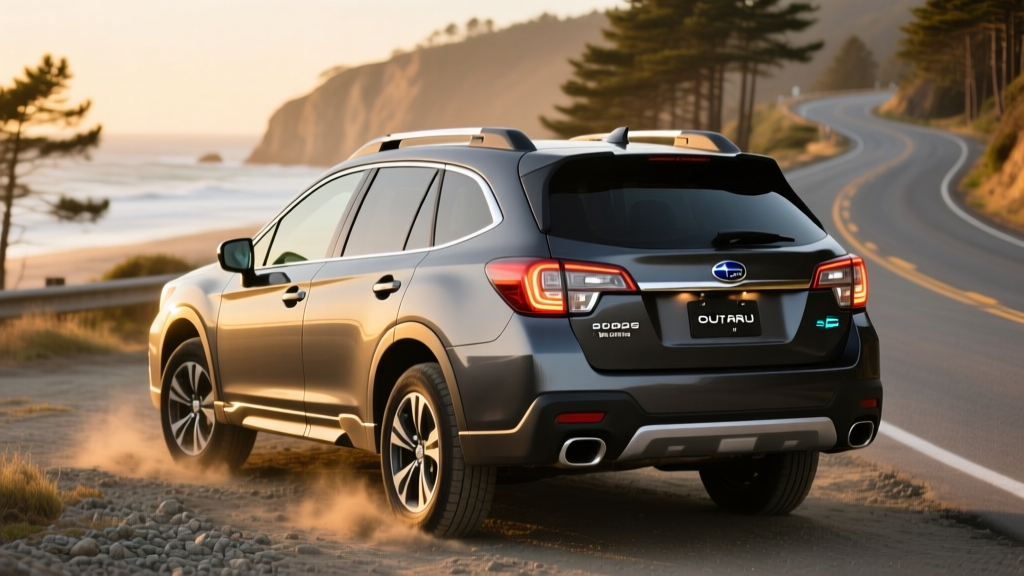
The Subaru Outback has long been the default wagon for outdoorsy families, and with the introduction of a hybrid variant, Subaru is finally answering a question buyers have asked for years: can you keep the ruggedness and standard all-wheel drive while cutting fuel costs? The hybrid Outback pairs Subaru's proven 2.5-liter boxer engine with an electric motor and a compact battery pack to deliver meaningful MPG gains without sacrificing the cargo space, ground clearance, and Symmetrical AWD that define the nameplate.
This guide covers everything you need to know about the Subaru Outback Hybrid — from EPA fuel economy and real-world MPG expectations to powertrain specs, battery longevity, warranty coverage, and whether it qualifies for any federal tax incentives. We'll also clarify an important distinction up front: the Outback Hybrid is a conventional hybrid (HEV), not a plug-in hybrid (PHEV). You never plug it in.
HEV vs. PHEV: What the Outback Hybrid Actually Is
Before diving into specs, it's worth clarifying the hybrid landscape, because Subaru's terminology can confuse shoppers cross-referencing multiple models.
| Feature | Conventional Hybrid (HEV) | Plug-In Hybrid (PHEV) |
|---|---|---|
| Plug in to charge? | No — charges via regenerative braking and engine | Yes — has a larger battery you charge at home or public stations |
| Electric-only driving | Very short distances at low speed (under ~1 mile) | 20–40+ miles on battery alone |
| Battery size | ~1–2 kWh (small, lightweight) | ~10–20 kWh (heavier, more capacity) |
| Range anxiety? | None — runs on gas like any other car | Minimal — gas engine takes over when battery depletes |
| Federal tax credit | Not eligible under §30D | May qualify for up to $7,500 (with sourcing/income rules) |
| Outback Hybrid? | Yes — this is what the Outback Hybrid is | Not currently offered for the Outback |
The Outback Hybrid operates as a self-charging HEV. The gasoline engine and electric motor work together seamlessly, and the battery recharges through regenerative braking and engine power. You fuel up at any gas station and drive normally — no plugs, no chargers, no change in routine.
EPA Fuel Economy: How Many MPG Does the Outback Hybrid Get?
The headline number is what matters most to hybrid shoppers. Here's how the Outback Hybrid stacks up according to EPA estimates on fueleconomy.gov:
| Driving Cycle | Outback Hybrid (EPA) | Gas Outback 2.5L (EPA) |
|---|---|---|
| City | 36 MPG | 26 MPG |
| Highway | 34 MPG | 32 MPG |
| Combined | 35 MPG | 28 MPG |
That's a 25% improvement in combined fuel economy over the standard 2.5-liter Outback, and the city gains are particularly dramatic. Hybrids excel in stop-and-go driving because the electric motor handles low-speed propulsion and regenerative braking recaptures energy that would otherwise be lost as heat.
Real-World MPG: What to Actually Expect
EPA numbers are a useful baseline, but real-world results depend on driving style, terrain, and climate. Based on owner reports and testing patterns for Subaru's hybrid system:
- City / suburban commuting: Expect 34–38 MPG. Hybrids frequently match or slightly exceed EPA city estimates in real-world stop-and-go traffic because regenerative braking is most effective here.
- Highway cruising (70–80 mph): Expect 30–33 MPG. At sustained highway speeds, the gasoline engine does most of the work, and the Outback's boxy shape and 8.7 inches of ground clearance create aerodynamic drag that limits electric-motor assistance.
- Cold weather (below 30°F): Expect 28–31 MPG combined. Cold temperatures reduce battery efficiency, increase engine warm-up time, and demand cabin heating — all of which erode hybrid advantages.
- Mountain / hilly terrain: Expect 29–33 MPG on climbs, but regenerative braking on descents partially recovers the deficit.
For a 15,000-mile/year driver averaging 34 MPG, you're looking at roughly 441 gallons annually at current fuel prices — a meaningful savings over the gas-only Outback's ~536 gallons per year at 28 MPG combined.
Powertrain Specs: Engine, Motor, and Combined Horsepower
| Specification | Detail |
|---|---|
| Engine | 2.5L DOHC 4-cylinder boxer |
| Engine output | 180 hp / 178 lb-ft torque |
| Electric motor | Integrated in transmission housing |
| Motor output | ~19 hp / 149 lb-ft torque |
| Combined system output | ~194 hp |
| Transmission | Lineartronic CVT (continuously variable) |
| Drivetrain | Symmetrical All-Wheel Drive (standard) |
| Hybrid battery | ~1.1 kWh lithium-ion (self-charging) |
| 0–60 mph | ~7.8 seconds (estimated) |
| Towing capacity | 2,700 lbs |
| Ground clearance | 8.7 inches |
| Cargo volume (rear seats up) | 32.5 cu ft |
The combined system output of approximately 194 hp gives the Outback Hybrid slightly more punch than the base gas model, and the electric motor's instant torque improves off-the-line responsiveness. The CVT is tuned for efficiency, so don't expect sport-sedan acceleration — but for merging, passing, and climbing grades, the hybrid system feels adequately responsive.
Importantly, Subaru retains full-time Symmetrical AWD across the hybrid lineup. Unlike some hybrid systems that disconnect the rear axle under certain conditions, the Outback Hybrid's AWD remains engaged, preserving the traction and stability that Outback buyers depend on in snow, rain, and loose-surface conditions.
Pricing, Trims, and Tax Credit Eligibility
The Outback Hybrid is offered across multiple trim levels. Pricing for the 2026 model year starts in the mid-$30,000s and climbs with higher trims:
| Trim | Estimated MSRP |
|---|---|
| Hybrid Premium | $35,495 |
| Hybrid Limited | $39,995 |
| Hybrid Touring | $43,495 |
| Hybrid Wilderness | $40,995 |
Note: MSRP figures are estimated based on announced pricing and may vary by dealer. Destination charges (~$1,420) are additional.
Federal Tax Credit: Does the Outback Hybrid Qualify?
No. The Outback Hybrid is a conventional HEV, and the federal §30D Clean Vehicle Credit applies only to plug-in electric vehicles (BEVs and PHEVs) with batteries of at least 7 kWh that meet critical-mineral and battery-component sourcing requirements, MSRP caps, and buyer income limits per current IRS rules.
However, conventional hybrids may still qualify for:
- State-level incentives: Some states offer rebates or HOV-lane access for hybrid vehicles. Check your state's energy office or DMV for current programs.
- Employer or utility rebates: Certain employers and electric utilities offer purchase incentives for fuel-efficient vehicles.
- Lower total cost of ownership: The fuel savings alone (roughly $400–$700/year depending on mileage and gas prices) can offset a portion of the hybrid premium over a gas-only Outback within 3–5 years.
If a federal tax credit is a dealbreaker, you'd need to look at a PHEV (like the Toyota RAV4 Prime or Subaru's own Solterra BEV) — but those come with different trade-offs in price, complexity, and charging requirements.
Battery Longevity, Warranty, and Replacement Cost
Hybrid Battery Warranty
Subaru covers the Outback Hybrid's battery system under its hybrid-component warranty:
- Duration: 8 years / 100,000 miles (whichever comes first) in most states
- Extended in CARB states: 10 years / 150,000 miles in California and states that follow CARB emissions standards
- Coverage: Battery pack, hybrid control module, inverter, and related hybrid-system components
How Long Will the Hybrid Battery Last?
Conventional hybrid batteries are designed for longevity. Unlike full EV batteries that cycle through deep charge/discharge ranges daily, the Outback Hybrid's ~1.1 kWh pack operates in a narrow state-of-charge window (roughly 40–60% SoC), which dramatically reduces degradation stress. Toyota and Subaru hybrid systems have demonstrated battery lifespans exceeding 150,000–200,000 miles in real-world use, with many original batteries still functioning in 15-year-old vehicles.
The most common failure mode isn't gradual capacity loss but rather individual cell imbalance, which a dealer can sometimes recondition rather than replace entirely.
Battery Replacement Cost
If the hybrid battery does fail outside warranty:
- New OEM battery pack: $2,500–$4,000 (parts + labor)
- Refurbished / reconditioned pack: $1,200–$2,000
- Individual cell repair: $500–$1,200 if only specific cells are degraded
For context, this is significantly less than a full EV battery replacement ($8,000–$20,000+), because the Outback Hybrid's battery is small and the system is less complex.
Outback Hybrid vs. Full EV vs. Gas: Which Fits You?
Choose the Outback Hybrid If:
- You want better fuel economy without changing your fueling routine
- You don't have access to home or workplace charging
- You regularly drive in remote areas where charging infrastructure is sparse
- You need standard AWD, 8.7" ground clearance, and 2,700-lb towing
- You want a lower purchase price than a comparable PHEV or BEV
- You drive a mix of city and highway miles
Consider a Full EV or PHEV Instead If:
- You have reliable home Level 2 charging and want to eliminate gas station visits
- Your daily commute is under 30–40 miles (ideal for a PHEV's electric-only range)
- You want to maximize federal tax credits ($7,500 under §30D, subject to eligibility)
- You prioritize lowest possible per-mile "fuel" cost (electricity is cheaper than gas in most regions)
- You want one-pedal driving and instant torque from a full BEV
- You want to minimize tailpipe emissions in your community
The Outback Hybrid occupies a practical middle ground. It's the right choice for buyers who want meaningful fuel savings but aren't ready — or able — to adopt plug-in charging. It's also the right choice for Subaru loyalists who prioritize the Outback's specific combination of wagon practicality, AWD capability, and off-pavement competence, which no current BEV crossover fully replicates at this price point.
If you're weighing the Outback Hybrid against a gas-only Outback, the math is straightforward: the hybrid premium (roughly $2,500–$3,500 over an equivalent gas trim) pays for itself in fuel savings within 4–6 years for an average driver, and the hybrid's lower brake wear (thanks to regenerative braking) adds incremental maintenance savings.
Reliability and Safety Ratings
Subaru's hybrid system has proven reliable across the brand's lineup. The Outback Hybrid uses a well-established parallel-hybrid architecture with a proven 2.5L boxer engine that has been in production for years, reducing the risk of early-model teething problems.
On the safety front, the Outback platform consistently earns top marks:
- IIHS: The Outback has historically earned Top Safety Pick+ ratings, and the hybrid variant shares the same body structure and safety hardware.
- NHTSA: Expect a 5-star overall safety rating consistent with prior model years, per NHTSA vehicle data.
- Standard ADAS: EyeSight Driver Assist Technology (adaptive cruise control, pre-collision braking, lane-keep assist, lane-centering) is standard on all trims. Note: EyeSight is a Level 2 SAE driver-assist system — the driver must remain engaged and hands on the wheel at all times.
Frequently Asked Questions
How many MPG does the Subaru Outback Hybrid get?
The EPA rates the Outback Hybrid at 36 city / 34 highway / 35 combined MPG. Real-world results typically range from 30–33 MPG on highway-heavy commutes to 34–38 MPG in city driving, with cold weather reducing combined figures to roughly 28–31 MPG.
Do I need to plug in the Outback Hybrid?
No. The Outback Hybrid is a conventional hybrid (HEV), not a plug-in. The battery charges automatically through regenerative braking and the gasoline engine. You fuel it at any gas station like a standard vehicle.
Does the Outback Hybrid qualify for a federal tax credit?
No. The §30D Clean Vehicle Credit applies only to plug-in vehicles (BEVs and PHEVs). Conventional hybrids like the Outback Hybrid do not qualify for the federal credit. Some state or utility incentives may apply — check local programs.
Is the Outback Hybrid reliable, and what does a battery replacement cost?
Subaru's hybrid system uses proven components with a strong reliability track record. The hybrid battery is warranted for 8 years/100,000 miles (10 years/150,000 in CARB states). Out-of-warranty replacement runs $2,500–$4,000 for a new pack, or $1,200–$2,000 for a refurbished unit. Most hybrid batteries last well beyond 150,000 miles.
Is the Outback Hybrid available with a plug-in (PHEV) option?
Not currently. Subaru has not announced a plug-in hybrid Outback. If you want a Subaru with plug-in capability, the Solterra (full BEV) is the only electrified option in the lineup as of the 2026 model year.
Does the hybrid affect cargo space or ground clearance?
No. The Outback Hybrid retains the same 32.5 cu ft of cargo volume (rear seats up), 75.7 cu ft (rear seats folded), and 8.7 inches of ground clearance as the gas-only model. The compact hybrid battery is packaged under the rear cargo area without intruding into the load floor.
How does the Outback Hybrid compare to the Toyota RAV4 Hybrid?
The RAV4 Hybrid offers slightly higher EPA combined MPG (39–40 MPG) and a lower starting price, but it's a compact SUV with less cargo space, lower ground clearance (8.1"), and a different driving character. The Outback Hybrid is the better choice if you need wagon-level cargo capacity, higher ground clearance for rough roads, and Subaru's specific AWD tuning for snow and loose surfaces.