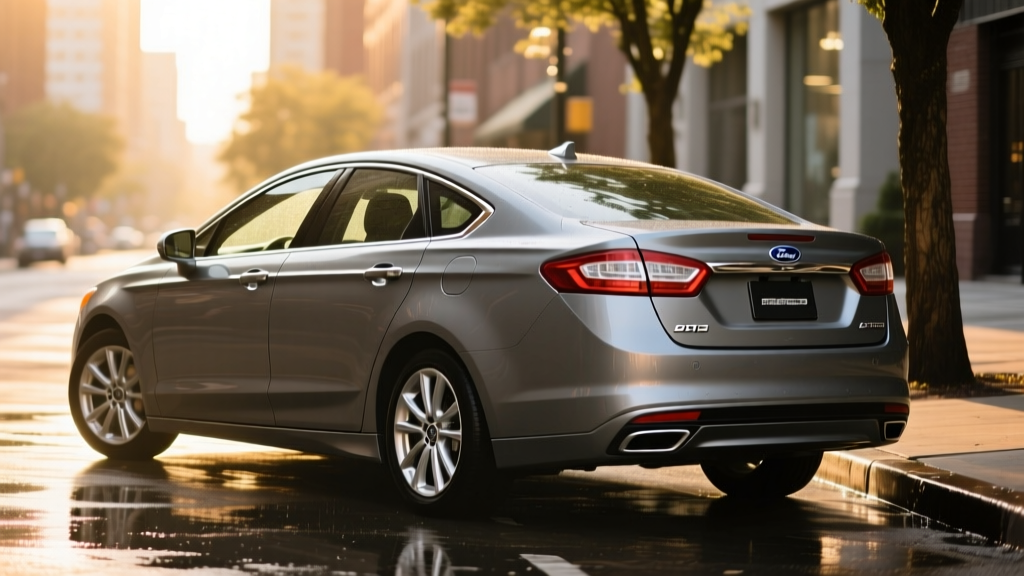
The 2012 Ford Fusion Hybrid sedan occupies a specific niche in the used-car market: it's one of the last midsize hybrids you can pick up for well under $10,000 that still delivers credible fuel economy and a comfortable daily-drive experience. More than a decade after its debut, buyers are still searching for this model — not for cutting-edge tech, but for proven, low-cost hybrid efficiency. Here's everything you need to know about the 2012 Fusion Hybrid, from its real-world MPG to its battery longevity and ownership costs in 2026.
What Exactly Is the 2012 Ford Fusion Hybrid?
The 2012 Fusion Hybrid is a conventional hybrid electric vehicle (HEV) — not a plug-in hybrid (PHEV) and not a battery electric vehicle (BEV). This distinction matters because it fundamentally shapes how you own and fuel the car.
HEV vs. PHEV vs. EV: Where the 2012 Fusion Fits
| Attribute | 2012 Fusion Hybrid (HEV) | Plug-In Hybrid (PHEV) | Battery EV (BEV) |
|---|---|---|---|
| Plug in to charge? | No — charges via regenerative braking and engine | Yes — Level 1 or Level 2 | Yes — Level 1, 2, or DC fast |
| Electric-only driving | Brief, low-speed (under ~47 mph, short distances) | 20–50 miles typically | 200–400+ miles |
| Gasoline engine | Yes — primary power source assisted by electric motor | Yes — kicks in after battery depletes | No engine |
| Fuel needed | Gasoline only | Gasoline + electricity | Electricity only |
| Tailpipe emissions | Yes | Yes (when engine runs) | None |
The Fusion Hybrid uses Ford's second-generation hybrid system (for this model year), pairing a 2.5-liter Atkinson-cycle four-cylinder engine with an electric motor integrated into the transmission. The system does not require — and does not support — plug-in charging. You simply fill it with gasoline and drive. The hybrid battery recharges through regenerative braking and the gasoline engine.
Fuel Economy: EPA Ratings vs. Real-World MPG
This is the main reason anyone buys a 2012 Fusion Hybrid. According to fueleconomy.gov, the EPA rates the 2012 Ford Fusion Hybrid at:
| Driving Cycle | EPA MPG Rating |
|---|---|
| City | 41 MPG |
| Highway | 36 MPG |
| Combined | 39 MPG |
Those were class-leading numbers in 2012, and they remain competitive with many 2026 conventional hybrids. But how do they hold up in the real world?
Real-World MPG Expectations
Hybrids tend to overperform their EPA city ratings because stop-and-go traffic maximizes regenerative braking and electric-motor assist. Conversely, sustained highway driving at 75+ mph favors the gasoline engine and reduces the hybrid advantage. Based on aggregated owner data from Fuelly and real-world testing:
- City driving (mixed stoplights, 25–40 mph): 38–44 MPG — many owners report matching or slightly exceeding the 41 MPG EPA city figure
- Highway driving (65–75 mph): 33–37 MPG — the hybrid system offers less benefit at sustained high speed
- Cold weather (below 35°F): Expect a 5–10% drop, bringing combined figures to roughly 35–37 MPG, as the engine runs more frequently for cabin heat and battery warmup
- Annual fuel cost (2026 estimate): At $3.20/gallon and 12,000 miles/year, you'd spend approximately $985/year on fuel — versus ~$1,600 for a comparable 25 MPG gas-only midsize sedan
The annual fuel savings versus a typical gas midsize sedan sits around $600–$650 per year, which adds up meaningfully on a car that costs $6,000–$9,000 on the used market.
Powertrain and Performance Specs
| Specification | 2012 Ford Fusion Hybrid |
|---|---|
| Engine | 2.5L Atkinson-cycle inline-4 |
| Engine horsepower | 156 HP @ 6,000 RPM |
| Electric motor output | ~105 HP (permanent-magnet AC synchronous) |
| Combined system horsepower | 191 HP (net) |
| Transmission | Electronically controlled CVT (eCVT — planetary gearset, not belt-driven) |
| 0–60 mph | ~8.4 seconds |
| Drivetrain | Front-wheel drive |
| Hybrid battery | Nickel-metal hydride (NiMH), ~1.4 kWh total capacity |
| Fuel tank capacity | 16.5 gallons |
| Total driving range (est.) | ~640 miles (at combined 39 MPG) |
| Curb weight | ~3,720 lbs |
The 191 combined net horsepower is adequate for highway merging and passing. The eCVT is a planetary-gearset design (similar to Toyota's HSD), not a rubber-belt CVT — this matters for long-term reliability, as planetary gearsets have proven extremely durable.
Hybrid Battery Lifespan, Warranty, and Replacement Cost
This is the number-one concern for any used-hybrid buyer. The 2012 Fusion Hybrid uses a nickel-metal hydride (NiMH) battery pack, not a lithium-ion pack. NiMH chemistry is less energy-dense than modern lithium-ion but has a well-documented track record for longevity in hybrid applications.
Original Battery Warranty
When new, Ford covered the hybrid battery under its Hybrid Component Warranty: 8 years / 100,000 miles (10 years / 150,000 miles in California and states that adopted CARB emissions standards). By 2026, virtually all 2012 Fusion Hybrids are past the original factory warranty.
Real-World Battery Longevity
NiMH hybrid batteries in vehicles like the Fusion Hybrid and Toyota Prius routinely last 150,000–200,000+ miles before significant capacity loss. Unlike BEV batteries, the hybrid battery is relatively small (~1.4 kWh) and operates in a narrow state-of-charge window (roughly 40–80% SoC), which greatly reduces degradation stress. The battery management system never allows full charge or full discharge.
That said, at 14 years old, some 2012 Fusion Hybrids will be on their original batteries with 120,000+ miles, and capacity loss of 10–20% is possible. Symptoms of a degrading hybrid battery include:
- Reduced electric-only low-speed driving
- Engine cycling on and off more frequently
- Slightly lower city MPG (e.g., dropping from 40 to 35–36)
- Hybrid system warning light on the dash
Battery Replacement Cost (2026)
| Option | Cost Range | Notes |
|---|---|---|
| New OEM battery (Ford dealer) | $3,000–$4,500 | Includes labor; restores full performance |
| Remanufactured battery (aftermarket) | $1,500–$2,500 | Common option for older vehicles; 1–3 year warranty typical |
| Used/salvage battery | $500–$1,200 | Risky — unknown remaining life; no warranty |
| Individual cell/module replacement | $800–$1,500 | Specialized hybrid shops can replace only failed modules |
For a car worth $6,000–$9,000, a $2,000 remanufactured battery is the most common economic choice. The replacement is straightforward — the pack sits in the trunk area and can be swapped in 2–3 hours by a qualified hybrid technician.
Pricing and Tax Credit Eligibility in 2026
Used Market Pricing
As of early 2026, the 2012 Ford Fusion Hybrid trades on the used market in the following range:
- 80,000–100,000 miles, good condition: $7,500–$9,500
- 100,000–140,000 miles, average condition: $5,500–$7,500
- 140,000+ miles or cosmetic issues: $3,500–$5,500
Tax Credit Eligibility
The 2012 Ford Fusion Hybrid does not qualify for the federal §30D new clean vehicle credit — that credit applies only to new vehicle purchases. However, the Used Clean Vehicle Credit (§25E) may apply, but with important caveats:
- The §25E credit applies to plug-in EVs and fuel cell vehicles — conventional hybrids like the Fusion Hybrid are not eligible
- The credit covers 30% of the sale price up to $4,000, but only for qualified used plug-in electric vehicles with a battery capacity of at least 7 kWh
- The Fusion Hybrid's ~1.4 kWh NiMH battery does not meet the threshold
Bottom line: No federal tax credit is available for the 2012 Fusion Hybrid in 2026, whether new or used. Some states may offer inspection-emissions exemptions for hybrids, but no direct purchase incentive applies. Always verify current rules at IRS.gov.
Reliability, Safety, and Ownership Costs
Overall Reliability
The 2012 Fusion Hybrid earned an above-average reliability reputation in its generation. The eCVT planetary-gearset transmission is essentially bulletproof — there are no belts, clutches, or friction bands to wear out. The 2.5L Atkinson-cycle engine is under-stressed and long-lived. Common non-hybrid issues on this model year include:
- Power steering assist faults (electric power steering module — a known recall item; verify it was addressed)
- Automatic transmission shudder on non-hybrid models (not applicable to the hybrid eCVT)
- Interior wear: dashboard cracking, seat bolster wear at high mileage
- A/C blend door actuator failures (a $300–$500 repair)
Safety Ratings
The 2012 Fusion received a 5-star overall safety rating from NHTSA and was an IIHS Top Safety Pick with Good ratings in all crash-test categories. Standard safety equipment includes front, side, and curtain airbags, stability control, and anti-lock brakes. It does not include modern ADAS features like automatic emergency braking or lane-keeping assist — those were not common in 2012.
Estimated Annual Ownership Costs
| Cost Category | Estimated Annual Cost |
|---|---|
| Fuel (12,000 mi/yr @ 39 MPG) | ~$985 |
| Insurance (national avg.) | $900–$1,300 |
| Maintenance (oil, brakes, tires) | $400–$600 |
| Depreciation | Minimal ($300–$500/yr at this age) |
| Total estimated annual cost | $2,600–$3,400 |
Brake wear is notably low on the Fusion Hybrid thanks to regenerative braking — many owners report original brake pads lasting 80,000–100,000 miles. Oil changes are standard every 5,000–7,500 miles with conventional or synthetic blend oil.
Who Should Buy the 2012 Fusion Hybrid in 2026?
Pros
- Strong real-world city MPG (38–44) that rivals 2026 hybrids
- Low purchase price ($5,500–$9,000) with minimal depreciation remaining
- Comfortable midsize cabin with generous rear-seat legroom
- Proven, durable eCVT powertrain with no belt or clutch wear items
- Low brake wear thanks to regen
- No plug-in requirement — fuel it like any gas car
Cons
- No electric-only highway driving — it's a hybrid, not a PHEV
- Dated infotainment (SYNC 1, no Apple CarPlay/Android Auto without aftermarket head unit)
- No modern ADAS (no AEB, no lane-keep, no adaptive cruise)
- Hybrid battery is 14+ years old — budget $1,500–$2,500 for potential replacement
- No federal tax credit eligibility
- Trunk space reduced by battery pack placement (~11.8 cu ft vs. 16.5 in gas model)
The Decision Framework
Choose the 2012 Fusion Hybrid if: You want a cheap, fuel-efficient daily driver under $10K, primarily drive in city or suburban conditions, don't want to deal with plug-in charging, and can budget for a potential battery replacement.
Choose a newer PHEV (e.g., 2020+ Toyota RAV4 Prime, Ford Escape PHEV) if: You have home charging access, want 30–40 miles of electric-only commuting, and want modern safety tech — but expect to pay $20,000–$35,000+ used.
Choose a full BEV (e.g., Chevrolet Bolt EV, used Tesla Model 3) if: You want zero tailpipe emissions, have reliable home or workplace charging, and are ready to plan around DC fast charging for road trips — starting around $12,000–$25,000 used.
Choose a gas-only midsize sedan if: You drive primarily long highway miles (where the hybrid advantage shrinks), want the lowest possible purchase price, and don't mind spending $600+ more per year on fuel.
Frequently Asked Questions
How many MPG does the 2012 Ford Fusion Hybrid get?
The EPA rates it at 41 city / 36 highway / 39 combined MPG. Real-world owners typically see 38–44 MPG in city driving and 33–37 MPG on the highway, with cold weather reducing combined figures to roughly 35–37 MPG.
Does the 2012 Fusion Hybrid need to be plugged in?
No. This is a conventional hybrid (HEV), not a plug-in hybrid. The battery recharges automatically through regenerative braking and the gasoline engine. You never plug it in — you just fill it with gas.
How far can it drive on electric power alone?
The 2012 Fusion Hybrid can operate on electric-only power at low speeds (up to approximately 47 mph) for very short distances — typically under 1–2 miles on a full battery charge. This is not a meaningful electric-only range for commuting; the electric motor primarily assists the gas engine to improve fuel economy, not to replace it.
Is the 2012 Fusion Hybrid reliable?
Yes, it has a strong reliability record. The eCVT planetary-gearset transmission is extremely durable, and the 2.5L Atkinson-cycle engine is under-stressed. The main age-related concern is the NiMH hybrid battery, which may need replacement after 150,000+ miles or 14+ years of service.
What does a replacement hybrid battery cost?
Expect $3,000–$4,500 for a new OEM battery at a Ford dealer, or $1,500–$2,500 for a remanufactured unit from an aftermarket supplier. Individual module replacement at a hybrid specialist shop can cost $800–$1,500 if only a few cells have failed.
Does it qualify for any federal tax credit in 2026?
No. The §30D new clean vehicle credit only applies to new purchases, and the §25E used clean vehicle credit only applies to plug-in electric vehicles with at least 7 kWh of battery capacity. The Fusion Hybrid's ~1.4 kWh NiMH battery does not qualify. Consult IRS.gov for current rules.
How does it compare to a Toyota Camry Hybrid of the same era?
The 2012 Camry Hybrid is rated at 41 city / 38 highway / 40 combined — marginally better on the highway. Both use proven planetary-gearset eCVTs and NiMH batteries. The Fusion Hybrid offers slightly more horsepower (191 vs. 200 net for the Camry) and a sportier driving feel, while the Camry Hybrid has a stronger long-term parts ecosystem. Either is a solid used-hybrid choice.