The Kia Niro has occupied a unique lane in the compact crossover segment since its debut: a dedicated hybrid platform that doesn't try to look like one. For 2026, Kia continues to offer the Niro in two electrified flavors — the conventional hybrid (HEV) and the plug-in hybrid (PHEV) — each targeting a different buyer with different charging access and driving habits. If you've been searching for Kia Niro hybrid cars, this guide breaks down every number that matters: EPA MPG, electric-only range, battery capacity, pricing, tax-credit eligibility, and the real-world ownership picture that spec sheets leave out.
HEV vs PHEV: What's the Actual Difference in the Niro Lineup?
Kia Niro Hybrid (HEV): A self-charging system. The 1.6L engine and electric motor work together, recapturing energy through regenerative braking. You never plug it in. The small 1.56 kWh battery is charged entirely by the engine and regen.
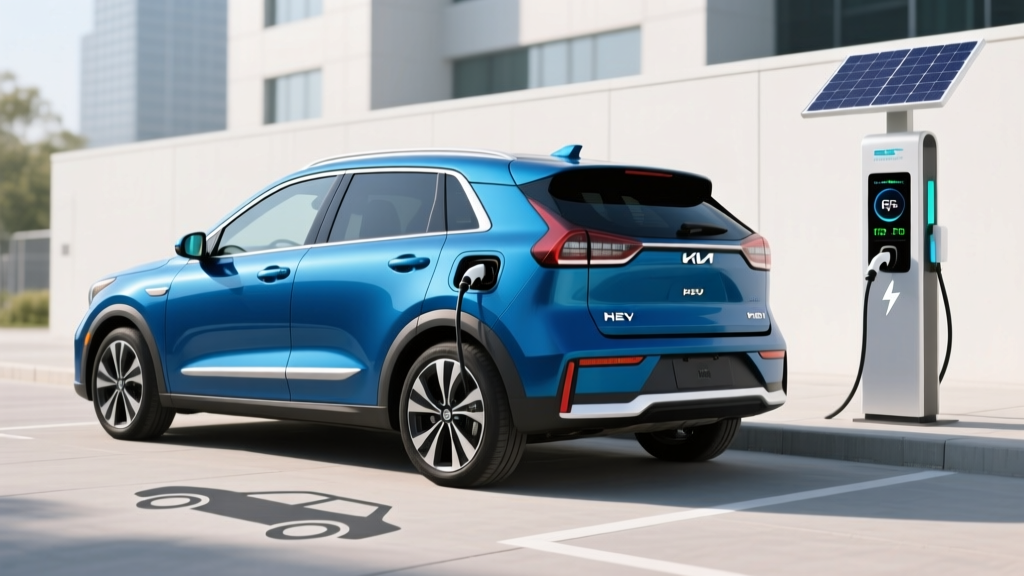
Kia Niro Plug-In Hybrid (PHEV): A larger 11.1 kWh battery that you can plug in at home or at a public charger. It delivers a meaningful electric-only driving range before the gas engine kicks in. Think of it as a short-range EV that carries a gas engine as a backup generator.
The distinction matters enormously for your wallet and daily routine. The HEV is simpler and cheaper upfront. The PHEV rewards owners who can charge at home with dramatically lower fuel costs on daily commutes — but it costs more to buy and only makes financial sense if you actually plug it in regularly.
| Attribute | 2026 Niro HEV | 2026 Niro PHEV |
|---|---|---|
| Powertrain | 1.6L GDI 4-cyl + 32 kW electric motor | 1.6L GDI 4-cyl + 62 kW electric motor |
| Combined Horsepower | 139 hp | 180 hp |
| Battery Capacity | 1.56 kWh (lithium-ion) | 11.1 kWh (lithium-ion) |
| Plug-In Required? | No — self-charging | Yes — for EV range benefit |
| Transmission | 6-speed dual-clutch (DCT) | 6-speed dual-clutch (DCT) |
| Drivetrain | FWD | FWD |
| 0–60 mph | ~9.3 sec | ~7.4 sec |
Fuel Economy: EPA MPG for Every 2026 Niro Hybrid Trim
The headline number for the Niro HEV is its EPA-estimated 53 MPG combined on the FE (Fuel Economy) trim — one of the highest figures in any non-plug-in crossover on the market. Higher trims with larger wheels and additional equipment drop slightly. The PHEV is rated in MPGe during electric operation and conventional MPG once the battery is depleted.
| Model / Trim | City MPG | Highway MPG | Combined MPG | MPGe (PHEV EV Mode) |
|---|---|---|---|---|
| Niro HEV FE | 53 | 54 | 53 | N/A |
| Niro HEV LX / EX / SX | 49 | 52 | 50 | N/A |
| Niro PHEV (all trims) | 48 (gas only) | 45 (gas only) | 46 (gas only) | 108 MPGe |
Source: EPA Fuel Economy
Real-World MPG: What to Actually Expect
Hybrids typically exceed their EPA city estimates in stop-and-go traffic because regenerative braking recovers energy that a gas car wastes as heat. In our experience and owner-reported data, the Niro HEV FE regularly delivers 50–56 MPG in mixed city driving. Highway driving at sustained 70–75 mph speeds tends to land closer to 46–50 MPG because the electric motor assists less at constant velocity.
Cold weather (below 35°F) reduces MPG by roughly 8–12% due to increased engine idling for cabin heat and reduced battery efficiency. If your commute is mostly highway in winter, plan on mid-to-upper 40s rather than low 50s.
PHEV Electric-Only Range and Total Range
The 2026 Niro PHEV carries an 11.1 kWh battery (approximately 9.0 kWh usable to protect longevity) and delivers an EPA-estimated 33 miles of electric-only range. That covers most daily commutes and errands without the engine ever starting — provided you charge at home overnight.
Once the battery depletes, the PHEV operates as a conventional hybrid, returning approximately 46 MPG combined. With a 11.1-gallon fuel tank, total combined range (EV + gas) reaches roughly 540 miles — eliminating range anxiety entirely on road trips.
PHEV Range Summary:
Electric-only: 33 miles (EPA) · Real-world: 28–35 miles depending on temperature and speed
Gas-only range after depletion: ~500 miles
Total combined range: ~540 miles
Charging the Niro PHEV: Times and Limitations
The Niro PHEV uses a standard J1772 connector for Level 1 and Level 2 AC charging. It does not support DC fast charging — a common limitation among compact PHEVs due to battery size and cost constraints.
| Charging Level | Power | Time (0–100%) | Where |
|---|---|---|---|
| Level 1 (120V household) | ~1.4 kW | ~7–8 hours | Any standard outlet |
| Level 2 (240V home/public) | ~3.3 kW (onboard limit) | ~2.5–3 hours | Home wallbox, public AC stations |
| DC Fast Charging | Not supported | N/A | N/A |
The 3.3 kW onboard charger is the bottleneck here — even if you plug into a 7.2 kW Level 2 station, the car will only accept 3.3 kW. For overnight home charging this is perfectly adequate. A standard 120V outlet adds roughly 4–5 miles of EV range per hour of charging, which may suffice for light drivers.
2026 Pricing and Federal Tax Credit Eligibility
The Niro lineup remains one of the most affordable ways into an electrified vehicle. Here's where the trims land for the 2026 model year:
| Trim | MSRP (est.) | Powertrain |
|---|---|---|
| Niro HEV LX | $28,390 | Hybrid |
| Niro HEV EX | $30,090 | Hybrid |
| Niro HEV SX Touring | $34,690 | Hybrid |
| Niro PHEV LX | $35,790 | Plug-In Hybrid |
| Niro PHEV EX | $37,490 | Plug-In Hybrid |
| Niro PHEV SX Touring | $40,190 | Plug-In Hybrid |
Does the Niro Qualify for a Federal Tax Credit?
This is where the HEV and PHEV diverge sharply:
- Niro HEV: Does not qualify for the federal §30D Clean Vehicle Credit. Conventional hybrids are ineligible — the credit applies only to plug-in vehicles with sufficient battery capacity.
- Niro PHEV: May qualify for up to $7,500 under §30D, but eligibility depends on multiple factors that change frequently: battery critical-mineral sourcing, buyer income caps ($150K single / $300K joint AGI), MSRP caps ($80,000 for SUVs), and final assembly in North America. As of the 2026 tax year, the Niro PHEV's final assembly location and battery sourcing determine eligibility — and these details shift as Kia adjusts supply chains.
The PHEV credit can now be transferred to the dealer at point of sale under current IRS rules, effectively reducing your purchase price rather than waiting for a tax refund. Always verify current eligibility on the IRS qualified vehicles list before purchasing, and consult a tax professional for your specific situation.
Many states also offer additional rebates for PHEVs (California's CVRP, for instance), but these vary by jurisdiction and funding availability — check your state energy office for current programs.
Battery Warranty, Reliability, and Replacement Costs
Kia Hybrid/PHEV Battery Warranty:
10 years / 100,000 miles (whichever comes first) on the high-voltage battery pack and hybrid-specific components including the electric motor and inverter.
Applies to original owner; transfers to 5 years/60,000 miles for subsequent owners in most states.
Kia's hybrid system is mature technology at this point — the Niro has used variations of this powertrain since 2017. The 1.6L Atkinson-cycle engine is low-stress, and the dual-clutch transmission, while occasionally criticized for low-speed hesitation in early model years, has been refined through software updates.
For battery longevity, the Niro HEV's tiny 1.56 kWh pack undergoes shallow charge-discharge cycles (typically operating between 40–60% state of charge), which is extremely gentle on lithium-ion cells. The PHEV's larger 11.1 kWh pack has more robust thermal management and a generous buffer zone to prevent deep cycling.
Out-of-warranty replacement cost: If the high-voltage battery fails after the warranty period, expect a replacement cost of approximately $2,500–$3,500 for the HEV and $5,000–$7,500 for the PHEV, including parts and labor. However, hybrid battery failures before 150,000 miles remain uncommon based on industry failure-rate data. Many owners report well over 200,000 miles on the original pack.
The conventional 12V auxiliary battery (which powers electronics and starts the system) is a separate maintenance item and typically needs replacement every 4–6 years at $200–$350, same as any vehicle.
Who Should Buy the Niro HEV vs PHEV vs a Full EV?
Choose the Niro HEV if:
- You have no access to home or workplace charging
- You want maximum simplicity — no plugs, no cables, no apps
- Your budget is under $30,000 and you want the best MPG for the dollar
- You drive a mix of city and highway with no predictable short-commute pattern
Choose the Niro PHEV if:
- You can install a Level 2 charger at home (or have reliable workplace charging)
- Your daily round-trip commute is under 35 miles — you'll rarely use gas on weekdays
- You want EV-like daily driving but need gas flexibility for road trips
- You may qualify for the federal tax credit, effectively narrowing the price gap with the HEV
Choose a full EV (like the Kia Niro EV or EV6) if:
- You have reliable home Level 2 charging
- Your daily driving is under 200 miles and you road-trip fewer than 5 times a year
- You want zero tailpipe emissions and minimal maintenance (no oil changes, no spark plugs)
- You qualify for the full $7,500 federal credit, bringing EV pricing competitive with the PHEV
Pros and Cons: The Honest Scorecard
Pros
- Class-leading 53 MPG combined (HEV FE) in a practical crossover body
- PHEV's 33-mile EV range covers most daily commutes entirely on electricity
- 10-year/100,000-mile hybrid battery warranty — among the best in the industry
- Comfortable ride quality, spacious rear seat for the segment, usable cargo area (22.8 cu ft behind rear seats)
- Standard advanced driver-assistance features (forward collision-avoidance, lane-keeping, adaptive cruise)
- PHEV qualifies for potential $7,500 federal credit (verify current IRS eligibility)
Cons
- FWD only — no AWD option limits appeal in snowy climates
- PHEV does not support DC fast charging; 3.3 kW onboard charger is slow for public Level 2
- 9.3-second 0–60 time on the HEV feels sluggish for highway merging
- DCT can exhibit low-speed hesitation in stop-and-go traffic
- No federal tax credit for the conventional HEV
- Top PHEV SX Touring trim pushes past $40,000, encroaching on full-EV territory
Frequently Asked Questions
How many MPG does the Kia Niro hybrid get in real-world driving?
The Niro HEV FE is EPA-rated at 53 MPG combined (53 city / 54 highway). In real-world mixed driving, owners typically report 48–55 MPG depending on conditions. City-heavy routes with frequent stops actually improve hybrid efficiency thanks to regenerative braking. Sustained highway driving at 75+ mph and cold weather reduce MPG to the mid-to-upper 40s.
How far can the Niro PHEV go on electric only?
The EPA rates the 2026 Niro PHEV at 33 miles of electric-only range. Real-world results range from about 28 miles (cold weather, highway speeds, climate control running) to 35 miles (mild weather, city driving under 45 mph). For most commuters with a sub-30-mile round trip, this means near-zero gasoline use on weekdays if you charge nightly.
Is the Kia Niro hybrid reliable?
The Niro's hybrid powertrain is well-proven, sharing architecture with the Hyundai Ioniq and Kia's own hybrid systems dating to 2017. The 10-year/100,000-mile warranty on the high-voltage battery and hybrid components provides substantial protection. Third-party reliability surveys generally rate the Niro at or above average for the compact crossover segment. The primary complaints in earlier model years centered on DCT low-speed behavior, which Kia has addressed through transmission software revisions.
What does it cost to replace the hybrid battery?
Out-of-warranty replacement runs approximately $2,500–$3,500 for the HEV and $5,000–$7,500 for the PHEV. However, premature hybrid battery failure is rare — most packs last well beyond 150,000 miles given the shallow cycling strategy Kia employs. The 10-year/100,000-mile warranty covers defects and capacity loss below a defined threshold for the original owner.
Does the Kia Niro hybrid qualify for any tax credit?
The conventional Niro HEV does not qualify for the federal §30D Clean Vehicle Credit — it applies only to plug-in vehicles. The Niro PHEV may qualify for up to $7,500 depending on current-year battery sourcing requirements, buyer income limits, MSRP caps, and North American final assembly rules. The credit can be transferred at the point of sale as an instant rebate. Check the IRS qualified clean vehicles list before purchasing, as eligibility can change with supply-chain updates.
Do I need to plug in the Niro hybrid?
No — the conventional Niro HEV never needs to be plugged in. It charges its small battery through the engine and regenerative braking. Only the Niro PHEV benefits from plugging in. If you buy the PHEV and never plug it in, you're carrying extra battery weight for nothing and would have been better served by the cheaper HEV.
Is the Niro available with all-wheel drive?
No. Both the Niro HEV and PHEV are front-wheel drive only for 2026. If AWD is a priority, you'll need to look at competitors like the Toyota RAV4 Hybrid (AWD standard) or the Hyundai Tucson Hybrid, though both are larger and slightly less fuel-efficient.