The 2026 Land Rover Hybrid SUV Lineup at a Glance
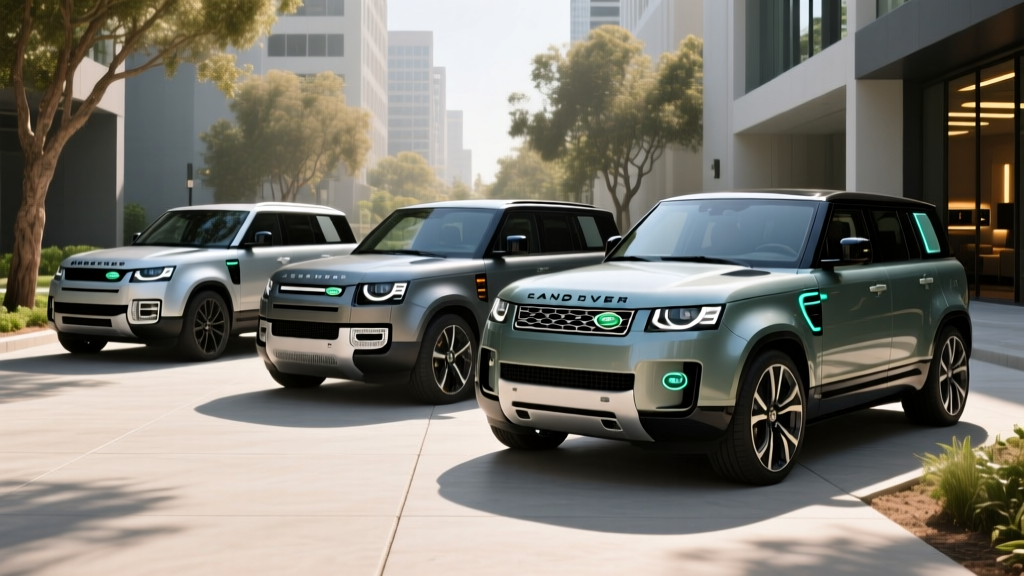
If you're shopping for a Land Rover hybrid SUV, you're navigating a brand that has gone all-in on plug-in hybrid (PHEV) technology while quietly retiring its conventional hybrid (HEV) offerings. For the 2026 model year, Land Rover sells three PHEV models in the United States: the Range Rover PHEV, the Range Rover Sport PHEV, and the Defender 110 PHEV (badged P400e). None of these are self-charging hybrids — every one requires a plug to unlock its electric-only driving capability.
This guide breaks down each model's EPA-verified electric range, combined MPG, battery specs, powertrain output, pricing, and whether any qualify for federal tax incentives under current IRS §30D rules.
HEV vs. PHEV — What Land Rover Buyers Need to Know
Conventional Hybrid (HEV): Uses a small battery recharged by regenerative braking and the engine. No plug. Typically delivers 20–35 MPG combined. Land Rover discontinued its mild-hybrid (MHEV) inline-six models for the U.S. market after 2024.
Plug-in Hybrid (PHEV): Pairs a larger battery (19–38 kWh usable) with an electric motor and gas engine. Plugs into a wall or charger for 20–51 miles of electric-only range, then operates as a hybrid. This is where Land Rover has invested its engineering.
Spec Comparison: Every 2026 Land Rover PHEV
| Spec | Range Rover P550e PHEV | Range Rover Sport PHEV | Defender 110 P400e |
|---|---|---|---|
| Powertrain | 3.0L I6 turbo + 160 kW motor | 3.0L I6 turbo + 160 kW motor | 3.0L I6 turbo + 105 kW motor |
| Combined HP | 542 hp | 542 hp | 404 hp |
| Battery (usable) | 38.2 kWh (NMC) | 38.2 kWh (NMC) | 19.2 kWh (NMC) |
| EPA Electric Range | 51 mi | 48 mi | 26 mi |
| EPA Combined MPG (hybrid mode) | 22 MPG | 23 MPG | 20 MPG |
| 0–60 mph | 4.8 sec | 4.7 sec | 5.6 sec |
| Level 2 Charge Time (0–100%) | ~5 hr (7.2 kW onboard) | ~5 hr (7.2 kW onboard) | ~2.5 hr (7.2 kW onboard) |
| DC Fast Charging | No | No | No |
| Starting MSRP | $127,500 | $101,500 | $78,000 |
Sources: fueleconomy.gov (EPA), Land Rover USA spec sheets. Real-world electric range may drop to 35–42 mi on the Range Rover in cold weather or sustained highway driving above 70 mph.
Electric-Only Range: How Far Can You Drive Without Gas?
The headline figure for the 2026 Range Rover P550e PHEV is 51 miles of EPA-rated electric-only range — enough to cover most daily commutes without burning a drop of gasoline. The Range Rover Sport PHEV delivers 48 miles, while the Defender 110 P400e manages 26 miles on its smaller 19.2 kWh pack.
Real-World Range Reality Check
EPA electric-range tests include a mix of city and highway driving at moderate temperatures. Expect the following in practice:
- City/suburban, 50–75°F: Range Rover PHEV may achieve 48–53 mi — close to or slightly above EPA.
- Highway, 75 mph sustained: Expect 38–44 mi; aerodynamic drag drains the battery faster.
- Cold weather (below 32°F): Range drops 25–35%, yielding roughly 33–38 mi for the Range Rover and 18–20 mi for the Defender. Battery chemistry (NMC) is less tolerant of cold than LFP.
Fuel Economy: EPA MPG and Real-World Expectations
Once the battery is depleted, these PHEVs operate as conventional hybrids. Here's how they stack up on fueleconomy.gov:
| Model | City MPG | Highway MPG | Combined MPG | MPGe (charge-sustaining) |
|---|---|---|---|---|
| Range Rover P550e PHEV | 21 | 24 | 22 | 42 MPGe |
| Range Rover Sport PHEV | 22 | 25 | 23 | 44 MPGe |
| Defender 110 P400e | 19 | 22 | 20 | 38 MPGe |
Real-world MPG note: PHEVs behave differently from conventional hybrids. If you charge nightly and drive under 50 miles per day, you may use almost no gasoline for months. But on long road trips with a depleted battery, these are heavy luxury SUVs — expect 18–21 MPG combined in real-world highway driving, slightly below EPA. The Defender's boxy aerodynamics hit especially hard above 70 mph.
Charging: Level 2 Only, No DC Fast Charging
All three Land Rover PHEVs use a J1772 connector for AC charging and max out at 7.2 kW onboard. None support DC fast charging — a notable omission for a luxury brand in 2026, though typical for PHEVs with sub-40 kWh batteries.
| Charging Level | Power | Range Rover (38.2 kWh) Time | Defender (19.2 kWh) Time |
|---|---|---|---|
| Level 1 (120V outlet) | ~1.4 kW | ~27 hours | ~14 hours |
| Level 2 (240V, 32A) | 7.2 kW (max) | ~5 hours | ~2.5 hours |
| DC Fast Charge | N/A | Not supported | Not supported |
Practical takeaway: A Level 2 home charger is essentially mandatory. Level 1 from a standard 120V outlet is too slow to fully recharge the Range Rover's 38.2 kWh pack overnight. Budget $500–$1,200 for a quality Level 2 wallbox (ChargePoint Home Flex or Emporia Vue) and $800–$2,500 for professional installation depending on your electrical panel. Consult a licensed electrician for a final quote.
Battery Longevity, Warranty, and Replacement Cost
Land Rover PHEV Battery Warranty
- High-voltage battery warranty: 8 years / 62,000 miles (whichever comes first)
- Capacity retention threshold: Land Rover warrants the battery against defects and excessive capacity loss. If the battery drops below approximately 70% of original capacity during the warranty period, Land Rover will repair or replace it.
- Powertrain warranty: 4 years / 50,000 miles
- New-vehicle limited warranty: 4 years / 50,000 miles
Is a Land Rover PHEV reliable? Land Rover's historical reliability ratings from J.D. Power and Consumer Reports rank below average among luxury brands. The PHEV powertrain adds complexity — an electric motor, high-voltage cabling, and a larger battery on top of the conventional drivetrain. However, the NMC battery chemistry in these models is well-proven in the industry, and the 8-year warranty provides a meaningful safety net.
Battery replacement cost: Out of warranty, a full high-voltage battery replacement for the 38.2 kWh pack (Range Rover/Sport) is estimated at $12,000–$18,000 including labor. The Defender's smaller 19.2 kWh pack would cost approximately $7,000–$11,000. These are dealer-estimated figures and may vary. Most owners will never need a full replacement, as NMC packs typically retain 80–85% capacity after 100,000 miles under normal use.
Pricing, Trims, and Federal Tax Credit Eligibility
Land Rover PHEVs sit in the luxury tier, and pricing reflects that:
- Defender 110 P400e: Starting at ~$78,000 (base P400e trim)
- Range Rover Sport PHEV: Starting at ~$101,500 (Autobiography trim)
- Range Rover P550e PHEV: Starting at ~$127,500 (SE trim)
Do Land Rover PHEVs Qualify for the Federal §30D Tax Credit?
Under current 2026 IRS rules (irs.gov), new clean vehicle credits require meeting all of the following:
- ✅ Vehicle type: PHEVs qualify if they have ≥4 kWh battery and ≥2,500 lb GVWR — all Land Rover PHEVs meet this.
- ❌ MSRP cap: SUVs must be under $80,000. Only the base Defender 110 P400e at ~$78,000 may qualify — and only if equipped without options that push MSRP above $80,000.
- ❌ Battery sourcing / critical minerals: The battery must meet phased-in percentages of U.S.-sourced or FTA-partner-sourced critical minerals and battery components. Land Rover batteries are primarily sourced from supply chains that do not currently meet the critical-minerals threshold for the full $7,500 credit.
- ❌ Buyer income cap: AGI must not exceed $300,000 (joint) / $150,000 (single).
- ❌ Final assembly: Must occur in North America. Range Rover and Range Rover Sport PHEVs are assembled in Solihull, UK — disqualifying them. The Defender is assembled in Nitra, Slovakia — also disqualifying.
Bottom line: As of 2026, no Land Rover PHEV qualifies for the federal §30D new clean vehicle tax credit due to non-North-American assembly and battery sourcing requirements. Some states (California, Colorado, New York, etc.) may offer separate rebates — check your state's energy office or the AFDC state incentives database for details. Consult a tax professional for personal eligibility.
Who Should Buy a Land Rover Hybrid SUV — And Who Shouldn't
Choose a Land Rover PHEV If:
- You want 40+ miles of silent, electric commuting but need a gas engine for weekend road trips or towing (up to 7,700 lb on the Range Rover Sport).
- You have home Level 2 charging and a daily commute under 50 miles.
- You value luxury, off-road capability (Wade Sensing, Terrain Response 2), and brand prestige.
- You're not dependent on a federal tax credit to justify the purchase.
Choose a Full EV Instead If:
- You want zero tailpipe emissions and lower per-mile fuel costs (electricity at $0.14/kWh ≈ $0.04/mi vs. premium gas at $4.00/gal ≈ $0.22/mi).
- You want DC fast charging for road trips (150–350 kW on vehicles like the Rivian R1S or Cadillac Escalade IQ).
- You want federal tax credit eligibility — many U.S.-assembled EVs qualify for up to $7,500.
Choose a Gas SUV Instead If:
- You lack reliable home charging access (apartment, street parking).
- Your budget is under $70,000 and you don't need PHEV capability.
- You prioritize long-term reliability ratings and lower maintenance costs.
✅ Pros
- 51 mi electric range (Range Rover) covers most commutes gas-free
- 542 hp in Range Rover/Sport — genuinely quick for a luxury SUV
- Genuine off-road hardware (air suspension, low-range, wading depth)
- Premium interior materials and technology (Pivi Pro, Meridian audio)
- No range anxiety — gas engine provides 400+ mi total range
❌ Cons
- No DC fast charging on any model
- Does not qualify for the $7,500 federal tax credit
- Below-average brand reliability history
- Starting prices from $78K–$127K with no budget option
- 20–23 MPG combined once the battery is depleted — not class-leading
- Heavy: 5,800–6,100 lb curb weight increases tire and brake wear
Frequently Asked Questions
How many MPG does a Land Rover hybrid SUV get?
In charge-sustaining (hybrid) mode after the battery is depleted, the 2026 Range Rover P550e PHEV achieves 22 MPG combined (21 city / 24 highway), the Range Rover Sport PHEV gets 23 combined, and the Defender 110 P400e gets 20 combined. If you charge daily and drive under the electric range, your effective fuel consumption can approach zero for daily driving.
How far can a Land Rover PHEV go on electric only?
The 2026 Range Rover P550e PHEV delivers an EPA-rated 51 miles of electric-only range, the Range Rover Sport PHEV achieves 48 miles, and the Defender 110 P400e manages 26 miles. Cold weather (below freezing) can reduce these figures by 25–35%.
Do Land Rover PHEVs qualify for any tax credit?
As of 2026, no Land Rover PHEV qualifies for the federal §30D new clean vehicle tax credit. All three models are assembled outside North America (UK and Slovakia), and their battery supply chains do not meet the critical-minerals sourcing requirements. Some state-level incentives may apply — check the AFDC state incentives database and consult a tax professional.
Is a Land Rover PHEV reliable, and what does battery replacement cost?
Land Rover ranks below average in J.D. Power and Consumer Reports reliability surveys. The PHEV system adds complexity, but the high-voltage battery is warranted for 8 years / 62,000 miles. Out-of-warranty replacement costs are estimated at $12,000–$18,000 for the Range Rover/Sport's 38.2 kWh pack and $7,000–$11,000 for the Defender's 19.2 kWh pack.
Can I DC fast charge a Land Rover PHEV?
No. All 2026 Land Rover PHEVs support only AC Level 2 charging at a maximum of 7.2 kW. A full charge takes approximately 5 hours for the Range Rover/Sport and 2.5 hours for the Defender. DC fast charging is not available on any current Land Rover PHEV.
Should I buy a Land Rover PHEV or a full electric SUV?
Choose the PHEV if you need off-road capability, luxury, and the flexibility of a gas engine for long trips but want electric commuting. Choose a full EV (like the Rivian R1S, BMW iX, or Cadillac Escalade IQ) if you want lower operating costs, DC fast charging, tax credit eligibility, and zero tailpipe emissions — and if you have reliable home charging.