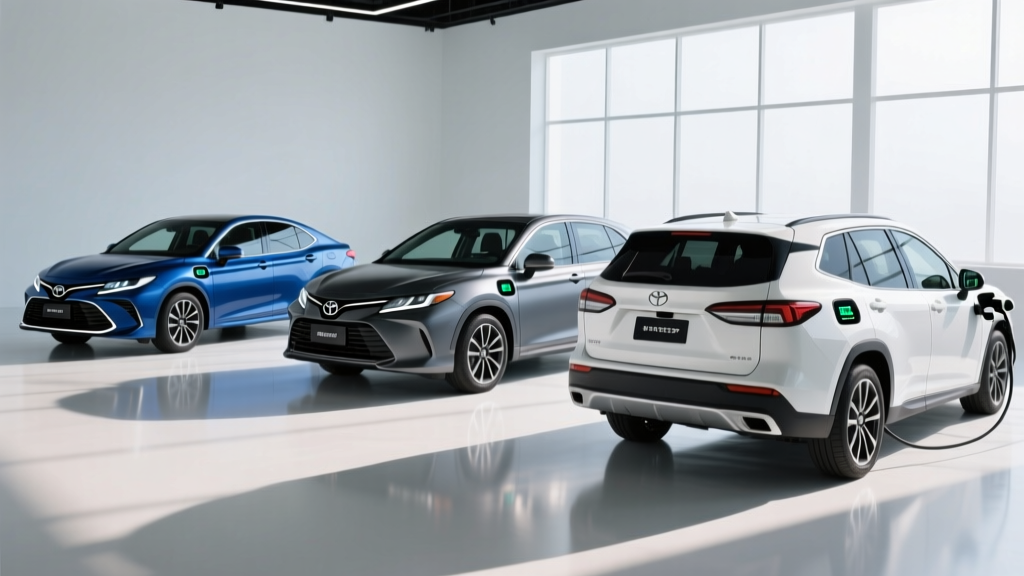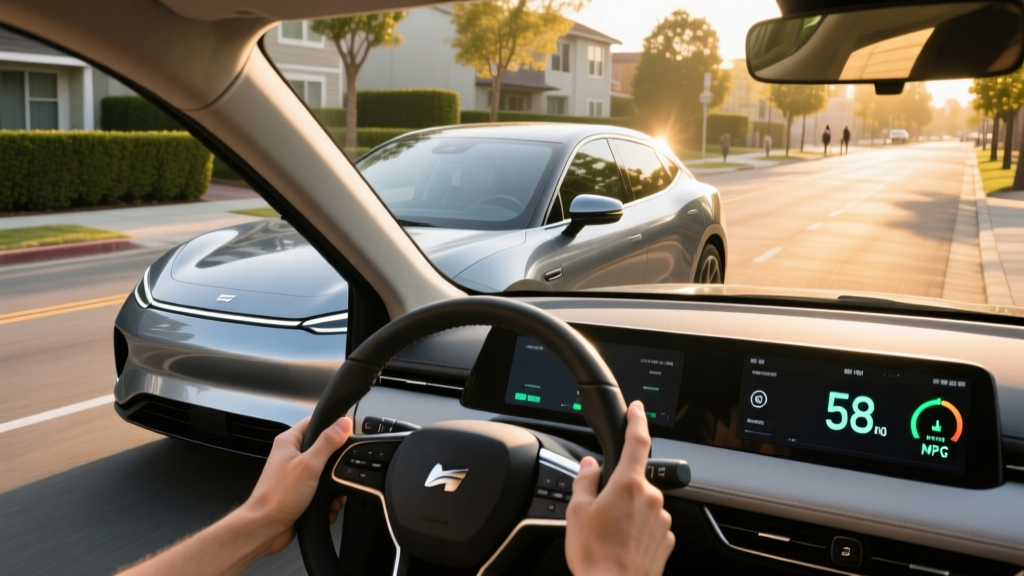
You've bought the hybrid. The EPA sticker promises 50-plus MPG combined. But on your first fill-up, the trip computer reads 42. What happened? The gap between EPA estimates and real-world hybrid fuel economy rarely comes down to the car — it comes down to how you drive it. Hybrids reward specific techniques that gas cars simply don't care about, and mastering them can push your efficiency 10–20% above the sticker.
This guide breaks down exactly how to drive a hybrid — whether it's a conventional self-charging hybrid (HEV) like the Toyota Prius or a plug-in hybrid (PHEV) like the RAV4 Prime — to extract every mile from every gallon and every kilowatt-hour.
First: Know Which Hybrid You're Driving
The driving techniques that maximize efficiency differ meaningfully between HEVs and PHEVs. Before you can optimize, you need to know which powertrain you're working with.
| Feature | Conventional Hybrid (HEV) | Plug-In Hybrid (PHEV) |
|---|---|---|
| Plugs in? | No — charges via engine and regen | Yes — charges via plug + engine + regen |
| Battery size | ~1.0–1.6 kWh (small buffer) | ~13–22 kWh (usable) |
| Electric-only driving | Low-speed, short bursts (~1 mi) | 20–45 miles at highway speeds |
| Primary fuel | Gasoline always | Electricity first, gasoline when depleted |
| Federal tax credit | Not eligible under §30D | Up to $7,500 (subject to sourcing/income rules) |
| Example models | Toyota Prius, Honda Accord Hybrid | Toyota RAV4 Prime, Jeep Wrangler 4xe |
The distinction matters for your driving strategy. In an HEV, you're managing a tiny battery buffer — your goal is to keep the engine running at its most efficient RPM and let the electric motor assist. In a PHEV, you're managing two energy sources, and the priority shifts to depleting the battery first before the engine ever starts.
The 6 Techniques That Actually Move the MPG Needle
1. Master Regenerative Braking
Every time you touch the friction brakes in a hybrid, you're wasting energy. Regenerative braking converts kinetic energy back into electricity, storing it in the battery for the next acceleration. Here's how to maximize it:
- Brake early and lightly. A slow, steady brake application gives the regen system time to capture energy. A hard, late stop overwhelms the motor-generator and forces the friction pads to engage.
- Use the B mode (if equipped). Many hybrids (Toyota, Hyundai, Kia) offer a "B" shift position that increases regen aggressiveness. Use it on long downhill grades to capture more energy and save your brake pads.
- Watch the charge-flow display. Your dashboard shows real-time energy flow. When you see the battery icon charging during braking, that's regen working. When you see the friction brake indicator, you're braking too hard for regen alone.
2. Pulse and Glide (The Hybrid Secret Weapon)
This is the single most effective technique for HEVs, and it's counterintuitive if you're used to driving gas cars. Here's how it works:
- Pulse: Accelerate briskly (not gently) to your target speed. This runs the engine at its peak efficiency RPM, assisted by the electric motor. Moderate-to-firm acceleration is more efficient than feather-light acceleration in a hybrid because the engine operates in a narrower, more efficient band.
- Glide: Once at speed, ease off the throttle to a specific "null point" where neither the engine nor the motor is providing or absorbing power. On most Toyotas, this is roughly where the charge-flow meter centers. The engine shuts off entirely, and the car coasts with minimal drag.
On suburban roads with 35–45 mph limits, pulse and glide can yield 55–65 MPG in a Prius — well above the EPA's 57 MPG combined estimate. It's less effective on highways where aerodynamic drag dominates.
3. Exploit EV Mode Strategically (PHEV and Some HEVs)
Many hybrids have a dedicated EV button that forces electric-only operation. The instinct is to use it immediately, but strategy matters:
- In a PHEV: Let the car manage EV/gas switching automatically in most cases. The onboard computer is optimized for this. However, if you know your last 5 miles are in a low-speed neighborhood, save EV mode for that segment — electric motors are most efficient at low speeds where gas engines are least efficient.
- In an HEV: EV mode is limited to ~25 mph and roughly one mile. Use it in parking lots, drive-throughs, and the last block before your driveway. Don't waste the battery buffer on EV mode at the start of a trip when the engine needs to warm up anyway.
4. Precondition the Cabin While Plugged In (PHEV)
If your PHEV is plugged in, use scheduled preconditioning to heat or cool the cabin using grid electricity before you leave. This preserves battery energy for actual driving rather than climate control. The Toyota RAV4 Prime and Jeep Wrangler 4xe both support scheduled preconditioning via their companion apps. In winter, this alone can preserve 3–5 miles of electric range.
5. Manage Speed on the Highway
Hybrid advantages shrink at highway speeds. The electric motor's efficiency edge over the gas engine is greatest below 45 mph. Above 65 mph, aerodynamic drag quadruples (drag force is proportional to velocity squared), and the engine is doing most of the work regardless. Here's the reality:
- A Prius rated at 57 MPG combined may return 48–52 MPG at 75 mph and 53–57 MPG at 65 mph.
- A RAV4 Prime in hybrid mode (battery depleted) may see 35 MPG at 75 mph vs. its EPA-rated 38 MPG combined.
- Adaptive cruise control helps maintain steady speed, which is more efficient than human throttle inputs on rolling terrain.
6. Keep the Battery in the Sweet Spot
Hybrid batteries operate most efficiently between roughly 40% and 80% state of charge (SoC). The car's computer manages this automatically — you'll notice the engine kicking on to charge the battery when it drops low and shutting off when it's full. Don't fight the system. If you see the battery indicator consistently at the top or bottom, you're driving in a way that defeats the hybrid system. Moderate, varied driving keeps the SoC in the efficient middle band.
Real-World MPG: What to Actually Expect
Hybrids often exceed their EPA estimates in city driving — the opposite of gas cars. That's because city driving provides frequent braking (regen opportunities) and low speeds (where electric motors shine). Here's how popular 2025/2026 hybrids perform:
| Vehicle | Type | EPA City | EPA Highway | EPA Combined | Real-World Avg (Owners) |
|---|---|---|---|---|---|
| Toyota Prius LE | HEV | 57 MPG | 56 MPG | 57 MPG | 52–62 MPG |
| Toyota Prius Prime SE | PHEV | 52 MPG (hybrid) | 48 MPG (hybrid) | 50 MPG / 127 MPGe | 48–55 MPG + 44 mi EV |
| Honda Accord Hybrid | HEV | 51 MPG | 44 MPG | 48 MPG | 43–52 MPG |
| Toyota RAV4 Prime | PHEV | 40 MPG (hybrid) | 36 MPG (hybrid) | 38 MPG / 94 MPGe | 35–40 MPG + 42 mi EV |
| Hyundai Tucson PHEV | PHEV | 35 MPG (hybrid) | 35 MPG (hybrid) | 35 MPG / 80 MPGe | 32–36 MPG + 33 mi EV |
| Ford Maverick Hybrid | HEV | 42 MPG | 33 MPG | 37 MPG | 34–41 MPG |
Data sourced from fueleconomy.gov and aggregated owner reports. Real-world figures vary by climate, terrain, and driving style. Cold weather (below 32°F) typically reduces hybrid MPG by 5–15% due to increased engine runtime for cabin heat and reduced battery efficiency.
Hybrid vs PHEV vs Full EV: Which Fits Your Driving Life?
Knowing how to drive a hybrid efficiently only matters if a hybrid is the right choice. Here's the decision framework:
Choose a conventional hybrid (HEV) if:
- You can't charge at home (apartment, street parking, no garage)
- You want zero behavior change — just drive and fill up with gas
- Your budget is under $32,000 and you want maximum MPG
- You drive 10,000–15,000 miles/year with mixed city/highway
Choose a plug-in hybrid (PHEV) if:
- You can install a Level 2 charger at home
- Your daily commute is under 40 miles round-trip (covers most EV range)
- You take road trips regularly and don't want to plan around chargers
- You want EV-like daily driving with gas-car road-trip freedom
Choose a full EV (BEV) if:
- You can charge at home and your daily driving is under 250 miles
- You want to eliminate gas entirely and minimize maintenance
- You qualify for the full federal tax credit (up to $7,500 under IRS §30D)
- You're comfortable with DC fast charging on road trips
Pricing, Tax Credits, and Total Cost
Hybrids carry a modest price premium over their gas-only counterparts — typically $1,500–$3,000 — but pay it back through fuel savings. PHEVs cost $4,000–$8,000 more than equivalent gas models but may qualify for federal incentives.
| Model | Base MSRP (2025/2026) | Powertrain | Combined HP | Federal Credit |
|---|---|---|---|---|
| Toyota Prius LE (HEV) | $28,350 | 2.0L 4-cyl + 2 motors | 194 HP (AWD: 196 HP) | None (HEV) |
| Toyota Prius Prime SE (PHEV) | $33,475 | 2.0L 4-cyl + 2 motors, 13.6 kWh battery | 220 HP | Up to $3,750* |
| Toyota RAV4 Prime SE (PHEV) | $44,615 | 2.5L 4-cyl + 3 motors, 18.1 kWh battery | 302 HP | Up to $7,500* |
| Ford Maverick XLT Hybrid | $29,495 | 2.5L 4-cyl + 1 motor | 191 HP | None (HEV) |
| Hyundai Tucson PHEV SEL | $39,490 | 1.6L turbo + 1 motor, 13.8 kWh battery | 261 HP | Up to $3,750* |
*Federal tax credit eligibility under §30D depends on battery critical-mineral sourcing, buyer income limits ($150K single / $300K joint AGI), MSRP caps ($55K sedans / $80K SUVs/trucks), and current-year rules. PHEV credits are often reduced proportionally to battery capacity. Verify current eligibility at IRS.gov or through a point-of-sale transfer at a participating dealer. Some states offer additional rebates — check your state energy office.
Battery Longevity, Warranty, and Replacement Costs
This is the number-one concern for hybrid buyers, and the data is reassuring. Modern hybrid batteries are engineered for the life of the vehicle.
Real-World Degradation Data
Toyota Prius taxis routinely surpass 300,000 miles on original battery packs. A 2024 study by Recurrent Auto found that hybrid battery degradation curves flatten significantly after year 4, with most packs retaining 85–92% capacity at the 10-year mark. The key factors that affect longevity:
- Heat is the enemy. Garage parking in hot climates extends battery life. The battery cooling system's air intake (often near the rear seat) should be kept unobstructed.
- Shallow cycles win. Hybrid batteries rarely cycle below 40% or above 80% SoC — the car's computer enforces this. This "buffer" is why they outperform early EV batteries.
- Don't let it sit. A hybrid left unplugged and undriven for weeks can degrade the 12V auxiliary battery (not the traction battery, but it'll strand you just the same).
Replacement Cost if Needed
If your hybrid battery fails outside warranty:
- Toyota Prius (Gen 4+): $2,000–$3,500 for a new OEM pack; $1,200–$2,000 for a refurbished unit
- Toyota RAV4 Hybrid: $3,000–$5,000 OEM
- Ford Maverick Hybrid: $2,500–$4,000 (limited long-term data as of 2025)
- PHEV packs (larger): $5,000–$9,000 depending on kWh capacity
These costs are rare. Most hybrid owners will trade or sell the vehicle before the traction battery requires replacement.
Cold Weather and Terrain: Adjusting Your Technique
Hybrid efficiency drops in winter for reasons you can partially mitigate:
- The engine runs more for cabin heat. Unlike EVs with heat pumps, most hybrids use engine waste heat for the cabin. In cold weather, the engine runs continuously until it reaches operating temperature — sometimes 5–10 minutes. Combine trips to avoid repeated cold starts.
- Use seat heaters over cabin heat. Seat heaters draw ~50 watts vs. the several kilowatts needed to heat cabin air. On short trips, this keeps the engine off longer.
- Block the grille (extreme cold). Some hypermilers use foam pipe insulation behind the grille to reduce cold-air intake, helping the engine reach operating temperature faster. This is an enthusiast technique — monitor coolant temperature if you try it.
- Hills are your friend — if you drive them right. Regen on descents can recover 60–70% of the energy spent climbing. Let the car coast downhill in D or B mode rather than braking, and use the engine's momentum uphill at steady throttle rather than surging.
Common Hybrid Driving Myths, Corrected
"You should always accelerate gently." Wrong for hybrids. Moderate-to-firm acceleration gets the engine into its efficient RPM band faster, then lets you shut it off and glide. Feather-light acceleration keeps the engine running longer at inefficient low RPM.
"Hybrids need to be plugged in." Only PHEVs. Conventional hybrids (HEVs) charge their battery entirely through regenerative braking and the engine — you never plug them in.
"Turning off traction control saves fuel." It doesn't, and it compromises safety. The hybrid system's efficiency gains come from the powertrain, not the stability system.
"You should never use the A/C." Modern hybrid compressors are electric and draw 1–3 kW. That's roughly a 2–4 MPG penalty — meaningful but not catastrophic. In hot weather, A/C is safer than open windows above 45 mph (which increase drag).
Why Hybrids Reward Skilled Drivers
- 5–15 MPG improvement with technique alone
- Brake pads last 80,000–120,000+ miles (regen does the work)
- No charging infrastructure required (HEV)
- Lower fuel cost without range anxiety
- Proven reliability with 10-year battery warranties
Limitations to Accept
- Highway MPG advantage over gas cars is smaller
- Cold weather reduces gains by 5–15%
- PHEVs require home charging to justify the premium
- Pulse-and-glide feels unnatural at first
- Towing significantly reduces hybrid efficiency gains
Frequently Asked Questions
How many MPG does a hybrid actually get in real driving?
Most hybrids meet or exceed their EPA combined rating in city driving, where regen braking and low-speed electric assist shine. The Toyota Prius LE (EPA 57 combined) regularly returns 55–65 MPG in suburban driving with proper technique. Highway-only driving at 75 mph typically drops 5–10 MPG below the combined rating. Check fueleconomy.gov for official estimates on specific models.
For a PHEV, how far can it go on electric only?
Current PHEVs offer 20–45 miles of EPA-rated electric range. The RAV4 Prime delivers 42 miles, the Prius Prime delivers 44 miles, and the Hyundai Tucson PHEV delivers 33 miles. Real-world EV range is typically 10–20% lower in cold weather or at highway speeds above 65 mph. Once the battery depletes, the PHEV operates as a conventional hybrid — it doesn't strand you.
Hybrid vs PHEV vs EV — which should I choose?
If you can't charge at home, choose an HEV. If you can charge at home and drive under 40 miles daily but take road trips, a PHEV gives you EV commuting with gas-car flexibility. If you can charge at home and rarely drive over 250 miles in a day, a full EV offers the lowest operating cost and maintenance. The right answer depends on your charging access, daily mileage, and road-trip frequency — not just the sticker price.
Are hybrids reliable, and what does battery replacement cost?
Hybrids are among the most reliable vehicles on the road — fewer moving parts than gas cars (no alternator, starter motor, or conventional transmission in most designs). Toyota's hybrid system has two decades of proven durability. Battery packs carry 8–10 year / 100,000–150,000 mile warranties and typically retain 85–92% capacity at 10 years. Out-of-warranty replacement runs $2,000–$5,000 for HEVs and $5,000–$9,000 for PHEVs, but most owners never need one.
Does a hybrid qualify for a federal tax credit?
Conventional hybrids (HEVs) do not qualify for the federal §30D clean vehicle credit. Plug-in hybrids (PHEVs) may qualify for up to $7,500, but the actual amount depends on battery capacity, critical-mineral sourcing requirements, buyer income limits ($150K single / $300K joint), and MSRP caps ($55K for sedans, $80K for SUVs/trucks). Credit rules change frequently — verify current eligibility at IRS.gov. Some PHEVs may also qualify for point-of-sale transfer, reducing your purchase price directly at the dealer.
Should I use premium fuel in my hybrid?
Almost all current hybrids are designed for regular 87-octane fuel. The Toyota Prius, RAV4 Hybrid, Honda Accord Hybrid, and Ford Maverick Hybrid all specify regular unleaded. Using premium fuel provides no efficiency or performance benefit in engines tuned for 87 octane. Check your owner's manual — if it says "recommended," regular is fine; if it says "required," use premium.
Does towing ruin hybrid fuel economy?
Towing dramatically reduces hybrid efficiency gains because sustained heavy loads keep the engine running continuously with minimal regen opportunity. A Maverick Hybrid rated at 37 MPG combined may return 18–22 MPG while towing a 1,500-lb trailer. If towing is a primary use case, the hybrid's advantage narrows — though it still typically beats a comparable non-hybrid under load.
The Bottom Line
Driving a hybrid efficiently isn't about being slow — it's about being strategic. Brake early to harvest regen, accelerate with purpose then glide, manage EV mode based on your route, and respect the cold-weather penalty. These techniques consistently deliver 5–15 MPG above the EPA estimate in real-world conditions, turning a 50-MPG car into a 58-MPG car over the course of a year. That's roughly 50–80 extra gallons saved annually at current fuel prices — and proof that the most important efficiency technology in your hybrid is your right foot.