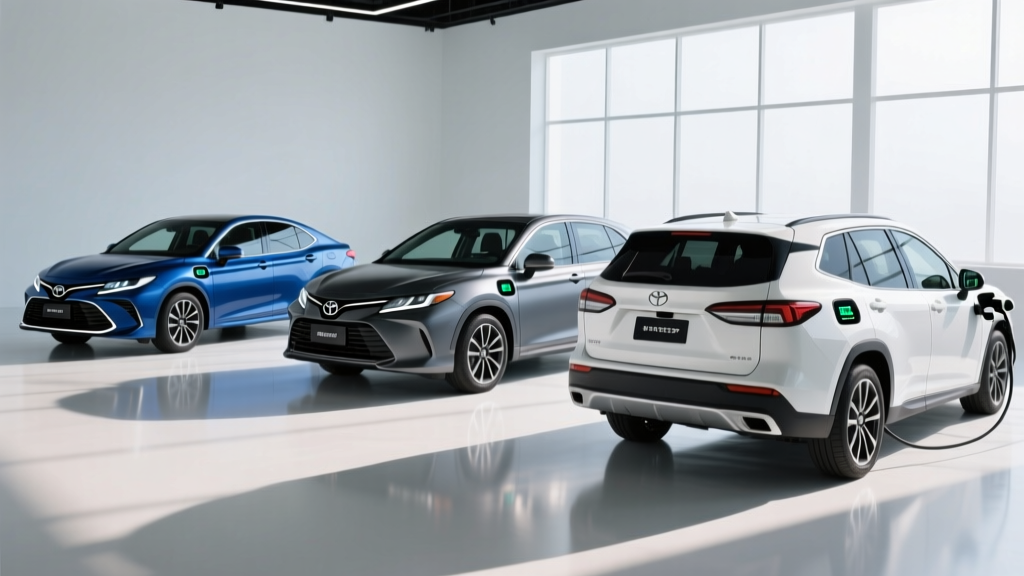
If you've searched for a Toyota Prime hybrid, you're looking at Toyota's plug-in hybrid electric vehicle (PHEV) lineup — specifically the RAV4 Prime and Prius Prime. These aren't conventional hybrids you simply fill with gas and forget. They carry larger batteries, offer meaningful electric-only driving range, and can be plugged in overnight to start your morning with a full charge. For 2026, both models remain among the most practical PHEVs on the market, blending daily EV commuting with gas-engine road-trip freedom.
But the two Prime models serve very different buyers. The Prius Prime is the efficiency champion for commuters, while the RAV4 Prime delivers SUV practicality with surprising performance. This guide breaks down exact EPA numbers, real-world expectations, charging logistics, pricing, and federal tax credit eligibility so you can decide which Toyota Prime hybrid — if either — fits your garage.
HEV vs PHEV: What "Prime" Actually Means at Toyota
Toyota uses the Prime badge exclusively for its plug-in hybrid models. A conventional Toyota hybrid (like the standard Prius or RAV4 Hybrid) is a self-charging HEV — it recovers energy through regenerative braking and the gas engine, and you never plug it in. A Prime PHEV is fundamentally different:
| Feature | Toyota HEV (Standard Hybrid) | Toyota Prime (PHEV) |
|---|---|---|
| Plugs in? | No — self-charging | Yes — Level 1 or Level 2 |
| Electric-only range | ~1 mile at low speed | 25–44 miles (model-dependent) |
| Battery size | ~1.0–1.6 kWh | 13.6–18.1 kWh usable |
| Federal tax credit | Not eligible (§30D) | Eligibility varies by model/year |
| Best for | Drivers without home charging | Drivers with home/outlet access |
The critical takeaway: if you cannot plug in at home or work, a Prime PHEV still functions as a highly efficient hybrid once the battery depletes — but you're paying extra for electric range you won't use. In that case, the standard HEV variant makes more financial sense.
2026 Toyota Prius Prime: Specs, Range, and Efficiency
The current-generation Prius Prime (redesigned for 2023, carried forward through 2026) shed the dowdy reputation of its predecessor. It's genuinely quick, striking to look at, and delivers class-leading electric range among compact PHEVs.
| Spec | 2026 Prius Prime SE | 2026 Prius Prime XSE / XSE Premium |
|---|---|---|
| EPA electric-only range | 44 miles | 40 miles |
| EPA combined MPG (hybrid mode) | 52 MPG | 48 MPG |
| EPA city / highway MPG | 53 / 51 | 50 / 47 |
| MPGe (electric + gas combined) | 127 MPGe | 117 MPGe |
| Battery capacity | 13.6 kWh (lithium-ion) | |
| Combined horsepower | 220 HP | |
| 0–60 mph | ~6.6 seconds | |
| Level 2 charge time (0–100%) | ~4 hours at 3.3 kW (Level 1 ~11 hours) | |
| DC fast charging | Not supported | |
| Total combined range | ~600+ miles (gas + electric) | |
| Base MSRP | ~$33,445 | ~$36,695 / ~$40,365 |
The SE trim's lighter weight and smaller wheels squeeze out 4 extra electric miles and 4 more MPG in hybrid mode. If you prioritize maximum efficiency over heated seats and a larger touchscreen, the SE is the spec-sheet winner.
Real-World MPG vs EPA: What Prius Prime Owners Actually See
Toyota hybrids historically exceed EPA city estimates in real-world stop-and-go driving because regenerative braking recaptures energy that gas cars waste as heat. On the highway at 75+ mph, expect MPG to dip 3–5 MPG below the sticker. In cold weather (below 30°F), the gas engine runs more frequently to heat the cabin, reducing electric-only range by roughly 20–30%. Source: fueleconomy.gov Prius Prime listing.
2026 Toyota RAV4 Prime: The Performance SUV PHEV
The RAV4 Prime is Toyota's most powerful RAV4 variant — producing 302 combined horsepower from its 2.5-liter four-cylinder engine paired with front and rear electric motors. It hits 60 mph in roughly 5.7 seconds, making it quicker than many sport sedans, while still delivering over 40 miles of electric range.
| Spec | 2026 RAV4 Prime SE | 2026 RAV4 Prime XSE |
|---|---|---|
| EPA electric-only range | 42 miles | 42 miles |
| EPA combined MPG (hybrid mode) | 38 MPG | 38 MPG |
| EPA city / highway MPG | 40 / 36 | 40 / 36 |
| MPGe (electric + gas combined) | 94 MPGe | 94 MPGe |
| Battery capacity | 18.1 kWh (lithium-ion) | |
| Combined horsepower | 302 HP | |
| 0–60 mph | ~5.7 seconds | |
| Level 2 charge time (0–100%) | ~2.5 hours at 6.6 kW (Level 1 ~12 hours) | |
| DC fast charging | Not supported | |
| AWD | Standard (electronic rear motor) | |
| Total combined range | ~600 miles (gas + electric) | |
| Base MSRP | ~$44,965 | ~$48,275 |
The RAV4 Prime supports 6.6 kW Level 2 charging — roughly double the Prius Prime's 3.3 kW rate — which means a full charge in about 2.5 hours on a 240V home outlet or dedicated Level 2 station. Neither Prime model supports DC fast charging, which is standard for PHEVs in this segment. The battery is simply too small to justify the cost and weight of DC hardware.
Charging a Toyota Prime Hybrid at Home: What You Need
Both Prime models come with a dual-voltage charging cord that handles 120V (Level 1) and 240V (Level 2) outlets. Here's what that means practically:
| Charging Level | Power (kW) | Voltage | Prius Prime (Full Charge) | RAV4 Prime (Full Charge) |
|---|---|---|---|---|
| Level 1 (standard outlet) | ~1.2 kW | 120V | ~11 hours | ~12 hours |
| Level 2 (dedicated circuit) | 3.3 kW (Prius) / 6.6 kW (RAV4) | 240V | ~4 hours | ~2.5 hours |
For most PHEV owners, Level 1 overnight charging on a standard 120V outlet is sufficient — you're replenishing 40 miles of range while you sleep. A dedicated 240V Level 2 installation (typically $500–$1,500 depending on panel proximity and local electrician rates) is a convenience upgrade, not a necessity, for PHEV-sized batteries.
Does the Toyota Prime Hybrid Qualify for a Federal Tax Credit?
This is where the rules require careful attention. Under the current IRS §30D Clean Vehicle Credit, a new PHEV must meet all of the following to qualify for up to $7,500:
- Battery capacity: At least 7 kWh — both Primes qualify (13.6 and 18.1 kWh)
- MSRP cap: Vans/SUVs/pickups ≤ $80,000; sedans ≤ $55,000
- Buyer income cap: Modified AGI ≤ $150,000 (single) / $300,000 (joint)
- Critical minerals & battery component sourcing: Must meet phased-in percentages from US or FTA-trade partners
- Final assembly: Must occur in North America
- Point-of-sale transfer: Eligible buyers can apply the credit at purchase to reduce the sale price
For 2026: The Prius Prime (assembled in Japan) does not qualify for the federal §30D credit due to its non-North-American final assembly. The RAV4 Prime (assembled in Japan as of the current generation) also does not qualify. This is a significant purchasing consideration — you're paying a premium for the PHEV powertrain without the federal offset that some domestically assembled competitors receive.
However, several states offer their own rebates for PHEVs regardless of assembly location. California's CVRP program, Colorado's state tax credit, and various utility rebates may apply. Always verify current state incentive availability through your state energy office or dealer.
Toyota Prime Battery Warranty, Lifespan, and Replacement Cost
Toyota's PHEV batteries are engineered conservatively with robust thermal management and a sizable buffer (the car never uses 100% of the physical battery capacity). Real-world data from earlier Prius generations shows hybrid batteries routinely lasting 150,000–200,000+ miles before meaningful degradation. PHEV batteries experience more charge cycles but benefit from larger capacity and active cooling.
Out-of-warranty replacement cost: If a Prime battery does eventually need replacement beyond the warranty window, expect $4,000–$7,000 for the battery pack plus labor, depending on model and dealership pricing. Third-party hybrid battery rebuilders offer alternatives in the $2,500–$4,000 range. For context, this is comparable to a major transmission repair on a conventional vehicle.
Toyota Prime Hybrid Reliability
Toyota's hybrid synergy drive system has over 25 years of production history. The planetary gearset power-split device has no traditional transmission clutches or belts to wear out. Both the Prius Prime and RAV4 Prime carry above-average reliability ratings from major automotive evaluators. The electric motors have no brushes and require no maintenance. The gas engine runs less frequently than in a conventional car, potentially extending its service life.
Toyota Prime Hybrid vs Full EV vs Gas Car: Which Fits You?
Choose a Toyota Prime PHEV if:
- Your daily commute is under 40 miles and you can charge at home
- You take regular road trips where charging infrastructure is uncertain
- You want electric daily driving without range anxiety
- You live in a single-vehicle household that needs flexibility
Choose a full BEV (like the bZ4X or Tesla Model Y) if:
- Your daily driving is predictable and under 250 miles
- You have reliable home charging and access to DC fast chargers for trips
- You want zero tailpipe emissions and minimal maintenance
- You want to maximize federal tax credit eligibility ($7,500)
Choose a conventional Toyota HEV (non-Prime) if:
- You cannot charge at home or work
- You want hybrid efficiency at a lower purchase price
- You drive mostly highway miles where PHEV electric range adds little benefit
Toyota Prime Advantages
- 40+ miles electric covers most commutes gas-free
- 600+ mile total range eliminates road-trip charging stops
- 10-year/150,000-mile battery warranty
- RAV4 Prime's 302 HP and standard AWD
- No DC fast charger dependency
- Proven Toyota hybrid reliability
Toyota Prime Limitations
- No federal §30D tax credit (Japan assembly)
- No DC fast charging (Level 2 maximum)
- RAV4 Prime MSRP near $45K–$50K before options
- Electric range drops 20–30% in freezing weather
- Prius Prime cargo space is limited vs crossover alternatives
- Long dealer waitlists on RAV4 Prime in many markets
Frequently Asked Questions About Toyota Prime Hybrids
How many MPG does the Toyota Prime hybrid get?
In hybrid mode (after the battery is depleted), the 2026 Prius Prime SE achieves an EPA-estimated 52 MPG combined (53 city / 51 highway). The RAV4 Prime delivers 38 MPG combined (40 city / 36 highway). In real-world city driving with frequent regenerative braking, Prius Prime owners commonly report 54–58 MPG. Highway cruising at 75+ MPH typically yields 46–49 MPG for the Prius Prime and 34–36 MPG for the RAV4 Prime.
How far can the Toyota Prime go on electric only?
The Prius Prime SE achieves an EPA-estimated 44 miles of electric-only range (40 miles for XSE trims with larger wheels). The RAV4 Prime delivers 42 miles of electric-only range. Real-world electric range varies: expect 36–44 miles in mild weather for the Prius Prime and 28–42 miles for the RAV4 Prime, depending on temperature, terrain, and driving speed.
Do Toyota Prime hybrids need to be plugged in?
To access the full electric-only range, yes — plug in overnight using either a standard 120V outlet or a 240V Level 2 charger. However, if you forget or don't have access to an outlet, both Prime models operate as highly efficient conventional hybrids. The gas engine and regenerative braking keep the battery charged enough for hybrid-mode driving. You'll just miss the electric-only miles you paid extra for.
Is the Toyota Prime hybrid reliable, and what does a battery replacement cost?
Toyota's hybrid system has a 25+ year track record with millions of units on the road. The PHEV battery is covered by a 10-year/150,000-mile warranty. Out-of-warranty battery replacement runs approximately $4,000–$7,000 at a dealership, or $2,500–$4,000 through third-party hybrid specialists. Most Toyota hybrid batteries last well beyond 150,000 miles with proper thermal management.
Does the Toyota Prime hybrid qualify for a federal tax credit?
As of 2026, neither the Prius Prime nor the RAV4 Prime qualifies for the federal §30D Clean Vehicle Credit because both are assembled in Japan, and the credit requires North American final assembly. However, state-level incentives (such as California's CVRP, Colorado's state credit, or local utility rebates) may partially offset the purchase price. Always check current IRS guidelines and your state energy office for the latest eligibility details.
Can the Toyota Prime charge at a public DC fast charger?
No. Neither the Prius Prime nor the RAV4 Prime has DC fast charging capability. They accept Level 1 (120V, ~1.2 kW) and Level 2 (240V, up to 3.3 kW for Prius Prime or 6.6 kW for RAV4 Prime). Given the small battery sizes (13.6–18.1 kWh), a Level 2 charge fully replenishes the battery in 2.5–4 hours, which is practical for home or workplace charging.
The Toyota Prime hybrid lineup occupies a specific and valuable niche: genuine electric commuting for daily life, with a gas engine that erases range anxiety for longer trips. If you can plug in at home and your commute fits within 40 miles, a Prime PHEV lets you drive on electricity most days while keeping the freedom to hit the open road without planning charger stops. The trade-off is a higher purchase price without the federal tax credit that some competitors receive — making state incentives and long-term fuel savings the primary financial justification.