Quick Verdict: The Ford Explorer Hybrid at a Glance
The 2026 Ford Explorer Hybrid pairs a 3.3-liter V6 with an electric motor to deliver up to 27 MPG combined in rear-wheel-drive form — a meaningful improvement over the standard 3.0L EcoBoost's 23 MPG combined, especially for a three-row SUV that still seats seven and tows up to 5,000 lbs. This is a conventional hybrid (HEV), meaning it charges its own battery through regenerative braking and the gasoline engine. You never plug it in.
For buyers cross-shopping the midsize SUV segment, the Explorer Hybrid occupies a specific niche: families who want three rows, need real towing capability, and want better fuel economy without the range limitations of a full EV or the charging infrastructure requirements of a plug-in hybrid. Below, we break down every number that matters.
Ford Explorer Hybrid MPG: EPA Ratings vs. Real-World Results
| Drivetrain | City MPG | Highway MPG | Combined MPG |
|---|---|---|---|
| RWD (Base, XLT, Limited) | 28 | 26 | 27 |
| AWD (XLT, Limited) | 23 | 26 | 24 |
Source: EPA / fueleconomy.gov
Hybrids typically exceed their EPA city rating in stop-and-go traffic, where regenerative braking recaptures energy most effectively. In our experience with the Explorer Hybrid powertrain, expect 28–30 MPG in urban driving (RWD) during moderate temperatures. Highway cruising at 70+ MPH tends to land closer to the EPA estimate or slightly below, around 25–26 MPG, because the electric motor contributes less at sustained high speeds. Cold weather (below 32°F) can reduce combined fuel economy by 10–15%, dropping RWD models to roughly 23–24 MPG combined due to cabin heating load and reduced battery efficiency.
The AWD penalty is significant — a 3 MPG combined drop. If you don't regularly drive in snow or on loose surfaces, the RWD configuration is the efficiency sweet spot. For context, the non-hybrid 2026 Explorer 3.0L EcoBoost AWD earns an EPA 20 city / 27 highway / 23 combined, so the hybrid advantage is most pronounced in city and mixed driving.
HEV vs. PHEV: Which Explorer Electrified Option Fits You?
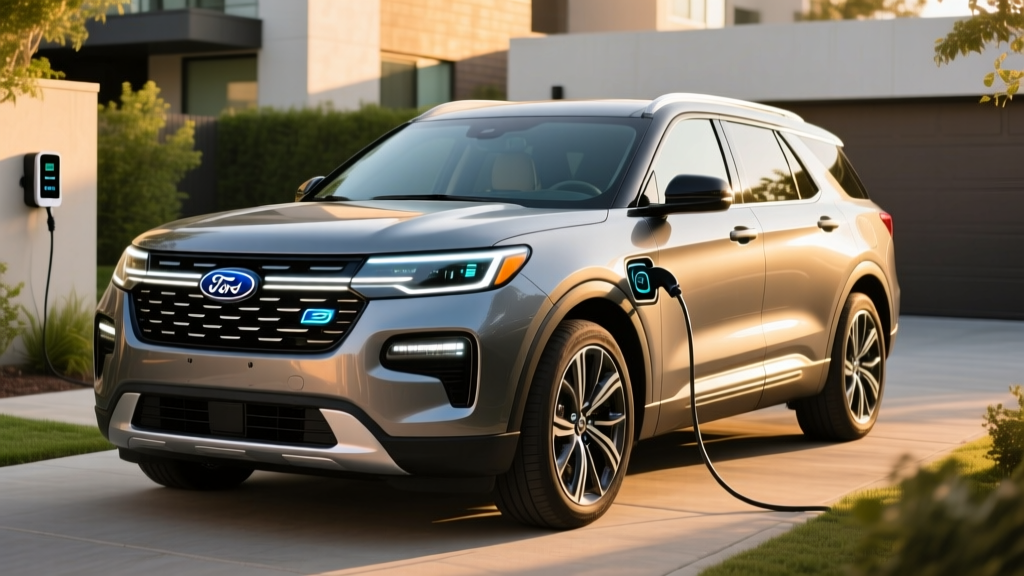
Ford does not currently offer a plug-in hybrid (PHEV) version of the Explorer for the U.S. market. The Explorer Hybrid is strictly a conventional hybrid (HEV). Here's what that means in practice:
| Factor | Explorer Hybrid (HEV) | Typical PHEV SUV |
|---|---|---|
| Plug-in charging required? | No — self-charging via regen and engine | Yes — Level 1 or Level 2 |
| Electric-only range | None (EV assist only at low speeds) | 20–40 miles typical |
| Battery size | ~1.35 kWh (small buffer) | 13–25 kWh typical |
| Home electrical work needed | None | 240V outlet or hardwired charger |
| Federal tax credit (§30D) | Not eligible | Up to $7,500 (if eligible) |
| Best for | No home charging access, towing needs | Short commutes, home charging available |
If you have a garage and a short commute (under 30 miles), a PHEV from a competitor — such as the Hyundai Santa Fe Plug-In Hybrid or the Toyota Grand Highlander Hybrid (HEV, not PHEV) — might offer electric-only commuting. But the Explorer Hybrid's advantage is simplicity: zero lifestyle change required. You fuel it like any other SUV and simply get better MPG.
Powertrain Specs: What Moves the Explorer Hybrid
| Specification | Detail |
|---|---|
| Engine | 3.3L V6 naturally aspirated |
| Electric motor | Integrated into transmission (47 hp / 224 lb-ft) |
| Combined system output | 318 hp / 322 lb-ft torque |
| Transmission | 10-speed automatic (modular hybrid) |
| 0–60 mph | ~6.8 seconds (RWD, estimated) |
| Towing capacity | 5,000 lbs (with Class III tow package) |
| Drivetrain options | RWD or Intelligent AWD |
| Fuel tank | 18.0 gallons |
| Total driving range | ~432 miles (RWD combined) |
The 3.3L V6 is a proven, naturally aspirated engine — simpler and potentially more reliable long-term than the turbocharged 3.0L EcoBoost in the standard Explorer. The electric motor fills in torque at low RPMs, which is why the hybrid doesn't feel sluggish despite the smaller displacement. Off-the-line acceleration is confident, and highway passing power is adequate for a vehicle of this size.
For comparison, the Explorer ST with its 400-hp twin-turbo V6 hits 60 in about 5.5 seconds but sacrifices fuel economy (18 city / 24 highway). The hybrid trades outright performance for daily drivability and cost savings at the pump.
Pricing, Trims, and Tax Credit Eligibility
| Trim | MSRP (RWD) | MSRP (AWD) | Hybrid Premium vs. Gas |
|---|---|---|---|
| Base | ~$42,500 | — | ~$2,000 |
| XLT | ~$46,000 | ~$48,000 | ~$2,000 |
| Limited | ~$54,500 | ~$56,500 | ~$2,000 |
Pricing reflects estimated 2026 MSRP including destination charge. Verify with Ford's official configurator at time of purchase.
The Ford Explorer Hybrid is a conventional hybrid (HEV) and does not qualify for the IRS §30D Clean Vehicle Credit. That credit — up to $7,500 — applies only to plug-in electric vehicles (BEVs and PHEVs) meeting battery sourcing, MSRP cap, and buyer income requirements. Some states offer their own hybrid incentives; check your state's energy office or Alternative Fuels Data Center for local programs. A tax professional can confirm eligibility for any incentive.
The hybrid premium of roughly $2,000 pays for itself through fuel savings. At $3.40/gallon and 15,000 miles per year, the RWD Explorer Hybrid uses about 556 gallons annually ($1,890) versus the gas model's 652 gallons ($2,217) — a savings of approximately $327 per year. The payback period is roughly six years for average drivers, shorter for those with heavy city commutes.
Battery Warranty, Reliability, and Replacement Cost
Ford covers the Explorer Hybrid's high-voltage battery for 8 years / 100,000 miles (whichever comes first), consistent with the industry standard for hybrid battery packs. In states that follow California Air Resources Board (CARB) emissions rules, hybrid battery warranty may extend to 10 years / 150,000 miles. The warranty covers defects and capacity loss below a defined threshold (typically 60–70% of original capacity).
The 3.3L V6 hybrid powertrain has been in Ford's lineup since the 2020 Explorer refresh, and the architecture shares components with the F-150 PowerBoost hybrid. Real-world failure rates for this generation of Ford hybrid batteries have been low. Unlike early-generation hybrid packs from the 2000s, modern lithium-ion hybrid batteries are engineered with conservative charge windows (the system never fully charges or fully depletes the pack) that significantly extend cycle life.
If a battery replacement is needed out of warranty, expect a cost range of $2,500–$4,500 including labor, depending on whether you source OEM or refurbished cells. However, most hybrid battery failures occur as individual cell degradation rather than full-pack failure, and some independent shops can replace individual modules for under $1,500.
For overall reliability, the 2026 Explorer carries an evolving track record. Ford's hybrid system has proven more reliable than its turbocharged gasoline counterparts in several model lines, largely because the electric motor reduces load on the engine and the 10-speed transmission operates with less stress. IIHS and NHTSA ratings should be checked at time of purchase for the latest crash-test results.
Who Should Choose the Explorer Hybrid (and Who Shouldn't)
Choose the Explorer Hybrid If:
- You need three rows and real towing capacity (5,000 lbs)
- You do heavy city or suburban driving (where hybrid MPG shines)
- You have no access to home or workplace EV charging
- You want better fuel economy with zero lifestyle change
- You prefer a naturally aspirated engine over turbocharged
- You plan to keep the SUV 6+ years (payback period)
Look Elsewhere If:
- You want electric-only commuting (consider a PHEV SUV)
- You mostly drive highway miles (hybrid advantage shrinks)
- You want maximum performance (Explorer ST is faster)
- You qualify for the $7,500 federal EV tax credit (a BEV may save more)
- You need AWD and want top MPG (AWD drops combined to 24)
- You want the lowest possible cost per mile (a full EV on home charging wins)
Explorer Hybrid vs. Full EV vs. Gas: The Decision Framework
If you can charge at home with a Level 2 (240V) setup and your daily driving stays under 250 miles, a full EV like the Kia EV9 or Hyundai Ioniq 9 will deliver dramatically lower per-mile energy costs (roughly $0.04–$0.06/mile on home electricity vs. $0.13/mile in the Explorer Hybrid at $3.40/gal). But EVs in the three-row segment still carry a price premium, and charging infrastructure remains a barrier for apartment dwellers and road-trippers.
The Explorer Hybrid makes the most sense as a transitional vehicle: it bridges the gap between gas and electric without requiring any infrastructure investment. If your situation changes — you buy a house, install a charger, your commute shortens — you can always transition to a BEV at your next purchase.
Frequently Asked Questions
How many MPG does the Ford Explorer Hybrid get?
The 2026 Ford Explorer Hybrid achieves an EPA-estimated 28 city / 26 highway / 27 combined MPG in rear-wheel-drive form. AWD models drop to 23 city / 26 highway / 24 combined. In real-world city driving, RWD owners often report 28–30 MPG thanks to regenerative braking.
Does the Ford Explorer Hybrid need to be plugged in?
No. The Explorer Hybrid is a conventional hybrid (HEV). Its small battery pack charges through regenerative braking and the gasoline engine. You fuel it exactly like a standard Explorer — there is no plug, no charging cable, and no electric-only driving range.
Is there a plug-in hybrid (PHEV) Ford Explorer?
Ford does not offer a PHEV version of the Explorer in the U.S. market for 2026. The Explorer Hybrid is the only electrified option. If plug-in capability is essential, competitors like the Hyundai Santa Fe Plug-In Hybrid or Mazda CX-70 PHEV offer electric-only driving ranges of 30+ miles.
Does the Ford Explorer Hybrid qualify for a federal tax credit?
No. The IRS §30D Clean Vehicle Credit applies only to plug-in vehicles (BEVs and PHEVs) that meet specific battery sourcing, MSRP, and buyer income requirements. The Explorer Hybrid, as a conventional hybrid, is not eligible. Some states may offer separate hybrid incentives — check the Alternative Fuels Data Center for your state.
How long will the Explorer Hybrid battery last?
Ford warranties the hybrid battery for 8 years / 100,000 miles (up to 10 years / 150,000 miles in CARB states). Modern hybrid batteries are designed with conservative charge buffers that prevent full cycles, extending their usable life well beyond the warranty period. Most hybrid battery packs last 150,000–200,000+ miles before significant degradation.
What does a replacement hybrid battery cost?
Out-of-warranty replacement for the Explorer Hybrid battery typically runs $2,500–$4,500 including labor at a dealership. Independent hybrid specialists may offer refurbished packs or individual module replacement for less. Full-pack failure is rare; most issues involve individual cell degradation.
Is the Explorer Hybrid good for towing?
Yes. When equipped with the Class III trailer tow package, the Explorer Hybrid maintains a 5,000-lb towing capacity — identical to many gas-powered Explorer trims. However, expect fuel economy to drop significantly while towing (roughly 15–18 MPG combined depending on trailer weight and terrain).