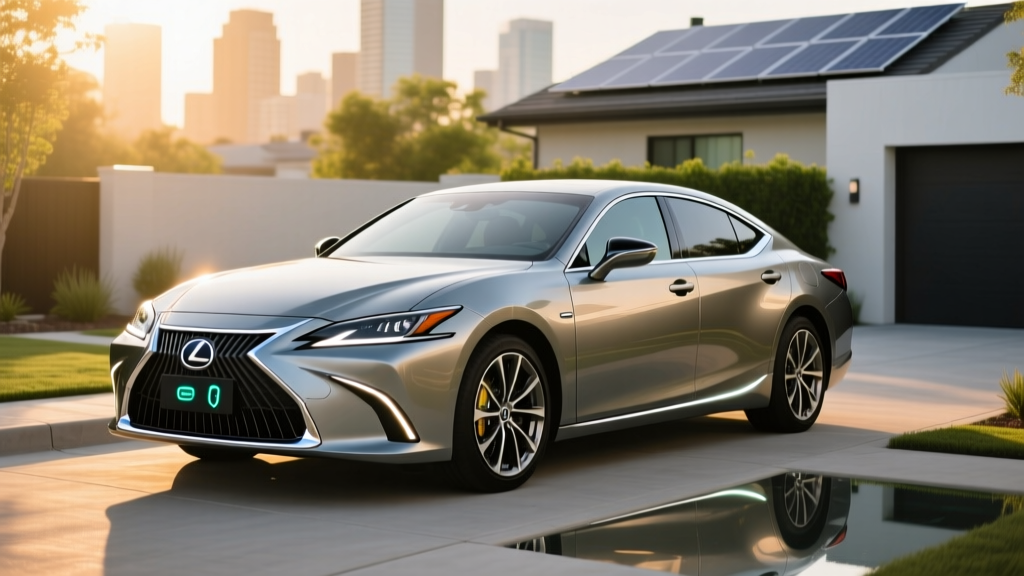
Searching for a "Lexus hybrid 350" in 2026 leads to three distinct models—the compact UX 350h, the mid-size NX 350h, and the flagship RX 350h. All three are conventional hybrid electric vehicles (HEVs), not plug-in hybrids. That means no charging cables, no range anxiety, and EPA-rated fuel economy that regularly exceeds 35 MPG combined in real-world city driving. This guide breaks down every current Lexus 350 hybrid with exact MPG figures, powertrain specs, battery warranty coverage, and whether any qualify for federal tax incentives.
Which Lexus Hybrid 350 Models Exist in 2026?
Lexus currently offers three vehicles wearing the "350h" badge, each targeting a different buyer profile:
| Model | Segment | Powertrain | Combined HP | Drivetrain |
|---|---|---|---|---|
| UX 350h | Subcompact crossover | 2.0L I4 + 2 motors | 181 hp | AWD (E-Four) |
| NX 350h | Compact crossover | 2.5L I4 + 3 motors | 240 hp | AWD (E-Four) |
| RX 350h | Mid-size crossover | 2.5L I4 + 3 motors | 246 hp | AWD (E-Four) |
None of these are plug-in hybrids. If you want a Lexus PHEV with electric-only driving, you'd need to look at the NX 450h+ or RX 450h+—covered in a separate comparison. The 350h lineup is strictly self-charging hybrid territory.
HEV vs PHEV: What Lexus 350h Buyers Need to Know
PHEV (Plug-in Hybrid Electric Vehicle) — The Lexus 450h+ models. A larger battery (18.1 kWh usable) charges from a wall outlet or charger, delivering 37–38 miles of electric-only range before the gas engine engages. Total range exceeds 450 miles.
The distinction matters for three reasons:
- No plug required for 350h. You fuel up at any gas station. The hybrid system handles the rest automatically.
- No federal tax credit for 350h models. IRS §30D credits apply only to plug-in vehicles with sufficient battery capacity. Conventional hybrids do not qualify.
- Lower upfront cost. 350h trims carry a smaller price premium over gas-only equivalents compared to 450h+ PHEV trims.
Fuel Economy: EPA MPG and Real-World Numbers
This is the headline metric for any Lexus hybrid 350 buyer. Here are the official EPA figures alongside what owners and testers report in mixed driving:
| Model | EPA City | EPA Highway | EPA Combined | Real-World Observed |
|---|---|---|---|---|
| UX 350h | 43 MPG | 41 MPG | 42 MPG | 40–45 MPG |
| NX 350h | 41 MPG | 37 MPG | 39 MPG | 36–42 MPG |
| RX 350h | 37 MPG | 34 MPG | 36 MPG | 33–38 MPG |
Source: fueleconomy.gov, EPA estimates. Real-world figures compiled from owner reports and independent testing.
Why Hybrids Often Beat EPA City Estimates
Unlike gas-only vehicles, hybrids recapture energy during stop-and-go driving through regenerative braking. The UX 350h's 43 MPG city rating is not optimistic—many owners report 44–46 MPG in urban commutes with frequent stops. Highway driving is where hybrids lose their advantage, since the electric motor contributes less at sustained speeds and aerodynamic drag dominates.
If your commute is primarily city and suburban, a Lexus 350h will likely exceed its EPA combined rating. If you spend 80%+ of your miles on the interstate at 75 MPH, expect numbers closer to (or slightly below) the highway figure.
Powertrain Details: What Powers Each Lexus 350h
All three 350h models use Toyota's fourth-generation hybrid system, pairing an Atkinson-cycle gasoline engine with permanent-magnet electric motors and an electronically controlled CVT (eCVT).
UX 350h Powertrain
- 2.0-liter 4-cylinder engine: 146 hp, 133 lb-ft
- Front electric motor: 107 hp / Rear motor: 40 hp
- Net system output: 181 hp
- 0–60 MPH: 7.8 seconds
- Hybrid battery: ~1.4 kWh nickel-metal hydride (NiMH)
NX 350h Powertrain
- 2.5-liter 4-cylinder engine: 184 hp, 185 lb-ft
- Front electric motor: 134 hp / Rear motor: 54 hp
- Net system output: 240 hp
- 0–60 MPH: 7.2 seconds
- Hybrid battery: ~1.7 kWh NiMH
RX 350h Powertrain
- 2.5-liter 4-cylinder engine: 184 hp, 185 lb-ft
- Front electric motor: 134 hp / Rear motor: 54 hp
- Net system output: 246 hp
- 0–60 MPH: 7.4 seconds
- Hybrid battery: ~1.7 kWh NiMH
The eCVT is not a traditional belt-and-pulley CVT. It uses a planetary gearset to blend engine and motor power, delivering smooth, stepless acceleration with none of the rubber-band feel associated with older CVTs.
Pricing, Trims, and Tax Credit Eligibility
| Model | Base Trim | Starting MSRP (2026) | Top Trim MSRP |
|---|---|---|---|
| UX 350h | Premium | $38,300 | $46,500 (F SPORT Handling) |
| NX 350h | Premium | $43,950 | $56,000 (F SPORT Handling) |
| RX 350h | Premium | $53,200 | $63,500 (F SPORT Handling) |
MSRP includes destination charge. Prices subject to change; verify at dealer.
Do Lexus 350h Models Qualify for Federal Tax Credits?
No. Under current IRS §30D rules, the federal clean vehicle credit applies only to plug-in electric vehicles (BEVs and PHEVs) with battery capacities of at least 7 kWh and meeting critical mineral and battery component sourcing requirements. The 350h's ~1.4–1.7 kWh NiMH battery falls far short of the threshold.
If tax incentives are a priority, the Lexus NX 450h+ (PHEV) may qualify for a partial credit depending on battery sourcing, income limits, and MSRP caps. Consult a tax professional and review current IRS §30D guidance before purchasing.
Some states and utilities offer rebates for conventional hybrids, though these are less common than EV incentives. Check your state energy office or local utility for current programs.
Battery Warranty, Lifespan, and Replacement Costs
• 10 years / 150,000 miles (whichever comes first) in all 50 states
• Covers battery capacity loss below a defined threshold and all hybrid system components (inverter, motor, control module)
• Transferable to subsequent owners at no cost
Toyota and Lexus hybrid batteries have demonstrated exceptional longevity. Independent data from fleet operators and high-mileage owners shows most NiMH hybrid packs retain 85–90% of original capacity at 150,000 miles. The smaller battery size and conservative charge/discharge strategy (the system never fully charges or fully depletes the pack) significantly extends cycle life.
What Does Hybrid Battery Replacement Cost?
If your battery does fail outside of warranty:
- New OEM replacement: $2,500–$4,000 depending on model, plus ~$500–$800 labor
- Refurbished/remanufactured: $1,200–$2,000 installed
- Individual cell replacement: $800–$1,500 at specialist hybrid shops
For context, this is dramatically less than EV traction battery replacement ($8,000–$20,000+) because the hybrid pack stores roughly 1/40th the energy of a typical EV battery.
Hybrid System Reliability Track Record
Lexus consistently ranks at or near the top of J.D. Power Vehicle Dependability Studies and Consumer Reports reliability surveys. The hybrid system has fewer wear items than a conventional powertrain—no alternator, no starter motor, no traditional transmission clutches or torque converter, and regenerative braking extends pad life significantly. The eCVT planetary gearset has no belts or bands to fail.
According to NHTSA and IIHS data, the RX, NX, and UX lines carry strong safety ratings, with the RX earning IIHS Top Safety Pick+ designation in recent test cycles.
Who Should Buy a Lexus Hybrid 350?
- You want 35–42 MPG without changing your fueling habits
- You lack access to home or workplace charging
- Your commute is primarily city/suburban stop-and-go
- You value Lexus reliability and resale value
- You want AWD without the fuel penalty of a gas-only AWD
- You plan to own the vehicle 8–10+ years
- You want electric-only driving (consider a PHEV or BEV)
- You want federal tax credits (BEV/PHEV only)
- You primarily drive long highway miles (diesel or efficient gas may match MPG)
- You need maximum cargo/towing capacity (body-on-frame SUV territory)
- You want the lowest possible per-mile fuel cost (home-charged EV wins)
Hybrid vs PHEV vs EV: The Decision Framework
| Factor | HEV (350h) | PHEV (450h+) | BEV (e.g., RZ 450e) |
|---|---|---|---|
| Plug in required? | No | Yes (optional) | Yes (mandatory) |
| Electric-only range | ~1 mile at low speed | 37–38 miles | 220–260 miles |
| Fuel/energy cost per mile | ~$0.10–$0.12 | ~$0.04–$0.10 | ~$0.03–$0.05 |
| Federal tax credit | $0 | Up to $7,500* | Up to $7,500* |
| Home charger needed | No | Recommended | Essential |
| Maintenance cost | Low | Low–Moderate | Very Low |
*Tax credit eligibility depends on income, MSRP, battery sourcing, and point-of-sale rules. See IRS guidelines.
Real-World Ownership: What 350h Owners Report
Beyond MPG, here's what current Lexus 350h owners consistently highlight:
- Brake longevity: Regenerative braking handles most deceleration. Many owners report 60,000–80,000 miles on original brake pads.
- Winter performance: The E-Four electronic AWD system engages the rear motor automatically in low-traction conditions. Hybrid fuel economy drops 10–15% in cold weather (short-trip engine warm-up), but remains well above gas-only equivalents.
- Cargo trade-off: The hybrid battery sits under the rear seats, preserving cargo space compared to older hybrid designs. The UX 350h offers 21.7 cu ft behind the rear seats; the RX 350h provides 29.6 cu ft.
- Driving feel: The eCVT delivers smooth, linear acceleration. The NX and RX 350h have adequate passing power at highway speeds; the UX 350h is adequate for city driving but modest on highway ramps.
- Fuel cost savings: At 15,000 miles/year and $3.40/gallon, the UX 350h costs roughly $1,215/year in fuel vs. $1,880 for a comparable 28 MPG gas crossover—a $665 annual savings.
Frequently Asked Questions
How many MPG does the Lexus hybrid 350 get?
The UX 350h leads the lineup at 42 MPG combined (43 city/41 highway). The NX 350h achieves 39 MPG combined (41 city/37 highway). The RX 350h delivers 36 MPG combined (37 city/34 highway). In real-world city driving, many owners exceed the EPA city figures thanks to regenerative braking.
Do I need to plug in a Lexus 350h?
No. All Lexus 350h models are conventional hybrids (HEVs). The battery charges automatically through regenerative braking and the gasoline engine. You simply fill up at a gas station as you would with any other vehicle.
Is the Lexus 350h hybrid reliable?
Yes. Lexus (and parent company Toyota) have built millions of hybrid vehicles since 1997 with a strong reliability record. The hybrid system is backed by a 10-year/150,000-mile warranty. The eCVT has fewer wear components than a conventional automatic transmission, and regenerative braking extends brake pad life.
What is the hybrid battery replacement cost?
Out of warranty, a new OEM hybrid battery replacement runs $2,500–$4,000 depending on the model. Refurbished packs cost $1,200–$2,000 installed. In practice, most Lexus hybrid batteries last well beyond the warranty period—150,000+ miles with minimal degradation is common.
Does the Lexus 350h qualify for any tax credit?
No federal tax credit applies to conventional hybrids under current IRS §30D rules, which require plug-in capability and minimum battery capacity. Some states or utilities may offer small hybrid rebates—check your local programs. If a federal credit is important, consider the Lexus NX 450h+ or RX 450h+ plug-in hybrids instead.
How does the Lexus 350h compare to a full EV?
A BEV like the Lexus RZ 450e offers lower per-mile fuel costs (~$0.04/mile vs. ~$0.11/mile), near-zero routine maintenance, and potential tax credits. However, a BEV requires reliable home charging, has a higher purchase price, and may lose 20–30% range in cold weather. The 350h offers a lower-stakes path to electrified efficiency with no charging infrastructure dependency.