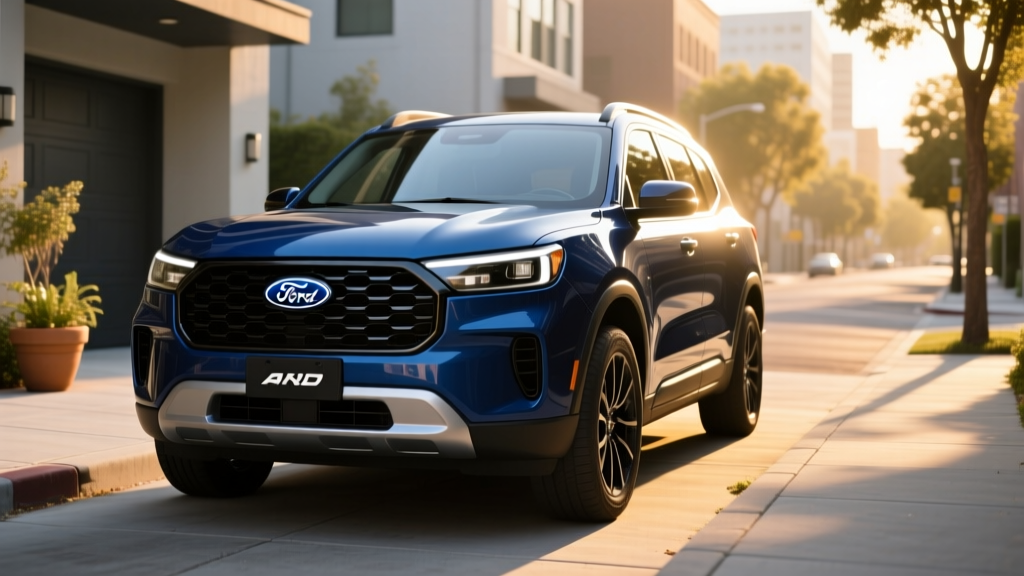
The Ford Maverick Hybrid occupies a rare spot in the truck market: a compact pickup that sips fuel like a midsize sedan while still offering a functional 4.5-foot bed and 1,500-pound payload capacity. With the addition of all-wheel drive for the 2025 model year, Ford answered the biggest complaint about the original FWD-only hybrid powertrain. But adding a second driven axle inevitably changes the fuel economy story. Here's the complete breakdown of Ford Maverick Hybrid AWD MPG, real-world efficiency, powertrain specs, and whether this truck fits your garage — or whether a PHEV or full EV makes more sense.
Ford Maverick Hybrid AWD MPG: The EPA Numbers
The 2025 Ford Maverick Hybrid with AWD carries EPA-estimated fuel economy ratings that remain impressive for a truck, even if they trail the front-wheel-drive variant slightly. Ford's engineering team managed the AWD penalty well by using an electrically driven rear axle rather than a mechanical driveshaft, preserving much of the hybrid system's efficiency.
| Configuration | City MPG | Highway MPG | Combined MPG | Fuel Tank | EPA Est. Range |
|---|---|---|---|---|---|
| Hybrid FWD | 42 | 33 | 38 | 16.5 gal | ~627 mi |
| Hybrid AWD | 38 | 38 | 40 | 16.5 gal | ~660 mi |
| EcoBoost 2.0T AWD | 23 | 30 | 26 | 16.5 gal | ~429 mi |
Source: EPA Fuel Economy Guide
The AWD hybrid actually achieves a slightly higher combined EPA rating than the FWD hybrid (40 vs 38 combined), largely because the rear electric motor assists more seamlessly during mixed driving and the AWD system's highway efficiency matches the FWD's 38 MPG highway figure. The FWD hybrid still wins in pure city driving, where the front-only electric assist is lighter and more efficient in stop-and-go conditions.
Powertrain: How the AWD Hybrid System Works
The Maverick Hybrid AWD pairs Ford's 2.5-liter Atkinson-cycle inline-four engine with two electric motors — one integrated into the transaxle driving the front wheels, and a second independent motor powering the rear axle. There is no mechanical connection between the front and rear drivelines; the rear axle engages electronically when traction is needed or during hard acceleration.
| Spec | Value |
|---|---|
| Engine | 2.5L Atkinson-cycle I-4 |
| Combined System Horsepower | 194 hp |
| Front Motor | Permanent-magnet AC synchronous (integrated in eCVT) |
| Rear Motor (AWD) | Independent electric motor, electronically engaged |
| Transmission | Electronic continuously variable (eCVT) |
| Hybrid Battery | 1.1 kWh lithium-ion (sealed, self-charging HEV) |
| 0-60 MPH | ~7.8 seconds (est.) |
| Max Payload | 1,500 lbs |
| Max Towing | 2,000 lbs (4,000 lbs with 4K Tow Package — gas only) |
| Drivetrain | Electronic AWD with rear motor disconnect |
The 1.1 kWh battery pack is small by EV standards — and that's intentional. As a conventional hybrid (HEV), the Maverick never plugs in. The battery captures energy from regenerative braking and engine excess, then deploys it for electric assist during acceleration and low-speed electric-only driving at parking-lot speeds. The rear motor disconnects entirely during steady-state cruising to eliminate drag losses.
HEV vs PHEV vs EV: Which Powertrain Fits Your Truck Needs?
The Maverick Hybrid is a conventional hybrid (HEV) — it has no plug, no electric-only highway range, and requires zero behavioral change from a gas-truck owner. Understanding how it compares to PHEVs and full EVs is essential before you buy.
| Factor | HEV (Maverick Hybrid) | PHEV (e.g., upcoming EVs) | BEV (e.g., Rivian R1T, F-150 Lightning) |
|---|---|---|---|
| Plug-in Required? | No — self-charging | Yes — plug in for EV range | Yes — plug in to drive |
| Electric-Only Range | ~1 mi at low speed | 25-50 mi typical | 230-400 mi |
| Fuel/Energy Cost per Mile | ~$0.08 (at $3.20/gal) | ~$0.04 (electric) / $0.10 (gas) | ~$0.04-$0.06 |
| Home Charging Needed? | No | Recommended (Level 2) | Essential (Level 2) |
| Upfront Cost Premium | Low (~$1,000 over gas) | Moderate-High | High |
| Tax Credit Eligible? | No | Yes (if requirements met) | Yes (if requirements met) |
| Best For | No-plug buyers wanting MPG gains | Short commutes + road trip flexibility | Home-charging access + lower running costs |
Choose the Maverick Hybrid AWD if: you want dramatically better fuel economy than a gas truck without changing your fueling habits, you don't have reliable access to home or workplace charging, or you regularly drive in areas with sparse public charging infrastructure.
Consider a PHEV or full EV truck if: you have home Level 2 charging, your daily commute falls within a PHEV's electric-only range (saving gasoline entirely on weekdays), or you want to access federal tax credits under IRS §30D that conventional hybrids don't qualify for.
Pricing, Trims, and Tax Credit Reality
The 2025 Ford Maverick Hybrid AWD is available across multiple trim levels. Ford made the hybrid powertrain a $0-cost option on some trims and a modest upcharge on others, making it one of the most affordable hybrid trucks available.
| Trim | Base MSRP (incl. destination) | Hybrid AWD Availability |
|---|---|---|
| XL Hybrid AWD | ~$28,140 | Available |
| XLT Hybrid AWD | ~$30,335 | Available |
| Lobo Hybrid (FWD only) | ~$32,495 | FWD only |
| Lariat Hybrid AWD | ~$35,560 | Available |
| Tremor (2.0T gas only) | ~$40,000+ | Not available as hybrid |
Source: Ford.com 2025 Maverick (pricing subject to change; confirm with dealer).
Battery Warranty, Lifespan, and Replacement Cost
Hybrid battery longevity is the top concern for first-time hybrid buyers — and it's a fair one, given that traction batteries are the single most expensive component in the powertrain. Ford backs the Maverick Hybrid's battery with one of the stronger warranties in the segment.
• Hybrid battery: 8 years / 100,000 miles (whichever comes first)
• Hybrid system components (motor, inverter, eCVT): 8 years / 100,000 miles
• Powertrain (engine): 5 years / 60,000 miles
• Bumper-to-bumper: 3 years / 36,000 miles
In California and states that follow CARB emissions rules, hybrid battery coverage extends to 10 years / 150,000 miles.
How long do Maverick Hybrid batteries actually last? Ford's 1.1 kWh lithium-ion pack is modest in size and operates within a narrow state-of-charge window (roughly 40-60% SoC during normal driving), which minimizes degradation stress. Toyota's comparable hybrid systems — the industry benchmark — routinely exceed 150,000-200,000 miles before significant capacity loss. Ford's eCVT-based hybrid architecture is mechanically simpler than a traditional transmission, reducing long-term failure points.
Replacement cost if out of warranty: Based on current parts pricing and industry estimates, a Maverick Hybrid battery replacement runs approximately $2,500-$4,000 including labor. This is substantially less than full EV battery replacements ($10,000-$20,000+) because the pack is small. Independent hybrid-repair shops are also increasingly able to replace individual cells rather than the entire pack, further reducing costs.
Real-World Ownership: What MPG Actually Looks Like
EPA estimates are a starting point, not a guarantee. Here's what Maverick Hybrid AWD owners and testers report across common driving scenarios:
- City commuting (suburban stoplights, 25-40 MPH): 40-45 MPG. The hybrid system shines here — frequent regenerative braking and low-speed electric assist maximize efficiency. Some hypermilers report 48+ MPG on flat city routes.
- Highway cruising (70-75 MPH, flat terrain): 34-38 MPG. The truck's boxy aerodynamics and the AWD system's residual drag limit highway gains. This is where the EcoBoost gas model narrows the gap somewhat.
- Highway towing (light trailer, ~1,500 lbs): 22-28 MPG. Towing is the hybrid's weakest scenario. The small battery can't sustain electric assist under continuous heavy load, and the engine works harder. The 2.0T EcoBoost may be preferable for frequent towing.
- Cold weather (below 32°F): Expect a 5-12% MPG reduction. The engine runs more frequently to provide cabin heat (no heat pump in the hybrid), and the battery is less efficient at low temperatures. Winter city MPG may dip to 35-38.
- Hot weather (above 95°F with A/C): 2-5% reduction. The hybrid battery's thermal management system and cabin cooling draw additional load.
Fuel cost comparison: At $3.20/gallon and 15,000 miles/year, the Maverick Hybrid AWD (40 MPG combined) costs roughly $1,200/year in fuel. The 2.0T EcoBoost AWD (26 MPG combined) costs approximately $1,846/year. That's a $646 annual savings with the hybrid — and the gap widens as gas prices rise.
Pros and Cons: Maverick Hybrid AWD at a Glance
Pros
- 40 MPG combined EPA — best-in-class for AWD trucks
- No plug required — zero lifestyle change from gas trucks
- AWD available (added 2025) for snow/rain/trail traction
- Low starting price (~$28,140) undercuts most midsize trucks
- 8-year/100,000-mile hybrid battery warranty
- Functional 4.5-foot bed with 1,500-lb payload
- Real-world city MPG often exceeds EPA estimate
Cons
- Towing limited to 2,000 lbs (4K Tow Package is gas-only)
- Not eligible for $7,500 federal EV tax credit (not a PHEV/BEV)
- Highway MPG advantage narrows vs EcoBoost at sustained 75+ MPH
- Smaller bed than midsize trucks (Tacoma, Ranger, Colorado)
- No DC fast charging (not applicable — this is an HEV)
- Dealer markups and wait times remain common in some markets
- Hybrid-only FWD on Lobo trim limits AWD availability
Who Should Buy the Maverick Hybrid AWD?
This truck is purpose-built for a specific buyer profile. You'll get maximum value from the Maverick Hybrid AWD if:
- You commute in mixed city/highway driving and want truck utility without truck fuel bills. The city-heavy commute is where the hybrid's regenerative system pays the biggest dividends.
- You live in a snow-belt or rain-heavy region where AWD is necessary for part of the year, but you don't want the fuel penalty of a traditional AWD truck.
- You don't have home charging access. Apartment dwellers, street parkers, and those without garage charging infrastructure benefit enormously from a hybrid that never needs a plug.
- Your towing needs are light (utility trailer, small boat, motorcycle — under 2,000 lbs). If you regularly tow heavier loads, the EcoBoost 2.0T with the 4K Tow Package is the better fit.
- You want the lowest total cost of ownership in a compact truck. The combination of low MSRP, strong MPG, and minimal maintenance (no transmission fluid changes on the eCVT, regenerative braking extends pad life) makes this one of the cheapest trucks to own over five years.
Look elsewhere if: you need midsize-truck payload/towing (consider Ranger or F-150), you want electric-only commuting (look at PHEV SUVs or a full EV with home charging), or you frequently tow above 2,000 lbs.
Frequently Asked Questions
How many MPG does the Ford Maverick Hybrid AWD get?
The EPA rates the 2025 Maverick Hybrid AWD at 38 city / 38 highway / 40 combined MPG. In real-world driving, owners report 37-45 MPG depending on conditions — city driving often exceeds the EPA estimate thanks to regenerative braking, while sustained highway driving above 75 MPH may yield 33-36 MPG.
Does the Maverick Hybrid need to be plugged in?
No. The Maverick Hybrid is a conventional hybrid (HEV), not a plug-in hybrid (PHEV). It charges its small 1.1 kWh battery through regenerative braking and the gasoline engine. You fuel it exclusively at gas stations — no plug, no charger, no behavioral change required.
Does the Ford Maverick Hybrid qualify for a tax credit?
Not the federal §30D Clean Vehicle Credit — that credit applies only to plug-in vehicles (PHEVs and BEVs) meeting battery-sourcing, MSRP, and income requirements. The Maverick Hybrid is a conventional HEV and is ineligible. Some state programs and utility companies offer small hybrid rebates; check your local jurisdiction for current availability.
How long will the Maverick Hybrid battery last?
Ford warrants the hybrid battery for 8 years / 100,000 miles (10 years / 150,000 miles in CARB states). Based on industry data from comparable hybrid systems, these batteries routinely last 150,000-200,000+ miles before significant degradation. If replacement is needed out of warranty, expect $2,500-$4,000.
Is the Maverick Hybrid AWD good in snow?
Yes. The electronically engaged rear motor provides torque to the rear axle when front-wheel slip is detected, giving the AWD hybrid confident traction in snow and rain. It's not a dedicated off-roader like the Tremor, but for winter commuting and light trail use, it's well-suited.
How does Maverick Hybrid AWD MPG compare to competitors?
There is no direct compact-truck hybrid AWD competitor at this price point. The Hyundai Santa Cruz (turbo AWD) achieves roughly 22-24 MPG combined. The Toyota Tacoma i-FORCE MAX hybrid (midsize, much heavier) achieves around 23-26 MPG combined. The Maverick Hybrid AWD's 40 MPG combined is unmatched in the truck segment.