Quick Verdict: A Proven Midsize Hybrid Sedan on the Used Market
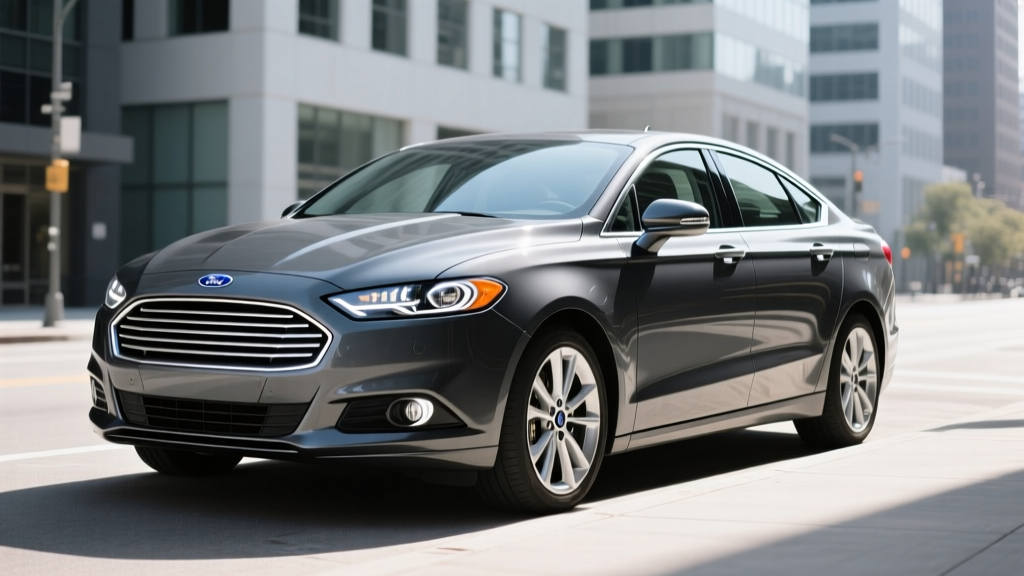
The 2015 Ford Fusion Hybrid SE FWD remains one of the more compelling used hybrid sedans you can buy in 2026. Ford paired a 2.0-liter Atkinson-cycle four-cylinder with an electric motor and a compact lithium-ion battery to deliver an EPA-rated 42 MPG combined — a figure that still holds up against newer hybrid offerings. The SE trim sits in the sweet spot: well-equipped with Sync infotainment, power driver seat, and dual-zone climate control, without the Premium price tag.
If you're cross-shopping used midsize sedans and weighing a conventional hybrid against a plug-in hybrid or full EV, this guide breaks down exactly what the 2015 Fusion Hybrid SE FWD delivers — and where its limits lie — more than a decade after it rolled off the assembly line.
| Spec | Value |
|---|---|
| EPA MPG (City / Highway / Combined) | 44 / 41 / 42 |
| Powertrain | 2.0L Atkinson I-4 + electric motor (eCVT) |
| Combined System Horsepower | 188 hp |
| Battery Type / Capacity | Lithium-ion / 1.4 kWh (gross) |
| Drivetrain | Front-wheel drive |
| 0–60 mph | ~8.0 seconds |
| Fuel Tank | 13.5 gallons |
| Total Driving Range | ~567 miles |
| Cargo Volume | 12.0 cu ft (reduced by battery) |
| Original MSRP (SE trim) | ~$27,280 |
| Typical 2026 Used Price | $8,500–$13,000 |
HEV vs. PHEV: Understanding What You're Buying
The 2015 Fusion Hybrid is a conventional hybrid electric vehicle (HEV). It cannot be plugged in. The 1.4 kWh battery charges exclusively through regenerative braking and the gasoline engine. You will never see an electric-only range figure for this car because it is not designed to drive on electricity alone for meaningful distances — the motor assists the engine and enables brief low-speed EV-mode creep, but the gas engine is always doing the heavy lifting.
| Factor | HEV (this car) | PHEV (e.g., Fusion Energi) | BEV (e.g., Tesla Model 3) |
|---|---|---|---|
| Plug in to charge? | No | Yes | Yes |
| Electric-only range | ~0.5 mi (creep only) | ~20–40 mi typical | 250–400 mi typical |
| Gasoline required? | Yes, always | Yes, for longer trips | No |
| Home charging needed? | No | Recommended (120V ok) | Essential (240V ideal) |
| Federal tax credit (new) | None | Up to $7,500 (§30D) | Up to $7,500 (§30D) |
| Best for | No home charging access | Short commute + road trips | Home charging + daily driving |
Ford also sold the Fusion Energi — the plug-in hybrid variant — in the same model year. The Energi used a larger 7.6 kWh lithium-ion battery, offered about 19 miles of electric-only range (EPA), and could be charged from a standard 120V outlet or a 240V Level 2 charger. If you want plug-in capability in a Fusion, the Energi is the one to seek out, not this conventional Hybrid.
Fuel Economy: EPA Ratings vs. Real-World MPG
| Driving Condition | EPA MPG |
|---|---|
| City | 44 MPG |
| Highway | 41 MPG |
| Combined | 42 MPG |
Source: EPA Fuel Economy Guide
The Fusion Hybrid's city MPG actually exceeds its highway rating — a hallmark of conventional hybrids. Regenerative braking recovers energy in stop-and-go traffic, and the electric motor handles low-speed acceleration where gas engines are least efficient. On the highway, the 2.0L engine carries more of the load, and aerodynamic drag reduces the hybrid system's advantage.
Real-World MPG Expectations
Owner-reported data on Fuelly and similar platforms consistently shows real-world combined averages between 39 and 44 MPG for the 2015 Fusion Hybrid. Several factors influence where you'll land:
- City-dominant driving: Many owners report 44–47 MPG in urban commuting with frequent stops, exceeding the EPA city rating.
- Highway-dominant driving: Sustained 70–80 mph cruising typically yields 37–40 MPG — below the EPA highway figure.
- Cold weather: Expect a 5–10% MPG drop in winter. The engine runs more often to provide cabin heat, and battery efficiency decreases in low temperatures.
- Driving style: Aggressive acceleration defeats the hybrid system's purpose. Smooth, moderate inputs maximize electric-motor assist time.
With a 13.5-gallon fuel tank and 42 MPG combined, real-world total range sits around 500–570 miles per fill-up — competitive with any midsize sedan and far better than most turbocharged gas competitors.
Powertrain Deep Dive: How the Hybrid System Works
The 2015 Fusion Hybrid uses Ford's second-generation hybrid powertrain, shared with the C-Max Hybrid and Lincoln MKZ Hybrid of the same era:
- Engine: 2.0-liter Atkinson-cycle inline-4 producing 141 hp and 129 lb-ft of torque. The Atkinson cycle sacrifices some low-end power for greater thermal efficiency.
- Electric motor: Permanent-magnet AC synchronous motor contributing up to 118 hp (system combined output is limited to 188 hp, not a simple sum).
- Transmission: Electronically controlled continuously variable transmission (eCVT) — a planetary gearset, not a belt-driven CVT. This is mechanically robust with no belts or pulleys to fail.
- Battery: 1.4 kWh gross lithium-ion pack located behind the rear seat. This compact size is why cargo space is 12.0 cu ft versus 16.0 cu ft in the gas Fusion.
The eCVT is a key reliability advantage. Unlike belt-type CVTs found in some competitors (notably older Nissan models), Ford's planetary eCVT has no friction-dependent components. It's essentially bulletproof with basic fluid maintenance.
Battery Longevity, Warranty, and Replacement Cost
Hybrid Battery Warranty (Original)
Ford warranted the 2015 Fusion Hybrid's lithium-ion traction battery for 8 years / 100,000 miles (extended to 10 years / 150,000 miles in California and states that adopted CARB emissions standards). That warranty has now expired for virtually all 2015 examples unless a certified replacement battery was installed more recently.
How Long Do These Batteries Actually Last?
The 1.4 kWh battery in the Fusion Hybrid is small and conservatively managed — Ford's battery management system keeps the state of charge within a narrow window (roughly 40–60% in normal operation), which dramatically reduces cycle stress. This shallow-cycling strategy is why many first-generation Ford Hybrids (2010–2012 Fusion Hybrid with NiMH batteries) exceeded 150,000–200,000 miles on original battery packs.
For the 2015 lithium-ion pack, expect similar longevity: 150,000–200,000+ miles before significant degradation. "Significant" here means enough capacity loss that you notice reduced electric-motor assist and a 2–4 MPG drop — not total failure. The car remains drivable even with a degraded hybrid battery; the engine simply compensates.
Battery Replacement Cost
If you do face a hybrid battery replacement:
- New OEM battery (Ford dealer): $2,500–$4,000 including labor, depending on region and dealer pricing.
- Refurbished/remanufactured pack: $1,200–$2,000 from independent hybrid specialists.
- Individual cell replacement: Some hybrid repair shops can diagnose and replace only the failed module(s) for $500–$1,000, though this requires specialized expertise.
Compared to full EV battery replacements ($5,000–$20,000+), the Fusion Hybrid's small battery is relatively inexpensive to service. The risk is manageable, especially if you're buying an example under 120,000 miles.
Pricing, Tax Credits, and Used-Buyer Economics
When new, the 2015 Fusion Hybrid SE started around $27,280 (destination included). In 2026, used examples typically sell for $8,500–$13,000 depending on mileage, condition, and region, based on Kelley Blue Book and Autotrader listings.
Tax Credit Eligibility
The 2015 Fusion Hybrid does not qualify for any federal tax credit — neither when new nor on the used market. Under current IRS §30D rules, the federal new-vehicle EV/PHEV credit applies only to plug-in vehicles with sufficient battery capacity, and conventional HEVs have never been eligible. The IRS clean vehicle credit page confirms that HEVs are excluded.
The used clean vehicle credit (up to $4,000 or 30% of sale price, whichever is less) also requires the vehicle to be a plug-in EV or PHEV with at least 7 kWh of battery capacity. The Fusion Hybrid's 1.4 kWh pack and lack of a plug disqualify it entirely.
Some states offer their own hybrid incentives, but these are increasingly rare and typically target new purchases. Check your state's energy office or DMV for any current programs.
Total Cost of Ownership Snapshot
At $10,500 (mid-range used price), 15,000 miles/year, $3.20/gallon regular, and 42 MPG combined, annual fuel cost is roughly $1,143. A comparable 2015 gas-only Fusion (2.5L, ~26 MPG combined) would cost about $1,846/year in fuel — a savings of roughly $700 annually with the hybrid. Over five years, that's ~$3,500 in fuel savings, which largely offsets the hybrid's modest used-price premium over gas-only Fusions.
Who Should Choose This Hybrid (And Who Shouldn't)
Pros
- 42 MPG combined EPA — proven, real-world-validated efficiency
- No plug-in charging required — works for apartment dwellers
- Smooth, quiet eCVT with excellent reliability record
- Strong safety ratings (IIHS Top Safety Pick)
- Affordable used pricing ($8,500–$13,000)
- Low-cost hybrid battery replacement vs. full EV
Cons
- Trunk space reduced to 12.0 cu ft (battery intrusion)
- No electric-only driving range
- No federal or state tax credit eligibility
- Hybrid battery warranty has expired on all 2015 examples
- Infotainment (Sync 2) feels dated vs. modern systems
- Acceleration is adequate, not quick (~8.0 sec 0–60)
Choose the 2015 Fusion Hybrid SE if:
- You lack access to home or workplace charging (apartment, street parking).
- Your commute involves heavy stop-and-go traffic where hybrids shine.
- You want a reliable midsize sedan under $13,000 with low running costs.
- You drive 12,000–18,000 miles/year and fuel savings matter.
Look at a PHEV or full EV instead if:
- You have Level 2 home charging and a short commute (a PHEV or EV eliminates most gasoline use).
- You want tax credits — a used EV under $25,000 may qualify for the $4,000 used-vehicle credit.
- You prioritize cargo space — the battery pack compromises the Fusion's trunk.
- You want modern infotainment with Apple CarPlay/Android Auto (not available on the 2015 Sync 2 system).
Reliability and Common Issues to Watch
The 2015 Fusion Hybrid's powertrain is among Ford's most reliable offerings. The eCVT, Atkinson-cycle engine, and hybrid battery have all demonstrated strong longevity. However, a few non-powertrain items deserve attention when buying used:
- 12V auxiliary battery: Like all hybrids, the Fusion has a conventional 12V battery that powers electronics. These typically last 3–5 years. A dead 12V battery will prevent the car from starting, even though the hybrid battery is fine.
- Brake actuator: Some 2013–2015 Fusion Hybrids experienced issues with the regenerative brake actuator module. Check for any open recalls or service bulletins on the specific VIN via NHTSA's recall lookup.
- Coolant system: The hybrid system has its own coolant loop separate from the engine. Ensure maintenance records show coolant service at recommended intervals.
- Infotainment glitches: The Sync 2 (MyFord Touch) system was notorious for slow response and occasional freezes. A software update from Ford resolved many issues; confirm it was applied.
Frequently Asked Questions
How many MPG does the 2015 Ford Fusion Hybrid SE FWD get?
The EPA rates it at 44 MPG city, 41 MPG highway, and 42 MPG combined. Real-world owners typically see 39–44 MPG combined depending on driving mix, with city-dominant driving often exceeding the EPA city rating and sustained highway driving falling slightly below the highway rating.
Can I plug in the 2015 Fusion Hybrid to charge it?
No. The 2015 Fusion Hybrid is a conventional HEV with no plug and no charging port. The battery charges only through regenerative braking and the gasoline engine. If you want a plug-in Fusion, look for the Fusion Energi, which was Ford's PHEV variant of the same car.
How far can the 2015 Fusion Hybrid go on electric power alone?
Effectively zero miles at meaningful speeds. The electric motor can propel the car at very low speeds (under ~25 mph) for brief distances — roughly half a mile — but the gasoline engine engages almost immediately for normal acceleration. This is not a plug-in hybrid; electric-only operation is incidental, not a feature.
Is the 2015 Fusion Hybrid reliable, and what does a battery replacement cost?
Yes — the hybrid powertrain (engine, eCVT, battery) is one of Ford's most reliable setups. The eCVT uses a planetary gearset with no wear-prone belts. Hybrid batteries commonly last 150,000–200,000+ miles. If replacement is needed, expect $1,200–$4,000 depending on whether you choose a refurbished or new OEM pack.
Does the 2015 Ford Fusion Hybrid qualify for any tax credit?
No. Conventional hybrids (HEVs) have never qualified for the federal §30D clean vehicle credit, which requires plug-in capability and minimum battery capacity. The used-vehicle credit also excludes HEVs. No current federal incentive applies to this car. Check your state's energy office for any local hybrid programs, though these are rare.
How does the Fusion Hybrid compare to the Toyota Camry Hybrid of the same year?
The 2015 Camry Hybrid LE is rated at 41 MPG combined (40 city / 38 highway per EPA), slightly below the Fusion's 42 combined. The Fusion has a more refined interior and sharper handling, while the Camry Hybrid typically commands higher used prices and has an even stronger long-term reliability reputation. Both are excellent choices — the Fusion often represents better value on the used market.
What should I check before buying a used 2015 Fusion Hybrid?
Request maintenance records confirming regular oil changes, hybrid coolant service, and 12V battery replacement history. Run the VIN through NHTSA's recall database. Test-drive in stop-and-go traffic to verify smooth regenerative braking transitions. If possible, have a hybrid-qualified mechanic perform a battery state-of-health diagnostic using an OBD-II scanner that reads hybrid battery parameters.