The Dodge Hornet R/T Plug-In Hybrid occupies a specific niche: it's one of the few compact crossover PHEVs that leans into performance rather than pure efficiency. Sharing its platform with the Alfa Romeo Tonale, the Hornet PHEV pairs a turbocharged gasoline engine with an electric motor and a 15.5 kWh battery pack, delivering 285 combined horsepower and an EPA-estimated 32 miles of electric-only driving. For 2026, it remains Dodge's only electrified offering and a compelling option for buyers who want some electric capability without committing to a full battery-electric vehicle.
This guide covers everything a prospective buyer needs: real-world MPG versus EPA estimates, electric-only range in practical conditions, charging logistics, battery longevity, federal tax credit eligibility under current IRS §30D rules, and how the Hornet PHEV stacks up against full hybrids and full EVs.
HEV vs. PHEV: What the Dodge Hornet Plug-In Hybrid Actually Is
Before diving into specs, it's worth clarifying what you're looking at. The Hornet lineup includes two distinct powertrains:
Dodge Hornet GT (Conventional Hybrid / HEV)
The standard Hornet GT uses a mild-hybrid setup with a 48-volt system assisting the 2.0L turbo engine. It cannot be plugged in, has no meaningful electric-only range, and operates like a traditional gasoline car that recovers energy during braking. Think of it as a gas car with a small efficiency boost.
Dodge Hornet R/T (Plug-In Hybrid / PHEV)
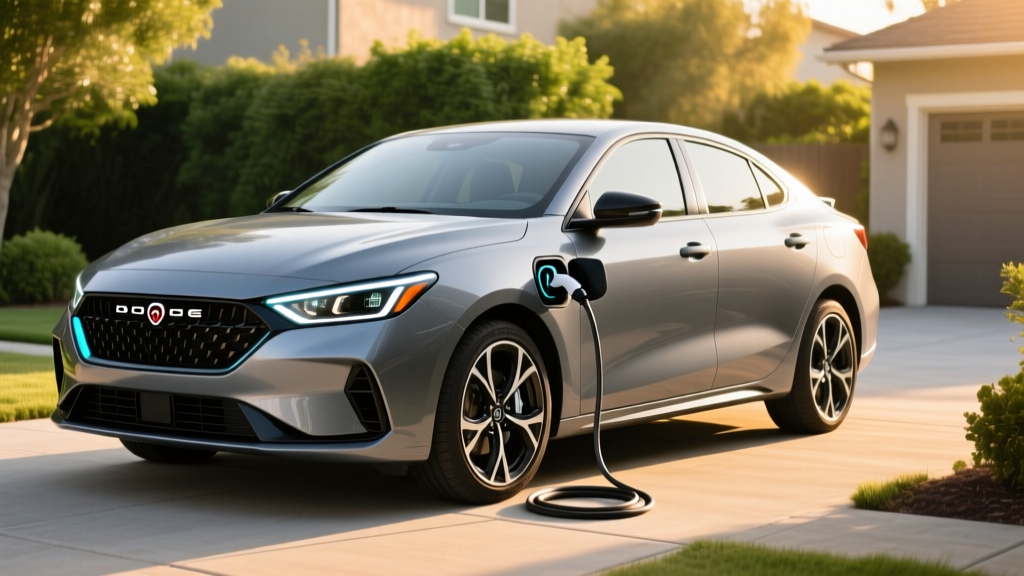
The R/T is a true plug-in hybrid with a 15.5 kWh lithium-ion battery, a rear-axle electric motor, and a charging port. You plug it in to access its 32-mile electric-only range. When the battery depletes, it operates as a conventional hybrid using regenerative braking — no plugging in required for hybrid mode.
The distinction matters because the ownership experience, fuel costs, and tax credit eligibility are fundamentally different between the two. This article focuses on the Dodge Hornet R/T Plug-In Hybrid.
Fuel Economy: EPA Ratings and Real-World MPG
The Hornet PHEV's efficiency depends entirely on how you use it. With a charged battery and short commutes, you may burn almost no gasoline. On long highway trips with a depleted battery, it reverts to hybrid operation.
| Metric | EPA Estimate | Real-World Expectation |
|---|---|---|
| Combined MPGe (electric + gas) | 77 MPGe | 70–80 MPGe with regular charging |
| Gas-only combined MPG (battery depleted) | 29 MPG | 26–28 MPG highway; 30–32 MPG city |
| City MPG (gas-only mode) | 31 MPG | 30–33 MPG (regen helps in stop-and-go) |
| Highway MPG (gas-only mode) | 28 MPG | 25–27 MPG at 75+ mph |
| Electric-only range | 32 miles | 25–30 miles (highway/cold); 30–34 miles (city/mild weather) |
| Total combined range | ~380 miles | ~340–370 miles depending on conditions |
Real-world note: PHEVs reward city driving and frequent charging. If your daily commute is under 30 miles and you charge every night, you could go weeks without visiting a gas station. However, on sustained highway trips at 75 mph with a depleted battery, expect fuel economy closer to 26 MPG — the electric motor contributes less at high speeds, and the Hornet's 3,700+ lb curb weight works against it. Cold weather (below 35°F) will reduce electric-only range by roughly 15–20%, dropping it to approximately 25–27 miles.
For comparison, the EPA's fueleconomy.gov listing confirms the 77 MPGe combined and 29 MPG gas-only figures.
Powertrain and Performance Specs
| Specification | Dodge Hornet R/T PHEV |
|---|---|
| Gasoline engine | 1.3L turbocharged 4-cylinder |
| Engine output | 177 HP / 199 lb-ft torque |
| Electric motor | Rear-axle P2 motor, 121 HP |
| Combined system output | 285 HP / 383 lb-ft torque |
| Transmission | 6-speed automatic (front); single-speed (rear e-axle) |
| Drivetrain | AWD (e-AWD with electric rear axle) |
| 0–60 mph | 5.6 seconds (with PowerShot boost) |
| Battery capacity | 15.5 kWh (lithium-ion, NMC chemistry) |
| Battery usable capacity | ~12.0 kWh |
| EPA electric range | 32 miles |
| Fuel tank | 11.2 gallons |
| Curb weight | ~3,800 lbs |
The PowerShot feature deserves a mention: activating it via a steering-wheel button delivers a temporary boost from both power sources simultaneously, dropping the 0–60 time to 5.6 seconds. It's a 15-second burst that's genuinely useful for highway merging. This is the performance angle that separates the Hornet PHEV from competitors like the Toyota RAV4 Prime or Hyundai Tucson PHEV, which prioritize efficiency over acceleration.
Charging: Speeds, Times, and Home Setup
One of the Hornet PHEV's notable limitations is its charging infrastructure. Here's what you need to know:
| Charging Level | Power | Time (0–100%) | Notes |
|---|---|---|---|
| Level 1 (120V household outlet) | ~1.4 kW | ~9–10 hours | Overnight from near-empty; adequate for most daily use |
| Level 2 (240V home/public) | ~7.4 kW | ~2.5 hours | Recommended home setup; full charge while you work or sleep |
| DC Fast Charging | Not supported | N/A | No CCS or CHAdeMO port; Level 2 is the maximum |
Key takeaway: The Hornet PHEV cannot DC fast charge. This is typical for compact PHEVs — the 15.5 kWh battery is small enough that Level 2 charging fills it in about 2.5 hours, and most PHEV owners charge overnight at home. If you're relying on public charging infrastructure or need quick top-ups on road trips, this is a limitation worth understanding. The J1772 connector handles all Level 1 and Level 2 charging.
For home Level 2 installation, budget between $500–$1,500 for a quality 32-amp or 40-amp wall connector (ChargePoint Home Flex, Emporia Vue, or similar), plus $300–$1,200 for electrician labor depending on your panel's proximity to the garage. A panel upgrade (to 200A) can add $1,500–$3,000 if your home has an older 100A service. Always get a quote from a licensed electrician before committing.
Pricing, Trims, and Federal Tax Credit Eligibility
For the 2026 model year, the Dodge Hornet R/T Plug-In Hybrid starts at approximately $41,490 MSRP (including destination). A well-equipped R/T Plus trim pushes closer to $47,000–$49,000 with options like the Track Pack, premium audio, and advanced driver-assistance features.
Federal §30D Tax Credit — Current Rules (IRS)
- Credit amount: Up to $7,500, split between critical minerals ($3,750) and battery components ($3,750)
- MSRP cap: Vehicle must be under $80,000 for SUVs/crossovers — the Hornet qualifies
- Buyer income cap: AGI must not exceed $150,000 (single), $225,000 (head of household), or $300,000 (joint)
- Battery sourcing: Critical minerals and battery components must meet phased-in domestic/F TA content thresholds for 2026
- Point-of-sale transfer: Eligible buyers can transfer the credit to the dealer for an immediate price reduction at purchase
- Assembly: Vehicle must undergo final assembly in North America — the Hornet is built in Italy, which may disqualify it
Critical caveat: The Hornet is manufactured at the Stellantis plant in Pomigliano, Italy. Under §30D, final assembly must occur in North America to qualify for the federal credit. Check the IRS qualified vehicles list before assuming eligibility — as of recent model years, the Hornet PHEV has not appeared on the eligible list due to its foreign assembly. This is a significant disadvantage versus domestically built competitors like the Chrysler Pacifica PHEV or the Ford Escape PHEV.
Some states offer their own rebates for PHEVs regardless of assembly location. Check your state's energy or environmental agency for current programs — California, Colorado, Massachusetts, and New York are among states with additional incentives, though amounts and eligibility vary.
Battery Warranty, Reliability, and Replacement Costs
Dodge Hornet PHEV Battery & Powertrain Warranty
- High-voltage battery: 8 years / 100,000 miles (whichever comes first)
- Capacity retention threshold: Warranty covers repair/replacement if battery drops below ~70% of original capacity
- Powertrain: 5 years / 60,000 miles
- Bumper-to-bumper: 3 years / 36,000 miles
- Estimated out-of-warranty battery replacement: $5,000–$8,000 (based on comparable Stellantis PHEV battery costs)
The 8-year/100,000-mile battery warranty is federally mandated for PHEVs and provides meaningful peace of mind. In practice, lithium-ion PHEV batteries degrade slowly — most owners see 5–10% capacity loss over the first 5 years, meaning your 32-mile electric range might drop to 28–30 miles by year five. This is normal and not a warranty concern.
Reliability data for the Hornet is still accumulating given its relatively recent launch. The shared Alfa Romeo Tonale platform has shown average reliability in early surveys, and the 1.3L turbo engine is a proven Stellantis unit used globally. The most common complaints in early model years involved software glitches in the Uconnect 5 infotainment system and occasional rough transitions between electric and gas modes — issues that have been largely addressed through over-the-air updates.
If you plan to keep the vehicle beyond the battery warranty period, budget for potential hybrid system maintenance. The electric motor and power electronics are generally robust, but the 6-speed automatic transmission and turbocharged engine will require standard maintenance (fluid changes, spark plugs, turbo care) that a full EV would not.
Who Should Buy the Dodge Hornet Plug-In Hybrid?
Choose the Hornet PHEV if:
- Your daily commute is 25–35 miles round-trip and you can charge at home every night
- You want AWD capability and peppy acceleration (285 HP, 5.6s 0–60) in a compact crossover
- You take regular road trips and don't want to plan around charging stations
- You want to reduce fuel consumption without committing to a full EV
- Performance matters to you more than maximum efficiency
Look elsewhere if:
- You need more than 32 miles of electric range (consider the Toyota RAV4 Prime at 42 miles)
- Federal tax credit eligibility is a priority (Hornet's Italian assembly likely disqualifies it)
- You want DC fast charging capability for apartment/condo living without home charging
- Maximum fuel efficiency is your goal (the RAV4 Prime returns 38 MPG gas-only vs. the Hornet's 29)
- You prefer a fully electric experience — consider the Hyundai Ioniq 5 or Tesla Model Y instead
Hornet PHEV vs. Full EV vs. Gas Car: The Ownership Math
The right choice depends on your driving patterns, charging access, and budget. Here's a practical framework:
| Factor | Hornet R/T PHEV | Full EV (e.g., Ioniq 5) | Gas Car (e.g., Hornet GT AWD) |
|---|---|---|---|
| Approx. purchase price | $41,500 | $42,000 | $32,500 |
| Fed. tax credit | $0 (likely ineligible) | Up to $7,500 | $0 |
| Annual fuel/energy cost | ~$800–$1,200 | ~$500–$700 | ~$1,800–$2,200 |
| 5-year fuel/energy total | ~$5,000 | ~$3,000 | ~$10,000 |
| Maintenance (5-year) | ~$2,500 | ~$1,200 | ~$3,000 |
| Home charging install | $500–$1,500 | $500–$2,000 | $0 |
The PHEV's sweet spot is the buyer who can charge nightly, commutes under 30 miles, and regularly takes trips exceeding 250 miles where EV charging logistics become a burden. If you can charge at home and rarely drive more than 40 miles daily, a full EV will save you more money long-term — especially with the $7,500 federal credit that the Hornet likely cannot access. If you have no charging access at all, a conventional hybrid like the Toyota RAV4 Hybrid (39 MPG combined) makes more sense than a PHEV you can never plug in.
Pros and Cons
Pros
- 285 HP and 5.6s 0–60 make it one of the quickest compact PHEV crossovers
- Standard AWD via electric rear axle — no mechanical driveshaft
- 32-mile EV range covers most daily commutes
- Uconnect 5 infotainment is responsive and well-organized
- Drives like a performance crossover, not an efficiency appliance
- No range anxiety — gas engine covers long trips seamlessly
Cons
- Likely ineligible for $7,500 federal tax credit (Italian assembly)
- 29 MPG gas-only is mediocre for a PHEV (RAV4 Prime: 38 MPG)
- No DC fast charging capability
- Cargo space reduced versus gas Hornet (battery placement)
- Higher starting price than non-hybrid competitors
- Electric range drops to ~25 miles in cold weather or highway driving
Frequently Asked Questions
How many MPG does the Dodge Hornet plug-in hybrid get?
The EPA rates the Hornet R/T PHEV at 77 MPGe combined when operating in electric-assist mode, and 29 MPG combined (31 city / 28 highway) when running on gasoline alone with a depleted battery. Real-world gas-only MPG tends to be 26–28 on the highway and 30–32 in city driving, where regenerative braking recovers more energy.
How far can the Dodge Hornet PHEV go on electric only?
The EPA estimates 32 miles of electric-only range. In real-world conditions, expect 25–30 miles on the highway or in cold weather (below 35°F) and 30–34 miles in mild-weather city driving where speeds are lower and regen braking is maximized. The usable battery capacity is approximately 12 kWh of the total 15.5 kWh pack — the remainder is a buffer to protect battery longevity.
Does the Dodge Hornet PHEV qualify for a tax credit?
Under current IRS §30D rules, the Hornet PHEV is likely ineligible for the federal tax credit because it is assembled in Italy, and the credit requires final assembly in North America. Always verify on the IRS qualified vehicles list before purchasing. Some state-level incentives may still apply regardless of assembly location.
Is the Dodge Hornet hybrid reliable?
Long-term reliability data is still building, but the powertrain components are proven: the 1.3L turbo engine is used across Stellantis globally, and the hybrid system is shared with the Alfa Romeo Tonale. Early owner surveys show average reliability with most issues related to software rather than mechanical failures. The high-voltage battery carries an 8-year/100,000-mile warranty.
What does it cost to replace the Hornet PHEV battery?
Out-of-warranty replacement for the 15.5 kWh battery pack is estimated at $5,000–$8,000 based on comparable Stellantis PHEV systems. However, most PHEV batteries retain 85–90% capacity after 100,000 miles, and the 8-year warranty covers premature degradation below ~70%. Full replacement before 150,000 miles is uncommon.
Can I charge the Hornet PHEV at a DC fast charger?
No. The Hornet PHEV only supports Level 1 (120V) and Level 2 (240V) AC charging via a J1772 connector. There is no DC fast-charge port. A full Level 2 charge takes approximately 2.5 hours. This is standard for compact PHEVs with smaller batteries.
Hybrid vs. PHEV vs. EV — which should I choose?
A conventional hybrid (HEV) is best if you have no home charging access and want simple efficiency gains with no plug-in routine. A PHEV like the Hornet suits drivers with home charging who commute under 30 miles daily but also take frequent long road trips. A full EV is ideal if you can charge at home, drive under 250 miles daily, and want the lowest operating costs with zero tailpipe emissions — plus the $7,500 federal credit that many EVs (but not the Hornet) qualify for.