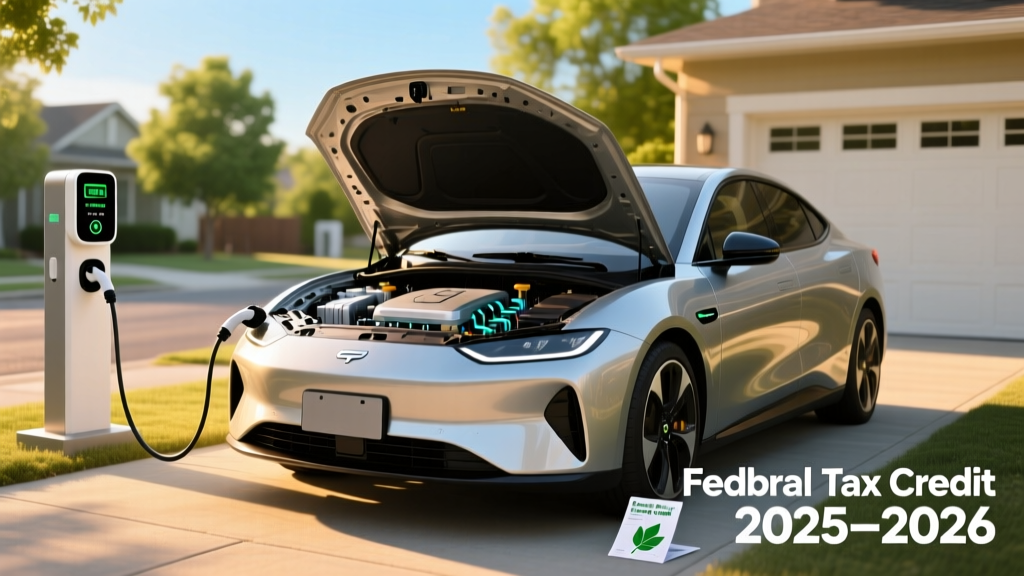
The Tax Credit Reality for Hybrids in 2026
Here's the short answer that saves you a lot of reading: conventional hybrids (HEVs) like the Toyota Camry Hybrid or Honda CR-V Hybrid do not qualify for the federal §30D tax credit. Only plug-in hybrids (PHEVs) with sufficient battery capacity and compliant sourcing can earn up to $7,500 — and even then, income caps, MSRP ceilings, and critical-mineral rules eliminate many buyers and models. As of the 2025-2026 tax year, the landscape has narrowed further under the Inflation Reduction Act's evolving battery-sourcing requirements.
This guide cuts through the confusion. We'll explain the HEV vs. PHEV distinction that determines credit eligibility, map out which popular PHEVs still qualify, walk through the §30D checklist, and help you decide whether a hybrid, PHEV, or full EV makes financial sense for your situation.
HEV vs. PHEV: The Tax-Credit Divide
| Feature | Conventional Hybrid (HEV) | Plug-in Hybrid (PHEV) |
|---|---|---|
| Plugs in? | No — charges via regenerative braking and engine | Yes — charges via plug and regenerative braking |
| Battery size | 0.5–2.0 kWh | 12–25+ kWh |
| Electric-only range | 0–1 mile (assist only) | 20–50+ miles |
| §30D federal tax credit | Never eligible | Up to $7,500 if all requirements met |
| Example | Toyota Prius HEV | Toyota RAV4 Prime |
Which Plug-in Hybrids Qualify for the Federal Tax Credit?
Under IRS §30D, a PHEV must meet all of the following to deliver a credit to you. Note that the credit is non-refundable (it can only reduce your federal tax liability to zero) unless you elect the point-of-sale transfer, which effectively makes it a dealer discount.
§30D Credit Checklist (2025–2026 Tax Year)
- Battery capacity: At least 7 kWh (most PHEVs clear this easily)
- MSRP caps: ≤$80,000 for vans, SUVs, and pickups; ≤$55,000 for sedans, wagons, and hatchbacks
- Buyer income limits (AGI): $300,000 joint / $225,000 head of household / $150,000 single
- North American final assembly: Vehicle must be assembled in the U.S., Canada, or Mexico (check VIN via NHTSA VIN decoder)
- Critical-mineral and battery-component sourcing: Percentages increase annually — for 2025, 80% of critical minerals and 100% of battery components must meet FEOC (Foreign Entity of Concern) compliance to earn the full $7,500. Partial credits of $3,750 may apply.
- Point-of-sale transfer: You can elect to transfer the credit to the dealer at purchase, reducing your out-of-pocket cost immediately (requires dealer registration)
- One credit per buyer per year: You cannot claim §30D on more than one new vehicle per calendar year
The IRS maintains a published list of eligible vehicles on IRS.gov. Always verify a specific VIN before purchase — eligibility can change if a manufacturer alters its supply chain.
PHEVs Commonly Purchased in 2025–2026: Credit Status
| Model (2025–2026 MY) | PHEV? | Battery (kWh) | EV Range | EPA Combined MPG/MPGe | Base MSRP | §30D Credit |
|---|---|---|---|---|---|---|
| Toyota RAV4 Prime | Yes | 18.1 kWh | 42 mi | 94 MPGe / 38 MPG | ~$44,500 | Eligible (verify sourcing) |
| Toyota Prius Prime | Yes | 13.6 kWh | 44 mi | 114 MPGe / 52 MPG | ~$33,500 | Eligible (verify sourcing) |
| Jeep Wrangler 4xe | Yes | 17.3 kWh | 22 mi | 49 MPGe / 20 MPG | ~$51,000 | Eligible (verify sourcing) |
| Chrysler Pacifica Hybrid | Yes | 16.0 kWh | 32 mi | 82 MPGe / 30 MPG | ~$51,000 | Eligible (verify sourcing) |
| Hyundai Tucson PHEV | Yes | 13.8 kWh | 33 mi | 80 MPGe / 35 MPG | ~$38,000 | Eligible (verify sourcing) |
| Ford Escape PHEV | Yes | 14.4 kWh | 37 mi | 105 MPGe / 40 MPG | ~$40,000 | Eligible (verify sourcing) |
| Toyota Camry Hybrid | No (HEV) | 1.1 kWh | N/A | 52 MPG combined | ~$29,500 | Not eligible |
| Honda CR-V Hybrid | No (HEV) | 1.1 kWh | N/A | 40 MPG combined | ~$35,000 | Not eligible |
Credit eligibility can shift mid-model-year. Always confirm on the IRS eligible-vehicle list and with your dealer before signing.
How Many MPG Does a Hybrid Actually Get?
Hybrid efficiency is where marketing meets reality — and the good news is that conventional hybrids often exceed their EPA city ratings in real-world stop-and-go driving, because regenerative braking recovers energy that a gas car wastes as heat.
| Model | EPA City | EPA Highway | EPA Combined | Real-World Note |
|---|---|---|---|---|
| Toyota Prius (HEV) | 57 MPG | 46 MPG | 52 MPG | Owners report 50–58 city; 42–48 highway |
| Toyota Camry Hybrid | 51 MPG | 53 MPG | 52 MPG | Consistent 48–55 in mixed driving |
| Honda CR-V Hybrid | 43 MPG | 36 MPG | 40 MPG | City exceeds EPA; highway drops at 75+ mph |
| Toyota RAV4 Hybrid | 41 MPG | 38 MPG | 39 MPG | 36–42 typical; AWD reduces slightly |
| Ford Maverick Hybrid | 42 MPG | 33 MPG | 37 MPG | City strong; highway towing drops to 25–28 |
For PHEVs, the efficiency picture is dual-layered. On battery alone, you'll see 80–120 MPGe depending on the model. Once the battery depletes and the gas engine takes over, expect 30–40 MPG combined — still better than most gas-only counterparts but lower than a dedicated HEV, because the PHEV carries the weight of a larger battery you're no longer using.
PHEV Electric-Only Range: How Far Can You Go Without Gas?
Electric-only range is the PHEV's signature advantage. For commutes under 30–40 miles round-trip, many PHEV owners go months between fill-ups. Here's what the current crop delivers:
- Toyota Prius Prime: 44 miles electric-only — the class leader for sedans, enough for most daily commutes
- Toyota RAV4 Prime: 42 miles — exceptional for an SUV, paired with 302 combined HP
- Ford Escape PHEV: 37 miles — adequate for suburban commutes
- Hyundai Tucson PHEV: 33 miles — practical for shorter routes
- Chrysler Pacifica Hybrid: 32 miles — covers school runs and errands for a minivan
- Jeep Wrangler 4xe: 22 miles — the shortest, reflecting the Wrangler's aerodynamics and weight
Real-World Range Caveats
Electric-only range drops 20–35% in freezing temperatures (below 32°F) and at sustained highway speeds above 65 mph. A RAV4 Prime rated at 42 miles may deliver 28–33 miles in a January Minnesota commute. If your one-way commute exceeds the rated range in winter, a full EV with 250+ miles of range may serve you better.
PHEV Charging: What You Need to Know
PHEV batteries are small enough that Level 1 charging (120V household outlet) is genuinely practical — unlike full EVs. Expect:
- Level 1 (1.4 kW): Full charge in 8–12 hours — plug in overnight, wake up full
- Level 2 (3.3–7.2 kW): Full charge in 2–4 hours — ideal for home wallbox or workplace charging
- DC fast charging: Most PHEVs do not support DC fast charging. The Mitsubishi Outlander PHEV is a rare exception, accepting up to 22 kW DC (CHAdeMO). If you rely on public fast-charging, a PHEV may frustrate you.
Hybrid vs. PHEV vs. Full EV: Which Fits You?
This is the decision that matters more than the tax credit. Here's a practical framework:
Choose a Conventional Hybrid (HEV) If:
- You cannot charge at home (apartment, street parking, no garage)
- You drive 15,000+ miles/year with frequent long highway trips
- You want maximum simplicity — no plugs, no range planning, no charging apps
- Your budget is under $35,000 and you want proven reliability
- Tax credit: None available, but lower purchase price offsets this
Choose a Plug-in Hybrid (PHEV) If:
- You can charge at home (Level 1 is sufficient for most PHEVs)
- Your daily commute is under 40 miles round-trip
- You want electric daily driving but gas flexibility for road trips
- You qualify for the §30D credit (income + MSRP + sourcing all clear)
- You're not ready to commit to a full EV but want to reduce gas consumption 60–80%
Choose a Full EV (BEV) If:
- You can install Level 2 charging at home (240V, ~$500–$1,500 install)
- Your daily driving is under 250 miles and you road-trip occasionally
- You want the lowest per-mile fuel cost (~$0.04–$0.08/mile vs. $0.12–$0.18 for gas)
- You want minimal maintenance (no oil changes, fewer moving parts)
- You qualify for the full $7,500 §30D credit, which also applies to BEVs
Reliability and Battery Warranty: What Hybrid Buyers Need to Know
Hybrid battery longevity is the #1 concern among prospective buyers — and the data is reassuring. Toyota's hybrid synergy drive system, in particular, has proven exceptionally durable, with many Prius batteries lasting 200,000+ miles with minimal degradation.
| Manufacturer | Hybrid Battery Warranty | What's Covered |
|---|---|---|
| Toyota | 10 years / 150,000 miles | Capacity loss below specified threshold, defects |
| Honda | 8 years / 100,000 miles (10/150k in CARB states) | Hybrid battery assembly, control modules |
| Hyundai/Kia | 10 years / 100,000 miles | HEV/PHEV battery pack and related components |
| Ford | 8 years / 100,000 miles | Hybrid/PHEV battery, electric motor, power control |
Battery Replacement Cost Reality
If a hybrid battery fails out of warranty, replacement costs are:
- Toyota Prius HEV: $2,000–$3,500 (NiMH pack, widely available refurbished)
- Toyota RAV4 Prime PHEV: $5,000–$8,000 (larger lithium-ion pack)
- Honda CR-V Hybrid: $2,500–$4,000
- Ford Escape PHEV: $4,500–$7,000
For context, a conventional gas car's transmission replacement runs $3,000–$7,000, and most hybrid batteries outlast the vehicle's economic life. According to IIHS and long-term fleet data, hybrid powertrains show lower overall repair frequency than comparable gas-only models, partly because regenerative braking reduces brake wear and the electric motor has far fewer failure points than a traditional transmission.
Pricing: The Real Cost After Credits
The §30D credit can dramatically alter a PHEV's value proposition — but only if you clear every hurdle. Here's how the math works for a popular model:
| Cost Factor | Toyota RAV4 Prime (PHEV) | Toyota RAV4 Hybrid (HEV) | Toyota RAV4 Gas (AWD) |
|---|---|---|---|
| Base MSRP | $44,500 | $33,500 | $30,500 |
| §30D Federal Credit | –$3,750 to $7,500* | $0 | $0 |
| Effective Purchase Price | $37,000–$40,750 | $33,500 | $30,500 |
| Annual Fuel/Energy Cost (12k mi/yr) | ~$600–$900** | ~$1,400 | ~$1,800 |
| 5-Year Fuel Cost | $3,000–$4,500 | $7,000 | $9,000 |
| 5-Year Total (Purchase + Fuel) | $40,000–$45,250 | $40,500 | $39,500 |
*Credit amount depends on battery-component and critical-mineral sourcing compliance. **PHEV fuel cost assumes 70%+ of driving within electric range with home charging at $0.13/kWh.
The PHEV closes the gap with the gas model over 5 years through fuel savings, especially if you secure the full $7,500 credit. The HEV occupies a strong middle ground — no credit, but a lower sticker and excellent MPG.
Frequently Asked Questions
Does a regular hybrid like the Toyota Camry Hybrid qualify for the federal tax credit?
No. Conventional hybrids (HEVs) that cannot be plugged in do not qualify for the §30D federal tax credit. The credit is reserved for plug-in electric vehicles — both full EVs (BEVs) and plug-in hybrids (PHEVs) with at least 7 kWh of battery capacity.
Can I get the tax credit if I lease a PHEV instead of buying?
Leasing is treated differently. Under §30D, the credit goes to the vehicle owner — which in a lease is the leasing company, not you. However, many leasing companies pass the credit through as a "lease cash" reduction. Additionally, leased vehicles may qualify under the separate §45W commercial credit, which has fewer sourcing restrictions. Ask the dealer explicitly how the credit is applied in a lease.
What if my income is slightly above the $150,000 single-filer cap?
The §30D income limits are based on modified adjusted gross income (MAGI) for either the current or prior tax year — whichever is lower. If your MAGI is $152,000 in 2025 but was $148,000 in 2024, you may still qualify. Consult a tax professional for your specific situation, and check the IRS guidance for exact definitions.
How long do hybrid batteries actually last?
Data from fleet operators and long-term owners shows most hybrid batteries last 150,000–250,000 miles before significant degradation. Toyota's NiMH packs in the Prius have demonstrated exceptional longevity, with many exceeding 200,000 miles with less than 15% capacity loss. Lithium-ion PHEV packs are newer but show comparable durability with modern thermal management. The 8–10 year / 100,000–150,000 mile warranty provides a strong safety net.
Is a PHEV worth it if I can only charge on a standard 120V outlet?
Absolutely — PHEVs are the one electrified vehicle category where Level 1 (120V) charging is fully practical. A 14–18 kWh PHEV battery charges fully in 8–12 hours on a standard outlet, which means plugging in when you get home and waking up to a full charge every morning. You do not need to invest in a 240V Level 2 installation to get the daily EV-driving benefit.
Which PHEV gives the most electric-only range in 2026?
Among mass-market PHEVs available in the U.S., the Toyota Prius Prime leads at 44 EPA-rated miles, followed closely by the RAV4 Prime at 42 miles. Several luxury PHEVs (BMW X5 xDrive50e, Volvo XC60 Recharge) offer 35–40 miles of electric range but at higher MSRPs that may exceed the $80,000 SUV cap for §30D eligibility.
The Bottom Line on Hybrid Tax Credits
The federal tax credit for hybrid cars in the 2025–2026 period is exclusively a plug-in hybrid benefit — and even then, it's not guaranteed. Sourcing requirements tighten annually, MSRP caps exclude luxury models, and income limits filter out higher earners. Before committing to a PHEV for the credit:
- Verify the specific model year and VIN on the IRS eligible-vehicle list
- Confirm your MAGI is below the threshold
- Check that the MSRP (including dealer-installed options) stays under the cap
- Ask the dealer whether they support point-of-sale credit transfer
- Consider whether a conventional HEV's lower price and zero charging hassle might serve you just as well
The tax credit is a bonus, not a reason to buy. Choose the powertrain that fits your daily driving, your home charging situation, and your budget — then claim whatever incentives you legitimately qualify for. For most suburban commuters with home charging access, a PHEV like the Prius Prime or RAV4 Prime delivers the best of both worlds: electric daily driving, gas-powered road-trip freedom, and a potential $3,750–$7,500 federal discount.