Why the Chevy Volt PHEV Still Matters in 2026
General Motors killed the Chevrolet Volt after the 2019 model year, yet nearly seven years later, this plug-in hybrid remains one of the most practical electrified vehicles on the used market. The reason is simple: the Volt's Voltec powertrain solved the exact problem that still trips up some EV buyers today — range anxiety — by pairing a usable electric-only range with a gasoline backup for longer trips.
If you're searching for a Chevy Volt PHEV in 2026, you're likely weighing it against newer plug-in hybrids, full battery-electric vehicles, and conventional gas cars. This guide breaks down every number that matters — from real-world electric range and highway MPG to battery degradation, replacement costs, and what to inspect before signing the paperwork.
HEV vs. PHEV: Understanding What the Volt Actually Is
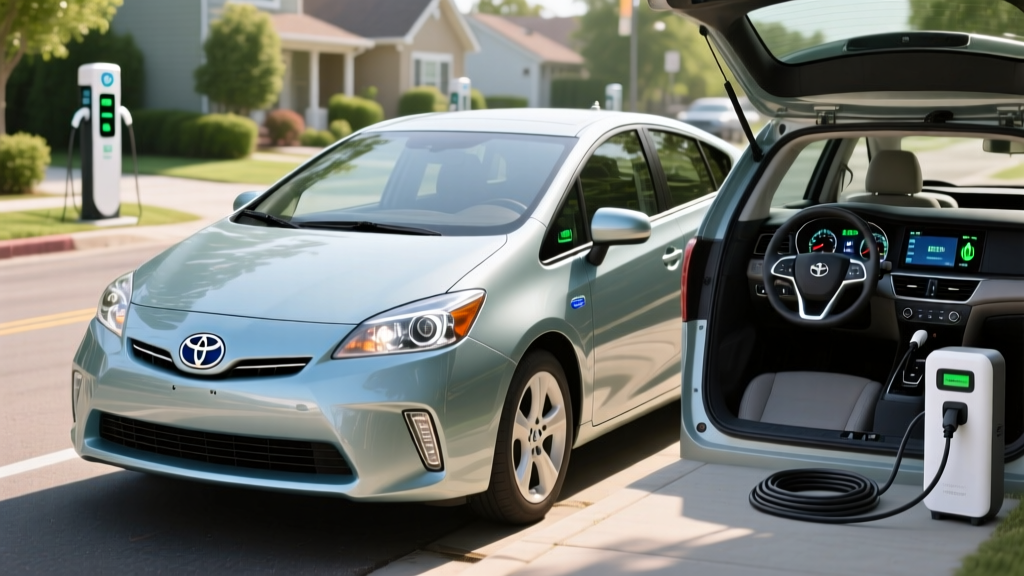
Conventional Hybrid (HEV): Vehicles like the Toyota Prius use a small battery (1–2 kWh) that recharges solely through regenerative braking and the gas engine. You never plug them in. They improve fuel economy but cannot drive on electricity alone for meaningful distances.
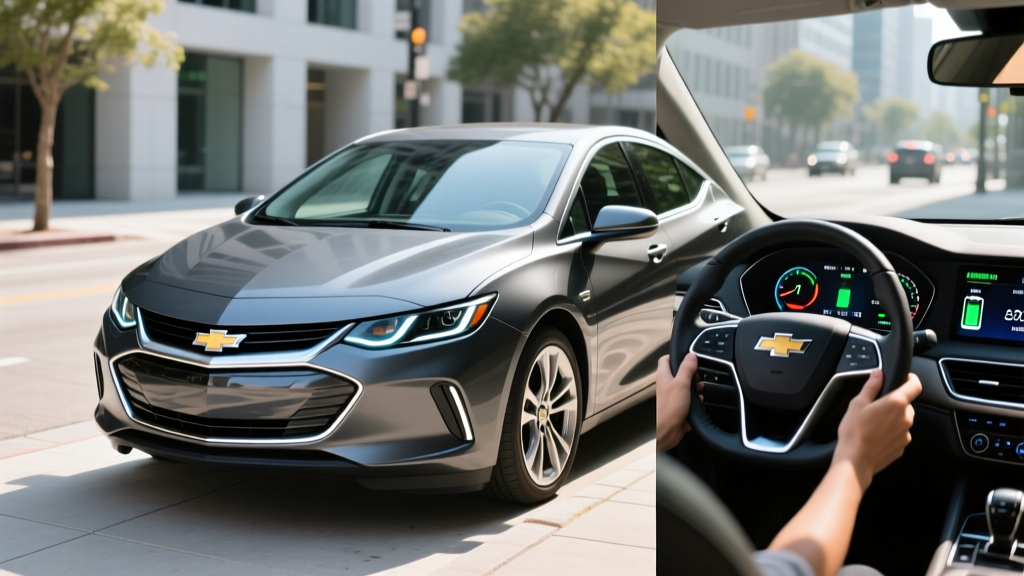
Plug-In Hybrid (PHEV): The Chevy Volt is a PHEV — specifically, an extended-range electric vehicle (EREV). It carries a much larger battery (18.4 kWh usable in Gen 2) that you charge from a wall outlet or Level 2 charger. The Volt drives on pure electricity for its first 53 EPA-rated miles. Only when the battery depletes does the 1.5L gas engine activate as a generator to extend range.
Full EV (BEV): Battery-electric vehicles like the Chevy Bolt EV or Tesla Model 3 have no gas engine at all. They rely entirely on charging infrastructure and battery capacity for all driving.
The Volt's EREV architecture is key to understanding its behavior: under normal driving, the electric motors always drive the wheels. The gas engine generates electricity — it does not mechanically drive the wheels in most conditions. This gives the Volt the smooth, instant-torque feel of an EV for the vast majority of daily commutes.
Chevy Volt PHEV Specs: Range, MPG, and Powertrain
| Specification | Gen 2 Volt (2016–2019) | Gen 1 Volt (2011–2015) |
|---|---|---|
| EPA Electric-Only Range | 53 miles | 35–38 miles |
| Total Combined Range (Electric + Gas) | 420 miles | 340–380 miles |
| Battery Capacity (Usable) | 18.4 kWh (Lithium-Ion NMC) | 10.4–11.3 kWh (NMC) |
| Combined System Power | 149 hp / 294 lb-ft torque | 149 hp / 273 lb-ft torque |
| Gas Engine | 1.5L 4-cyl (101 hp, generator) | 1.4L 4-cyl (84 hp, generator) |
| EPA Fuel Economy (Charge-Sustaining) | 42 MPG combined | 37 MPG combined |
| EPA MPGe (Electric Mode) | 106 MPGe | 93–98 MPGe |
| 0–60 mph | 7.5 seconds | 9.0 seconds |
| Level 1 Charging (120V) | ~13 hours (full) | ~10 hours |
| Level 2 Charging (240V, 3.6 kW) | ~4.5 hours (full) | ~4 hours |
| DC Fast Charging | Not supported | Not supported |
| Cargo Volume | 10.6 cu ft | 10.6 cu ft |
How Many MPG Does the Chevy Volt Get?
Once the battery is depleted and the Volt switches to charge-sustaining (hybrid) mode, the Gen 2 delivers an EPA-rated 42 MPG combined. Here's the breakdown per fueleconomy.gov:
| Driving Condition | Gen 2 Volt (Charge-Sustaining) | Gen 1 Volt |
|---|---|---|
| City | 43 MPG | 35 MPG |
| Highway | 42 MPG | 40 MPG |
| Combined | 42 MPG | 37 MPG |
Real-world MPG vs. EPA: Unlike conventional hybrids that often beat their EPA city numbers thanks to regenerative braking, the Volt's charge-sustaining MPG tends to land close to or slightly below the EPA figure on highway-heavy trips. Owners on long road trips at 70–75 mph typically report 38–42 MPG. Around town in hybrid mode, 42–46 MPG is achievable because regen braking recaptures energy effectively at lower speeds.
The critical insight: if your daily commute is under 53 miles round-trip and you charge at home every night, you may burn zero gasoline for months at a time. The 42 MPG figure only applies when you exhaust the battery and continue driving.
Charging the Chevy Volt: What to Expect at Home
The Volt does not support DC fast charging — a deliberate engineering choice for a vehicle designed around overnight home charging. Here's what you'll encounter:
| Charging Level | Power (kW) | Time (Empty to Full) | Miles of Range Added per Hour |
|---|---|---|---|
| Level 1 (120V household outlet) | 1.4 kW | ~13 hours (Gen 2) | ~4 miles |
| Level 2 (240V, 12A setting) | 3.6 kW | ~4.5 hours (Gen 2) | ~12 miles |
The Volt came with a portable Level 1 cordset that plugs into any standard 120V outlet. For daily use, this is often sufficient — plugging in when you get home yields a full battery by morning for most commutes. However, a Level 2 home station (240V) cuts charge time to roughly 4.5 hours, which matters if you make multiple trips per day or want to top up midday.
Home charging cost: At the US average residential rate of ~$0.16/kWh (per EIA data), fully recharging the Gen 2 Volt's 18.4 kWh usable battery costs roughly $2.94. That delivers 53 miles of electric driving — equivalent to about $0.055 per mile, compared to roughly $0.12–$0.15 per mile in a 30 MPG gas car at $3.50/gallon.
Note: Always have a licensed electrician evaluate your panel and circuit capacity before installing a Level 2 charger. A 240V/20A dedicated circuit typically costs $400–$1,200 installed depending on panel proximity and local permitting.
Battery Health, Warranty, and Replacement Cost
Degradation reality: The Volt's NMC lithium-ion battery has proven remarkably durable in real-world use. Unlike full EVs that expose the entire battery to deep cycles, the Volt's software maintains a generous buffer — you never truly use 100% or 0% of the cells. Data from owner communities and fleet studies show most Gen 2 Volts lose only 8–15% of original electric range over 100,000 miles. A Volt that originally delivered 53 electric miles might show 45–48 miles after 8 years and 90,000 miles.
Gen 1 caution: The 2011–2015 Volt's smaller battery has shown more noticeable degradation. Some high-mileage Gen 1 examples have dropped to 25–30 electric miles from the original 35–38. This is still functional, but it's a factor in used pricing.
Battery replacement cost: As of 2026, a remanufactured Volt battery pack replacement runs approximately $3,500–$5,500 including labor at an independent EV-capable shop. GM dealer pricing tends to be higher, often $6,000–$8,000 for a new OEM pack. Third-party refurbishers offer modules-level repair (replacing only degraded cells) for $1,500–$3,000, though availability varies.
What to check before buying used:
- Use the dashboard's "Energy" screen to view current estimated electric range — compare to the 53-mile EPA sticker for Gen 2.
- Request a battery State of Health (SoH) readout from a Chevy dealer or use an OBD-II scanner with EV-capable software (like Torque Pro with the Volt PID set).
- Check for any outstanding recalls on NHTSA.gov — some early Volts had battery-cooling-system recalls.
- Verify the charge cord is included; OEM replacements cost $200–$400.
Reliability and Common Issues
The Chevy Volt ranks among the more reliable vehicles in GM's recent lineup. The Voltec powertrain has fewer moving parts than a conventional automatic transmission, and the electric motors are essentially maintenance-free. Key reliability notes:
- Engine maintenance: The 1.5L generator engine requires standard oil changes (every 7,500–10,000 miles or annually). Because it runs infrequently on short commutes, oil can degrade from condensation — change it at least once yearly even with low mileage.
- Coolant system: The Volt uses multiple coolant loops for the battery, power electronics, and engine. Check levels periodically; the battery coolant should be flushed per GM's schedule (every 5 years / 150,000 miles).
- Common complaints: The most frequently reported issues on NHTSA and owner forums include 12V auxiliary battery failures (common in all electrified vehicles), infotainment screen freezes (Gen 1 primarily), and occasional charge-port door latch malfunctions.
- Brakes: Thanks to aggressive regenerative braking, Volt brake pads often last 80,000–120,000 miles — a significant maintenance savings over gas cars.
Tax Credits and Incentives: What Applies in 2026?
Here's where used Volt buyers need clarity, because the incentive landscape has shifted significantly since the Volt was new:
- Original federal credit (now expired for Volt): The Volt qualified for the full $7,500 federal tax credit under the old §30D rules when new, but GM hit the 200,000-unit manufacturer cap in 2019. This credit is no longer available for any new Volt purchase.
- Used EV credit (§25E): Under current IRS rules, buying a used Volt from a dealer may qualify for up to $4,000 or 30% of the sale price (whichever is lower) under the Used Clean Vehicle Credit. Requirements include: sale price under $25,000, buyer income below $75,000 (single) / $150,000 (married filing jointly), the vehicle must be at least 2 model years old, and you must purchase from a licensed dealer (not a private party). The Volt's battery capacity (18.4 kWh) exceeds the 7 kWh minimum.
- State incentives: Some states offer additional rebates for used PHEVs or EVs. Check your state's energy office or DMV for current programs — these vary widely and change frequently.
- Home charging credit: The Alternative Fuel Vehicle Refueling Property Credit (§30C) may cover up to 30% of home charger installation costs (capped at $1,000) if you live in an eligible census tract.
Tax eligibility depends on your individual circumstances. Consult a tax professional before relying on any credit.
Chevy Volt PHEV vs. Alternatives: Which Should You Choose?
- 53-mile electric range covers most commutes gas-free
- 420-mile total range eliminates road-trip anxiety
- Smooth EV-like driving feel (instant torque, quiet)
- Proven battery longevity with minimal degradation
- Low operating cost (~$0.055/mile on electricity)
- Eligible for up to $4,000 used-EV tax credit
- Strong regenerative braking extends brake life
- Discontinued — only available used (2011–2019)
- No DC fast charging capability
- Tight rear seats and limited cargo space (10.6 cu ft)
- Gen 1 models show more battery degradation
- Original factory warranty expiring or expired
- Infotainment feels dated vs. 2026 vehicles
- Requires home charging access to maximize value
Choose the Chevy Volt PHEV if: Your daily round-trip commute is under 50 miles, you have access to home or workplace Level 1/Level 2 charging, you regularly take road trips beyond 250 miles, and you want an electrified vehicle without depending on public charging infrastructure. A well-maintained 2017–2019 Gen 2 Volt typically sells for $14,000–$22,000 in 2026, making it one of the best value-per-electric-mile vehicles available.
Choose a full EV (like a used Chevy Bolt EV or Tesla Model 3) if: You rarely drive more than 200 miles in a day, you have reliable home Level 2 charging, your region has robust DC fast-charging networks, and you want to eliminate gasoline entirely. Full EVs have even lower maintenance costs (no oil changes, no gas engine) but require more charging planning on road trips.
Choose a conventional hybrid (like a Toyota Prius) if: You cannot charge at home or work, you want maximum simplicity with no plug-in routine, and you prioritize cargo space and rear-seat room over electric-only driving. Conventional hybrids deliver 50+ MPG without any behavioral change.
Frequently Asked Questions
How far can the Chevy Volt go on electric only?
The Gen 2 Chevy Volt (2016–2019) delivers an EPA-rated 53 miles on electricity alone. In real-world driving, expect 45–55 miles in moderate temperatures and 35–42 miles in freezing conditions. The Gen 1 Volt (2011–2015) provides 35–38 EPA-rated electric miles, with real-world figures often 28–38 miles depending on age and battery health.
How many MPG does the Chevy Volt get when the battery is depleted?
In charge-sustaining (hybrid) mode, the Gen 2 Volt achieves 42 MPG combined (43 city / 42 highway) per the EPA. Real-world highway driving at 75 mph typically yields 38–42 MPG. City driving with regenerative braking can push slightly above the EPA figure to 44–46 MPG.
Does the Chevy Volt qualify for a tax credit in 2026?
The Volt is no longer eligible for the new-vehicle §30D federal credit. However, it may qualify for the Used Clean Vehicle Credit (§25E) — up to $4,000 or 30% of the sale price — if purchased from a licensed dealer for under $25,000 and the buyer meets income limits ($75,000 single / $150,000 married). Consult a tax professional for your specific situation, and verify current rules at IRS.gov.
Is the Chevy Volt reliable, and how much does a battery replacement cost?
The Volt has proven to be one of GM's more reliable vehicles. The Voltec powertrain has few moving parts, and the battery degradation is modest (typically 8–15% range loss over 100,000 miles for Gen 2). A full remanufactured battery replacement costs approximately $3,500–$5,500 at an independent shop, or $6,000–$8,000 at a GM dealer. Module-level repairs can reduce this to $1,500–$3,000.
Can the Chevy Volt DC fast charge?
No. The Chevy Volt does not support DC fast charging on any model year. It charges via Level 1 (120V, ~13 hours for a full charge) or Level 2 (240V at 3.6 kW, ~4.5 hours). This is adequate for overnight home charging but means the Volt cannot use public DC fast chargers like Electrify America or Tesla Superchargers.
Hybrid vs PHEV vs EV — which is right for me?
A conventional hybrid (HEV) like the Prius needs no plug and delivers 50+ MPG — ideal if you lack charging access. A PHEV like the Volt offers 35–53 miles of electric driving for daily commutes plus a gas engine for long trips — the best of both worlds if you can charge at home. A full EV (BEV) eliminates gas entirely, has the lowest maintenance costs, but requires reliable charging access and road-trip planning around DC fast chargers.
What should I check before buying a used Chevy Volt?
Prioritize: (1) current electric range displayed on the Energy screen vs. the 53-mile EPA rating, (2) battery State of Health via OBD-II scan or dealer readout, (3) maintenance records for oil changes and coolant service, (4) open recalls on NHTSA.gov, (5) inclusion of the OEM Level 1 charge cord, and (6) 12V auxiliary battery age (replace proactively if over 4 years old to avoid being stranded).