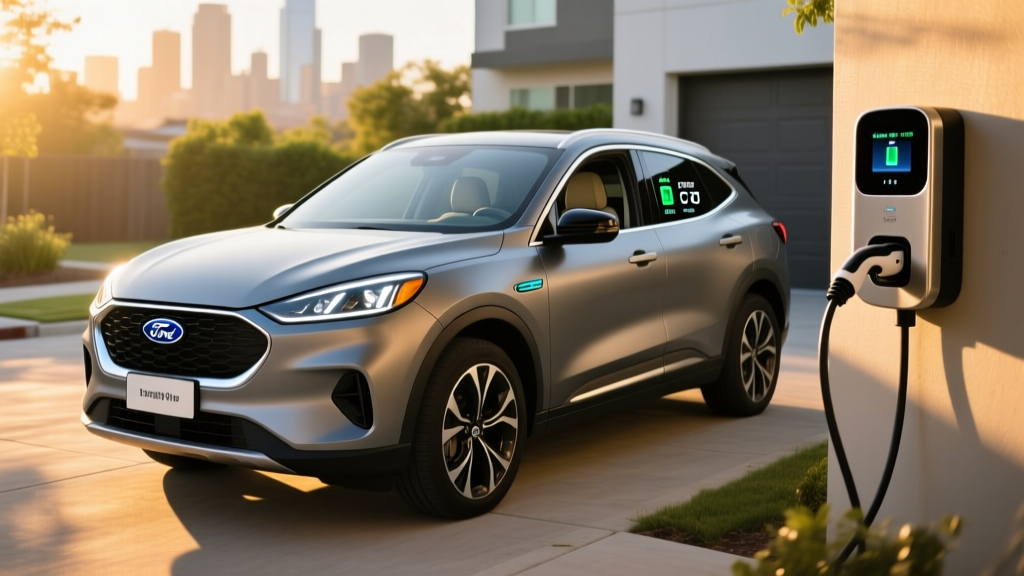
The compact SUV segment is crowded, but the 2025 Ford Escape Plug-In Hybrid occupies a specific niche: buyers who want daily electric commuting without surrendering the flexibility of a gas engine for longer trips. With an EPA-rated 37 miles of electric-only range and 40 MPG combined once the battery depletes, it targets households that can charge at home but aren't ready to commit to a full battery-electric vehicle.
This guide covers the real numbers — not just the sticker specs — including what you'll actually see on your commute, how long charging takes, whether it qualifies for federal tax credits in 2025, and how it stacks up against both the conventional Escape Hybrid and full EVs like the Tesla Model Y or Hyundai Ioniq 5.
HEV vs PHEV: Which Escape Hybrid Is Right for You?
Ford sells two distinct hybrid versions of the Escape. The distinction matters enormously for your wallet and daily routine.
| Feature | Escape Hybrid (HEV) | Escape Plug-In Hybrid (PHEV) |
|---|---|---|
| Needs to be plugged in? | No — self-charging via regen | Yes — plug in for electric-only driving |
| Battery capacity | 1.1 kWh (small buffer) | 14.4 kWh usable |
| Electric-only range | ~1 mile at low speed | 37 miles (EPA) |
| EPA combined MPG | 39 MPG | 40 MPG (hybrid mode after depletion) |
| MPGe (electric mode) | N/A | 105 MPGe |
| DC fast charging | N/A | No — Level 2 only |
| Starting MSRP | ~$33,000 | ~$39,500 |
The conventional HEV is the simpler choice: you never plug in, the battery recharges through regenerative braking and the engine, and you get excellent fuel economy without changing any habits. The PHEV demands access to a 120V or 240V outlet but rewards you with near-silent, zero-tailpipe-emission driving for most daily commutes.
Electric-Only Range and Total Driving Range
The 2025 Escape PHEV pairs a 14.4 kWh lithium-ion battery pack with an electric motor integrated into the transaxle. The EPA rates it at 37 miles of electric-only range. In real-world testing, expect that figure to hold fairly steady in moderate temperatures (50–80°F) on suburban routes with frequent regen opportunities. On a pure highway run at 70 mph, electric range drops to roughly 28–31 miles due to higher aerodynamic drag and less regenerative braking. In freezing weather (below 32°F), cabin heating and battery thermal losses can reduce electric range to 22–26 miles.
Real-world suburban (moderate weather): 33–37 miles
Real-world highway (70 mph): ~28–31 miles
Cold weather (below 32°F): ~22–26 miles
Total combined range (electric + gas): ~470 miles
Once the battery depletes, the 2.5-liter Atkinson-cycle four-cylinder engine engages seamlessly, and the Escape PHEV operates as a conventional hybrid, delivering its EPA-rated 40 MPG combined. With a 11.1-gallon fuel tank, total range extends to approximately 470 miles — enough for any road trip without range anxiety.
Fuel Economy: EPA Numbers and Real-World MPG
According to fueleconomy.gov, the 2025 Ford Escape Plug-In Hybrid posts the following figures:
| Mode | City | Highway | Combined |
|---|---|---|---|
| Electric-only (MPGe) | 115 MPGe | 96 MPGe | 105 MPGe |
| Hybrid (gasoline, MPG) | 42 MPG | 38 MPG | 40 MPG |
Real-world note: Hybrid vehicles typically exceed their EPA city rating in stop-and-go traffic because regenerative braking recovers energy that a gas car wastes as heat. Owners who drive primarily in urban environments with the battery charged frequently report 43–46 MPG in hybrid mode. Highway-heavy drivers will see numbers closer to 36–38 MPG, as the Atkinson-cycle engine is optimized for efficiency over peak power at sustained speeds.
If your daily round-trip commute is under 37 miles and you charge every night, you may go weeks without buying gasoline. Ford's MyFord Mobile app tracks your electric vs. gas miles, and many PHEV owners report using gasoline for fewer than 15% of their total miles driven over a year.
Powertrain, Performance, and Charging Specs
The Escape PHEV's powertrain combines a 2.5-liter four-cylinder engine with a permanent-magnet electric motor, routed through an electronically controlled continuously variable transmission (eCVT).
| Specification | Value |
|---|---|
| Combined net horsepower | 210 hp |
| Engine | 2.5L Atkinson-cycle I-4 (163 hp) |
| Electric motor | 96 kW (129 hp) |
| Battery capacity (usable) | 14.4 kWh, lithium-ion |
| Transmission | eCVT |
| Drivetrain | FWD only |
| 0–60 mph | ~8.5 seconds |
| EPA electric range | 37 miles |
| Level 1 charging (120V) | ~10–11 hours (full) |
| Level 2 charging (240V, 3.6 kW) | ~3.5 hours (full) |
| DC fast charging | Not supported |
| Charge port | J1772 (Level 2) |
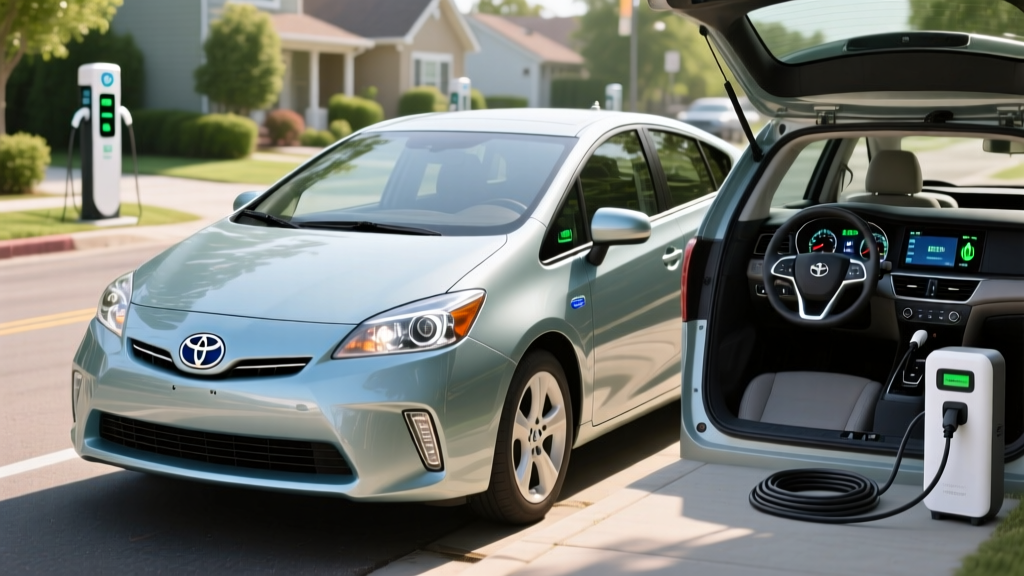
Charging reality: The Escape PHEV's onboard charger maxes out at 3.6 kW. That means even on a 48-amp Level 2 home charger, you're limited to 3.6 kW — the battery will fully replenish in about 3.5 hours. There is no DC fast charging, which is typical for PHEVs in this price class. The smaller battery simply doesn't warrant the added cost and weight of DC fast-charge hardware. Overnight Level 1 charging from a standard 120V outlet will replenish the battery in roughly 10–11 hours, which works fine for most commuters who plug in when they get home.
Pricing, Trims, and Tax Credit Eligibility
The 2025 Ford Escape PHEV is offered in a single trim level, which simplifies the buying decision:
- Escape PHEV (base): Starting MSRP approximately $39,500 (including destination)
- Premium package (available): Adds panoramic sunroof, premium audio, upgraded interior materials — pushes price to ~$43,000–$44,000
Federal tax credit status: Under the current IRS §30D rules, the 2025 Ford Escape Plug-In Hybrid does not qualify for the full $7,500 federal tax credit. The credit has been restructured with strict critical-mineral sourcing and battery-component manufacturing requirements that many PHEVs do not fully meet. Some buyers may be eligible for a partial credit depending on the specific battery sourcing in their vehicle's build month. Always verify current eligibility on irs.gov before purchasing, and consult a tax professional.
- Vehicle MSRP must not exceed $80,000 for SUVs — Escape PHEV qualifies ✓
- Buyer AGI must not exceed $150K (single) / $300K (joint) — varies by buyer
- Battery components must meet North American manufacturing thresholds — partial compliance varies by build date
- Critical minerals must meet sourcing thresholds — partial compliance varies
- Point-of-sale transfer available if credit is confirmed — check with dealer
Some states offer additional incentives for PHEVs. California's CVRP program, for instance, has been restructured but may offer rebates for income-eligible buyers. Check your state energy office or the AFDC state law database for current local incentives.
Battery Warranty, Reliability, and Replacement Cost
Hybrid battery longevity is the single most common concern among first-time PHEV buyers. Here's what Ford provides:
Coverage threshold: Battery must retain sufficient capacity to deliver meaningful electric range; Ford covers repair or replacement if capacity drops below functional thresholds
Powertrain warranty: 5 years / 60,000 miles
Hybrid system components: Covered under 8-year/100,000-mile hybrid component warranty
Real-world reliability: Ford's 2.5L Atkinson-cycle hybrid powertrain has been in production across multiple models (Fusion Hybrid, Maverick Hybrid, Escape Hybrid) for over a decade. The eCVT design has no traditional transmission bands or clutches to wear out — it uses planetary gearsets that are extremely durable. Independent reliability data from sources like Consumer Reports has rated the Escape Hybrid powertrain favorably compared to turbocharged alternatives.
Battery replacement cost: If the high-voltage battery requires replacement outside of warranty, expect a cost in the range of $4,000–$6,000 for the battery pack plus labor, depending on the service center. However, PHEV battery packs rarely fail catastrophically — individual cell modules can sometimes be serviced, and gradual capacity loss over 10–15 years is more typical than sudden failure. Most owners will sell or trade the vehicle before a replacement is needed.
Who Should Choose the Escape PHEV vs. a Full EV or Gas Car?
- 37 miles of silent, zero-tailpipe electric commuting
- 40 MPG hybrid mode — no range anxiety on road trips
- Charges fully overnight on a standard 120V outlet
- No dependence on public charging infrastructure
- Smooth eCVT with seamless electric-to-gas transitions
- Practical cargo space (only slight reduction vs. gas Escape)
- Strong reliability track record for Ford's 2.5L hybrid system
- FWD only — no AWD option on the PHEV variant
- No DC fast charging — impractical to charge on road trips
- Limited to ~3.6 kW Level 2 charging speed
- Does not qualify for full $7,500 federal tax credit
- Higher starting price than the conventional Escape Hybrid
- ~8.5-second 0–60 time — adequate but not quick
- Only one trim level available
- Your daily commute is under 35 miles round-trip and you can charge at home
- You want to drive electric daily but need gas flexibility for road trips
- You don't have reliable access to DC fast chargers in your area
- You want a proven, low-complexity hybrid powertrain
- You want zero gasoline purchases and lower per-mile energy cost
- You have reliable home Level 2 charging and access to DC fast chargers for road trips
- You want stronger acceleration and lower long-term maintenance
- You cannot charge at home (apartment, street parking, no outlet access)
- You want a lower purchase price and simpler ownership
- Your driving is mostly highway, where PHEV electric range offers less benefit
Frequently Asked Questions
How many MPG does the 2025 Ford Escape Plug-In Hybrid get?
The EPA rates it at 42 city / 38 highway / 40 combined MPG in hybrid mode (after the battery depletes). In electric-only mode, it achieves 105 MPGe combined. Real-world city driving often yields 43–46 MPG thanks to regenerative braking in stop-and-go traffic.
How far can the Escape PHEV go on electric only?
The EPA rates it at 37 miles of electric-only range. Real-world results vary: expect 33–37 miles in moderate suburban driving, 28–31 miles on the highway, and 22–26 miles in freezing temperatures. Total combined range (electric + full gas tank) is approximately 470 miles.
Does the Escape PHEV qualify for a federal tax credit?
Under current 2025 IRS §30D rules, the Escape PHEV does not qualify for the full $7,500 federal tax credit due to battery sourcing requirements. Partial credit eligibility may vary by build date. Always verify on irs.gov and consult a tax professional before purchasing. State-level incentives may also apply.
Is the Ford Escape hybrid system reliable?
Ford's 2.5L Atkinson-cycle hybrid system has been in production across multiple models for over a decade and has a strong reliability record. The eCVT uses durable planetary gearsets rather than wear-prone belts or clutches. The high-voltage battery is warrantied for 8 years / 100,000 miles.
What does it cost to replace the Escape PHEV battery?
Out-of-warranty high-voltage battery replacement typically costs $4,000–$6,000 including labor. However, catastrophic battery failure is rare — gradual capacity loss over 10–15 years is the more common scenario, and most owners sell the vehicle before a full replacement is necessary.
Can I charge the Escape PHEV at home on a regular outlet?
Yes. A standard 120V household outlet (Level 1) will fully charge the 14.4 kWh battery in approximately 10–11 hours, which works well for overnight charging. A 240V Level 2 charger reduces that to about 3.5 hours, though the onboard charger is limited to 3.6 kW regardless of the charger's capacity.
Why doesn't the Escape PHEV offer all-wheel drive?
Ford reserves AWD for the conventional gas and hybrid Escape trims. The PHEV variant is FWD only, likely due to packaging constraints and cost — adding a rear electric motor for AWD would increase complexity and price. If AWD is essential, consider the conventional Escape Hybrid or a competitor like the Toyota RAV4 Prime (which offers AWD but at a higher price and with limited availability).
The 2025 Ford Escape Plug-In Hybrid is a pragmatic bridge vehicle for households transitioning toward electric driving. It won't match a full EV's per-mile energy cost or acceleration, and the lack of a federal tax credit stings. But for the buyer with a sub-35-mile commute, a garage outlet, and weekend road-trip plans, it delivers electric daily driving with zero compromise on longer journeys — and that's a formula that still makes sense for millions of American drivers.