Quick Verdict: The Wagon That Hybrids Forgot
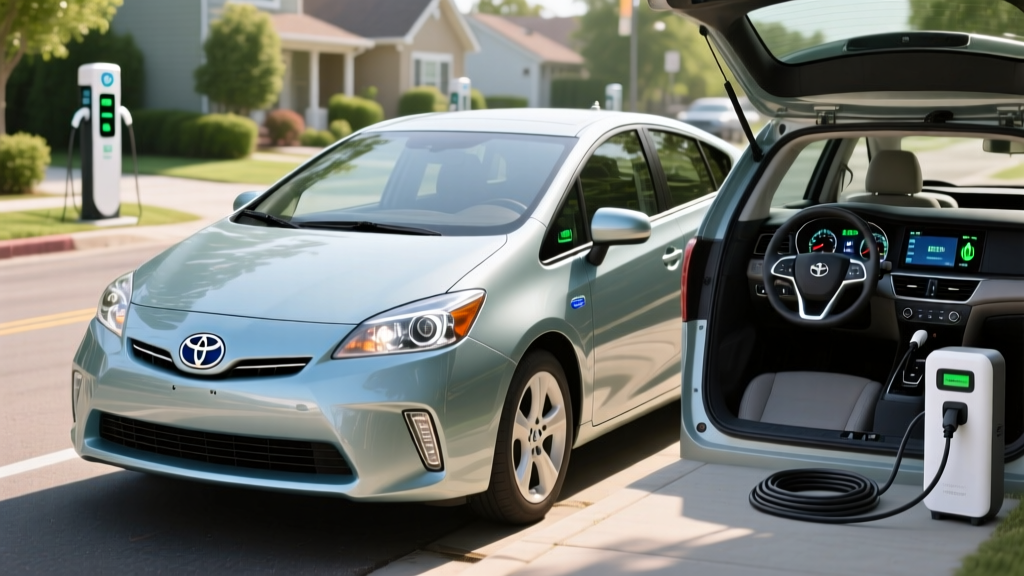
Toyota discontinued the Prius v (the "v" stands for versatility) after the 2017 model year, but the 2014 Toyota Prius v hybrid remains one of the most practical used hybrid wagons on the market. With EPA-rated 42 MPG combined, a cavernous 34.3 cubic feet of cargo space behind the rear seats, and Toyota's proven Hybrid Synergy Drive powertrain, it occupies a specific niche: buyers who want hybrid efficiency without paying new-car prices or committing to a plug-in lifestyle.
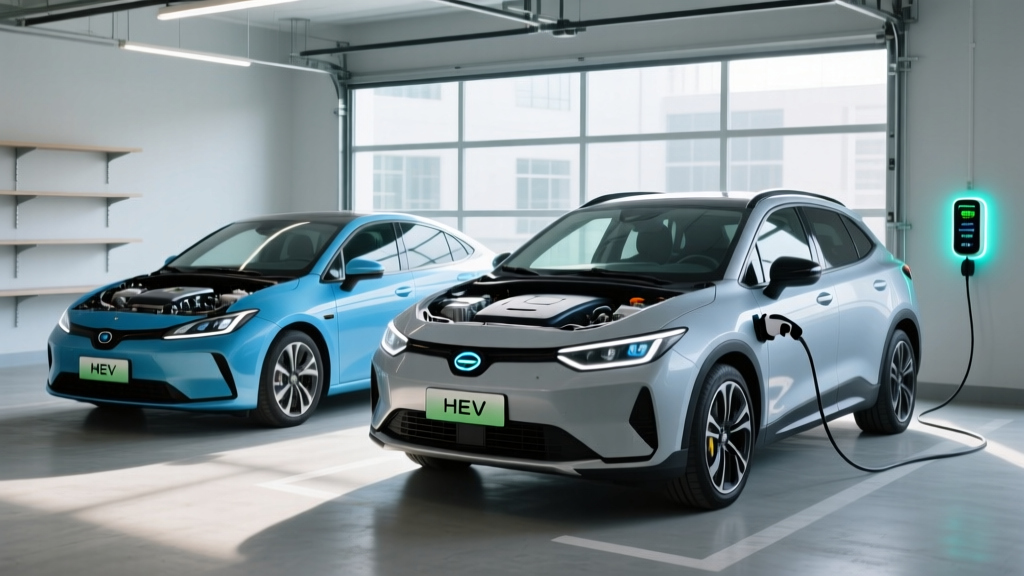
This is a conventional hybrid (HEV), not a plug-in hybrid (PHEV). You never plug it in. The gasoline engine and regenerative braking recharge a small nickel-metal hydride (NiMH) battery that assists the engine during acceleration and enables brief low-speed electric-only driving. If you're shopping for a 2014 Prius v in 2026, you're likely looking at examples with 100,000–160,000 miles, priced between $8,000 and $14,000 depending on condition. Here's exactly what you need to know before buying.
Fuel Economy: EPA Ratings vs. Real-World MPG
The 2014 Prius v carries EPA ratings that remain competitive even against newer hybrids. According to fueleconomy.gov, the official numbers are:
| Metric | Value |
|---|---|
| City MPG | 44 MPG |
| Highway MPG | 40 MPG |
| Combined MPG | 42 MPG |
| Fuel Tank Capacity | 11.9 gallons |
| EPA Estimated Range | ~499 miles per tank |
| Annual Fuel Cost (EPA est.) | ~$1,250 (15,000 mi/yr at ~$3.50/gal) |
Real-World MPG: What Owners Actually Report
The 2014 Prius v's city-biased EPA rating reflects how Toyota's hybrid system excels in stop-and-go traffic, where the electric motor handles low-speed propulsion and regenerative braking recaptures energy. In real-world driving:
- City/suburban driving: Many owners report 43–48 MPG, sometimes exceeding the EPA city estimate. This is typical of Toyota hybrids — the EPA city test cycle plays to the hybrid system's strengths.
- Highway cruising (70+ mph): Expect 36–40 MPG. Aerodynamic drag and the 1.8L Atkinson-cycle engine working solo at sustained speed reduce efficiency.
- Cold weather (below 35°F): MPG drops 5–12%. The engine runs more frequently to maintain cabin heat and battery temperature, reducing electric-only operation.
- Combined real-world average: Most owners on Fuelly and Prius forums report 39–44 MPG over long-term ownership, aligning closely with or slightly below the EPA combined figure.
Powertrain: How the Hybrid System Works
The 2014 Prius v uses Toyota's third-generation Hybrid Synergy Drive, the same proven system found in the standard Prius liftback of the same era, but fitted to a larger, heavier wagon body.
| Component | Specification |
|---|---|
| Engine | 1.8L 4-cylinder Atkinson cycle (98 hp, 105 lb-ft) |
| Electric Motor | Permanent magnet AC synchronous (80 hp / 60 kW) |
| Combined Net Horsepower | 134 hp |
| Transmission | Planetary eCVT (continuously variable) |
| Hybrid Battery | 1.3 kWh (usable ~0.8 kWh), Nickel-Metal Hydride (NiMH) |
| Drivetrain | Front-wheel drive |
| 0–60 mph | ~9.8 seconds |
| Curb Weight | ~3,274 lbs |
The 1.3 kWh NiMH battery pack is small by modern standards — a 2026 Toyota Prius Prime PHEV carries an 11.4 kWh lithium-ion pack. But the Prius v's battery isn't designed for range; it's designed for power assist. It captures energy during braking, provides torque fill during acceleration, and enables engine-off coasting and low-speed creeping. The system never fully charges or fully depletes the battery, keeping the state of charge (SoC) in a narrow 40–80% window to maximize longevity.
HEV vs. PHEV vs. EV: Where Does the Prius v Fit?
If you're cross-shopping a used 2014 Prius v against newer electrified options, understanding the fundamental architecture differences matters.
| Feature | HEV (Prius v) | PHEV (e.g., Prius Prime) | BEV (e.g., Tesla Model 3) |
|---|---|---|---|
| Plug-in Charging | No — gas only | Yes — Level 1/Level 2 | Yes — Level 1/2/DC fast |
| Electric-Only Range | ~0.5 mi at low speed | 25–44 mi (model dependent) | 250–360 mi |
| Battery Size | 1.3 kWh (NiMH) | 11–18 kWh (Li-ion) | 50–82 kWh (Li-ion) |
| Fuel Needed | Yes — regular unleaded | Yes — but less frequently | No |
| Typical Used Price (2026) | $8,000–$14,000 | $18,000–$28,000 | $18,000–$35,000 |
| Federal Tax Credit (Used) | Not eligible | Up to $4,000 (§25E) | Up to $4,000 (§25E) |
Who Should Choose the 2014 Prius v?
Choose the Prius v (HEV) if:
- You lack access to home or workplace charging (apartment, street parking)
- Your budget is under $15,000 and you need maximum cargo space
- You drive a mix of city and highway and want consistent 40+ MPG without behavioral changes
- You want minimal maintenance — no charging cables, no EV-specific service
Choose a used PHEV if:
- You can charge at home and your daily commute is under 30 miles round-trip
- You want some electric-only driving but need gas flexibility for road trips
- You qualify for the §25E used clean vehicle credit (up to $4,000 on vehicles under $25,000)
Choose a used BEV if:
- You have reliable home Level 2 charging
- Your daily driving is under 200 miles and you rarely road-trip beyond DC fast charger coverage
- You want the lowest per-mile fuel cost and near-zero powertrain maintenance
Battery Life, Warranty, and Replacement Cost
The hybrid battery is the single biggest concern for any used Prius v buyer. Here's what the data shows after more than a decade of real-world operation.
Original Battery Warranty
Toyota warranted the 2014 Prius v hybrid battery for 8 years / 100,000 miles in most states, and 10 years / 150,000 miles in California Air Resources Board (CARB) states (California, New York, Massachusetts, and others adopting CARB standards). By 2026, virtually all 2014 examples are outside original warranty coverage unless an extended warranty was purchased.
How long do Prius v hybrid batteries actually last? The NiMH battery in the 2014 Prius v has proven remarkably durable. Based on fleet data, owner surveys from PriusChat and Reddit's r/prius communities, and independent hybrid shop reports:
- Typical lifespan: 150,000–220,000 miles before significant degradation or failure
- Failure mode: Usually one or two weak modules within the 28-module pack, not total pack failure
- Age factor: Calendar age matters. A 12-year-old battery with 80,000 miles can fail just like one with 180,000 miles. Heat and prolonged high-SoC storage accelerate degradation more than mileage alone.
Battery replacement costs (2026 market):
| Option | Cost Range | Notes |
|---|---|---|
| New OEM Toyota battery | $2,200–$3,000 (installed) | Best longevity; available through Toyota dealers |
| Refurbished/reconditioned pack | $1,000–$1,800 (installed) | Replaced weak modules; 1–3 year warranty typical |
| Individual module replacement | $300–$600 (installed) | Only viable if 1–2 modules are weak; requires cell balancing |
| Aftermarket new pack (e.g., Dorman) | $1,800–$2,500 (installed) | Third-party new pack; warranty varies |
At $8,000–$14,000 for the car and $1,000–$3,000 for a potential battery replacement, a worst-case total investment of $11,000–$17,000 still undercuts most new hybrids by $15,000+. Many owners budget for a refurbished pack replacement as part of their purchase calculus.
Reliability and Known Issues
The 2014 Prius v benefits from sharing its powertrain with the third-generation Prius liftback (2010–2015), one of the most extensively road-tested hybrid systems ever produced. According to owner-reported data and repair databases:
- Powertrain: Excellent. The 1.8L 2ZR-FXE engine and eCVT have no traditional transmission clutches, belts, or torque converters to wear out. Timing chain (not belt) eliminates a common maintenance item.
- Brakes: Exceptional longevity. Regenerative braking handles most deceleration, so friction brake pads routinely last 80,000–120,000 miles.
- Head gasket concern: Some 2010–2015 1.8L Prius engines develop head gasket leaks around 120,000–180,000 miles, often linked to EGR (exhaust gas recirculation) valve clogging. A $200–$400 EGR cleaning every 80,000 miles is preventive maintenance that significantly reduces this risk.
- Oil consumption: Some owners report increased oil consumption above 100,000 miles. Check oil level every 3,000–5,000 miles.
- Inverter coolant pump: Was subject to a Toyota recall. Verify recall completion on any used example via NHTSA's VIN lookup.
Pricing, Tax Credits, and Ownership Economics
The 2014 Toyota Prius v originally started at an MSRP of approximately $26,400 (Two trim) to $30,000+ (Five trim with Advanced Technology Package). In the 2026 used market:
| Condition / Mileage | Typical Price Range |
|---|---|
| Excellent, under 80k miles | $12,000–$14,500 |
| Good, 80k–120k miles | $9,500–$12,000 |
| Fair, 120k–160k miles | $7,500–$9,500 |
| High mileage / needs battery | $5,500–$7,500 |
Federal tax credit eligibility: The 2014 Prius v does not qualify for the §30D new clean vehicle credit (it's not a plug-in vehicle, and it's not new). It also does not qualify for the §25E used clean vehicle credit, which requires a plug-in electric vehicle (PHEV or BEV) with a battery capacity of at least 7 kWh. The Prius v's 1.3 kWh NiMH battery falls far short of this threshold. Conventional HEVs are not eligible for any federal purchase incentive as of current IRS guidelines.
Some states and utilities offer rebates for used hybrid purchases or hybrid battery replacements — check your state energy office or local utility for current programs.
5-Year Ownership Cost Estimate
Compared to a similar-age gas-only wagon (e.g., 2014 Honda Crosstour or Subaru Outback 2.5i getting ~25 MPG combined), the Prius v saves approximately $600–$900 per year in fuel at 15,000 miles driven and $3.50/gallon. Over five years, that's $3,000–$4,500 in fuel savings — often enough to offset the purchase price premium over a gas equivalent, even before factoring in the Prius v's lower brake and maintenance costs.
Cargo, Interior, and Practicality
The Prius v's reason for existing is interior volume. With 34.3 cubic feet behind the rear seats and 67.3 cubic feet with the rear seats folded, it offers more cargo space than a 2014 Toyota RAV4 (38.4 cu ft behind rear seats, but the RAV4 was more expensive and less efficient). The sliding and reclining rear seats add flexibility for passengers or cargo.
Interior materials are hard-plastic-heavy, consistent with Toyota's economy-car approach of the era. The Entune infotainment system with its 6.1-inch touchscreen feels dated by 2026 standards — no Apple CarPlay or Android Auto, though aftermarket head-unit replacements ($300–$600 installed) solve this easily. The Prius v Five trim adds SofTex synthetic leather, a panoramic resin roof, and LED headlights.
Pros and Cons
Pros
- EPA 42 MPG combined; real-world city often exceeds 44 MPG
- Class-leading cargo volume for a wagon/hatchback at this price
- Proven, simple hybrid system with massive aftermarket and DIY support
- Low brake wear (80k–120k miles on original pads typical)
- No plug-in charging required — works anywhere gas is sold
- Strong reliability record; low cost of ownership
Cons
- Hybrid battery is 12+ years old — replacement is likely within ownership
- Modest 134 hp; highway passing requires planning
- Dated infotainment — no CarPlay/Android Auto without aftermarket swap
- Road noise and ride quality trail modern competitors
- No federal tax credit eligibility (HEV, not PHEV)
- High-mileage examples may need EGR service or head gasket attention
Frequently Asked Questions
How many MPG does the 2014 Toyota Prius v hybrid get?
The EPA rates the 2014 Prius v at 44 MPG city, 40 MPG highway, and 42 MPG combined. Real-world owners typically report 39–44 MPG combined, with city driving often exceeding the EPA estimate and highway driving at 70+ mph falling to 36–40 MPG. Cold weather reduces efficiency by 5–12%.
Is the 2014 Prius v a plug-in hybrid?
No. The 2014 Prius v is a conventional hybrid (HEV). It has no plug, no charging port, and no meaningful electric-only range. The gasoline engine and regenerative braking recharge the small 1.3 kWh NiMH battery automatically. If you want a plug-in Toyota from this era, look at the Prius Plug-in (later renamed Prius Prime), which offers 11–25 miles of electric-only range depending on model year.
How far can the 2014 Prius v drive on electric power alone?
Effectively less than one mile at very low speeds (under 25 mph) on a fully charged hybrid battery. This is not designed for electric-only commuting — the system uses the electric motor to assist the gas engine, reduce fuel consumption, and enable regenerative braking. For meaningful electric-only range, you need a PHEV or BEV.
How much does it cost to replace the hybrid battery in a 2014 Prius v?
A new OEM Toyota battery costs $2,200–$3,000 installed. Refurbished packs run $1,000–$1,800 installed. Individual module replacement (when only 1–2 of 28 modules are weak) costs $300–$600. Most 2014 Prius v batteries last 150,000–220,000 miles, but calendar age (12+ years) is also a degradation factor regardless of mileage.
Does the 2014 Prius v qualify for any federal tax credit?
No. The §30D new clean vehicle credit applies only to new plug-in vehicles, and the §25E used clean vehicle credit requires a battery capacity of at least 7 kWh — the Prius v's 1.3 kWh NiMH pack does not qualify. Conventional hybrids (HEVs) are not eligible for federal purchase incentives. Check your state and local utility for possible hybrid-specific rebates.
Is the 2014 Prius v reliable at high mileage?
Yes, with proper maintenance. The hybrid powertrain is among the most durable Toyota has produced. Key maintenance items for high-mileage examples: EGR valve and cooler cleaning (every 80,000 miles to prevent head gasket issues), inverter coolant pump recall verification, regular oil changes every 5,000 miles (the 1.8L engine can consume oil as it ages), and hybrid battery health check via an OBD2 scanner with hybrid-specific software (e.g., Toyota Techstream or Dr. Prius app).
Should I buy a 2014 Prius v or a newer used hybrid?
If budget is the priority, the 2014 Prius v offers the best cargo-per-dollar ratio in the used hybrid market. If you want modern safety features (automatic emergency braking, lane keeping), updated infotainment with CarPlay, and a battery with more remaining life, consider a 2017–2019 Toyota Prius (liftback, not v) or a 2018+ Toyota Camry Hybrid, though you'll pay $16,000–$24,000 for those. The Prius v has no direct successor — Toyota discontinued the wagon body style.