If you've ever noticed a hybrid returning 50+ MPG in stop-and-go city traffic while a conventional sedan struggles to hit 30, you've witnessed hybrid vehicle braking energy recovery at work. It's the single biggest efficiency advantage electrified powertrains hold over internal combustion engines, and understanding how it functions — and how much fuel it actually saves — is essential before you spend $30,000+ on a new hybrid or plug-in hybrid.
This guide breaks down the physics of regenerative braking, shows you the real-world MPG gains it produces across popular 2026 hybrid models, and helps you decide whether a conventional hybrid (HEV) or plug-in hybrid (PHEV) fits your driving pattern.
The Physics: How Hybrid Vehicle Braking Energy Recovery Actually Works
In a conventional gas car, every time you press the brake pedal, kinetic energy converts to waste heat through friction brake pads. That energy — which your engine burned fuel to create — is lost permanently. On a 3,500-pound vehicle decelerating from 65 mph to zero, that's roughly 0.3 kWh of energy dissipated as heat per hard stop.
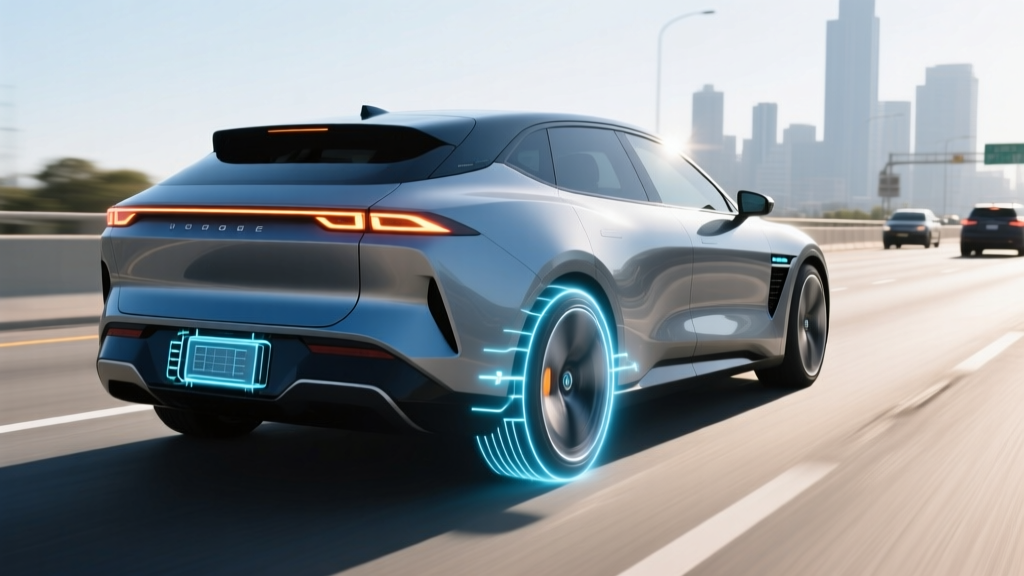
Hybrid vehicle braking energy recovery flips this process. Instead of friction brakes doing all the work, the electric motor reverses its function and becomes a generator. As the motor spins from the wheels' momentum, it creates electrical resistance (slowing the car) while simultaneously sending current back into the hybrid battery pack. This is regenerative braking, or "regen" for short.
The sequence in a typical hybrid deceleration event:
- Driver lifts off accelerator or presses brake pedal lightly — the powertrain control module engages regen mode
- Electric motor switches to generator mode — electromagnetic resistance creates braking torque at the wheels
- Generated electricity flows to the battery — typically a 1–2 kWh NiMH or Li-ion pack in HEVs, 13–25 kWh in PHEVs
- Friction brakes engage only when needed — during hard stops, at very low speeds (below ~5 mph), or when the battery is fully charged
The blending between regen and friction braking is seamless in modern hybrids. Toyota's Hybrid Synergy Drive and Honda's two-motor e:HEV system both use sophisticated brake-by-wire controllers that modulate the regen-to-friction ratio dozens of times per second.
HEV vs PHEV: How Regen Differs Between Hybrid Types
Before diving into MPG numbers, it's critical to distinguish the two hybrid architectures, because braking energy recovery functions differently in each:
| Feature | Conventional Hybrid (HEV) | Plug-In Hybrid (PHEV) |
|---|---|---|
| Plugs in to charge? | No — charges only via engine and regen | Yes — Level 1/Level 2 plug-in charging |
| Battery size | 1–2 kWh (small, buffers regen energy) | 13–25 kWh (large, supports EV-only driving) |
| Regen's primary role | Recaptures braking energy to assist engine, reduce fuel use | Extends electric-only range; recaptures energy for EV driving |
| Electric-only range | Under 1 mile at low speeds | 25–50+ miles at highway speeds |
| DC fast charging? | No | Most PHEVs: No (exception: Mitsubishi Outlander PHEV supports CHAdeMO DC) |
Because HEV batteries are small (typically 1.0–1.6 kWh usable), regen energy is deployed almost immediately to assist the next acceleration event. PHEVs, with 10–20× larger batteries, can store recaptured energy for sustained electric-only driving later — making regen even more valuable on hilly or stop-heavy routes.
Real-World MPG: How Much Fuel Does Regen Actually Save?
The EPA's fuel economy testing already accounts for regenerative braking, which is why hybrids post dramatically higher city MPG than highway MPG — the opposite of gas-only cars. Here's how braking energy recovery translates to real numbers across popular 2026 hybrids:
| Vehicle (2026 Model Year) | Type | City MPG | Highway MPG | Combined MPG | Combined HP |
|---|---|---|---|---|---|
| Toyota Prius LE | HEV | 57 | 56 | 57 | 196 |
| Toyota Prius Prime SE | PHEV | 52 (hybrid mode) | 48 (hybrid mode) | 50 (hybrid) / 127 MPGe (EV) | 220 |
| Honda Accord Hybrid | HEV | 51 | 44 | 48 | 204 |
| Toyota RAV4 Hybrid | HEV | 41 | 38 | 40 | 219 |
| Toyota RAV4 Prime | PHEV | 40 (hybrid mode) | 36 (hybrid mode) | 38 (hybrid) / 94 MPGe (EV) | 302 |
| Hyundai Tucson PHEV | PHEV | 37 (hybrid mode) | 35 (hybrid mode) | 36 (hybrid) / 80 MPGe (EV) | 261 |
Source: fueleconomy.gov — EPA estimates. Real-world results vary with driving style, temperature, and terrain.
Real-World MPG vs. EPA Sticker: Hybrids routinely exceed their EPA city ratings in actual stop-and-go driving because more braking events mean more energy recaptured. Owners on forums and fueleconomy.gov's My MPG tracker report 2–5 MPG above EPA city figures in heavy traffic. Conversely, sustained highway driving at 75+ mph yields lower-than-EPA results because regen opportunities decrease and aerodynamic drag dominates.
PHEV Electric-Only Range, Charging, and Total Range
For plug-in hybrids, regen works in concert with plug-in charging to maximize electric miles. Here's the full picture for 2026 PHEVs:
| PHEV Model | Battery (kWh) | EV-Only Range | Total Combined Range | Level 2 Charge Time (0–100%) | DC Fast Charge? |
|---|---|---|---|---|---|
| Toyota Prius Prime SE | 13.6 kWh (Li-ion) | 44 miles | ~600 miles | ~4 hours (3.3 kW onboard) | No |
| Toyota RAV4 Prime | 18.1 kWh (Li-ion) | 42 miles | ~600 miles | ~2.5 hours (6.6 kW onboard) | No |
| Hyundai Tucson PHEV | 13.8 kWh (Li-ion) | 33 miles | ~440 miles | ~2 hours (7.2 kW onboard) | No |
| Ford Escape PHEV | 14.4 kWh (Li-ion) | 37 miles | ~520 miles | ~3.5 hours (3.7 kW onboard) | No |
| Chrysler Pacifica PHEV | 16.0 kWh (Li-ion) | 32 miles | ~520 miles | ~2 hours (6.6 kW onboard) | No |
A key detail most buyers miss: regen braking in a PHEV can extend electric-only range by 5–15% on hilly routes. If you descend a long grade with a full battery, regen may be limited (the battery can't accept more charge when full), but on mixed terrain with frequent deceleration, you'll squeeze more electric miles from each charge than the EPA sticker suggests.
Hybrid Battery Reliability, Warranty, and Replacement Cost
Hybrid Battery Warranty — What to Expect: Federal emissions regulations mandate that hybrid and PHEV battery packs carry a minimum warranty of 8 years / 100,000 miles. In CARB states (California and states that follow California emissions standards), this extends to 10 years / 150,000 miles. Most manufacturers match or exceed these minimums.
Real-world hybrid battery longevity data is overwhelmingly positive. Toyota's NiMH and Li-ion hybrid packs routinely reach 200,000+ miles with minimal capacity loss. The Prius, now in its sixth generation, has the longest track record: independent fleet data shows fewer than 5% of first-generation Prius packs required replacement before 150,000 miles.
PHEV batteries face slightly more stress due to deeper charge/discharge cycles and larger energy throughput, but the 13–18 kWh packs are conservatively engineered with substantial buffers (typically 15–20% of total capacity is reserved and unusable by the driver to prevent deep discharge or overcharge damage).
Battery replacement costs if out of warranty:
- HEV battery (Toyota Prius, RAV4 Hybrid): $2,000–$4,000 including labor
- PHEV battery (Prius Prime, RAV4 Prime): $4,500–$8,000 including labor
- Refurbished/remanufactured HEV packs are available for $1,000–$2,000
For context, a conventional automatic transmission replacement runs $3,500–$7,000, and most hybrid owners never need a battery swap within typical ownership periods. According to Consumer Reports reliability surveys, Toyota and Lexus hybrids consistently rank among the most reliable vehicles in any category.
Pricing and Tax Credit Eligibility for Hybrids and PHEVs
Here's where HEVs and PHEVs diverge significantly on cost:
| Model (Base Trim) | MSRP (2026) | Federal Tax Credit (§30D) | Effective Price After Credit |
|---|---|---|---|
| Toyota Prius LE (HEV) | $29,745 | $0 — conventional HEVs do not qualify | $29,745 |
| Toyota Prius Prime SE (PHEV) | $34,395 | Up to $3,750* | ~$30,645* |
| Toyota RAV4 Hybrid LE (HEV) | $33,575 | $0 | $33,575 |
| Toyota RAV4 Prime SE (PHEV) | $44,490 | Up to $3,750* | ~$40,740* |
| Hyundai Tucson PHEV SEL | $39,440 | Up to $3,750* | ~$35,690* |
| Ford Escape PHEV | $38,400 | Up to $3,750* | ~$34,650* |
*Credit amounts reflect 2026 IRS §30D rules. PHEV credit eligibility depends on battery sourcing, critical mineral requirements, buyer income caps ($150K single / $300K joint AGI), and MSRP limits ($55,000 sedans / $80,000 SUVs). Most Toyota/Hyundai PHEVs qualify for a partial credit ($3,750) due to battery component sourcing rules. Check the latest eligibility at irs.gov. Credits may be transferred to the dealer as a point-of-sale discount.
Key takeaway: Conventional hybrids (HEVs) do not qualify for the federal §30D new clean vehicle credit. Only PHEVs with sufficient battery capacity (≥7 kWh) and compliant sourcing may qualify. Some states offer additional rebates for PHEVs — check your state's energy office for current programs.
Hybrid vs PHEV vs Full EV: Which Powertrain Fits You?
Choose a conventional hybrid (HEV) if:
- You lack access to home or workplace charging (apartment, street parking)
- You want maximum MPG with zero behavior change — just fill up with gas
- Your budget is under $35,000 and you want the lowest upfront cost
- You drive primarily in city/stop-and-go traffic where regen delivers the biggest MPG advantage
Choose a plug-in hybrid (PHEV) if:
- You can charge at home (Level 2, 240V) and your daily commute is under 40 miles round-trip
- You want EV-like daily driving but need gas-engine flexibility for road trips
- You want to capture the partial federal tax credit to offset the higher MSRP
- You drive a mix of city (regen-rich) and highway routes
Choose a full battery EV (BEV) if:
- You can install home Level 2 charging and have access to DC fast chargers for road trips
- Your daily driving is under 250 miles and you want zero tailpipe emissions
- You want to qualify for the full $7,500 federal credit (on eligible models)
- You want the lowest per-mile "fuel" cost (electricity at $0.12/kWh ≈ $1.20/gallon equivalent)
The braking energy recovery advantage exists across all three, but it matters most for HEVs since regen is their only source of electric energy. For PHEVs, regen supplements plug-in charging. For BEVs, regen extends range but the large battery already provides ample buffer.
Maximizing Regen: Driving Techniques That Boost Your Hybrid's MPG
Not all hybrid owners extract the same benefit from regenerative braking. Here's how driving behavior directly impacts energy recovery:
- Anticipate stops: Lifting off the accelerator early and letting regen slow the car gradually recaptures more energy than a late, hard brake application (which engages friction brakes sooner)
- Use "B" mode or adjustable regen: Many hybrids (Toyota's "B" gear position, Hyundai's paddle-shift regen levels) increase regen aggressiveness, ideal for hilly terrain or heavy traffic
- Avoid "pulse and glide" on highways: This hypermiling technique works poorly with regen — steady throttle at moderate speed is more efficient in modern hybrids
- Pre-condition the cabin while plugged in (PHEVs): This preserves battery charge for driving rather than HVAC, giving regen more capacity to fill
- Keep the battery in the mid-range (PHEVs): A fully charged battery can't accept regen energy; some PHEVs offer a "charge hold" mode to reserve battery space for recapture on descents
On a 10-mile commute with 8 stoplights, an attentive hybrid driver can recapture 0.5–1.5 kWh of energy that a gas car would waste as heat. Over a year of city driving, that translates to 100–200 gallons of fuel saved — worth $350–$700 at current gas prices.
Pros of Hybrid Regen Braking
- Boosts city MPG by 30–60% vs. gas-only cars
- Reduces brake pad wear (friction brakes used less often) — some Prius owners report 80,000+ miles on original pads
- No behavior change required — the system works automatically
- Particularly effective in hilly terrain and stop-heavy commutes
Limitations to Understand
- Regen is limited when the battery is fully charged (common in PHEVs after a full plug-in charge)
- Very light braking at low speeds (<5 mph) still requires friction brakes
- Cold batteries accept charge more slowly, reducing regen effectiveness in winter
- Highway cruising offers minimal regen opportunities — hybrid advantage shrinks on open roads
Frequently Asked Questions
How many MPG does a hybrid get thanks to regenerative braking?
Regenerative braking is responsible for the dramatic city MPG advantage hybrids enjoy. The 2026 Toyota Prius LE achieves 57 MPG combined — roughly double a comparable gas-only compact sedan. In city driving specifically, regen recaptures energy from every stop, which is why the Prius posts nearly identical city and highway numbers (57/56), unlike gas cars that are far less efficient in stop-and-go traffic.
How far can a PHEV go on electric power alone?
Current 2026 PHEVs offer 32–44 miles of EPA-rated electric-only range. The Toyota Prius Prime leads at 44 miles on its 13.6 kWh battery. The RAV4 Prime delivers 42 miles. For most American commuters (average one-way commute: 16 miles per the Census Bureau), a PHEV can cover daily driving entirely on electricity, switching to hybrid mode only for longer trips.
Do conventional hybrids need to be plugged in?
No. Conventional hybrids (HEVs) like the Toyota Prius, RAV4 Hybrid, and Honda Accord Hybrid never plug in. Their small 1–2 kWh batteries are charged entirely by the gasoline engine and regenerative braking. You fuel them exactly like a gas car — the hybrid system operates transparently.
Is the hybrid battery reliable, and what does replacement cost?
Hybrid batteries carry a minimum 8-year/100,000-mile warranty (10 years/150,000 miles in CARB states). Real-world data shows most HEV batteries last 200,000+ miles without replacement. If replacement is needed out of warranty, HEV packs cost $2,000–$4,000 and PHEV packs cost $4,500–$8,000 including labor. Refurbished options reduce HEV replacement to $1,000–$2,000.
Does a hybrid or PHEV qualify for a tax credit?
Conventional hybrids (HEVs) do not qualify for the federal §30D clean vehicle credit. Plug-in hybrids (PHEVs) may qualify for up to $7,500, though most 2026 PHEVs currently earn $3,750 due to battery component sourcing requirements. Eligibility also depends on buyer income (AGI caps of $150K single / $300K joint), MSRP limits, and critical mineral sourcing. Always verify current eligibility at irs.gov before purchasing, and consult a tax professional for your specific situation.
Does regenerative braking replace the friction brakes entirely?
No. Regen handles the majority of deceleration in normal driving, but friction brakes are still required for hard emergency stops, very low-speed stops (below ~5 mph where the motor generates insufficient current), and when the battery is at full charge. Hybrids still have four-wheel disc or drum brakes, but pad and rotor wear is significantly reduced — it's common for hybrid brake pads to last 80,000–120,000 miles.
Does regen braking work differently in cold weather?
Yes. Lithium-ion batteries accept charge more slowly when cold (below ~32°F / 0°C). In winter, hybrids and PHEVs reduce regen aggressiveness to protect the battery, which means more braking falls to the friction brakes and slightly less energy is recaptured. Expect a 5–10% reduction in regen effectiveness in freezing conditions, contributing to the 10–20% overall fuel economy drop hybrids experience in cold weather.