Quick Verdict: What the 2026 Chevrolet Equinox Hybrid Offers
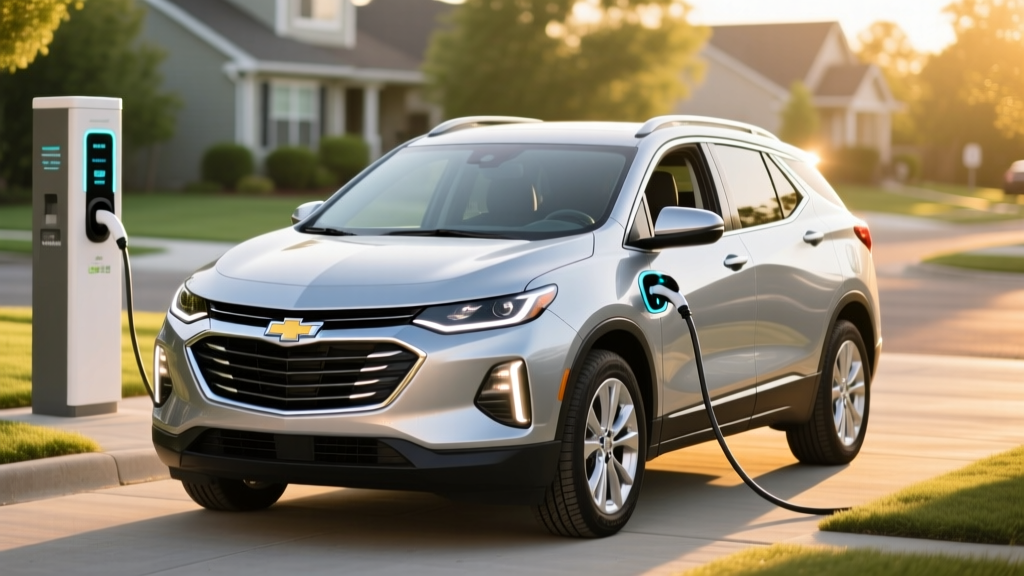
The Chevrolet Equinox has been one of America's best-selling compact SUVs for years, and for the 2026 model year, Chevrolet continues to offer it with a conventional hybrid (HEV) powertrain alongside the all-electric Equinox EV and the turbocharged gas-only variant. If you've been searching for a Chevrolet Equinox hybrid that delivers meaningful fuel savings without the lifestyle adjustments required by a plug-in hybrid or full battery-electric vehicle, the 2026 Equinox HEV occupies a practical middle ground — no plug needed, no range anxiety, and meaningful MPG gains over the gas model.
However, there's an important distinction buyers need to understand before visiting a dealership: the Equinox lineup now spans three fundamentally different powertrains. This guide breaks down exactly what the hybrid delivers, how it compares to the EV variant, and whether it's the right fit for your daily driving.
HEV vs PHEV vs EV: Understanding the Equinox Lineup
Chevrolet does not currently offer a plug-in hybrid (PHEV) version of the Equinox in the U.S. market. The lineup consists of:
- Equinox Gas (ICE): Traditional 1.5L turbocharged 4-cylinder, no electrification.
- Equinox Hybrid (HEV): Conventional hybrid — the gasoline engine is supplemented by a small electric motor and battery that recharge through regenerative braking and engine operation. You never plug it in.
- Equinox EV: Fully battery-electric, built on GM's Ultium platform with 250+ miles of EPA range.
HEV vs PHEV vs EV — Key Differences
| Feature | Equinox HEV (Hybrid) | Equinox PHEV | Equinox EV |
|---|---|---|---|
| Plug-in Required? | No | N/A (not offered) | Yes |
| Electric-Only Range | None (motor assists engine) | N/A | ~319 mi (EPA, FWD) |
| Fuel Source | Gasoline + regen | N/A | Electricity only |
| Home Charging Needed? | No | N/A | Yes (Level 2 recommended) |
| Federal Tax Credit (§30D) | No | N/A | Up to $7,500 (eligibility varies) |
| Starting MSRP (2026) | ~$33,000 | N/A | ~$33,600 (before credit) |
If you were hoping for an Equinox PHEV with 30-40 miles of electric-only driving before the gas engine kicks in — similar to the Toyota RAV4 Prime or Hyundai Tucson PHEV — that variant does not exist in the 2026 Equinox lineup. GM has instead directed plug-in buyers toward the Equinox EV or the larger Chevrolet Traverse PHEV concept space. The Equinox hybrid is strictly a conventional, self-charging HEV.
Fuel Economy: EPA MPG and Real-World Expectations
The headline reason to choose the Equinox hybrid over the gas model is fuel economy. Here's how the powertrains compare based on EPA estimates at fueleconomy.gov:
| Powertrain | City MPG | Highway MPG | Combined MPG |
|---|---|---|---|
| Equinox Gas 1.5T FWD | 26 | 31 | 28 |
| Equinox Gas 1.5T AWD | 24 | 30 | 26 |
| Equinox Hybrid FWD | 38 | 36 | 37 |
| Equinox Hybrid AWD | 36 | 34 | 35 |
The hybrid's combined 37 MPG (FWD) represents a roughly 32% improvement over the gas-only FWD model. For a driver covering 15,000 miles annually at $3.50/gallon, that translates to approximately $550-$650 in annual fuel savings — meaning the hybrid premium pays for itself in roughly 3-4 years depending on driving habits and local fuel prices.
Powertrain Specs: Engine, Motor, and Horsepower
The 2026 Chevrolet Equinox Hybrid pairs a naturally aspirated or turbocharged gasoline engine with one or two electric motor-generators integrated into a hybrid-specific transmission. The system prioritizes smooth, seamless power delivery over sporty acceleration.
| Specification | Equinox Hybrid FWD | Equinox Hybrid AWD |
|---|---|---|
| Gas Engine | 1.5L turbo I-4 | 1.5L turbo I-4 |
| Engine HP | ~170 hp | ~170 hp |
| Electric Motor | Integrated motor-generator | Front + rear motor-generators |
| Combined System HP | ~195 hp | ~210 hp |
| Transmission | Hybrid CVT (e-CVT) | Hybrid CVT (e-CVT) |
| 0-60 mph (est.) | ~7.8 sec | ~7.5 sec |
| Hybrid Battery | ~1.5 kWh (lithium-ion) | ~1.5 kWh (lithium-ion) |
| Towing Capacity | ~1,500 lbs | ~1,500 lbs |
Unlike a PHEV or full EV, the Equinox hybrid's battery is small — approximately 1.5 kWh — and serves as a buffer to capture regenerative braking energy and provide brief electric motor assist during acceleration. The vehicle cannot drive on electric power alone for any meaningful distance. The engine is always available and frequently active, particularly at highway speeds or under hard acceleration.
The e-CVT transmission is a hallmark of conventional hybrid design. It uses a planetary gearset rather than a belt-and-pulley system, which means it's mechanically robust and avoids the rubber-band feel associated with older CVTs. Expect smooth, linear acceleration without shift shock — though enthusiasts may find it somewhat unexciting.
Pricing, Trims, and Tax Credit Eligibility
The 2026 Chevrolet Equinox Hybrid is available across multiple trim levels. Pricing reflects the hybrid powertrain premium over the gas-only model:
| Trim | Drivetrain | MSRP (est.) |
|---|---|---|
| LT Hybrid | FWD | ~$33,000 |
| LT Hybrid | AWD | ~$35,000 |
| RS Hybrid | FWD | ~$36,500 |
| RS Hybrid | AWD | ~$38,500 |
| Premier Hybrid | AWD | ~$41,000 |
Federal and State Incentives
Here's where hybrid buyers need to manage expectations: the conventional Equinox Hybrid does not qualify for the federal §30D clean vehicle tax credit. Under current IRS guidelines, the §30D credit of up to $7,500 is reserved for plug-in electric vehicles (BEVs and PHEVs) that meet battery sourcing, critical mineral, MSRP cap, and buyer income requirements. A conventional HEV with a ~1.5 kWh battery does not meet the minimum battery capacity or plug-in criteria.
- ❌ Vehicle type: HEV (not a plug-in vehicle — ineligible)
- ❌ Battery capacity: ~1.5 kWh (below §30D minimum of 7 kWh for PHEVs)
- N/A — MSRP cap, income cap, and critical-mineral rules do not apply
If you want a Chevrolet that qualifies for the federal credit, consider the Equinox EV, which may be eligible for up to $7,500 depending on your income, the vehicle's MSRP, and battery-component sourcing. Consult a tax professional and review current IRS rules before purchasing.
Some states and municipalities offer separate incentives for hybrid vehicles — typically smaller rebates of $500-$1,500 or HOV-lane access. These vary by jurisdiction and change frequently. Check your state's energy office or department of environmental quality for current programs.
Battery Warranty, Reliability, and Replacement Cost
Hybrid battery longevity is consistently the top concern for first-time hybrid buyers. Here's what you need to know about the Equinox Hybrid's battery and warranty coverage:
- Hybrid Battery: 8 years / 100,000 miles (whichever comes first)
- Hybrid System Components: 8 years / 100,000 miles
- Bumper-to-Bumper: 3 years / 36,000 miles
- Powertrain (engine/transmission): 5 years / 60,000 miles
In states that follow California Air Resources Board (CARB) emissions standards — including CA, NY, MA, NJ, CT, RI, VT, ME, MD, OR, WA, CO, and others — the hybrid battery warranty may extend to 10 years / 150,000 miles under emissions-component coverage.
Real-World Hybrid Battery Durability
GM has been building hybrid systems since the early 2000s (the Saturn Vue Hybrid, Chevrolet Malibu Hybrid, and two generations of Volt). The lithium-ion hybrid battery in the Equinox is far smaller and less stressed than a full EV battery. It operates within a narrow state-of-charge window — typically between 40% and 70% — which dramatically reduces degradation compared to batteries that cycle from 0% to 100%.
Based on long-term data from GM's hybrid fleet and comparable systems from Toyota and Honda, conventional hybrid batteries routinely last 150,000-200,000+ miles before requiring replacement. Many first-generation Toyota Prius hybrid batteries are still functioning beyond 200,000 miles.
Battery Replacement Cost
If the hybrid battery does fail outside of warranty, replacement costs for a compact SUV hybrid battery typically range from $2,000 to $4,000 including parts and labor. This is substantially less than a full EV battery replacement ($8,000-$20,000+) because the hybrid battery is small (~1.5 kWh). Independent hybrid-repair shops are increasingly available and can often refurbish or replace individual battery modules for $800-$1,500 rather than replacing the entire pack.
For context, a conventional gas car's transmission replacement can cost $3,000-$5,000+ — a repair the hybrid's e-CVT is statistically less likely to need due to its simpler planetary gearset design with no clutch packs or torque converter.
Who Should Choose the Equinox Hybrid?
Choose the Equinox Hybrid If:
- You want better fuel economy without changing your refueling habits
- You don't have access to home or workplace charging (apartment, street parking)
- You drive 12,000-20,000 miles per year and want to reduce gas costs
- You want a compact SUV with proven hybrid reliability and a strong warranty
- You frequently take long road trips and don't want to plan around charging stations
Choose the Equinox EV Instead If:
- You have reliable home Level 2 charging access
- Your daily commute is under 100 miles round-trip
- You want to qualify for the federal §30D tax credit (up to $7,500)
- You want zero tailpipe emissions and the lowest per-mile fuel cost
- You're comfortable with DC fast charging on road trips (319-mile EPA range reduces stops)
Stick with the Gas Equinox If:
- You drive fewer than 8,000 miles per year (hybrid premium won't pay back quickly)
- You want the lowest possible purchase price and don't prioritize fuel savings
- You plan to keep the vehicle for only 2-3 years
Equinox Hybrid Pros
- 37 MPG combined (FWD) — 32% improvement over gas model
- No plug-in required; no charging infrastructure needed
- 8-year/100,000-mile hybrid battery warranty
- Smooth e-CVT with no shift shock
- Lower long-term maintenance vs. gas (less brake wear from regen)
- AWD available with hybrid powertrain
Equinox Hybrid Cons
- No federal tax credit eligibility
- No PHEV variant with electric-only range
- ~$3,000-$4,000 premium over gas-only model
- Towing limited to ~1,500 lbs
- 0-60 time unremarkable (~7.5-7.8 sec)
- Highway MPG advantage narrows at 75+ mph
How the Equinox Hybrid Compares to Rivals
The compact hybrid SUV segment is competitive. Here's how the Equinox Hybrid stacks up against key alternatives based on EPA data and manufacturer specifications:
| Model | Combined MPG | System HP | Starting MSRP | Hybrid Battery Warranty |
|---|---|---|---|---|
| Chevrolet Equinox Hybrid FWD | 37 | ~195 | ~$33,000 | 8 yr / 100k mi |
| Toyota RAV4 Hybrid | 39-41 | 219 | ~$33,500 | 10 yr / 150k mi |
| Honda CR-V Hybrid | 37-40 | 204 | ~$35,000 | 8 yr / 100k mi |
| Hyundai Tucson Hybrid | 37-38 | 226 | ~$34,000 | 10 yr / 100k mi |
| Ford Escape Hybrid | 37-39 | 198 | ~$34,500 | 8 yr / 100k mi |
The Toyota RAV4 Hybrid remains the segment benchmark with slightly higher MPG and standard AWD across all trims, plus Toyota's strong 10-year/150,000-mile hybrid battery warranty. The Equinox Hybrid holds its own with competitive fuel economy, though Chevy's pricing advantage and available tech features (including Super Cruise on higher trims) may sway brand-loyal buyers. If you also want a PHEV option in this segment, the RAV4 Prime (42 miles electric-only) and Tucson PHEV (33 miles) are worth cross-shopping — but remember, Chevy does not offer an Equinox PHEV.
Frequently Asked Questions
How many MPG does the Chevrolet Equinox Hybrid get?
The 2026 Equinox Hybrid achieves an EPA-estimated 38 city / 36 highway / 37 combined MPG in FWD configuration, and 36 city / 34 highway / 35 combined with AWD. In real-world city-dominant driving, many owners report 39-41 MPG thanks to regenerative braking. Highway-only driving at higher speeds may return 33-34 MPG.
Does the Equinox Hybrid need to be plugged in?
No. The Equinox Hybrid is a conventional HEV (hybrid electric vehicle). Its small battery recharges through regenerative braking and the gasoline engine. There is no plug, no charging cable, and no electric-only driving mode. You refuel exclusively at gas stations.
Is there a plug-in hybrid (PHEV) version of the Equinox?
No. As of the 2026 model year, Chevrolet does not offer a PHEV variant of the Equinox. If you want a Chevrolet with plug-in capability, the Equinox EV (fully electric) is the electrified alternative. For a compact SUV PHEV from another brand, consider the Toyota RAV4 Prime, Hyundai Tucson PHEV, or Ford Escape PHEV.
Does the Equinox Hybrid qualify for a federal tax credit?
No. The federal §30D clean vehicle credit applies only to plug-in electric vehicles (BEVs and PHEVs) meeting specific battery-capacity, sourcing, MSRP, and buyer-income requirements. The Equinox Hybrid, as a conventional HEV, does not qualify. The Equinox EV may be eligible for up to $7,500 depending on your circumstances — consult the IRS clean vehicle credit page and a tax professional.
How long will the Equinox Hybrid battery last?
GM covers the hybrid battery for 8 years / 100,000 miles (10 years / 150,000 miles in CARB states). Based on long-term data from GM and comparable hybrid systems, these batteries typically last 150,000-200,000+ miles. The battery operates in a narrow charge window (40-70% SoC), which minimizes degradation. Out-of-warranty replacement costs approximately $2,000-$4,000.
Hybrid vs EV — which Equinox should I buy?
Choose the Equinox Hybrid if you lack home charging access, drive long distances frequently, or want to avoid any lifestyle change. Choose the Equinox EV if you can install a Level 2 home charger, your daily driving is under 100 miles, and you want to access the federal tax credit and lower per-mile fuel costs (roughly $0.04-$0.06/mile on electricity vs. $0.12-$0.15/mile on gasoline for the hybrid).
Is the Equinox Hybrid reliable?
GM's hybrid powertrain technology has matured significantly since its early two-mode hybrid systems. The e-CVT design is mechanically simpler than a conventional automatic transmission, reducing potential failure points. The hybrid battery's conservative charge management extends its lifespan. While long-term reliability data specific to the 2026 Equinox Hybrid is still accumulating, the underlying architecture has proven durable across GM's hybrid fleet. The 8-year/100,000-mile hybrid warranty provides substantial protection.