Quick Verdict: A Proven Hybrid Hatchback With Caveats
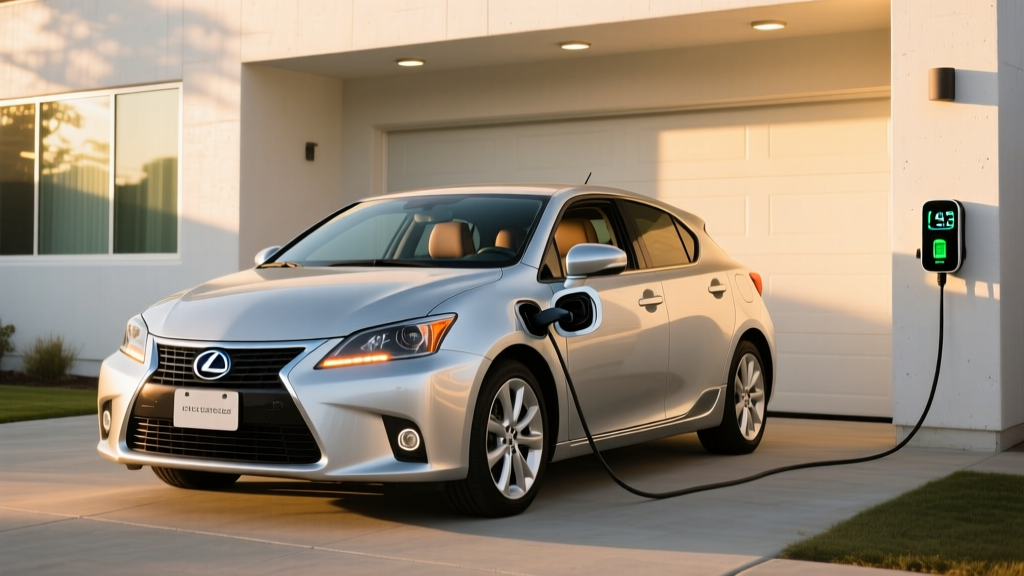
The 2016 Lexus CT 200h occupies a specific niche in the used-hybrid market: it's a luxury-branded compact hatchback that shares its powertrain with the Toyota Prius of the same era, delivering strong city fuel economy and Lexus build quality at a bargain used price. In 2026, well-maintained examples trade between $11,000 and $17,000 depending on mileage and condition — making the CT 200h one of the most affordable entry points into a proven hybrid.
But the CT 200h isn't without compromises. Its 1.8-liter four-cylinder and electric motor produce a combined 134 horsepower, resulting in leisurely acceleration. Highway fuel economy trails its city numbers. And as these vehicles approach their 10th birthday, hybrid battery health becomes the central ownership question. This guide covers exactly what to expect.
2016 Lexus CT 200h Core Specifications
| Specification | Value |
|---|---|
| Powertrain Type | Conventional Hybrid (HEV) — no plug-in |
| Engine | 1.8L 4-cylinder Atkinson-cycle (98 hp) |
| Electric Motor | 60 kW (80 hp) permanent-magnet AC |
| Combined System Output | 134 hp |
| Transmission | eCVT (planetary gearset) |
| Hybrid Battery | 1.3 kWh nominal (NiMH), ~0.9 kWh usable |
| EPA MPG (City / Hwy / Combined) | 43 / 40 / 42 |
| Fuel Tank | 10.6 gallons |
| Total Driving Range | ~445 miles |
| 0–60 mph | 9.8 seconds |
| Drivetrain | Front-wheel drive |
| Cargo Volume | 14.3 cu ft (rear seats up), 37.4 cu ft (folded) |
| Curb Weight | ~3,130 lbs |
| Original MSRP (2016) | $31,250 (base) – $38,000+ (loaded) |
| 2026 Used Price Range | $11,000 – $17,000 |
Fuel Economy: EPA Numbers vs. Real-World MPG
The EPA rates the 2016 Lexus CT 200h at 43 mpg city, 40 mpg highway, and 42 mpg combined according to fueleconomy.gov. These figures come directly from the shared Toyota Hybrid Synergy Drive platform — the same 1.8L Atkinson-cycle engine and eCVT found in the third-generation Prius.
| Driving Scenario | EPA Estimate | Real-World Expectation |
|---|---|---|
| City / Stop-and-Go | 43 mpg | 44–48 mpg (hybrids excel here) |
| Highway (70+ mph) | 40 mpg | 36–39 mpg |
| Combined Mixed | 42 mpg | 39–44 mpg |
| Cold Weather (below 32°F) | — | 34–38 mpg |
Like most conventional hybrids, the CT 200h actually exceeds its EPA city rating in real-world stop-and-go driving. Regenerative braking recaptures energy at every stoplight, and the engine shuts off frequently at low speeds. Highway driving is where efficiency drops — the small battery can't assist much at sustained high speeds, and aerodynamic drag dominates.
In cold weather, expect a 10–15% fuel-economy penalty. The engine runs more often to provide cabin heat (there's no electric heater in this generation), and the NiMH battery operates less efficiently at low temperatures. Owners in northern climates regularly report 35–38 mpg combined during winter months.
HEV vs. PHEV vs. EV: Where the CT 200h Fits
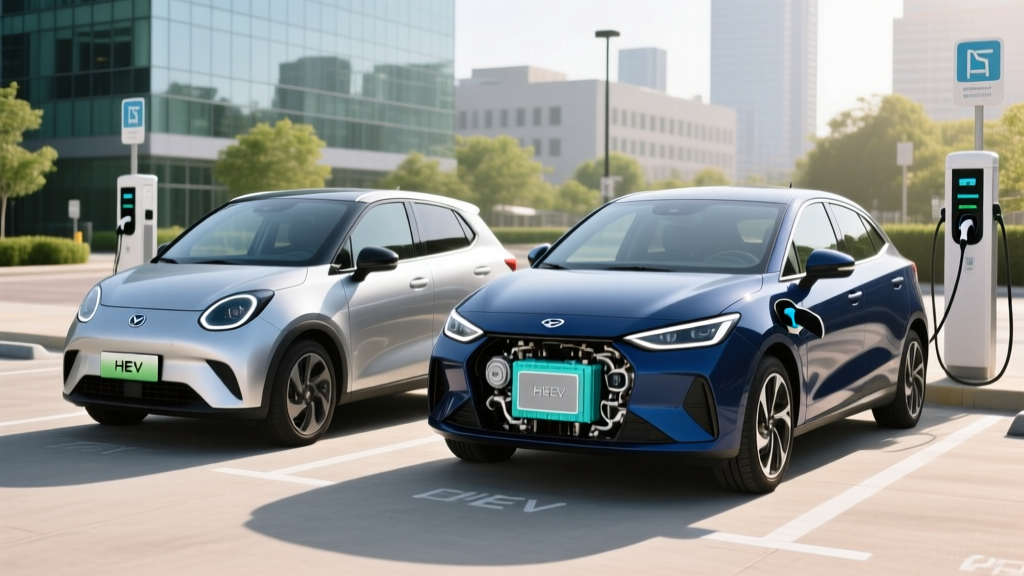
The 2016 CT 200h is a conventional hybrid (HEV). It has no plug, no electric-only driving range beyond about 1 mile at very low speeds, and no external charging capability. The 1.3 kWh NiMH battery recharges entirely through regenerative braking and engine power.
HEV vs. PHEV vs. BEV — Quick Comparison
| Feature | HEV (CT 200h) | PHEV (e.g., Prius Prime) | BEV (e.g., Bolt EV) |
|---|---|---|---|
| Plug-in Charging | No | Yes (Level 1/2) | Yes (Level 1/2/DC) |
| Electric-Only Range | ~1 mi (low speed) | 25–44 mi | 200–350+ mi |
| Fuel Required | Gasoline always | Gasoline for long trips | None |
| Home Charging Needed | No | Recommended | Essential |
| Federal Tax Credit (new) | None | Up to $7,500 (§30D) | Up to $7,500 (§30D) |
| Used EV Credit (§25E) | Not eligible | Not eligible | Up to $4,000 |
| Best For | No charging access, simple ownership | Home charging + long trips | Home charging, lower running costs |
Who should choose the CT 200h over a PHEV or EV? The answer is straightforward: buyers who lack access to home or workplace charging. If you park on the street, live in an apartment without charging infrastructure, or simply want zero lifestyle change from a gas car, a conventional HEV like the CT 200h delivers meaningful fuel savings (42 mpg vs. ~28 mpg for a comparable gas compact) without any plug-in requirement.
If you do have home charging access and your daily commute is under 30 miles, a used PHEV like the 2017+ Prius Prime or a used BEV with the §25E used-EV credit (up to $4,000 for qualifying buyers) may deliver lower total fuel costs. The CT 200h wins on simplicity and the lowest barrier to entry.
Hybrid Battery: Lifespan, Warranty, and Replacement Cost
The 2016 CT 200h uses a nickel-metal hydride (NiMH) hybrid battery pack rated at 1.3 kWh nominal capacity. This is a small battery by modern standards — its job is to buffer energy for acceleration assist and regenerative braking, not to drive the car for miles on electricity alone.
Battery Warranty & Lifespan
Original warranty: Lexus covered the hybrid battery for 8 years / 100,000 miles in most states, and 10 years / 150,000 miles in California and states that adopted CARB emissions standards (including NY, MA, NJ, CT, RI, VT, ME, OR, WA). As of 2026, most 2016 CT 200h vehicles are outside the 8-year/100k window unless they have unusually low mileage.
Expected lifespan: Toyota/Lexus NiMH hybrid batteries in this generation commonly last 150,000–200,000 miles before significant degradation. Many Prius and CT 200h taxis have exceeded 250,000 miles on the original pack. Failure before 120,000 miles is uncommon but not unheard of, particularly in hot climates where sustained high battery temperatures accelerate cell degradation.
Replacement cost in 2026:
| Option | Cost Range | Notes |
|---|---|---|
| New OEM Lexus battery | $3,500 – $4,500 (installed) | Dealer-only, full warranty |
| Remanufactured battery | $1,800 – $2,800 (installed) | Companies like Green Bean Battery; 1–3 year warranty |
| Used/salvage battery | $600 – $1,200 + install | Risky — unknown remaining life |
| Individual cell/module replacement | $400 – $900 | Requires specialist; replaces only bad modules |
For a used 2016 CT 200h purchase, the smart move is to have the hybrid battery's state of health (SoH) checked before buying. A Lexus dealer or hybrid specialist can read the battery's internal resistance and voltage-delta data through the OBD-II port using Toyota's Techstream software or aftermarket tools like Dr. Prius. A healthy pack shows module voltage deltas under 0.20V under load. Anything above 0.30V signals aging cells that may fail within 12–24 months.
Reliability and Long-Term Ownership Costs
The CT 200h benefits from one of the most thoroughly proven hybrid powertrains ever built. The Toyota Hybrid Synergy Drive in this generation has accumulated billions of real-world miles across the Prius, CT 200h, and Prius V. Common failure points are well-documented and generally manageable:
- Inverter coolant pump: Some units fail between 80,000–120,000 miles. Replacement runs $400–$700. Check for recall status — Lexus issued service campaigns on some model years.
- EGR valve and intake manifold clogging: Carbon buildup in the EGR system is a known issue on the 2ZR-FXE engine past 100,000 miles. Cleaning costs $200–$500; neglect can lead to head-gasket issues.
- Brake actuator assembly: The regenerative braking system uses an electro-hydraulic actuator that can fail on higher-mileage examples. Replacement is $1,200–$2,000 at a dealer. Listen for unusual buzzing or a hard brake pedal on your test drive.
- 12V auxiliary battery: Located in the rear cargo area, the AGM 12V battery typically lasts 4–6 years. A dead 12V battery will prevent the car from starting even if the hybrid battery is fully charged. Replacement: $200–$350.
According to reliability data aggregated by owner communities and repair databases, the CT 200h ranks among the most reliable vehicles in the Lexus lineup — which itself consistently tops J.D. Power and Consumer Reports dependability studies. Routine maintenance is minimal: oil changes every 10,000 miles (0W-20 synthetic), cabin air filter, and brake pad replacement intervals that often exceed 80,000 miles thanks to regenerative braking doing most of the work.
Tax Credits and Incentives for the 2016 CT 200h
Here's the straightforward answer: the 2016 Lexus CT 200h does not qualify for any federal tax credit in 2026.
As a conventional hybrid (HEV), the CT 200h was never eligible for the federal §30D new-vehicle clean energy credit, which applies only to plug-in electric vehicles (PHEVs and BEVs) with battery packs of at least 7 kWh. The CT 200h's 1.3 kWh NiMH pack falls far short of that threshold.
The §25E used clean vehicle credit (up to $4,000 or 30% of sale price, whichever is less) also does not apply — it's restricted to used BEVs and PHEVs purchased from a dealer, with MSRP and buyer income caps per IRS guidelines.
Some states offer modest incentives for hybrid purchases, but these programs have largely shifted toward plug-in vehicles. Check your state's energy office or the Alternative Fuels Data Center for any remaining hybrid-specific rebates in your area, though most have expired or are limited to commercial fleets.
Who Should Buy the 2016 CT 200h — And Who Shouldn't
Pros
- Proven hybrid powertrain with 150k–200k+ mile battery life
- 42 MPG combined; often exceeds EPA city rating in stop-and-go
- No plug-in charging required — works with existing gas-station habits
- Lexus build quality, quiet cabin, premium materials for the price
- Low maintenance costs; brake pads last 80k+ miles
- Strong reliability track record; affordable used pricing ($11k–$17k)
- Hatchback practicality with 37.4 cu ft cargo (seats folded)
Cons
- Slow acceleration (9.8s 0–60) — struggles with highway merging
- Highway MPG drops to ~36–39 real-world
- Outdated infotainment (no Apple CarPlay/Android Auto natively)
- Tight rear-seat legroom compared to modern compacts
- CVT drone under hard acceleration
- No DC fast charging or meaningful electric-only driving
- Hybrid battery replacement cost ($2k–$4.5k) as vehicle ages
- No federal tax credit eligibility
Buy the 2016 CT 200h if: You want a reliable, fuel-efficient daily driver with no charging requirements, you mostly drive in city or suburban conditions, and you value Lexus refinement at a used-car price. It's ideal for apartment dwellers, street parkers, and anyone who wants hybrid savings without changing their fueling routine.
Look elsewhere if: You have home charging access and want to maximize fuel savings (a used PHEV or BEV will cost less per mile), you regularly drive long highway distances (a modern diesel or efficient gas sedan may match the CT's highway MPG), or you need strong acceleration for mountain driving or frequent highway merging.
Frequently Asked Questions
How many MPG does the 2016 Lexus CT 200h get?
The EPA rates it at 43 mpg city, 40 mpg highway, and 42 mpg combined. In real-world driving, expect 44–48 mpg in city conditions and 36–39 mpg on the highway. Cold weather reduces combined economy to approximately 34–38 mpg.
Is the 2016 CT 200h a plug-in hybrid?
No. The CT 200h is a conventional hybrid (HEV). It cannot be plugged in and has no meaningful electric-only range. The hybrid battery charges solely through regenerative braking and the gasoline engine.
How long does the CT 200h hybrid battery last?
Toyota/Lexus NiMH batteries in this generation commonly last 150,000–200,000 miles. The original warranty was 8 years/100,000 miles (10 years/150,000 miles in CARB states). As of 2026, most 2016 models are beyond the standard warranty period.
What does it cost to replace the hybrid battery?
A new OEM battery from Lexus costs $3,500–$4,500 installed. Remanufactured options range from $1,800–$2,800. Individual module replacement by a hybrid specialist can cost as little as $400–$900 if only a few cells have failed.
Does the 2016 CT 200h qualify for any tax credit?
No. As a conventional hybrid, it is ineligible for the federal §30D new-vehicle credit, the §25E used-vehicle credit, and most current state EV incentive programs. No plug-in capability means no electrification incentives apply.
Is the CT 200h the same as a Prius?
They share the same 1.8L hybrid powertrain, eCVT, and NiMH battery architecture. The CT 200h adds a Lexus-tuned suspension, more sound insulation, premium interior materials, and a hatchback body style. Fuel economy is nearly identical (Prius rated 44/40/42 for the same era). The CT 200h is essentially a luxury-trimmed Prius in a different package.
Can I add Apple CarPlay or Android Auto?
Not natively — Lexus did not offer CarPlay until the 2019 model year across its lineup. Aftermarket solutions exist, including head-unit replacements ($600–$1,200 installed) and CarPlay adapter boxes that interface with the factory screen ($200–$400), but integration quality varies.