Quick Verdict: A Practical Used Hybrid Sedan
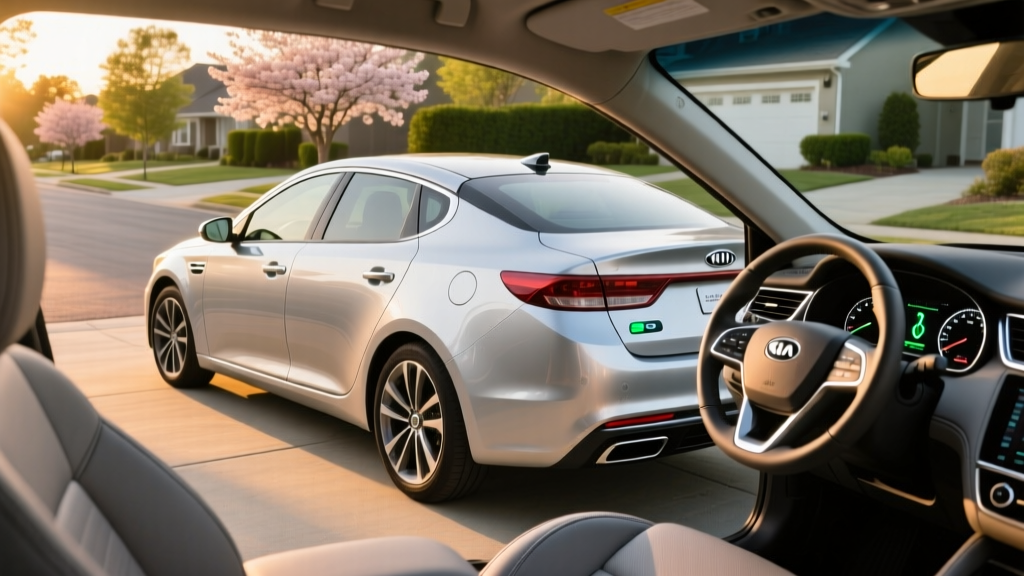
The 2014 Kia Optima Hybrid is a conventional hybrid electric vehicle (HEV) — not a plug-in — that pairs a 2.4-liter four-cylinder engine with a 47-horsepower electric motor to deliver an EPA-estimated 35 MPG combined. For used-car shoppers in 2026 who want hybrid efficiency without the complexity of plugging in, the Optima Hybrid remains a compelling midsize sedan, especially given its competitive pricing on the used market and Kia's original 10-year/100,000-mile hybrid battery warranty.
This guide covers everything a prospective buyer needs: real-world MPG, powertrain specs, battery longevity, reliability data, and how the 2014 Optima Hybrid stacks up against newer PHEVs and full EVs available today.
HEV vs PHEV: Understanding the 2014 Optima Hybrid
Before diving into specs, it's critical to understand what the 2014 Optima Hybrid is — and what it isn't.
Conventional Hybrid (HEV) — What the 2014 Optima Is
- No plug required: The battery charges via regenerative braking and the gasoline engine
- Small battery: 1.4 kWh lithium-polymer pack — enough for low-speed electric assist, not electric-only driving at highway speeds
- Seamless operation: You fuel up at gas stations; the car manages electric/gas blending automatically
- No range anxiety: Total range exceeds 550 miles on a single tank
Plug-In Hybrid (PHEV) — What the Optima Hybrid Is NOT
- Kia did offer an Optima PHEV in later model years (2017–2020), but the 2014 model was HEV-only
- PHEVs have larger batteries (typically 8–18 kWh), plug into wall outlets or chargers, and offer 20–40 miles of electric-only range
- PHEVs qualify for federal tax credits under IRS §30D (up to $7,500 when new, subject to MSRP/income/sourcing caps) — HEVs do not
Bottom line: If you see the 2014 Optima Hybrid listed somewhere, you're looking at a conventional hybrid. No charging cable, no electric-only commute. That's actually a feature for buyers without home charging access.
Fuel Economy: EPA Ratings vs Real-World MPG
| Metric | EPA Estimate | Real-World Expectation |
|---|---|---|
| City MPG | 35 MPG | 36–40 MPG (hybrids excel in stop-and-go) |
| Highway MPG | 39 MPG | 35–38 MPG (electric assist diminishes at sustained speed) |
| Combined MPG | 35 MPG | 34–38 MPG depending on driving mix |
| Fuel Tank Capacity | 17.2 gallons | — |
| Total Range | ~602 miles | ~540–610 miles |
The EPA rates the 2014 Optima Hybrid at 35 city / 39 highway / 35 combined. The slightly unusual city-highway split (many hybrids rate higher in city) reflects the Optima's 6-speed automatic transmission, which lacks the continuously variable transmission (CVT) optimization found in Toyota and Honda hybrids.
Real-world note: Owners on fueleconomy.gov report an average of 33–37 MPG combined, with city-heavy commuters sometimes exceeding 38 MPG. Highway-heavy drivers at 75+ MPH should expect closer to 32–34 MPG. Cold weather reduces efficiency by roughly 5–10% due to increased engine idling for cabin heat.
For comparison, the 2014 Toyota Camry Hybrid achieves 41/38/40 MPG, and the 2014 Honda Accord Hybrid reaches 50/45/47 MPG — both outperform the Optima Hybrid on paper. However, the Kia's real-world highway numbers tend to hold up better than its city figures suggest.
Powertrain Specs: Engine, Motor, and Combined Output
| Specification | 2014 Kia Optima Hybrid |
|---|---|
| Gasoline Engine | 2.4L inline-4 (Atkinson cycle) |
| Engine Horsepower | 169 HP @ 6,000 RPM |
| Engine Torque | 156 lb-ft @ 4,250 RPM |
| Electric Motor | 47 HP (35 kW), 151 lb-ft |
| Combined System Output | 206 HP @ 6,000 RPM |
| Transmission | 6-speed automatic |
| Hybrid Battery | 1.4 kWh lithium-polymer (270V) |
| 0–60 MPH | ~8.5 seconds |
| Curb Weight | 3,496 lbs |
| Drivetrain | Front-wheel drive |
The Optima Hybrid's powertrain uses a 2.4-liter Atkinson-cycle engine — the same thermodynamic approach Toyota and Honda use to maximize efficiency at the cost of peak power. The 47 HP electric motor sits between the engine and transmission, providing torque fill at low RPMs and enabling brief electric-only operation below ~25 MPH.
Unlike some competitors that use a CVT or planetary gearset (Toyota's e-CVT), Kia opted for a traditional 6-speed automatic. This gives the Optima Hybrid a more familiar, connected driving feel — you feel actual gear shifts — but sacrifices some efficiency optimization. The tradeoff is subjective: some drivers prefer the natural feel; others prioritize maximum MPG.
The 1.4 kWh lithium-polymer battery pack is mounted behind the rear seats, which reduces trunk space from 15.4 cubic feet (gas Optima) to 9.9 cubic feet. This is a meaningful compromise for cargo-heavy buyers.
Battery Longevity, Warranty, and Replacement Cost
Original Hybrid Battery Warranty
- Coverage: 10 years / 100,000 miles (whichever comes first)
- Applies to: Hybrid battery pack, electric motor, inverter, and related hybrid components
- Transferable: Yes — remaining warranty transfers to second owners (verify with Kia dealer using VIN)
- Capacity threshold: Kia typically covers the battery if capacity drops below ~70% of original
For a 2014 model in 2026, the original 10-year/100,000-mile warranty has likely expired for most vehicles (the 10-year mark passed in 2024). However, low-mileage examples under 100,000 miles may still carry partial coverage — always verify with a Kia dealer using the VIN before purchase.
Hybrid battery replacement cost: If the lithium-polymer pack fails out of warranty, replacement runs approximately $2,500–$4,000 including labor at a dealership. Independent hybrid specialists may offer refurbished packs for $1,500–$2,500. Cell-level repair (replacing individual modules) can cost $500–$1,200 but requires a technician experienced with Kia hybrid systems.
Degradation reality: Kia's lithium-polymer chemistry in this generation has proven durable. Most 2014 Optima Hybrids with 100,000+ miles report minimal capacity loss — typically 5–15% degradation over a decade. Unlike full EVs where battery degradation directly reduces range, a hybrid's small battery mainly affects regenerative braking efficiency and electric-assist duration. You'll still get close to original MPG even with moderate degradation.
Reliability and Common Issues
The 2014 Optima Hybrid carries generally average reliability ratings. IIHS named it a Top Safety Pick with Good ratings in most crash tests, though the small-overlap front test was rated Acceptable rather than Good.
Common owner-reported issues:
- Hybrid system warning light: Some owners report intermittent hybrid system warnings, often related to the 12V auxiliary battery rather than the hybrid pack. Replacing the 12V battery ($150–$250) frequently resolves this.
- Transmission shudder: A small number of reports describe slight shudder during electric-to-gas transitions at low speeds. Software updates from Kia dealers have addressed this in many cases.
- Brake feel: The regenerative braking system can feel less linear than conventional brakes. This is normal for hybrids but takes adjustment for new hybrid drivers.
- Trunk space: The 9.9 cubic-foot trunk is genuinely limiting. A full-size suitcase and a couple of grocery bags will fill it quickly.
The gasoline Optima of this generation had some engine-related concerns (theta II engine recalls), but the hybrid's Atkinson-cycle 2.4L is a different variant and has not been subject to the same widespread recalls. Still, verify recall completion on any used example via NHTSA's VIN lookup.
Pricing and Tax Credit Eligibility in 2026
As a used vehicle in 2026, the 2014 Kia Optima Hybrid typically sells for $6,000–$10,500 depending on mileage, condition, and trim (LX or EX).
| Trim | Original MSRP (2014) | Typical Used Price (2026) |
|---|---|---|
| Optima Hybrid LX | $26,750 | $6,000–$8,500 |
| Optima Hybrid EX | $32,600 | $7,500–$10,500 |
Federal tax credit: Conventional hybrids (HEVs) like the 2014 Optima Hybrid do not qualify for the IRS §30D Clean Vehicle Credit. That credit applies only to plug-in electric vehicles (BEVs and PHEVs) with battery capacities of at least 7 kWh. The Optima Hybrid's 1.4 kWh pack falls well below this threshold.
Used EV credit (§25E): Similarly, the used clean vehicle credit (up to $4,000 / 30% of sale price) applies only to used BEVs and PHEVs — not conventional hybrids. Check current rules at IRS.gov.
State incentives: A handful of states offer modest rebates or HOV lane access for hybrids, but these are increasingly targeted at PHEVs and BEVs. Check your state's energy office or DMV for current programs.
Who Should Buy the 2014 Optima Hybrid?
Pros
- No plugging in required — ideal for apartment dwellers or those without garage access
- Solid 35 MPG combined with no behavior change needed
- Comfortable ride, well-equipped EX trim with leather, panoramic sunroof, and Infinity audio
- Conventional 6-speed automatic feels natural vs CVTs
- Low used pricing — strong value for a hybrid sedan
- Proven hybrid battery durability with minimal degradation reports
Cons
- Trunk space reduced to 9.9 cu ft (battery pack intrusion)
- MPG trails Camry Hybrid and Accord Hybrid from the same era
- No electric-only highway driving — it's a mild hybrid, not a PHEV
- Original 10-year battery warranty has expired on most examples
- No federal or state tax credit eligibility
- Infotainment system feels dated by 2026 standards
Decision Framework: Hybrid vs PHEV vs EV
Choose the 2014 Optima Hybrid (HEV) if:
- You cannot charge at home (apartment, street parking, no 240V outlet access)
- Your budget is under $10,000 and you want hybrid efficiency
- You drive a mix of city and highway and want 550+ mile range without planning
- You prefer not to think about charging — just fill up with gas
Choose a used PHEV (e.g., 2017–2020 Optima PHEV, Prius Prime) if:
- You have home charging access (even a standard 120V outlet works for overnight charging)
- Your daily commute is under 30 miles and you want electric-only weekday driving
- You want to reduce fuel consumption by 60–80% on local trips
Choose a full EV (e.g., used Bolt EV, Model 3) if:
- You have reliable Level 2 home charging
- Your daily driving is under 200 miles and you rarely road-trip beyond charger network range
- You want to eliminate oil changes, spark plugs, and transmission maintenance
- You can spend $12,000–$25,000+ on a used EV
Frequently Asked Questions
How many MPG does the 2014 Kia Optima Hybrid get?
The EPA rates it at 35 city / 39 highway / 35 combined. Real-world owners average 33–37 MPG combined, with city-heavy drivers sometimes reaching 38+ MPG and highway-heavy drivers seeing 32–34 MPG.
Does the 2014 Optima Hybrid need to be plugged in?
No. The 2014 Optima Hybrid is a conventional hybrid (HEV), not a plug-in hybrid. It charges its small 1.4 kWh battery through regenerative braking and the gasoline engine. You never plug it in — you only refuel at gas stations.
Can the 2014 Optima Hybrid drive on electric power only?
Only at very low speeds (under ~25 MPH) for short distances (typically under 1 mile). The 1.4 kWh battery and 47 HP motor are designed for electric assist, not electric-only propulsion. This is normal for conventional hybrids.
Is the hybrid battery reliable, and what does replacement cost?
Kia's lithium-polymer hybrid battery has proven durable, with most 10-year-old examples showing only 5–15% capacity degradation. Out-of-warranty replacement costs $2,500–$4,000 at a dealer, or $1,500–$2,500 for a refurbished pack from an independent hybrid specialist. The original 10-year/100,000-mile warranty has expired on most 2014 models by 2026.
Does the 2014 Optima Hybrid qualify for any tax credit?
No. Federal tax credits under IRS §30D (new vehicles) and §25E (used vehicles) apply only to plug-in vehicles (BEVs and PHEVs) with battery capacities of at least 7 kWh. The Optima Hybrid's 1.4 kWh pack does not qualify. Some states may offer minor incentives for hybrids — check your state energy office.
How does the 2014 Optima Hybrid compare to the Toyota Camry Hybrid?
The 2014 Camry Hybrid achieves 41/38/40 MPG combined — roughly 5 MPG better than the Optima Hybrid. The Camry also has a larger trunk (13.1 cu ft vs 9.9 cu ft) and Toyota's longer track record with hybrid systems. The Optima Hybrid counters with a more engaging 6-speed automatic (vs the Camry's e-CVT), a lower used price, and available premium features on the EX trim.
What's the difference between the 2014 Optima Hybrid and the later Optima PHEV?
Kia introduced the Optima PHEV for the 2017 model year. The PHEV features a larger 9.8 kWh battery, a plug-in port (J1772 connector), approximately 27 miles of electric-only range, and eligibility for the $7,500 federal tax credit when new. The 2014 Optima Hybrid has none of these features — it's a conventional, non-plug-in hybrid.
Is the 2014 Optima Hybrid a good used car buy in 2026?
For buyers seeking a budget-friendly hybrid sedan under $10,000 who cannot charge at home, yes — it's a solid choice. The powertrain is proven, fuel savings are meaningful versus the gas Optima (roughly $400–$600/year at 15,000 miles and $3.50/gallon), and maintenance costs are reasonable. Just inspect the hybrid battery health via a pre-purchase inspection and verify trunk space meets your needs.