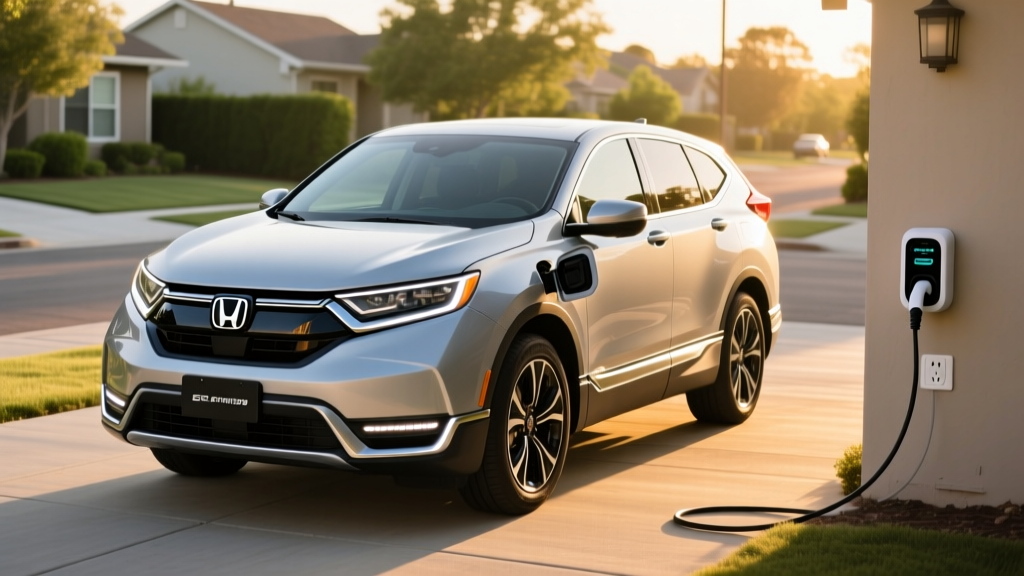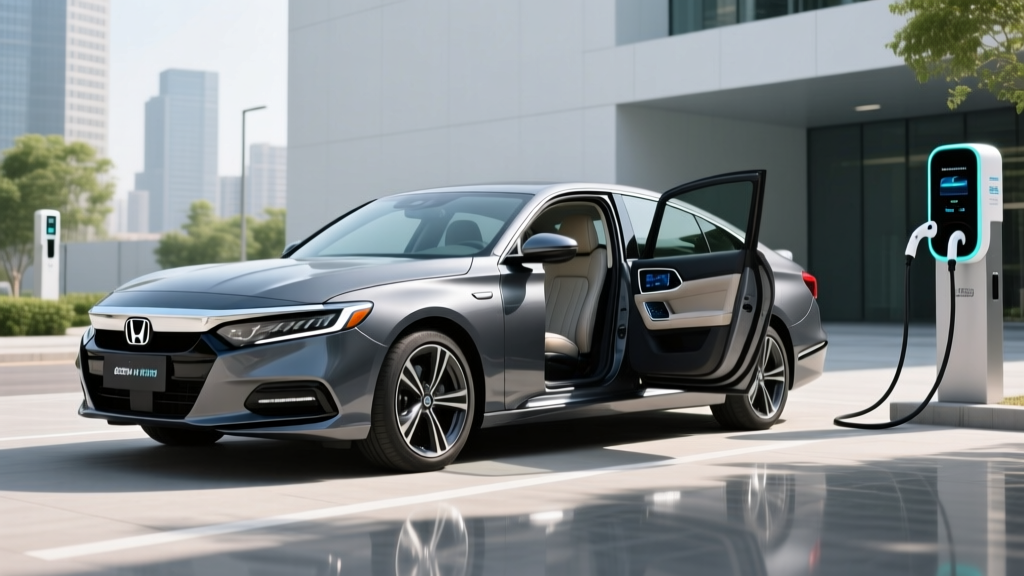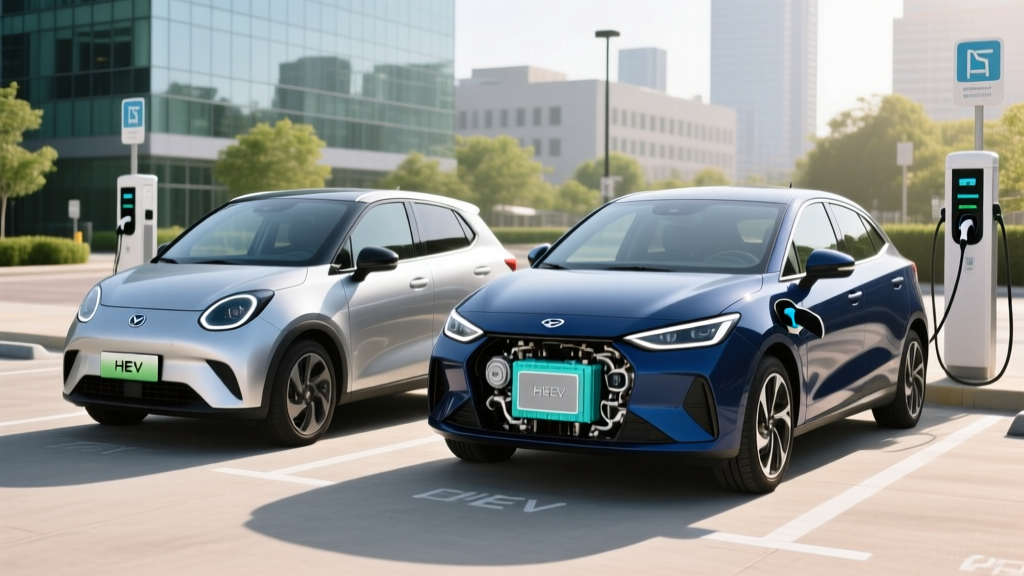
If you're not ready to commit to a full battery-electric vehicle but want to cut fuel costs and emissions, the electrified middle ground comes in two flavors: a conventional hybrid (HEV) or a plug-in hybrid (PHEV). Both use a gasoline engine paired with an electric motor, but the way they generate, store, and deploy electricity is fundamentally different — and that difference dictates which one saves you the most money over five years.
This guide breaks down the 2026 landscape with exact EPA figures, real-world efficiency data, battery warranty terms, and current federal tax credit rules so you can make a spec-driven decision.
HEV vs PHEV: The Core Difference
A conventional hybrid (HEV) like the Toyota Prius or Honda Accord Hybrid never plugs in. It captures energy through regenerative braking and the gasoline engine to keep a small battery (typically 1–2 kWh) charged. That battery assists the engine during acceleration and enables brief low-speed electric driving, but the car is 100% fueled by gasoline.
A plug-in hybrid (PHEV) like the Toyota RAV4 Prime or Jeep Wrangler 4xe carries a much larger battery (13–25+ kWh) that you charge from a wall outlet or public charger. This gives it a genuine electric-only driving range — usually 25–50 miles — before the gasoline engine engages. Think of it as a short-range EV with a built-in gas-engine backup.
| Attribute | Conventional Hybrid (HEV) | Plug-In Hybrid (PHEV) |
|---|---|---|
| Plugs in to charge? | No | Yes (Level 1 or Level 2) |
| Battery size | 0.7–2.0 kWh | 13–25+ kWh |
| Electric-only range | ~1 mile at low speed | 25–50+ miles (EPA) |
| Fueling | Gasoline only | Electricity + gasoline |
| Federal tax credit (§30D) | No | Up to $7,500 (if eligible) |
| Typical price premium over gas model | $1,000–$3,000 | $4,000–$9,000 |
| Best for | Drivers without home charging access | Drivers with home charging and short commutes |
Fuel Economy: EPA MPG and Real-World Expectations
Fuel economy is the headline reason buyers go hybrid. Here's how the top 2026 models stack up, with EPA city/highway/combined figures from fueleconomy.gov.
Conventional Hybrids (HEV)
| Model | City MPG | Highway MPG | Combined MPG | Real-World Note |
|---|---|---|---|---|
| Toyota Prius (LE AWD) | 57 | 56 | 57 | City drivers often see 60+; highway-heavy trips drop to ~48 |
| Honda Accord Hybrid (Sport) | 51 | 44 | 48 | Strong city regen; highway cruises yield ~40 |
| Toyota Camry Hybrid (LE) | 53 | 50 | 52 | Consistent across seasons; cold-weather loss ~5% |
| Hyundai Tucson Hybrid (Blue) | 38 | 38 | 38 | SUV penalty; real-world highway ~33 |
| Ford Maverick Hybrid (FWD) | 42 | 33 | 37 | City hauling shines; highway towing drops sharply |
Plug-In Hybrids (PHEV)
| Model | EV Range (mi) | Combined MPGe | Gas-Only Combined MPG | Total Range (mi) |
|---|---|---|---|---|
| Toyota RAV4 Prime (SE) | 42 | 94 MPGe | 38 | ~600 |
| Chrysler Pacifica PHEV | 32 | 82 MPGe | 30 | ~460 |
| Jeep Wrangler 4xe (Sahara) | 22 | 49 MPGe | 20 | ~370 |
| BMW X5 xDrive50e | 38 | 56 MPGe | 27 | ~460 |
| Toyota Prius Prime (SE) | 44 | 127 MPGe | 52 | ~600+ |
PHEV Electric Range, Battery Size & Charging Times
The defining spec of a PHEV is how far it drives on electricity alone. That range depends on battery capacity (measured in kilowatt-hours, or kWh — the energy stored) and vehicle efficiency. Here's how the major 2026 PHEVs compare:
| Model | Battery (kWh usable) | EV Range (EPA) | Level 2 Charge Time (0–100%) | DC Fast Charge? |
|---|---|---|---|---|
| Toyota RAV4 Prime | 14.9 kWh | 42 mi | ~2.5 hours (240V/16A) | No |
| Toyota Prius Prime | 13.6 kWh | 44 mi | ~4.0 hours (240V/12A) | No |
| Chrysler Pacifica PHEV | 16.0 kWh | 32 mi | ~2.0 hours (240V/32A) | No |
| Jeep Wrangler 4xe | 17.3 kWh | 22 mi | ~2.5 hours (240V/32A) | No |
| BMW X5 xDrive50e | 25.7 kWh | 38 mi | ~3.5 hours (240V/32A) | No (some markets: optional) |
A critical detail most buyers miss: the vast majority of PHEVs cannot DC fast charge. Their batteries are too small to justify the hardware cost, and the charge port is typically limited to Level 2 (J1772 connector, 3.3–7.2 kW). That means a PHEV charges overnight on a 240V home outlet and isn't practical for en-route charging on road trips. You plug in at home or at work, and on long drives you simply burn gasoline like a conventional hybrid.
Powertrain Output: Where Electric Torque Meets Gas Power
Hybrids aren't just about efficiency — many deliver genuinely strong acceleration thanks to the instant torque of the electric motor filling in the low-RPM gap before the gas engine reaches peak power.
| Model | Type | Combined HP | Engine | Motor(s) | 0–60 mph |
|---|---|---|---|---|---|
| Toyota RAV4 Prime | PHEV | 302 hp | 2.5L I4 | Front + rear electric | 5.7 sec |
| Toyota Prius Prime | PHEV | 220 hp | 2.0L I4 | Front electric | 6.6 sec |
| BMW X5 xDrive50e | PHEV | 483 hp | 3.0L I6 turbo | Integrated electric | 4.6 sec |
| Toyota Prius (HEV) | HEV | 196 hp | 2.0L I4 | Front + rear electric | 7.0 sec |
| Honda Accord Hybrid | HEV | 204 hp | 2.0L I4 | Two front motors | 7.5 sec |
| Jeep Wrangler 4xe | PHEV | 375 hp | 2.0L I4 turbo | Integrated electric | 6.0 sec |
The RAV4 Prime's 302 hp makes it the quickest RAV4 Toyota sells — quicker than the gas-only TRD model. The BMW X5 xDrive50e's 483 combined horsepower turns a luxury SUV into a legitimate performance car. Even the base Prius HEV at 196 hp is a massive improvement over the previous generation's 121 hp, and it shows in everyday merging and passing confidence.
Pricing & Federal Tax Credit Eligibility
Here's where the HEV vs PHEV decision gets financial. PHEVs carry a higher sticker price but may qualify for the federal §30D tax credit, which can narrow or even close the gap.
| Model | Base MSRP | Federal §30D Credit | Effective Price (if eligible) |
|---|---|---|---|
| Toyota Prius (LE HEV) | $28,350 | $0 | $28,350 |
| Toyota Prius Prime (SE PHEV) | $33,675 | Up to $3,750* | ~$29,925 |
| Toyota RAV4 Prime (SE PHEV) | $44,500 | Up to $3,750* | ~$40,750 |
| Chrysler Pacifica PHEV | $51,120 | Up to $7,500* | ~$43,620 |
| Jeep Wrangler 4xe (Sahara) | $51,795 | Up to $3,750* | ~$48,045 |
| BMW X5 xDrive50e | $72,800 | $0 (MSRP cap) | $72,800 |
*Credit amounts depend on critical mineral and battery component sourcing requirements under the Inflation Reduction Act. Amounts shown are maximum potential; actual credit varies. Consult IRS.gov §30D guidelines and a tax professional for your situation.
- MSRP caps: Vans/SUVs/pickups ≤ $80,000; sedans ≤ $55,000
- Buyer income caps: $150K single / $225K head of household / $300K joint (modified AGI)
- Battery sourcing: Increasing percentages of critical minerals and battery components must be sourced from the U.S. or FTA partners — this changes annually and can reduce or eliminate the credit for some models mid-year
- Point-of-sale transfer: You can transfer the credit to the dealer at purchase for an immediate price reduction rather than waiting for a tax refund
Conventional hybrids (HEVs) do not qualify for §30D. Some states offer separate rebates for PHEVs — check your state energy office.
Battery Warranty, Reliability & Replacement Cost
The hybrid battery is the component that makes buyers nervous. Here's the data: modern hybrid batteries from Toyota, Honda, Hyundai, and Ford are engineered to last the life of the vehicle, and failure rates are low.
- Toyota: 10 years / 150,000 miles (hybrid battery)
- Honda: 8 years / 100,000 miles (10/150,000 in CARB states)
- Hyundai/Kia: 10 years / 100,000 miles
- Ford: 8 years / 100,000 miles
- BMW: 8 years / 80,000 miles (PHEV high-voltage battery)
These warranties typically guarantee the battery will retain at least 60–70% of its original capacity. If it falls below that threshold within the warranty period, replacement is covered.
Replacement costs if out of warranty:
- HEV battery (Toyota Prius): $2,000–$3,500 for a new OEM pack; $1,000–$1,800 for a refurbished unit
- PHEV battery (RAV4 Prime, 14.9 kWh): $5,000–$8,000 OEM replacement
- PHEV battery (larger packs like BMW X5): $10,000–$15,000+
In practice, Consumer Reports data shows Toyota hybrid batteries routinely lasting 200,000+ miles with minimal degradation. The Prius has been in production since 1997, giving us nearly 30 years of longevity data. PHEV batteries are newer to the market at scale, but their larger size means they cycle less deeply (a 14 kWh battery used for 30 miles daily cycles far less stressfully than a 60 kWh EV battery used for 200 miles), which favors longevity.
Hybrid vs PHEV vs EV: Which Powertrain Fits You?
The right choice depends on three variables: your daily mileage, your access to charging, and your road-trip habits.
- You don't have access to home or workplace charging
- You want maximum simplicity — no plugs, no apps, no charging planning
- Your budget is tighter and you want a lower purchase price
- You drive a mix of city and highway and want consistent 40–57 MPG without behavior changes
- You can install a 240V Level 2 charger at home or have workplace charging
- Your daily commute is under 40 miles round-trip (you'll rarely burn gas on weekdays)
- You take occasional long road trips and don't want to plan around DC fast-charging stations
- You want EV-like daily driving with gas-car freedom on weekends
- You have reliable home charging and your daily driving is under 250 miles
- You want zero tailpipe emissions and the lowest per-mile fuel cost
- You're willing to plan road-trip charging stops (or have a Tesla Supercharger network advantage)
- You want the lowest maintenance costs (no oil changes, no spark plugs, minimal brake wear from regen)
5-Year Total Cost Snapshot: HEV vs PHEV vs Gas
Numbers clarify what marketing obscures. Here's a simplified 5-year/75,000-mile comparison using a Toyota RAV4 gas, RAV4 Hybrid, and RAV4 Prime, assuming 12,000 miles/year, $3.50/gallon gasoline, and $0.14/kWh electricity:
| Cost Factor | RAV4 Gas (LE AWD, 30 MPG) | RAV4 Hybrid (XLE AWD, 39 MPG) | RAV4 Prime (SE PHEV, 42 mi EV) |
|---|---|---|---|
| MSRP (approx.) | $32,670 | $35,175 | $44,500 |
| Federal tax credit | $0 | $0 | ~$3,750 |
| Fuel cost (5 yr) | $8,750 | $6,730 | ~$3,200 (70% on electric) |
| Maintenance (est.) | $3,500 | $3,200 | $2,800 |
| 5-year total (MSRP – credit + fuel + maint.) | ~$44,920 | ~$45,105 | ~$46,750 |
The PHEV's higher purchase price means the 5-year total is still slightly above the gas and hybrid versions. Stretch the timeline to 8–10 years, and the fuel savings typically close the gap entirely — especially if gas prices rise. The PHEV wins most decisively when your commute stays under the electric range and you charge at cheap residential rates.
Frequently Asked Questions
How many MPG does a hybrid get in real-world driving?
Most hybrids meet or exceed their EPA combined rating in city driving. A Toyota Prius rated at 57 combined regularly achieves 60–65 MPG in urban stop-and-go conditions. Highway driving at 75+ mph typically drops real-world MPG to 45–50 for the Prius and 35–40 for hybrid SUVs like the Tucson. Cold weather (below 30°F) reduces MPG by roughly 5–10% due to engine warm-up cycles and reduced battery efficiency.
How far can a PHEV go on electric only?
2026 PHEVs range from 22 miles (Jeep Wrangler 4xe) to 44 miles (Toyota Prius Prime) of EPA-rated electric-only range. Real-world EV range varies with temperature and driving style: expect 15–18 miles from the Wrangler 4xe in cold weather highway driving, and up to 48 miles from a Prius Prime on a mild-weather city commute. Once the battery depletes, the gas engine takes over seamlessly.
Do conventional hybrids need to be plugged in?
No. A conventional hybrid (HEV) charges its battery entirely through regenerative braking and the gasoline engine. You fuel it exactly like a regular gas car. Only plug-in hybrids (PHEVs) require or benefit from being plugged into an electrical outlet or EV charger.
Is a hybrid battery reliable, and what does replacement cost?
Hybrid batteries from major manufacturers have excellent longevity records. Toyota's hybrid battery packs regularly last 200,000+ miles. All 2026 models carry hybrid battery warranties of 8–10 years / 80,000–150,000 miles. Out-of-warranty replacement costs range from $2,000–$3,500 for a Prius HEV battery to $5,000–$15,000+ for larger PHEV packs, depending on the model. Refurbished batteries are available for HEVs at $1,000–$1,800.
Does a hybrid or plug-in hybrid qualify for a tax credit?
Conventional hybrids (HEVs) do not qualify for the federal §30D clean vehicle credit. Plug-in hybrids (PHEVs) may qualify for up to $7,500, but the actual amount depends on battery sourcing requirements, vehicle MSRP caps ($55K for sedans, $80K for SUVs/vans/pickups), and buyer income limits. Many PHEVs currently qualify for $3,750 (meeting the critical minerals requirement but not the battery components requirement). Check fueleconomy.gov's tax credit tracker for model-specific eligibility and consult a tax professional.
Should I buy a hybrid, PHEV, or full EV?
If you lack home charging access, a conventional hybrid (HEV) gives you the best fuel economy with zero lifestyle changes. If you can charge at home and your daily driving is under 40 miles, a PHEV lets you drive electric most days while keeping gas flexibility for road trips. If you have home charging, mostly drive under 250 miles daily, and want the lowest operating cost and zero tailpipe emissions, a full EV (BEV) is the most forward-looking choice. The PHEV is the bridge; the BEV is the destination — but the bridge is the right answer for millions of drivers in 2026.