Quick Verdict: A Luxury Sedan That Chose Torque Over Tax Credits
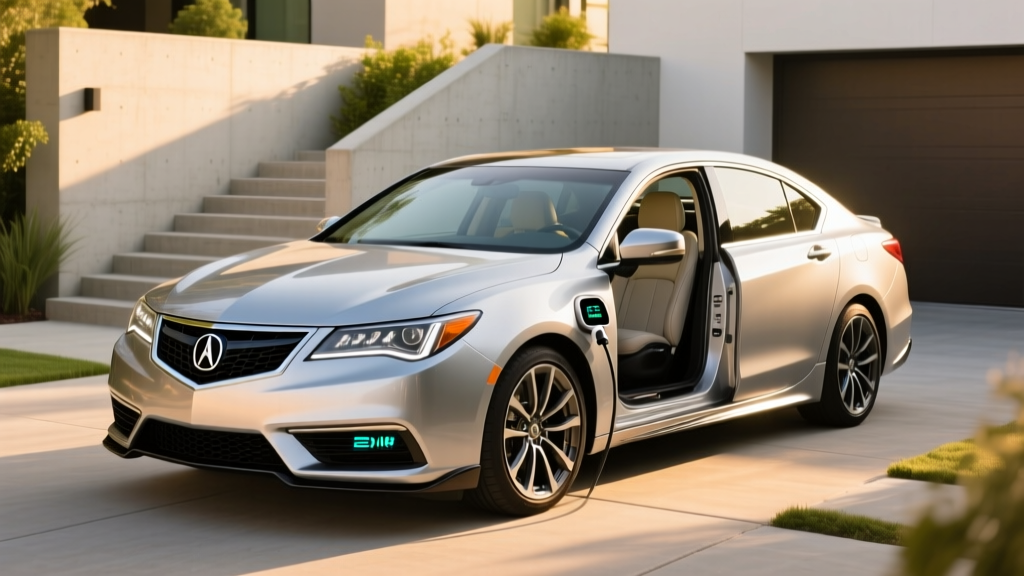
The 2016 Acura RLX Sport Hybrid was Honda's flagship attempt to blend a 3.5-liter V6 with a three-motor torque-vectoring system, producing a combined 377 horsepower and achieving an EPA-estimated 28 city / 32 highway / 30 combined MPG. Unlike many hybrids designed purely for fuel sipping, the RLX Sport Hybrid uses its electrified powertrain primarily for performance — the rear-axle motors deliver instantaneous torque vectoring that makes this 4,100-pound sedan corner with surprising agility.
As a used luxury hybrid in 2026, the RLX Sport Hybrid occupies a specific niche: buyers who want V6 smoothness, all-wheel-drive confidence, and better-than-average fuel economy without the complexity of plug-in charging. It does not qualify for any federal EV or PHEV tax credit because it is a conventional hybrid (HEV), not a plug-in vehicle.
Powertrain: Three Motors, One V6, and 377 Horsepower
The RLX Sport Hybrid's powertrain is one of the most complex Honda has ever built. Here's how it breaks down:
| Component | Specification |
|---|---|
| Gasoline Engine | 3.5L V6, direct-injected, 310 HP @ 6,500 rpm |
| Front Electric Motor | 35 kW (47 HP), integrated into 7-speed DCT |
| Rear Electric Motors (x2) | 27 kW (36 HP) each, one per rear wheel |
| Combined System Output | 377 HP |
| Transmission | 7-speed dual-clutch automatic (front) |
| Drivetrain | SH-AWD (torque-vectoring rear axle) |
| Hybrid Battery | 1.3 kWh lithium-ion (located behind rear seat) |
| 0-60 mph | ~4.9 seconds |
| Curb Weight | 4,145 lbs |
The twin rear motors are the star here. They don't just provide all-wheel drive — they actively overdrive the outside rear wheel in corners, creating a yaw moment that rotates the car. This is Honda's Super Handling All-Wheel Drive (SH-AWD) in its most advanced electrified form. The result is a full-size luxury sedan that genuinely changes direction with enthusiasm unusual for its class.
The 7-speed dual-clutch transmission is noteworthy because it retains a torque converter between the engine and the clutch pack. This was Honda's solution to the low-speed shudder that plagued early DCTs, and it works — shifts are crisp at speed and smooth in stop-and-go traffic.
Fuel Economy: EPA Numbers vs. Real-World MPG
| Driving Cycle | EPA Estimate | Real-World Expectation |
|---|---|---|
| City | 28 MPG | 27–30 MPG |
| Highway | 32 MPG | 29–31 MPG |
| Combined | 30 MPG | 28–30 MPG |
Source: fueleconomy.gov — 2016 Acura RLX Sport Hybrid
For a 377-horsepower, 4,145-pound all-wheel-drive sedan, 30 MPG combined is genuinely impressive. The non-hybrid 2016 RLX with the same V6 (but front-wheel drive and a conventional 6-speed) achieves only 20/31/24 MPG. That's a 25% combined fuel-economy improvement for the Sport Hybrid, with 66 more horsepower and standard AWD.
Real-world notes: Hybrid fuel economy advantages are most pronounced in city driving, where regenerative braking and engine-off coasting recapture energy. On sustained highway cruises above 75 mph, the aerodynamic drag of the RLX's full-size sedan body reduces the hybrid advantage. Expect 29-31 MPG on long interstate trips at legal speeds. In winter conditions with cold-soaked starts, owners report dips to 25-27 MPG combined until the powertrain reaches operating temperature.
Unlike a PHEV, the RLX Sport Hybrid has no electric-only range to speak of. The 1.3 kWh battery is too small to propel the car at meaningful speeds for more than a few hundred yards at low speed. The electric motors assist the gasoline engine; they do not replace it.
Hybrid vs. PHEV vs. EV: Where Does the RLX Sport Hybrid Fit?
Conventional Hybrid (HEV)
Example: 2016 Acura RLX Sport Hybrid
- No plug, no charging needed
- Small battery (~1-2 kWh)
- Gas engine is primary power source
- Electric motors assist for efficiency & performance
- No EV-only range
- No federal tax credit
Plug-in Hybrid (PHEV)
Example: 2025 Toyota RAV4 Prime
- Plugs in to charge (Level 1 or 2)
- Larger battery (~15-20 kWh)
- 25-42 miles electric-only range
- Gas engine kicks in for longer trips
- May qualify for §30D tax credit (if requirements met)
Battery Electric (BEV)
Example: 2025 Hyundai Ioniq 6
- Plugs in; no gasoline engine
- Large battery (~58-111 kWh)
- 250-360+ miles of total range
- DC fast charging capable
- May qualify for up to $7,500 §30D credit
The RLX Sport Hybrid is the right choice if you want the fuel-economy benefits of electrification without any change to your fueling habits. You fill up at a gas station, exactly as before. There is no plug, no charging app, no range planning. For buyers in apartments without charging access, or those who regularly drive 400+ miles between fill-ups in rural areas, a conventional hybrid eliminates all infrastructure dependency.
A PHEV makes more sense if you have home charging and a short commute (under 30 miles each way), allowing you to drive primarily on electricity with the gas engine as backup. A full EV maximizes operating cost savings but requires reliable charging access and route planning for long trips.
Pricing, Tax Credits, and Used Market Value
The 2016 Acura RLX Sport Hybrid launched with an MSRP of $60,950 for the Technology Package trim and $65,950 for the Advance Package — substantial premiums over the non-hybrid RLX (which started at $54,950).
As of early 2026, used RLX Sport Hybrid examples typically trade between $18,000 and $26,000 depending on mileage, condition, and trim. The Advance Package models with under 80,000 miles command the higher end of that range. Depreciation has been steep — the RLX was never a high-volume seller, and Acura discontinued the entire RLX nameplate after the 2020 model year.
Reliability, Battery Warranty, and Replacement Costs
For a 2016 model, the original 8-year/80,000-mile battery warranty has expired for most original owners as of 2024 (or 2026 for CARB-state vehicles under the 10-year provision). Used buyers should verify warranty transferability and remaining coverage with an Acura dealer using the VIN.
Battery replacement cost: Based on dealer parts pricing and independent hybrid repair shop data, a replacement hybrid battery pack for the RLX Sport Hybrid runs approximately $3,500 to $5,500 for the battery module itself, plus $500 to $1,000 for labor. The 1.3 kWh pack is relatively small compared to PHEV or BEV batteries, which helps keep replacement costs manageable. Third-party reconditioned or refurbished packs may be available for $2,000 to $3,500 as the vehicle ages.
Overall reliability: The RLX Sport Hybrid's powertrain complexity is a double-edged sword. The 3.5L V6 (J35Y series) is one of Honda's most proven engines with a strong longevity record past 200,000 miles when properly maintained. The 7-speed dual-clutch transmission, however, has been a known concern — some owners reported rough shifts and mechatronic unit issues in earlier model years. Acura issued software updates and, in some cases, hardware revisions under warranty. When evaluating a used example, verify that all transmission-related TSBs (Technical Service Bulletins) have been performed.
The rear-axle electric motors and their associated power electronics have proven largely trouble-free in Honda/Acura applications. The SH-AWD system's mechanical components (clutch packs, differential) share architecture with non-hybrid Acura models and have a solid service record.
Who Should Buy the 2016 RLX Sport Hybrid (and Who Shouldn't)
✓ Choose the RLX Sport Hybrid If:
- You want a luxury AWD sedan with strong performance (377 HP, ~5-sec 0-60)
- You prefer no change to your fueling routine — just use gas stations
- You value 30 MPG combined from a full-size V6 sedan
- You find a well-maintained example under $22,000 with documented TSB work
- You live in an area without reliable public EV charging infrastructure
- You want torque-vectoring AWD for confident all-weather handling
✗ Look Elsewhere If:
- You want electric-only driving or plug-in capability — this is not a PHEV
- You prioritize the latest infotainment and driver-assistance tech (the 2016 RLX shows its age)
- You're concerned about long-term parts availability for a discontinued model
- You want to claim a federal tax credit — HEVs don't qualify under §30D
- You drive primarily short city trips where a PHEV's electric-only mode would eliminate gas use entirely
- Cargo space is critical — the hybrid battery reduces trunk volume to 11.6 cu ft vs. 15.3 cu ft in the non-hybrid RLX
The RLX Sport Hybrid's trunk compromise is worth highlighting. That 1.3 kWh battery pack and its associated power electronics sit behind the rear seat, reducing cargo volume by nearly 4 cubic feet and eliminating the pass-through for long items. For a luxury sedan intended to carry golf clubs or luggage for road trips, this is a meaningful practical limitation.
Frequently Asked Questions
How many MPG does the 2016 Acura RLX Sport Hybrid get?
The EPA rates it at 28 city / 32 highway / 30 combined MPG. Real-world driving typically yields 28-30 MPG combined, with highway cruising at 75+ mph returning 29-31 MPG and cold-weather short-trip driving potentially dropping to 25-27 MPG. For a 377-HP, 4,145-lb AWD sedan, this is strong efficiency.
Can the 2016 RLX Sport Hybrid drive on electric power alone?
Not in any practical sense. It is a conventional hybrid (HEV) with a 1.3 kWh battery. The electric motors can move the car at very low speeds for brief distances (a few hundred yards), but the gasoline engine is always the primary power source. There is no EV mode button and no plug-in charging capability.
Is the 2016 Acura RLX Sport Hybrid reliable?
The 3.5L V6 engine has an excellent reliability record. The main concerns center on the 7-speed dual-clutch transmission, which had mechatronic and shift-quality issues in some early examples. Verify all TSBs have been completed. The hybrid battery and rear-axle motors have been largely trouble-free. As with any 10-year-old luxury car, maintenance history matters more than the badge.
How much does it cost to replace the hybrid battery?
Expect $3,500 to $5,500 for a new OEM battery pack plus $500-$1,000 in labor. Refurbished or reconditioned packs may be available for $2,000-$3,500. Given the small 1.3 kWh capacity, this is far less expensive than a PHEV or BEV battery replacement. The original warranty was 8 years/80,000 miles (10 years/150,000 in CARB states).
Does the 2016 RLX Sport Hybrid qualify for any tax credit?
No. The federal §30D Clean Vehicle Credit applies only to plug-in electric vehicles (battery electric and plug-in hybrid). Conventional hybrids like the RLX Sport Hybrid do not qualify. There is no federal tax credit available for purchasing a conventional hybrid, new or used, as of 2026. Check your state energy office for any local incentive programs.
What's the difference between the RLX Sport Hybrid and the regular RLX?
The non-hybrid 2016 RLX uses the same 3.5L V6 but produces 310 HP (not 377), has front-wheel drive (not SH-AWD), uses a 6-speed conventional automatic (not a 7-speed DCT), and achieves 20/31/24 MPG (not 28/32/30). The Sport Hybrid costs more, accelerates faster, grips harder in corners, uses less fuel, but sacrifices 3.7 cubic feet of trunk space due to the hybrid battery.
Should I buy the 2016 RLX Sport Hybrid instead of a modern hybrid or PHEV?
It depends on budget and priorities. At $18,000-$26,000, the RLX Sport Hybrid offers luxury, power, and efficiency at a fraction of a new vehicle's cost. However, a new 2026 Honda Accord Hybrid ($29,990 MSRP, 48/47/48 MPG) will dramatically outperform it on fuel economy with modern safety tech and a full warranty — just without the V6, AWD, or luxury appointments. A new PHEV like the Toyota Prius Prime (44 miles electric-only, $33,450 MSRP) offers plug-in capability and may qualify for tax credits. The used RLX makes sense for buyers specifically wanting a powerful, AWD luxury sedan at a depreciated price who accept the trade-offs of a discontinued model.