The Toyota Prius doesn't need a reinvention — it needs to keep doing exactly what it's been doing since its 2023 redesign: proving that efficiency doesn't have to look boring or feel slow. For 2026, the Prius lineup continues with both a conventional hybrid (HEV) and the plug-in Prius Prime (PHEV), giving buyers two distinct paths to 50+ MPG. If you've been searching for the 2026 Prius hybrid MPG numbers and wondering whether the standard hybrid or the Prime plug-in makes more sense for your commute, this guide breaks down every spec that matters.
We'll cover the real-world fuel economy you can actually expect — not just the EPA sticker — along with powertrain details, pricing, tax-credit eligibility, and the battery-warranty question every hybrid buyer eventually asks. Let's get into the numbers.
2026 Prius Hybrid MPG: The Official EPA Numbers
The 2026 Toyota Prius (non-plug-in HEV) carries over the fifth-generation powertrain that debuted for 2023, with EPA fuel-economy ratings that remain among the best of any non-plug-in vehicle sold in the U.S. Here is the full breakdown by trim and drivetrain, sourced from fueleconomy.gov:
| Trim / Drivetrain | City MPG | Highway MPG | Combined MPG |
|---|---|---|---|
| LE (FWD) | 57 | 56 | 57 |
| XLE / Limited (FWD) | 52 | 52 | 52 |
| LE (AWD-e) | 53 | 54 | 54 |
| XLE / Limited (AWD-e) | 49 | 50 | 49 |
The LE FWD trim's 57 MPG combined is the headline figure — and it's achievable. The higher trims drop a few MPG due to larger 19-inch alloy wheels, a slightly heavier curb weight, and additional equipment. The electronic all-wheel-drive (AWD-e) system, which uses a rear-mounted electric motor to power the rear axle when traction demands it, costs you about 3–5 MPG versus the FWD equivalent.
Real-World MPG: What You'll Actually See
One of the Prius's best-kept secrets is that conventional hybrids often exceed their EPA ratings in city driving. The regenerative braking system recaptures energy during stop-and-go traffic, and the engine shuts off at low speeds more frequently than the EPA test cycle assumes. In real-world urban commuting — think 25–40 mph average speeds with frequent stops — owners regularly report 58–62 MPG in the LE FWD.
Highway driving tells a different story. At sustained 70–80 mph speeds, aerodynamic drag dominates and the engine runs continuously. Expect 48–52 MPG on the highway in the LE FWD, which is a few ticks below the EPA sticker. In cold weather (below 35°F), the engine runs more often to maintain cabin heat and battery temperature, which can reduce city MPG by 5–10%. Using the seat heaters instead of cranking the cabin heat helps mitigate this loss.
Prius HEV vs Prius Prime PHEV: Which Powertrain Fits You?
Toyota offers the Prius in two flavors, and confusing them is the most common mistake shoppers make. Here's the essential difference:
- Prius HEV (standard hybrid): No plug. The battery charges via regenerative braking and the gasoline engine. You never need to plug it in, and it operates as a seamless gas-electric system. Think of it as a hyper-efficient gas car.
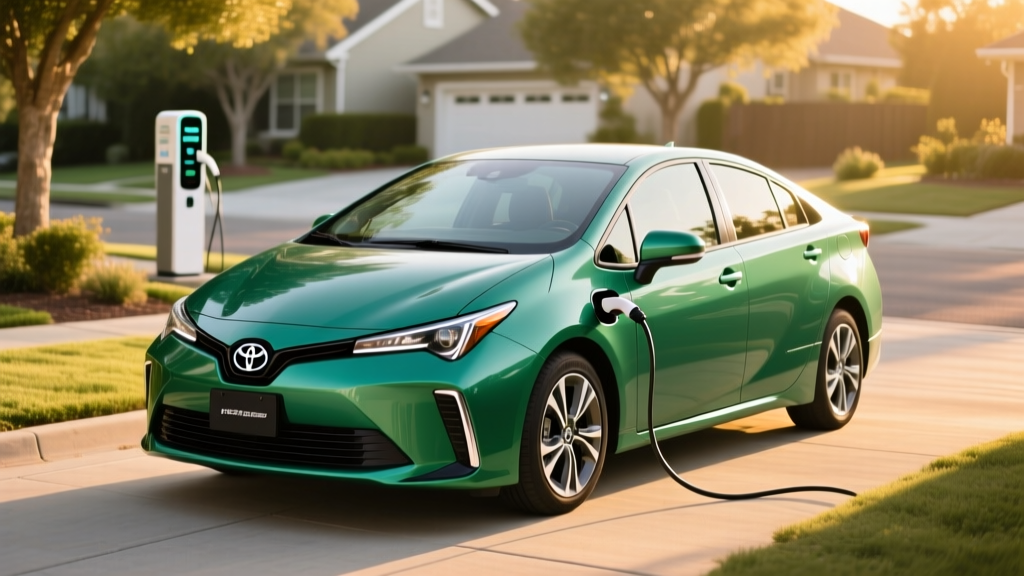
- Prius Prime PHEV (plug-in hybrid): Has a larger battery you can charge from a wall outlet or charger. It drives on pure electricity for a set distance before the gas engine kicks in. Best of both worlds — if you can plug in regularly.
| Specification | Prius HEV (LE FWD) | Prius Prime PHEV (SE) |
|---|---|---|
| Powertrain Type | Conventional Hybrid (HEV) | Plug-in Hybrid (PHEV) |
| Combined System HP | 194 hp (FWD) / 196 hp (AWD-e) | 220 hp |
| Engine | 2.0L 4-cyl + 2 motor-generators | 2.0L 4-cyl + 2 motor-generators |
| Traction Battery | ~1.0 kWh (lithium-ion) | 13.6 kWh (lithium-ion) |
| Electric-Only Range | N/A (EV mode ~1 mi at low speed) | 44 miles (EPA) |
| Total Combined Range | ~644 miles | ~490 miles (EV + gas) |
| Combined MPG (gas) | 57 MPG | 52 MPG (charge-sustaining) |
| MPGe (electric + gas) | N/A | 127 MPGe |
| 0–60 mph | 7.2 sec (FWD) | 6.6 sec |
| Level 1 Charge Time (120V) | N/A — no plug | ~11 hours |
| Level 2 Charge Time (240V) | N/A — no plug | ~4 hours |
| DC Fast Charging | No | No |
| Starting MSRP | ~$28,350 | ~$33,445 |
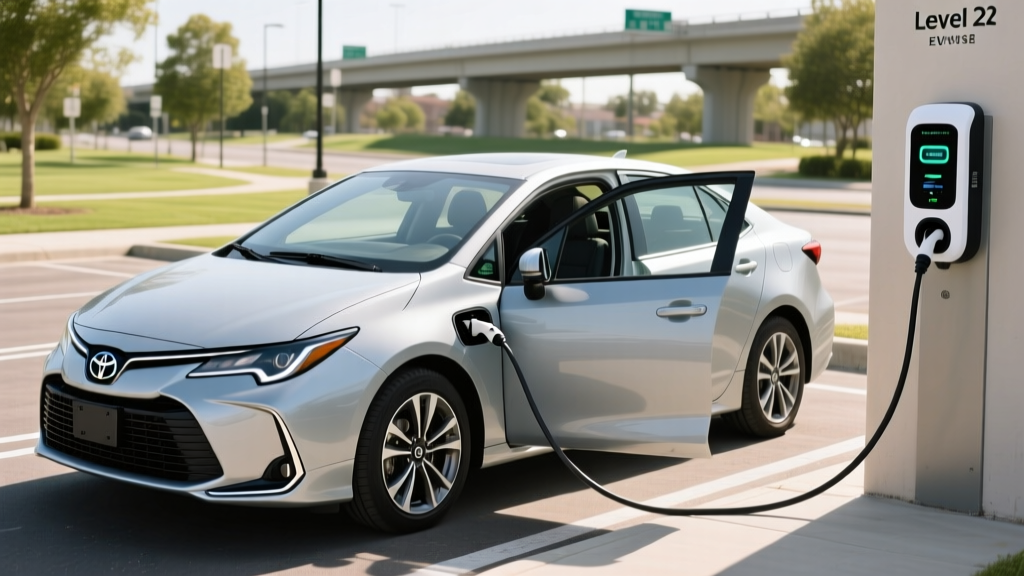
The Prius Prime's 44 miles of electric-only range is enough to cover most daily commutes without burning a drop of gas. On a standard 120V household outlet (Level 1), a full charge takes roughly 11 hours — plug in when you get home, and it's ready by morning. A 240V Level 2 home charger cuts that to about 4 hours. Note that neither the HEV nor the Prime supports DC fast charging; the Prime's battery is simply too small to benefit from it, and Level 2 is the practical ceiling.
Powertrain Deep Dive: 194 HP and Actually Quick
The fifth-generation Prius uses Toyota's latest hybrid synergy drive with a 2.0-liter four-cylinder engine paired with two motor-generators through a planetary gearset (e-CVT). Combined system output is 194 horsepower for FWD trims and 196 hp for AWD-e models, which add a 40-kW rear electric motor.
The result is a 0–60 mph time of 7.2 seconds for the FWD LE — a dramatic improvement over the previous generation's leisurely 10+ second sprint. The Prius Prime, with its larger battery and more powerful electric motor, pushes combined output to 220 hp and drops the 0–60 time to 6.6 seconds. In daily driving, the instant electric torque makes the Prius feel quicker than the numbers suggest, especially from 0–30 mph in city traffic.
The AWD-e system is worth considering if you deal with rain, snow, or gravel roads. The rear motor engages automatically when front-wheel slip is detected, up to about 43 mph, and disengages seamlessly. The trade-off is 3–5 MPG and roughly 100 lbs of additional weight.
Battery Warranty, Lifespan, and Replacement Cost
Hybrid battery longevity is the number-one concern among first-time hybrid buyers, and it's worth addressing with hard data rather than anxiety.
In practice, Toyota's hybrid batteries have demonstrated exceptional longevity. Data from fleet operators and long-term owners shows that most Prius hybrid batteries retain 85–90% of their original capacity at 150,000 miles. The relatively small ~1.0 kWh battery in the HEV undergoes shallow charge-discharge cycles (it rarely goes below 40% or above 80% state of charge), which dramatically reduces degradation. Toyota's battery management system is conservative by design — this is why hybrids rarely see the battery failures that plagued early-generation models two decades ago.
If the battery does need replacement outside of warranty, expect to pay $2,500–$4,000 for a new OEM hybrid battery pack, including labor. Refurbished or aftermarket packs are available for $1,500–$2,500. The Prius Prime's larger 13.6 kWh battery will cost more to replace — likely $5,000–$7,000 — but it carries the same 10-year/150,000-mile warranty.
Pricing, Trims, and Tax Credit Eligibility
The 2026 Toyota Prius HEV starts at approximately $28,350 for the LE trim (FWD), climbing to around $36,000 for a fully equipped Limited AWD-e. The Prius Prime PHEV starts at approximately $33,445 for the SE trim, with the XSE Premium reaching about $40,000.
| Model | Trim | MSRP (approx.) |
|---|---|---|
| Prius HEV | LE (FWD) | $28,350 |
| Prius HEV | XLE (FWD) | $31,200 |
| Prius HEV | Limited (FWD) | $34,500 |
| Prius HEV | LE (AWD-e) | $29,750 |
| Prius Prime | SE | $33,445 |
| Prius Prime | XSE | $36,845 |
| Prius Prime | XSE Premium | $39,995 |
Federal Tax Credit — Prius Prime PHEV Only: Under the current IRS §30D Clean Vehicle Credit rules, the Prius Prime may qualify for up to $3,750 (not the full $7,500) depending on battery mineral sourcing and component manufacturing requirements that are in effect for the 2026 tax year. The standard Prius HEV does not qualify for the federal new-vehicle EV credit because it is not a plug-in vehicle with a battery of at least 7 kWh. Eligibility depends on your taxable income (capped at $150,000 single / $300,000 joint), the vehicle's MSRP (must be under $55,000 for sedans — the Prius Prime clears this easily), and the battery's critical-mineral and component sourcing. The credit can be applied as a point-of-sale rebate through a registered dealer. Consult a tax professional for your specific situation, as sourcing requirements have tightened significantly since 2024.
State Incentives: Several states offer additional rebates or HOV-lane access for PHEVs. Check your state's energy office or the Alternative Fuels Data Center for current programs.
Who Should Buy the Prius Hybrid — and Who Shouldn't?
✓ Choose the Prius HEV If:
- You want 50+ MPG with zero behavior change — no plugging in, no range planning
- You live in an apartment or lack home-charging access
- Your budget is under $30,000 and you want the most efficient car available
- You do a mix of city and highway driving with no single dominant pattern
- You want proven, decade-long reliability with minimal maintenance
✓ Choose the Prius Prime PHEV If:
- Your daily commute is under 44 miles round-trip and you can charge at home
- You want EV-like daily driving with gas-engine backup for road trips
- You want the $3,750 federal tax credit to offset the higher MSRP
- You value the extra 26 hp (220 hp total) and quicker 6.6-sec 0–60
- You're not ready to commit to a full BEV but want to reduce gas consumption
✗ Look at a Full EV Instead If:
- You have home charging and your daily drive is under 100 miles
- You want zero tailpipe emissions and minimal moving parts
- You want the full $7,500 federal credit (on qualifying BEVs)
- You rarely take road trips over 250 miles
✗ A Gas Car Might Make Sense If:
- You drive fewer than 5,000 miles per year (fuel savings won't offset hybrid premium)
- You need maximum cargo space (the Prius hatchback is practical but compact)
- You tow regularly (the Prius is not rated for towing)
Ownership Costs: 5-Year Fuel Savings vs a Gas Car
To put the Prius's efficiency in dollar terms, compare it against a typical compact gas sedan averaging 30 MPG combined. At 15,000 miles per year and $3.40/gallon (national average as of early 2026):
| Prius LE (57 MPG) | Gas Sedan (30 MPG) | |
|---|---|---|
| Annual fuel use | 263 gallons | 500 gallons |
| Annual fuel cost | $894 | $1,700 |
| 5-year fuel cost | $4,470 | $8,500 |
| 5-year savings | $4,030 saved with the Prius | |
That $4,000 in fuel savings over five years nearly covers the Prius's modest price premium over a comparably equipped gas compact. Factor in the Prius's strong resale value — IIHS Top Safety Pick ratings and Toyota's reliability reputation keep used demand high — and the total cost of ownership is among the lowest in the industry.
Frequently Asked Questions
How many MPG does the 2026 Toyota Prius hybrid get?
The 2026 Prius HEV LE (FWD) is EPA-rated at 57 city / 56 highway / 57 combined MPG. Higher trims and AWD-e models range from 49–54 MPG combined. Real-world city driving often exceeds the EPA rating by 2–5 MPG thanks to regenerative braking, while highway-only driving at 75+ mph may return 48–52 MPG.
How far can the Prius Prime go on electric only?
The 2026 Prius Prime PHEV has an EPA-rated electric-only range of 44 miles on a full charge. This is sufficient for most daily commutes. After the battery depletes, the gas engine takes over and the car operates as a conventional hybrid, achieving 52 MPG combined in charge-sustaining mode.
Do I need to plug in the standard Prius hybrid?
No. The standard Prius HEV charges its small battery entirely through regenerative braking and the gasoline engine. There is no plug and no charging cord. The Prius Prime PHEV, however, does require plugging in to access its 44-mile electric range — though it will still function as a regular hybrid if you never plug it in.
Is the 2026 Prius hybrid battery reliable, and what does replacement cost?
Toyota's hybrid batteries are among the most reliable in the industry, with most lasting well beyond 150,000 miles. The battery is warrantied for 10 years / 150,000 miles. Out-of-warranty replacement costs $2,500–$4,000 for the HEV battery and $5,000–$7,000 for the Prime's larger pack. Given the conservative battery management and shallow cycling, most owners will never need a replacement.
Does the 2026 Prius qualify for a federal tax credit?
The standard Prius HEV does not qualify for the federal §30D Clean Vehicle Credit because it is not a plug-in vehicle. The Prius Prime PHEV may qualify for up to $3,750, depending on current-year battery sourcing requirements, your income (capped at $150,000 single / $300,000 joint filers), and the vehicle's MSRP (under $55,000 for sedans). Rules change frequently — check the IRS Clean Vehicle Credit page and consult a tax professional before purchasing.
Should I get the Prius hybrid or a full electric vehicle?
If you lack reliable home charging, drive over 300 miles regularly, or want the lowest possible purchase price with zero lifestyle adjustment, the Prius HEV is the pragmatic choice. If you have home charging, a commute under 40 miles, and want to eliminate most gasoline use while retaining road-trip flexibility, the Prius Prime PHEV is an excellent middle ground. A full BEV (like the Tesla Model 3 or Hyundai Ioniq 6) makes the most sense if you have home charging, rarely exceed 250 miles in a day, and want the lowest per-mile energy cost and zero tailpipe emissions.