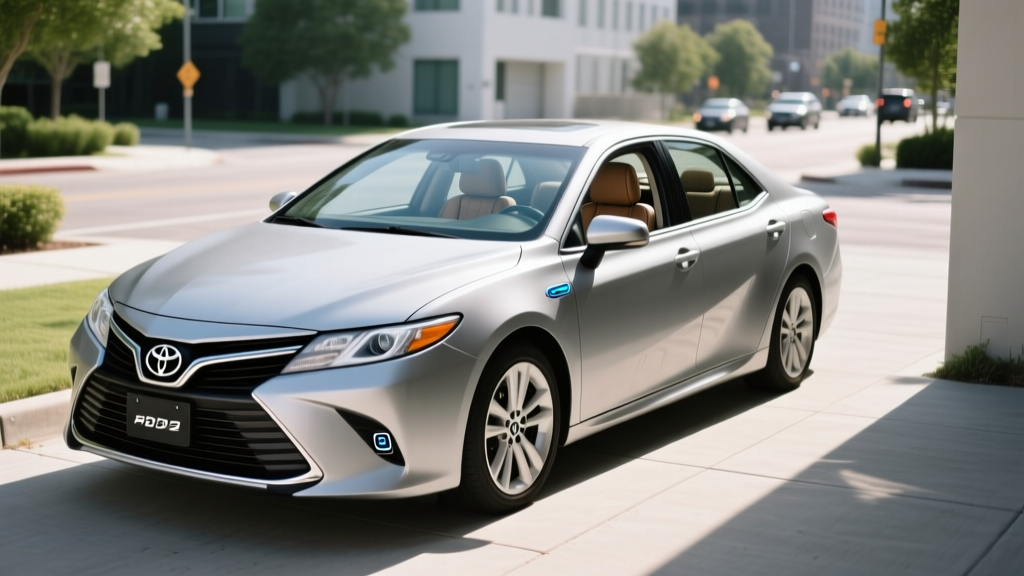
The 2012 Toyota Camry Hybrid: A 2026 Used-Buyer Deep Dive
If you've landed here searching for 2012 Camry Hybrid MPG data, you're likely evaluating one of the most popular used hybrids on the market. The 2012 model year was a turning point for the Camry Hybrid: Toyota introduced a redesigned platform with a new 2.5-liter Atkinson-cycle four-cylinder engine paired with a more powerful electric motor, yielding a significant efficiency jump over the 2011 model. More than a decade later, this sedan remains a fixture on used-car lots and in private-party sales — and its fuel economy still holds up against modern competitors.
This guide gives you the exact numbers you need to make an informed purchase in 2026: EPA and real-world MPG, powertrain specs, hybrid battery health expectations, replacement costs, and a clear-eyed look at how the 2012 Camry Hybrid stacks up against newer hybrids, PHEVs, and full EVs.
2012 Camry Hybrid MPG: EPA Ratings and Real-World Numbers
The headline figure that draws buyers to this car is its fuel economy. According to fueleconomy.gov, the 2012 Toyota Camry Hybrid carries the following EPA ratings:
| Metric | Value |
|---|---|
| City MPG | 43 MPG |
| Highway MPG | 39 MPG |
| Combined MPG | 40 MPG |
| Fuel Tank Capacity | 17.2 gallons |
| Total Driving Range (EPA est.) | ~688 miles |
| Annual Fuel Cost (EPA est., 15k mi/yr) | ~$1,350 (at $3.20/gal avg) |
Real-world MPG vs. EPA sticker: Toyota's Hybrid Synergy Drive system excels in stop-and-go city driving, where regenerative braking recaptures energy and the electric motor handles low-speed propulsion. Many owners report exceeding the 43 MPG city rating in moderate-temperature urban commutes, with figures of 44–47 MPG achievable on flat terrain at steady speeds below 45 mph.
Highway driving tells a different story. At sustained 70–80 mph speeds, the gasoline engine does most of the work, and aerodynamic drag increases significantly. Expect real-world highway fuel economy in the 35–38 MPG range, especially in colder months or with headwinds. Combined real-world driving typically lands between 37–42 MPG, depending on your commute mix, climate, and driving style.
Powertrain Specs: What's Under the Hood
The 2012 Camry Hybrid uses Toyota's third-generation Hybrid Synergy Drive, a series-parallel full hybrid system. It's important to understand that this is a conventional hybrid (HEV), not a plug-in hybrid. You never plug it in — the battery charges exclusively through regenerative braking and the gasoline engine.
| Specification | Value |
|---|---|
| Gasoline Engine | 2.5L Atkinson-cycle inline-4 (2AR-FXE) |
| Engine Power | 156 hp @ 5,700 rpm / 156 lb-ft torque |
| Electric Motor | Permanent-magnet synchronous AC motor |
| Electric Motor Power | 105 kW (141 hp) |
| Net Combined System Power | 200 hp |
| Transmission | Electronically controlled CVT (eCVT) |
| Hybrid Battery | Nickel-Metal Hydride (NiMH), ~1.6 kWh (gross) |
| Drivetrain | Front-wheel drive |
| 0–60 mph (est.) | ~7.6 seconds |
| Curb Weight | ~3,435 lbs |
The 200 net system horsepower was competitive for midsize sedans in 2012 and still provides adequate acceleration today. The eCVT — which is mechanically a planetary gearset, not a belt-driven CVT — is one of the most durable transmissions Toyota has ever built, with no belts or clutches to wear out.
Hybrid Battery Lifespan, Degradation, and Replacement Costs
The single biggest concern for any used hybrid buyer is battery health. Here's what the data shows for the 2012 Camry Hybrid's NiMH pack:
Expected Battery Lifespan
Toyota's NiMH hybrid batteries have a strong track record for longevity. Based on owner reports, fleet data, and independent analyses:
- Typical lifespan: 150,000–200,000 miles or 12–18 years before significant degradation
- Degradation pattern: NiMH batteries tend to lose capacity gradually rather than fail suddenly. A 12-year-old pack may have 70–85% of its original capacity, which translates to slightly reduced regenerative braking efficiency and marginally lower MPG — not a catastrophic failure
- Failure mode: Individual cell imbalance is more common than total pack failure. A single weak cell can trigger a hybrid system warning, but cell-level repair is possible
Battery Replacement Costs in 2026
| Option | Estimated Cost | Notes |
|---|---|---|
| New OEM Toyota Battery | $3,500–$4,500 (installed) | Available through Toyota dealers; full warranty |
| Refurbished/Reconditioned Pack | $1,500–$2,500 (installed) | Rebalanced cells from hybrid specialty shops; 1–3 year warranty typical |
| Used Salvage Pack | $800–$1,500 (installed) | From a wrecked Camry; mileage/health unknown; short warranty |
| Cell-Level Repair | $500–$1,200 | Replace only failed cells; requires a shop with NiMH diagnostic capability |
For a 2012 Camry Hybrid with a market value of roughly $7,000–$12,000 in 2026 (depending on mileage and condition), a $4,000 OEM battery replacement is a significant expense. Most owners opt for refurbished packs or cell-level repairs, which restore full functionality at a fraction of the cost.
Checking Battery Health Before You Buy
Before purchasing a used 2012 Camry Hybrid, request a hybrid battery health check. Toyota dealers can run a diagnostic that shows battery state of health (SoH) as a percentage. Independent hybrid specialists can also perform a load test. Key warning signs include:
- Hybrid system warning light on the dash
- Noticeably reduced fuel economy (below 32 MPG combined in warm weather)
- The gasoline engine running constantly, even at low speeds
- Rapid state-of-charge swings on the energy monitor display
Reliability Record and Common Issues
The 2012 Camry Hybrid benefits from one of the strongest reliability reputations in the industry. Toyota's hybrid powertrain components — the eCVT, inverter, and electric motor — are notably overbuilt and rarely fail. NHTSA records show no major systemic powertrain recalls specific to the hybrid system.
Common non-hybrid issues reported at higher mileages include:
- Brake actuator wear: The electro-hydraulic brake booster can develop issues around 120,000–150,000 miles. Replacement runs $800–$1,200.
- Water pump: The engine water pump may leak or fail between 100,000–140,000 miles. A relatively inexpensive fix ($300–$500).
- 12V auxiliary battery: Like any car, the standard 12V battery needs replacement every 4–6 years. This is separate from the hybrid traction battery.
- A/C compressor: Some high-mileage examples develop A/C compressor issues, a $600–$1,000 repair.
Overall, maintenance costs for a 2012 Camry Hybrid remain low compared to non-hybrid competitors. There are no spark plugs to change at short intervals (they last 120,000 miles), no timing belt (it uses a chain), and regenerative braking extends brake pad life significantly — many owners report original brake pads lasting 80,000+ miles.
HEV vs. PHEV vs. EV: Does the 2012 Camry Hybrid Still Make Sense?
In 2026, used hybrid buyers have more options than ever. Here's how the 2012 Camry Hybrid compares to the alternatives you're likely cross-shopping:
| Factor | 2012 Camry Hybrid (HEV) | Used PHEV (e.g., 2017+ Prius Prime) | Used EV (e.g., 2018+ Bolt, Leaf) |
|---|---|---|---|
| Plug-in Required? | No — gas only | Yes, for EV range benefit | Yes — mandatory |
| Electric-Only Range | ~1 mi (negligible) | 20–25 mi typical | 150–260 mi (model dependent) |
| Combined MPG / MPGe | 40 MPG | 54 MPG gas / 133 MPGe electric | 110–130 MPGe |
| Home Charging Needed? | No | Recommended (Level 1 OK) | Yes (Level 2 strongly recommended) |
| Fuel Cost (annual, 15k mi) | ~$1,350 (gas only) | ~$600–$900 (gas + electric mix) | ~$500–$700 (electric only) |
| Used Price Range (2026) | $7,000–$12,000 | $15,000–$22,000 | $12,000–$22,000 |
| Federal Tax Credit (Used) | Not eligible | Potentially $4,000 used-EV credit (§25E) | Potentially $4,000 used-EV credit (§25E) |
| Best For | No charging access; budget buyer; long highway commutes | Home charging available; short commute + occasional road trips | Home charging available; mostly under 200 mi/day; lowest operating cost |
Tax Credit Eligibility
The 2012 Camry Hybrid does not qualify for any federal tax credit. The IRS §25E used clean vehicle credit (up to $4,000) applies only to used EVs and PHEVs that meet battery capacity thresholds — conventional hybrids like the Camry HEV are excluded. No state-level hybrid incentives currently target a 2012 model year vehicle either.
If tax credits are a priority, a used PHEV or EV from the 2022+ model year may qualify for the §25E credit (up to $4,000 or 30% of the sale price, whichever is less), subject to income caps ($75,000 single / $150,000 joint) and a sale price cap of $25,000 for used vehicles. Always verify eligibility with a tax professional and the IRS guidelines before purchasing.
Who Should Buy the 2012 Camry Hybrid in 2026?
✓ Choose It If
- You lack access to home or workplace charging
- Your budget is under $12,000
- You want proven reliability with minimal risk
- Your commute is primarily city/suburban stop-and-go
- You want a comfortable midsize sedan with a large trunk (14.1 cu ft)
- You drive 15,000+ miles per year and want low fuel costs without plugging in
✗ Skip It If
- You have home Level 2 charging and want the lowest per-mile cost (consider a used EV)
- You want electric-only driving for short commutes (consider a PHEV)
- Tax credit eligibility matters to your purchase math
- You need modern ADAS features (blind-spot monitoring was optional; no automatic emergency braking on the 2012 model)
- The specific car you're evaluating shows hybrid battery warning signs
Frequently Asked Questions
How many MPG does the 2012 Camry Hybrid actually get?
The EPA rates it at 43 city / 39 highway / 40 combined. In real-world 2026 driving, most owners see 37–42 MPG combined, with city driving often exceeding 43 MPG and highway driving settling around 35–38 MPG. Cold weather and aggressive driving reduce these figures.
Does the 2012 Camry Hybrid need to be plugged in?
No. This is a conventional hybrid (HEV). The battery charges through regenerative braking and the gasoline engine. There is no plug, no charging cable, and no electric-only driving range of practical significance.
How long will the hybrid battery last on a 2012 Camry?
Toyota's NiMH packs typically last 150,000–200,000 miles or 12–18 years. Many 2012 examples still have their original batteries in 2026, though capacity has degraded 15–30%. If the battery does fail, refurbished replacements cost $1,500–$2,500 installed, and cell-level repairs can cost under $1,000.
Is the 2012 Camry Hybrid more reliable than a gas-only Camry?
Yes, by most measures. The hybrid powertrain eliminates the traditional automatic transmission (replaced by the virtually bulletproof eCVT planetary gearset), uses regenerative braking to extend pad life, and has fewer mechanical wear points. The main added risk is the hybrid battery, but failure before 150,000 miles is uncommon.
What's the difference between the 2012 Camry Hybrid LE and XLE?
Both trims share the identical 200 hp hybrid powertrain and 40 MPG combined rating. The XLE adds leather-trimmed seats, dual-zone automatic climate control, a smart key system, and an upgraded audio system. The LE is the value pick — you get the same fuel economy and powertrain at a lower price.
Can I still get parts for a 2012 Camry Hybrid in 2026?
Yes. Toyota continues to supply OEM hybrid battery packs and powertrain components. The aftermarket ecosystem is robust — hybrid battery refurbishers, independent specialists, and salvage yards all stock parts for this generation. The 2AR-FXE engine shares many components with the conventional 2AR-FE, keeping non-hybrid parts affordable and widely available.
How does the 2012 Camry Hybrid compare to a 2024–2026 Camry Hybrid?
The current-generation Camry Hybrid (2025+ redesign) achieves an EPA 44–51 MPG combined depending on trim, uses a more efficient lithium-ion hybrid battery, offers all-wheel drive, and includes Toyota Safety Sense 3.0 with automatic emergency braking and lane-keeping assist. However, a 2025 Camry Hybrid LE starts at roughly $30,000 — nearly three times the cost of a well-maintained 2012 example. If budget is your primary constraint, the 2012 model delivers 80–90% of the efficiency at a fraction of the price.