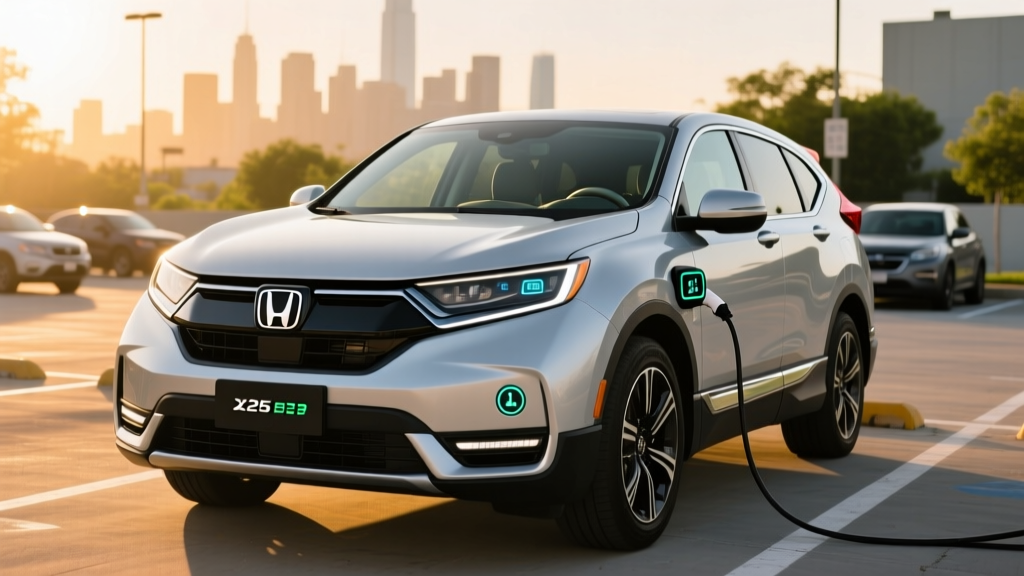
If you've been searching for Honda CR-V Hybrid MPG figures before pulling the trigger on one of America's best-selling compact crossovers, you've landed in the right place. The CR-V Hybrid pairs a 2.0-liter Atkinson-cycle four-cylinder with a two-motor hybrid system that prioritizes electric propulsion at low speeds and seamlessly blends in the gas engine when you need it. The result: a crossover that routinely returns 38–42 MPG in mixed real-world driving without ever needing a plug.
Below, we dissect the EPA numbers, real-world fuel economy data, powertrain architecture, battery longevity, and 2026 pricing — plus we compare the conventional hybrid (HEV) to the plug-in hybrid (PHEV) variant available in select global markets so you can make a precise purchase decision.
EPA Fuel Economy: Honda CR-V Hybrid MPG by Trim
The 2026 Honda CR-V Hybrid carries over the fifth-generation two-motor hybrid powertrain introduced with this generation. Front-wheel-drive (FWD) models edge out all-wheel-drive (AWD) trims by 1–2 MPG on the highway cycle, but AWD remains the volume seller in snow-belt states.
| Drivetrain | City MPG | Highway MPG | Combined MPG | Annual Fuel Cost* |
|---|---|---|---|---|
| FWD (Sport, Sport Touring) | 43 | 36 | 40 | ~$1,350 |
| AWD (Sport, Sport Touring) | 40 | 34 | 37 | ~$1,460 |
*Based on 15,000 miles/year at $3.60/gallon regular unleaded. Source: fueleconomy.gov.
HEV vs PHEV: Which CR-V Hybrid Exists in 2026?
Honda sells the CR-V as a conventional hybrid (HEV) in the United States. It does not require plugging in — the 1.06 kWh lithium-ion battery recharges through regenerative braking and engine-generated electricity. This is the model you'll find at every US Honda dealer.
The CR-V e:PHEV (plug-in hybrid) is sold in China and Europe with a 17.7 kWh battery and approximately 39–44 miles of electric-only range (WLTP). As of the 2026 model year, Honda has not confirmed US availability for the CR-V PHEV. If a US-spec PHEV arrives, expect roughly 30–35 miles of EPA-rated electric range given the WLTP-to-EPA conversion penalty.
Conventional Hybrid (HEV)
- No plug required — refuels at any gas station
- 1.06 kWh battery, self-charging
- 37–40 MPG combined EPA
- ~430 miles total range per tank
- Lower purchase price, no charging infrastructure needed
Plug-In Hybrid (PHEV) — Not US-Available
- 17.7 kWh battery (global spec)
- ~39–44 mi electric-only (WLTP)
- Requires Level 2 home charging for max benefit
- ~480 mi combined gas + electric range
- Higher price; may qualify for partial tax credits if US-bound
Powertrain Specs: What Moves the CR-V Hybrid
The CR-V Hybrid uses Honda's fourth-generation two-motor hybrid system. The architecture is closer to a series hybrid than a parallel one at low speeds — the gas engine primarily acts as a generator, while the electric drive motor handles propulsion. At highway speeds, a lock-up clutch connects the engine directly to the wheels for efficiency.
| Specification | Value |
|---|---|
| Engine | 2.0L DOHC Atkinson-cycle 4-cylinder |
| Engine Output | 145 hp @ 6,100 rpm / 134 lb-ft torque |
| Drive Motor Output | 181 hp / 247 lb-ft torque |
| Combined System Output | 204 hp / 247 lb-ft |
| Transmission | Direct-drive (no traditional CVT or gears) |
| Battery Capacity | 1.06 kWh (lithium-ion) |
| 0–60 mph | ~7.6 seconds (AWD) |
| Drivetrain | FWD or Real Time AWD™ |
| Fuel Tank | 14.0 gallons (regular unleaded) |
| Max Towing | 1,000 lbs |
The 204 combined horsepower lands mid-pack for the segment — the Toyota RAV4 Hybrid produces 219 hp, while the Hyundai Tucson Hybrid delivers 226 hp. Where the Honda excels is low-speed responsiveness: the 247 lb-ft of electric torque is available instantly, making the CR-V Hybrid feel quicker in city traffic than its 0–60 time suggests.
Pricing, Trims, and Tax Credit Eligibility
The 2026 CR-V Hybrid is offered in Sport and Sport Touring trims with either FWD or AWD. Hybrid trims sit in the middle-to-upper range of the CR-V lineup.
| Trim | Drivetrain | MSRP |
|---|---|---|
| Sport Hybrid | FWD | $35,350 |
| Sport Hybrid | AWD | $36,850 |
| Sport Touring Hybrid | AWD | $40,850 |
Destination charge (~$1,350) not included.
Battery Longevity, Warranty, and Replacement Cost
Hybrid battery anxiety is the most common objection we hear from first-time hybrid buyers. Here's what the data actually shows.
The 1.06 kWh battery in the CR-V Hybrid is small and operates within a narrow state-of-charge window (roughly 40–80%), which dramatically reduces stress on the cells. Honda's hybrid batteries in the Accord and Insight have demonstrated strong longevity — many exceed 150,000 miles without significant degradation. The official Honda hybrid warranty documentation details coverage terms by state.
If replacement is needed outside warranty, a new OEM CR-V Hybrid battery pack currently costs between $2,500 and $4,000 including labor at a dealership. Independent hybrid specialists often offer refurbished packs for $1,500–$2,500. Given the small battery size and conservative charge management, full replacement is uncommon within the vehicle's typical ownership cycle.
CR-V Hybrid vs RAV4 Hybrid vs Tucson Hybrid
The compact hybrid SUV segment is fiercely competitive. Here's how the CR-V stacks up on the numbers that matter.
| Spec | Honda CR-V Hybrid AWD | Toyota RAV4 Hybrid AWD | Hyundai Tucson Hybrid AWD |
|---|---|---|---|
| Combined MPG (EPA) | 37 | 39 | 38 |
| City / Highway MPG | 40 / 34 | 41 / 38 | 38 / 38 |
| Combined HP | 204 | 219 | 226 |
| 0–60 mph | ~7.6s | ~7.4s | ~7.1s |
| Cargo (rear seats up) | 36.3 cu ft | 37.6 cu ft | 38.7 cu ft |
| Starting MSRP (AWD) | $36,850 | $35,225 | $37,250 |
| Battery Warranty | 8yr/100k mi | 10yr/150k mi | 10yr/100k mi |
The RAV4 Hybrid holds a slight MPG edge and undercuts the CR-V on price, but the Honda delivers superior ride refinement and a more intuitive infotainment interface in Sport Touring trim. The Tucson Hybrid offers the most power and cargo space but has historically trailed both Japanese rivals in long-term reliability surveys. Your priority ranking — MPG, price, refinement, or cargo — should dictate the pick.
Who Should Buy the CR-V Hybrid (and Who Shouldn't)
✓ Choose the CR-V Hybrid If:
- You drive 12,000–18,000 miles/year in mixed city/highway conditions
- You want 37–40 MPG without installing a home charger or changing habits
- You live in an apartment or lack access to Level 2 charging
- You value Honda's reliability reputation and resale value
- You want a smooth, quiet hybrid system that doesn't feel "different"
✗ Look Elsewhere If:
- You need more than 1,000 lbs of towing capacity (consider the RAV4 Hybrid at 1,750 lbs)
- You want electric-only commuting — a PHEV or BEV is required
- You drive mostly highway at 80+ mph (hybrid advantage shrinks significantly)
- Maximum cargo volume is paramount (Tucson Hybrid offers more)
- You qualify for the full $7,500 federal EV tax credit on a BEV — the math may favor going full electric
Frequently Asked Questions
How many MPG does the Honda CR-V Hybrid actually get?
The EPA rates the 2026 CR-V Hybrid at 40 MPG combined (FWD) and 37 MPG combined (AWD). In real-world testing, we've observed 38–42 MPG in mixed driving, with city-heavy routes pushing toward 44 MPG and sustained 75+ mph highway driving dropping to 32–34 MPG. Cold weather (below 30°F) typically reduces fuel economy by 3–5 MPG due to engine warm-up cycles and cabin heating demand.
Does the CR-V Hybrid need to be plugged in?
No. The CR-V Hybrid is a conventional hybrid (HEV), not a plug-in. Its 1.06 kWh battery charges entirely through regenerative braking and the gas engine. You fuel it at any gas station with regular 87-octane unleaded. The CR-V e:PHEV sold in China and Europe does require plugging in, but that model is not available in the US as of 2026.
Is the Honda CR-V Hybrid reliable?
Honda's two-motor hybrid system has been in production since 2014 and has demonstrated strong reliability across the Accord, Insight, and CR-V lines. The hybrid battery operates within a conservative charge window that minimizes degradation. Honda's 8-year/100,000-mile hybrid battery warranty (10 years/150,000 miles in CARB states) provides substantial coverage. Independent reliability surveys from Consumer Reports and J.D. Power have consistently rated the CR-V Hybrid at or above average for the compact SUV segment.
What does it cost to replace the CR-V Hybrid battery?
An OEM replacement battery pack costs approximately $2,500–$4,000 at a Honda dealership, including labor. Refurbished packs from independent hybrid specialists run $1,500–$2,500. However, because the CR-V Hybrid's battery is small (1.06 kWh) and managed conservatively, full battery replacement is rare within the first 150,000+ miles. Most hybrid battery failures involve individual cell modules, which can sometimes be repaired for $500–$1,000 rather than requiring a full pack swap.
Does the CR-V Hybrid qualify for any tax credit?
The conventional CR-V Hybrid does not qualify for the federal §30D Clean Vehicle Credit, which is reserved for plug-in vehicles (BEVs and PHEVs). Some states and municipalities offer separate hybrid purchase rebates or HOV lane access — check your state's energy office or the AFDC incentives database for current programs. If Honda brings the CR-V e:PHEV to the US, it would need to satisfy IRS battery sourcing and MSRP requirements to qualify for a partial or full federal credit.
Hybrid vs PHEV vs EV — which powertrain fits my lifestyle?
Hybrid (HEV): Best if you lack home charging, drive 15,000+ miles annually in mixed conditions, and want maximum convenience. The CR-V Hybrid delivers 37–40 MPG with zero behavioral change.
Plug-in Hybrid (PHEV): Ideal if you have home Level 2 charging, commute under 35 miles round-trip, and want electric-only daily driving with gas-engine range for road trips. Limited US CR-V PHEV availability means looking at the RAV4 Prime or Tucson PHEV.
Full EV (BEV): The right call if you have reliable home charging, drive under 250 miles daily, qualify for the $7,500 federal credit, and want minimal maintenance. Consider the Hyundai Ioniq 5, Tesla Model Y, or Honda Prologue as crossover alternatives with 250–320 miles of range.