Quick Verdict: A Mild-Hybrid Relic From GM's Early Electrification Era
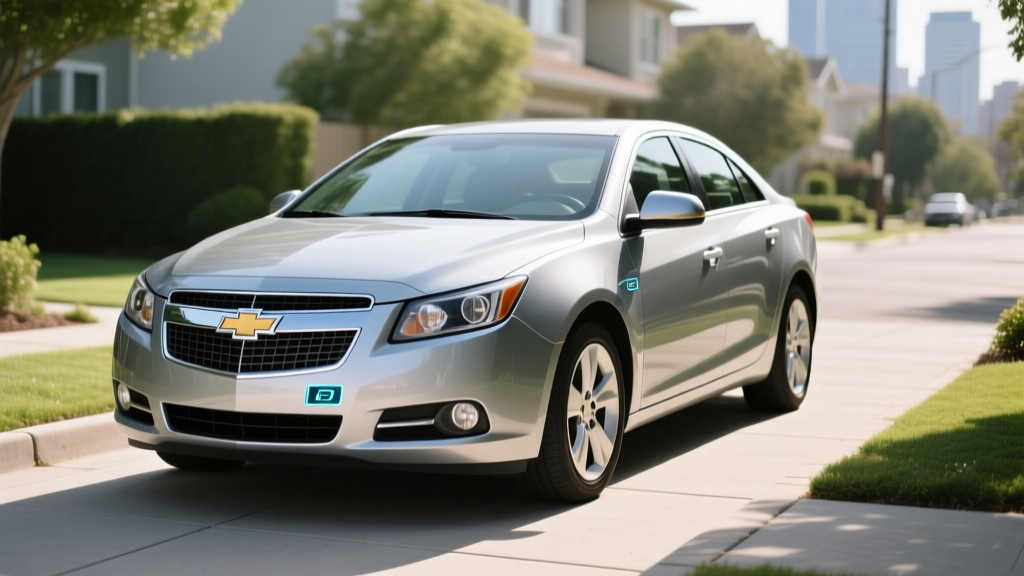
The 2009 Chevrolet Malibu Hybrid occupies a specific niche in the used-car market: it's a midsize sedan with a mild-hybrid system that delivers modest fuel-economy gains over its gasoline counterpart, but falls well short of what full-hybrid competitors offered even in its day. If you're searching for a 09 Chevy Malibu Hybrid as a budget-friendly used car, understanding exactly what its "hybrid" badge means — and what it doesn't — is essential before handing over cash.
This vehicle uses GM's Belt Alternator Starter (BAS) system, which is fundamentally different from the full-hybrid powertrains found in the Toyota Camry Hybrid or Ford Fusion Hybrid of the same era. The distinction matters enormously for fuel economy, reliability expectations, and ownership costs in 2026.
HEV vs. Mild Hybrid: What the Malibu Hybrid Actually Is
Before diving into specs, it's critical to understand where the 2009 Malibu Hybrid sits on the electrification spectrum. It is not a conventional full hybrid (HEV) in the way most buyers understand the term, and it is certainly not a plug-in hybrid (PHEV).
Electrification Levels Explained
| Type | Electric Motor Role | EV-Only Driving? | Plug In? | Example |
|---|---|---|---|---|
| Mild Hybrid (MHEV) | Assists engine at stop/start, cannot drive wheels alone | No | No | 2009 Chevy Malibu Hybrid |
| Full Hybrid (HEV) | Can propel vehicle at low speeds on electric alone | Yes (brief, low speed) | No | Toyota Camry Hybrid |
| Plug-In Hybrid (PHEV) | Larger battery + motor; meaningful EV-only range | Yes (20-50+ mi) | Yes | Toyota Prius Prime |
| Battery Electric (BEV) | 100% electric propulsion | Yes (all driving) | Yes | Tesla Model 3 |
Bottom line: The 2009 Malibu Hybrid's BAS system provides engine stop-start functionality and minor torque assist during acceleration. It cannot propel the car on electric power alone. This is the mildest form of vehicle electrification.
Fuel Economy: EPA MPG Numbers and Real-World Expectations
The headline question for any hybrid buyer: how many MPG does it actually get? According to EPA data on fueleconomy.gov, the 2009 Chevrolet Malibu Hybrid with the 2.4L 4-cylinder engine and BAS system rates as follows:
| Metric | EPA Rating | Real-World Expectation |
|---|---|---|
| City | 26 MPG | 24–28 MPG |
| Highway | 34 MPG | 30–34 MPG |
| Combined | 29 MPG | 26–31 MPG |
Real-World MPG Context
The mild-hybrid system's biggest advantage is the engine stop-start feature at traffic lights, which yields a small city-driving benefit. However, unlike a full hybrid (the 2009 Toyota Camry Hybrid rated at 33 city / 34 highway / 34 combined), the Malibu Hybrid cannot recapture significant energy during braking or cruise on electric power. On the highway, where stop-start doesn't activate, the Malibu Hybrid's efficiency advantage over the standard 2.4L Malibu (22/30/25 MPG) narrows considerably. Expect real-world combined driving to land around 27–30 MPG for most owners, depending on driving habits and vehicle condition at 17 years old.
Powertrain Specs: Engine, Motor, and Output
The 2009 Malibu Hybrid pairs GM's Ecotec 2.4-liter inline-4 gasoline engine with a belt-driven motor-generator unit. Here are the exact figures:
| Specification | Value |
|---|---|
| Engine | 2.4L DOHC I-4 (Ecotec) |
| Engine Horsepower | 164 HP @ 5,100 RPM |
| Engine Torque | 159 lb-ft @ 4,500 RPM |
| Hybrid System | GM BAS (Belt Alternator Starter) |
| Motor-Generator Output | ~5 kW (assist only) |
| Transmission | 4-speed automatic |
| Drivetrain | Front-wheel drive |
| Hybrid Battery | 36V NiMH (Nickel-Metal Hydride) |
| 0-60 MPH (est.) | ~9.0 seconds |
The BAS motor-generator provides brief torque assist during initial acceleration and handles the engine stop-start function. It does not add meaningful horsepower to the system output. The 4-speed automatic transmission was already dated for 2009 — competitors offered 5- and 6-speed units that improved both performance and highway efficiency.
Battery Reliability, Lifespan, and Replacement Cost
Battery & Warranty Summary
| Battery Chemistry: | Nickel-Metal Hydride (NiMH), 36V |
| Original Warranty: | 8 years / 100,000 miles (hybrid-specific components) |
| Warranty Status in 2026: | Expired for all examples |
| Battery Replacement Cost: | $1,500–$3,000 (parts + labor, aftermarket/rebuilt) |
| Expected Battery Lifespan: | 10–15 years / 120,000–150,000 miles (typical NiMH) |
The 36-volt NiMH battery pack in the Malibu Hybrid is small compared to full-hybrid or PHEV batteries. This is actually a reliability advantage: the battery undergoes less stress because it's never deeply discharged or charged at high rates. NiMH chemistry is also well-understood and generally robust, though it does degrade with age and heat exposure.
The critical issue for 2026 buyers: Every 2009 Malibu Hybrid is now at least 17 years old. The original 8-year/100,000-mile hybrid warranty has expired on every single example. If the hybrid battery hasn't been replaced, it's operating on borrowed time. Budget $1,500–$3,000 for a potential replacement if the battery hasn't been serviced. Before purchasing, have a mechanic check whether the stop-start function still activates — if it doesn't, the battery is likely degraded or failed.
Used Pricing and Tax Credit Eligibility
As of early 2026, the 2009 Chevy Malibu Hybrid trades on the used market for roughly $3,000–$6,000, depending on mileage, condition, and whether the hybrid system is still functional. Higher-mileage examples with a non-functional hybrid battery can sell for under $3,000.
Tax Credit Reality Check
The 2009 Malibu Hybrid does not qualify for the current federal §30D New Clean Vehicle Credit — that credit applies only to new vehicle purchases meeting specific MSRP caps, buyer income limits, and battery-sourcing requirements per IRS guidelines.
The Used Clean Vehicle Credit (§25E) offers up to $4,000 or 30% of the sale price (whichever is less) for qualifying used EVs and PHEVs. However, the Malibu Hybrid's mild-hybrid (BAS) system does not meet the minimum 7 kWh battery capacity requirement to qualify as a plug-in electric vehicle under the tax code. No federal tax credit is available for this vehicle.
Some states offer their own used-vehicle or scrappage incentives — check your state's energy office or DMV for current programs.
How Does It Compare to Modern Hybrids?
To put the 2009 Malibu Hybrid's performance in perspective, here's how it stacks up against contemporary and modern hybrid midsize sedans:
| Vehicle | Type | Combined MPG | EV-Only Range |
|---|---|---|---|
| 2009 Chevy Malibu Hybrid | Mild (BAS) | 29 MPG | None |
| 2009 Toyota Camry Hybrid | Full HEV | 34 MPG | ~1 mi (low speed) |
| 2026 Toyota Camry Hybrid | Full HEV | 52 MPG | ~1 mi (low speed) |
| 2026 Toyota Prius Prime | PHEV | 52 MPG / 127 MPGe | 44 miles |
| 2026 Hyundai Sonata Hybrid | Full HEV | 47 MPG | ~1 mi (low speed) |
The gap is stark. A modern Camry Hybrid delivers nearly 80% better combined fuel economy than the 2009 Malibu Hybrid. Even a same-year Camry Hybrid beats the Malibu by 5 MPG combined. The BAS system's limited electrification simply can't compete with full-hybrid synergy-drive or modern hybrid architectures.
Pros and Cons of the 2009 Malibu Hybrid in 2026
✅ Pros
- Very low purchase price ($3K–$6K used)
- Spacious midsize sedan cabin and trunk
- Simple BAS system — fewer complex hybrid components to fail vs. full HEV
- Standard 12V starting battery still works even if hybrid battery fails (car still drives)
- Comfortable ride quality for its era
- Decent highway MPG (34 EPA) for a 2009 vehicle
❌ Cons
- Only a mild hybrid — no EV-only driving, minimal fuel savings vs. gas Malibu
- 29 MPG combined is poor by any modern hybrid standard
- Outdated 4-speed automatic limits efficiency and refinement
- Hybrid battery warranty expired; replacement is an out-of-pocket cost
- No federal tax credit eligibility (new or used)
- Below-average safety ratings compared to modern vehicles
- GM discontinued BAS system due to poor market reception
Who Should Buy This — And Who Should Look Elsewhere?
Decision Framework
Consider the 2009 Malibu Hybrid if:
- You need a dirt-cheap commuter sedan under $5,000 and this specific example has a verified working hybrid system
- You mostly drive highway miles where the 34 MPG highway rating helps
- You're comfortable budgeting $1,500+ for a potential hybrid battery replacement
- You understand you're getting a mild hybrid, not a Prius-equivalent fuel sipper
Look at alternatives if:
- Fuel economy is your top priority — a same-year Camry Hybrid or Prius delivers 5+ more MPG combined
- You want meaningful electric-only driving — look at a used PHEV like the Chevy Volt (2016+, 53 mi EV range)
- You want modern safety tech (automatic emergency braking, lane-keeping) — these weren't available on the 2009 Malibu
- You want tax-credit eligibility — a new or qualifying used PHEV/EV is required
Frequently Asked Questions
How many MPG does the 2009 Chevy Malibu Hybrid get?
The EPA rates it at 26 city / 34 highway / 29 combined MPG. Real-world driving typically yields 27–30 MPG combined. The mild-hybrid system provides its greatest benefit in stop-and-go city traffic where the engine stop-start feature activates frequently.
Can the 2009 Malibu Hybrid drive on electric power alone?
No. The BAS (Belt Alternator Starter) system cannot propel the vehicle without the gasoline engine running. The electric motor-generator only assists during acceleration and handles engine stop-start at idle. This is a key difference from full hybrids like the Toyota Prius, which can cruise at low speeds on electric power alone.
Is the 2009 Chevy Malibu Hybrid reliable?
The 2.4L Ecotec engine and 4-speed automatic are generally durable powertrain components with well-known service histories. The BAS hybrid system adds modest complexity. The main reliability risk in 2026 is the 17-year-old NiMH hybrid battery, which may have degraded or failed. If the hybrid battery is non-functional, the car still drives normally — it just loses the stop-start feature and minor torque assist, reverting to standard Malibu fuel economy.
How much does it cost to replace the hybrid battery?
Expect $1,500–$3,000 for a replacement or rebuilt 36V NiMH battery pack including labor. Because the battery is small and low-voltage compared to full-hybrid packs, replacement costs are relatively moderate. Some independent hybrid-specialty shops offer rebuilt units at the lower end of this range.
Does the 2009 Malibu Hybrid qualify for any tax credit?
No. It does not qualify for the federal §30D new-vehicle credit (it's not a new vehicle and doesn't meet battery-capacity requirements), nor does it qualify for the §25E used clean vehicle credit (the mild-hybrid battery is well below the 7 kWh minimum threshold). It never qualified for the original federal hybrid tax credit that expired for most manufacturers years before 2009.
How does it compare to the standard gas 2009 Malibu?
The conventional 2009 Malibu with the same 2.4L engine and 4-speed automatic rated 22 city / 30 highway / 25 combined. The Hybrid's 29 MPG combined represents a 16% improvement — meaningful but modest compared to the 30–50% gains full-hybrid systems deliver. The Hybrid also carried a price premium of roughly $2,000–$3,000 when new.
Should I buy a 2009 Malibu Hybrid or a used Prius?
For fuel-economy-focused buyers, a same-era Toyota Prius (2009: 46 MPG combined) is significantly more efficient and has a proven full-hybrid system. The Prius will cost more upfront on the used market ($5,000–$8,000 for a comparable-year example), but the fuel savings over time and the stronger hybrid-system track record generally justify the premium. The Malibu Hybrid only makes sense if your budget is strictly under $5,000 and you need a conventional midsize sedan.