The State of the New Subaru Hybrid Lineup for 2026
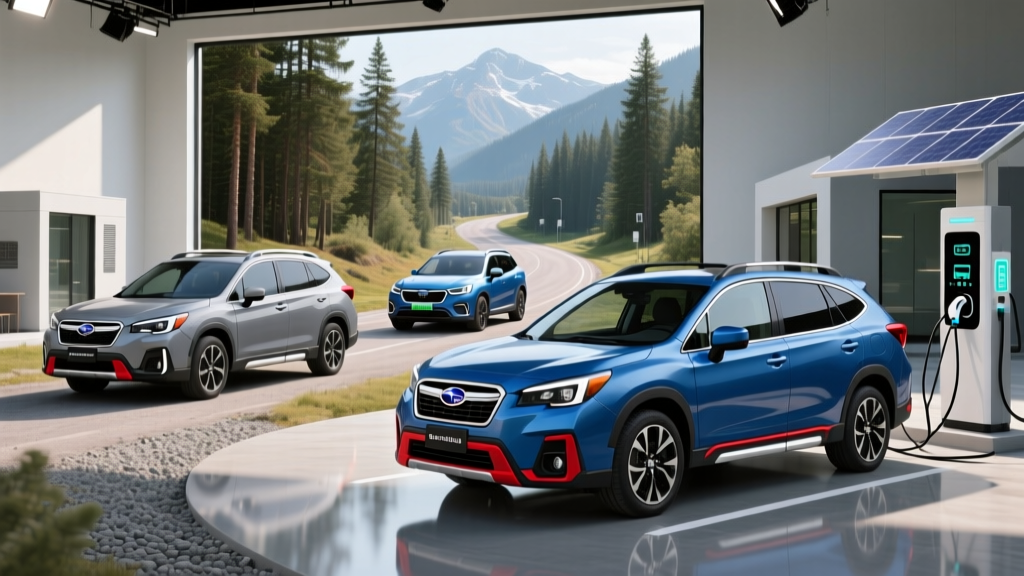
Subaru's approach to electrification has always been pragmatic rather than aggressive, and the 2026 model year is no exception. If you're researching a new Subaru hybrid, you're looking at a lineup that now includes the redesigned Crosstrek Hybrid (a conventional self-charging hybrid), the Forester Hybrid, and the carryover Crosstrek Plug-In Hybrid (PHEV). Each serves a different buyer — and confusing them is the single biggest mistake shoppers make.
This guide breaks down exactly what Subaru offers in the hybrid space for 2026, with EPA numbers, real-world expectations, powertrain details, battery warranty coverage, and a clear framework for deciding which one — if any — fits your driving life.
HEV vs PHEV: The Critical Distinction
Conventional Hybrid (HEV): Uses a small battery (typically 1-2 kWh) charged by regenerative braking and the gasoline engine. You never plug it in. It improves MPG, especially in city driving, but cannot drive on electric power alone for meaningful distances.
Plug-In Hybrid (PHEV): Carries a larger battery (13-20+ kWh) that you charge from a wall outlet or charging station. It offers a defined electric-only range (typically 17-40 miles) before the gas engine takes over. Functions as an EV for short commutes and a hybrid for longer trips.
2026 Subaru Crosstrek Hybrid (HEV): Specs, MPG, and Pricing
The Crosstrek Hybrid returned to the U.S. market for the 2025 model year after a hiatus, and the 2026 version carries over with Subaru's latest hybrid powertrain built in collaboration with Toyota's hybrid expertise. This is a conventional hybrid — no plug, no electric-only commuting, just better fuel economy with standard all-wheel drive.
| Spec | Value |
|---|---|
| Powertrain | 2.0L flat-4 + electric motor, AWD |
| Combined Horsepower | 194 hp |
| EPA MPG (City / Hwy / Combined) | 36 / 34 / 35 MPG |
| Hybrid Battery | ~1.1 kWh (NiMH), self-charging |
| Plug-In Required? | No |
| 0-60 mph | ~7.8 seconds (est.) |
| Cargo Volume | 20.1 cu ft (rear seats up) |
| Ground Clearance | 8.7 inches |
| Base MSRP | $33,095 (Hybrid Premium) |
| Federal Tax Credit | Not eligible (§30D requires plug-in) |
| Hybrid Battery Warranty | 8 years / 100,000 miles |
Real-World MPG: What to Actually Expect
The EPA rates the Crosstrek Hybrid at 35 MPG combined. In real-world driving, Subaru's hybrid system — like most Toyota-derived setups — tends to exceed its EPA city rating in stop-and-go traffic, where the electric motor does the heavy lifting. Expect 37-39 MPG in urban driving. Highway cruising at 70-75 mph will drop to roughly 30-32 MPG, as the small battery provides less assistance at sustained speeds and the boxy crossover shape creates aerodynamic drag.
In cold weather (below 30°F), expect a 5-10% MPG reduction as the engine runs more frequently to provide cabin heat and maintain battery temperature. This is normal hybrid behavior, not a defect.
2026 Subaru Forester Hybrid: The Family-Sized Option
Redesigned for 2025, the Forester Hybrid continues into 2026 with the same Toyota-sourced hybrid system adapted for Subaru's larger compact SUV. It fills the gap for buyers who need more cargo space than the Crosstrek provides but aren't ready for a three-row vehicle.
| Spec | Value |
|---|---|
| Powertrain | 2.5L flat-4 + electric motor, AWD |
| Combined Horsepower | 194 hp |
| EPA MPG (City / Hwy / Combined) | 35 / 33 / 34 MPG |
| Hybrid Battery | ~1.1 kWh (NiMH), self-charging |
| Plug-In Required? | No |
| Cargo Volume | 28.9 cu ft (rear seats up) |
| Ground Clearance | 8.7 inches |
| Base MSRP | $36,595 (Hybrid Premium) |
| Federal Tax Credit | Not eligible |
| Hybrid Battery Warranty | 8 years / 100,000 miles |
The Forester Hybrid sacrifices just 1 MPG combined compared to the Crosstrek Hybrid while delivering nearly 9 additional cubic feet of cargo space. For families hauling gear, the tradeoff is minimal. Real-world MPG behavior mirrors the Crosstrek: strong city numbers, slightly weaker highway efficiency.
2026 Subaru Crosstrek Plug-In Hybrid (PHEV): Electric Range and Charging
Subaru continues to sell the Crosstrek PHEV (sometimes badged as the Crosstrek Plug-In Hybrid) in select states, primarily those with ZEV mandate requirements. This is a fundamentally different vehicle from the HEV above — it uses a Toyota Prius Prime-derived powertrain and offers genuine electric-only commuting.
| Spec | Value |
|---|---|
| Powertrain | 2.0L flat-4 + 2 electric motors, AWD |
| Combined Horsepower | 219 hp (gas + electric combined) |
| Electric-Only Range (EPA) | 17 miles |
| Total Combined Range | ~480 miles |
| Battery Capacity | 13.6 kWh (lithium-ion, ~8.8 kWh usable) |
| Level 2 Charge Time (240V) | ~2.5 hours (0-100%) |
| DC Fast Charging | Not supported |
| EPA MPG (hybrid mode, after battery depleted) | 35 MPG combined |
| MPGe (electric + gas combined) | 90 MPGe |
| Base MSRP | $38,495 |
| Federal Tax Credit (§30D) | Not eligible (battery sourcing & MSRP cap issues) |
| PHEV Battery Warranty | 8 years / 100,000 miles |
Subaru Hybrid & PHEV Battery Warranty Explained
All 2026 Subaru hybrid and PHEV models carry an 8-year / 100,000-mile hybrid battery warranty (10 years / 150,000 miles in California-emission states including CA, CO, CT, ME, MD, MA, NJ, NY, OR, RI, VT, WA). This covers defects and capacity loss below a defined threshold — typically 60-70% of original capacity. Subaru uses proven NiMH chemistry in its HEVs and lithium-ion in the PHEV. Replacement cost, if out of warranty, ranges from $2,500 to $4,500 depending on the model, based on dealer parts pricing and labor.
Charging the Crosstrek PHEV at Home
The Crosstrek PHEV charges via a standard J1772 connector. On a 120V household outlet (Level 1), a full charge takes approximately 5-6 hours — adequate for overnight charging if your commute is short. A 240V Level 2 home charger cuts that to roughly 2.5 hours. Note that this PHEV does not support DC fast charging, which is typical for plug-in hybrids in this class. The 13.6 kWh battery is simply too small to benefit meaningfully from high-power DC infrastructure, and Subaru (like Toyota) has omitted the hardware to keep cost and weight down.
How Do Subaru Hybrids Compare on MPG?
| Model | City MPG | Highway MPG | Combined MPG | EV-Only Range |
|---|---|---|---|---|
| Crosstrek Hybrid (HEV) | 36 | 34 | 35 | N/A |
| Forester Hybrid (HEV) | 35 | 33 | 34 | N/A |
| Crosstrek PHEV (hybrid mode) | 35 | 35 | 35 | 17 mi |
| Gas Crosstrek (2.5L AWD baseline) | 27 | 34 | 29 | N/A |
| Gas Forester (2.5L AWD baseline) | 26 | 33 | 29 | N/A |
The hybrid advantage is most pronounced in city driving, where the gas-only Crosstrek manages just 27 MPG while the hybrid version delivers 36 — a 33% improvement. Highway differences are smaller because the electric motor contributes less at sustained speed. Source: fueleconomy.gov (EPA estimates).
Tax Credits and Incentives: What Subaru Hybrid Buyers Need to Know
This is where expectations often clash with reality. Under current IRS §30D rules, the federal clean vehicle credit of up to $7,500 applies only to plug-in vehicles — battery electric vehicles (BEVs) and plug-in hybrids (PHEVs) with at least 7 kWh of battery capacity. Conventional hybrids like the Crosstrek Hybrid and Forester Hybrid are categorically ineligible.
For the Crosstrek PHEV, the situation is more nuanced. Despite meeting the battery-capacity threshold, the Crosstrek PHEV has struggled to qualify for the full §30D credit due to critical-mineral sourcing and battery-component manufacturing requirements that tightened significantly in 2024-2025. Additionally, the buyer must meet income caps ($150,000 single / $300,000 joint filers) and the vehicle MSRP must not exceed $80,000 for SUVs. Always verify current eligibility on the IRS clean vehicle credit page before purchasing, as sourcing requirements continue to evolve.
Some states offer additional rebates for PHEVs. California's CVRP, for example, has offered up to $1,500-$2,000 for qualifying PHEVs, though program funding fluctuates. Check your state energy office for current availability.
Hybrid vs PHEV vs Full EV: Which Subaru (or Alternative) Fits You?
Choose the Crosstrek or Forester Hybrid (HEV) if:
- You cannot charge at home (apartment, street parking, no garage)
- You want better MPG without changing any habits — no plugging in, no route planning
- You drive mostly in the city where hybrid systems shine (36-37 MPG real-world)
- You want AWD capability with minimal fuel cost increase over a gas-only model
- Your budget is under $38,000 and you don't want to deal with tax-credit eligibility complexity
Choose the Crosstrek PHEV if:
- You have reliable Level 2 home charging and a commute under 17 miles each way
- You want electric-only weekday commuting but gas-powered weekend road trips without range anxiety
- You live in a ZEV-mandate state where the PHEV is actually available at dealers
- You want the strongest acceleration in the Crosstrek lineup (219 hp combined)
Consider a Full EV (e.g., Subaru Solterra or Hyundai Ioniq 5) if:
- You have home charging and want to eliminate gasoline entirely
- Your daily driving is under 250 miles and you take road trips fewer than 5 times per year
- You want to maximize federal tax credit eligibility ($7,500 for qualifying BEVs)
- You want the lowest per-mile "fuel" cost — electricity at $0.14/kWh costs roughly $0.04/mile vs. $0.12/mile for a 35 MPG hybrid on $3.50/gal gas
Reliability and Long-Term Ownership Costs
Subaru's hybrid systems benefit heavily from Toyota's decades of hybrid engineering. The 2.0L and 2.5L flat-four engines paired with Toyota-derived e-CVT transmissions and electric motors represent some of the most proven hybrid hardware on the market. Consumer Reports has historically rated Toyota and Subaru hybrid powertrains among the most reliable in the industry.
The hybrid battery is the top long-term concern for buyers. Here's the data-driven reality: Toyota and Subaru NiMH hybrid batteries in conventional HEVs routinely last 150,000-200,000+ miles before significant degradation, based on fleet data from Prius and previous-generation Subaru hybrid owners. The lithium-ion pack in the Crosstrek PHEV has less long-term data but benefits from a conservative usable buffer (~8.8 kWh usable from 13.6 kWh gross), which reduces stress on the cells and extends cycle life.
If replacement is needed out of warranty, budget $2,500-$3,500 for an HEV battery and $4,000-$5,500 for the PHEV pack, based on current dealer parts pricing. Third-party refurbished options may reduce this by 30-40%.
Insurance costs for Subaru hybrids run 5-10% higher than their gas-only counterparts, reflecting the higher replacement cost of hybrid components. Get a quote before purchasing to avoid surprises.
Pros and Cons of the 2026 Subaru Hybrid Lineup
Pros
- Standard AWD on every hybrid — no FWD compromise
- City MPG significantly beats gas-only models (36 vs 27 in the Crosstrek)
- Proven Toyota-derived hybrid powertrain reliability
- 8-year/100,000-mile hybrid battery warranty (10/150k in CARB states)
- No plug-in required for HEV — zero lifestyle change needed
- 8.7 inches of ground clearance for genuine light off-road use
- Strong resale value — Subaru hybrids hold value well in the used market
Cons
- Crosstrek PHEV electric-only range of 17 miles is below competitors (Toyota RAV4 Prime offers 42 mi)
- No DC fast charging on the PHEV
- Federal tax credit unavailable for HEVs; uncertain for the PHEV under current sourcing rules
- Highway MPG advantage over gas models is modest (~3-4 MPG)
- PHEV availability limited to select states
- Hybrid trims start $4,000-$5,000 above equivalent gas-only models
- Infotainment and interior materials lag behind Hyundai/Kia hybrid competitors
Frequently Asked Questions
How many MPG does the new Subaru hybrid get?
The 2026 Crosstrek Hybrid is EPA-rated at 36 city / 34 highway / 35 combined. The Forester Hybrid rates 35/33/34. In real-world city driving, both tend to exceed their EPA city figures by 2-4 MPG thanks to generous regenerative braking. Highway MPG at 75 mph drops to roughly 30-32 MPG for both models.
How far can the Subaru Crosstrek PHEV go on electric only?
The EPA rates the Crosstrek PHEV at 17 miles of electric-only range. In mild weather at city speeds, you may squeeze out 19-20 miles. In cold weather or at highway speeds, expect 12-14 miles. This is adequate for short commutes but falls well short of the Toyota RAV4 Prime's 42-mile electric range.
Does the new Subaru hybrid qualify for a tax credit?
The conventional Crosstrek Hybrid and Forester Hybrid do not qualify for any federal tax credit — §30D applies only to plug-in vehicles. The Crosstrek PHEV may partially qualify depending on current battery-sourcing rules and your income level. Check the IRS clean vehicle credit page for the latest eligibility details before purchasing. Some states offer separate PHEV rebates.
Is the Subaru hybrid reliable and what does battery replacement cost?
Subaru's hybrid systems use Toyota-derived components with extensive real-world reliability data. The NiMH batteries in HEVs commonly last 150,000-200,000+ miles. The hybrid battery is warranted for 8 years/100,000 miles (10 years/150,000 miles in CARB states). Out-of-warranty replacement runs $2,500-$3,500 for HEV batteries and $4,000-$5,500 for the PHEV pack.
Should I buy the Subaru hybrid or just get a full EV?
If you have reliable home charging and your daily driving is under 250 miles, a full EV like the Subaru Solterra or Hyundai Ioniq 5 offers lower per-mile fuel costs and eligibility for the full $7,500 federal tax credit. Choose the Subaru hybrid if you can't charge at home, regularly drive long distances in rural areas with sparse charging infrastructure, or simply want better MPG without any lifestyle change. The PHEV splits the difference — if you can charge at home and have a short commute, it offers the best of both worlds, albeit with limited electric range.
Do I need to plug in the Crosstrek Hybrid or Forester Hybrid?
No. The Crosstrek Hybrid and Forester Hybrid are conventional self-charging hybrids. They recover energy through regenerative braking and the gasoline engine. You fuel them exactly like a gas-only car — just with fewer stops at the pump.
What's the difference between the Crosstrek Hybrid and the Crosstrek PHEV?
The Crosstrek Hybrid (HEV) has a small ~1.1 kWh battery, never plugs in, and gets 35 MPG combined. The Crosstrek PHEV has a 13.6 kWh battery, plugs in for 17 miles of electric-only driving, and then operates as a 35 MPG hybrid. The PHEV costs about $5,400 more, offers more horsepower (219 vs 194), but is only sold in select states.