Quick Verdict: The 2026 Lexus RX Hybrid Lineup at a Glance
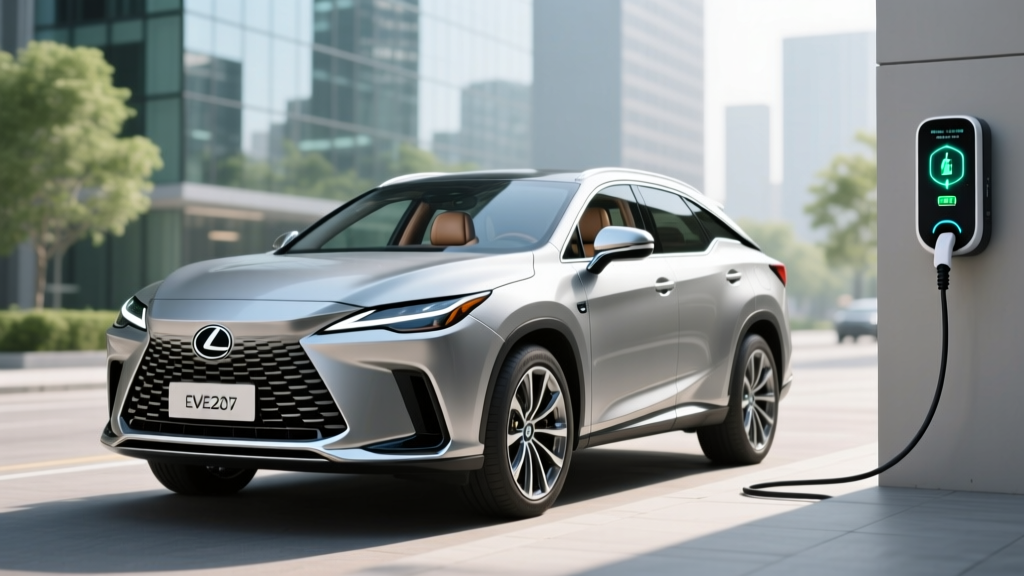
The 2026 Lexus RX Hybrid continues to offer two distinct electrified paths: the conventional RX 350h (a self-charging hybrid you never plug in) and the RX 450h+ (a plug-in hybrid with usable electric-only range). Both wear the same refreshed sheet metal and share Lexus's reputation for build quality, but they serve fundamentally different buyers. The RX 350h targets those who want effortless fuel savings without changing their routine. The RX 450h+ targets drivers with home charging access who want EV-like daily commuting with gas-engine backup for road trips.
Neither is a full battery-electric vehicle, and that's the point. For buyers not ready to commit to a BEV — whether due to apartment living, unreliable public charging, or frequent long-distance travel — the 2026 Lexus RX Hybrid lineup eliminates range anxiety entirely while still cutting fuel consumption meaningfully.
| Specification | RX 350h (HEV) | RX 450h+ (PHEV) |
|---|---|---|
| Powertrain | 2.5L 4-cyl + 2 electric motors | 2.5L 4-cyl + 2 electric motors (higher output) |
| Combined Horsepower | 246 hp | 302 hp |
| Drivetrain | AWD (eAxle rear motor) | AWD (eAxle rear motor) |
| EPA Combined MPG | 36 MPG | 35 MPG (hybrid mode) |
| EPA City / Highway | 37 city / 34 highway | 38 city / 33 highway |
| Electric-Only Range | N/A (not a plug-in) | 37 miles |
| Battery Capacity | 1.6 kWh (NiMH) | 18.1 kWh (lithium-ion) |
| Plug-In Charging | No — self-charging | Yes — Level 1 & Level 2 |
| DC Fast Charging | N/A | No |
| Level 2 Charge Time (0-100%) | N/A | ~2.5 hours |
| 0-60 mph | 7.4 seconds | 6.2 seconds |
| Base MSRP | $53,200 | $62,950 |
| Federal Tax Credit (§30D) | Not eligible | Not eligible (see details) |
HEV vs PHEV: Which 2026 Lexus RX Hybrid Is Which?
Before diving into specs, the distinction matters because it dictates your daily ownership experience:
- RX 350h (Conventional Hybrid / HEV): You never plug it in. A small battery captures energy from regenerative braking and the gasoline engine. The electric motors assist during acceleration and enable low-speed electric driving, but the gas engine does the heavy lifting. You simply fill up at a gas station like any other car — just less often.
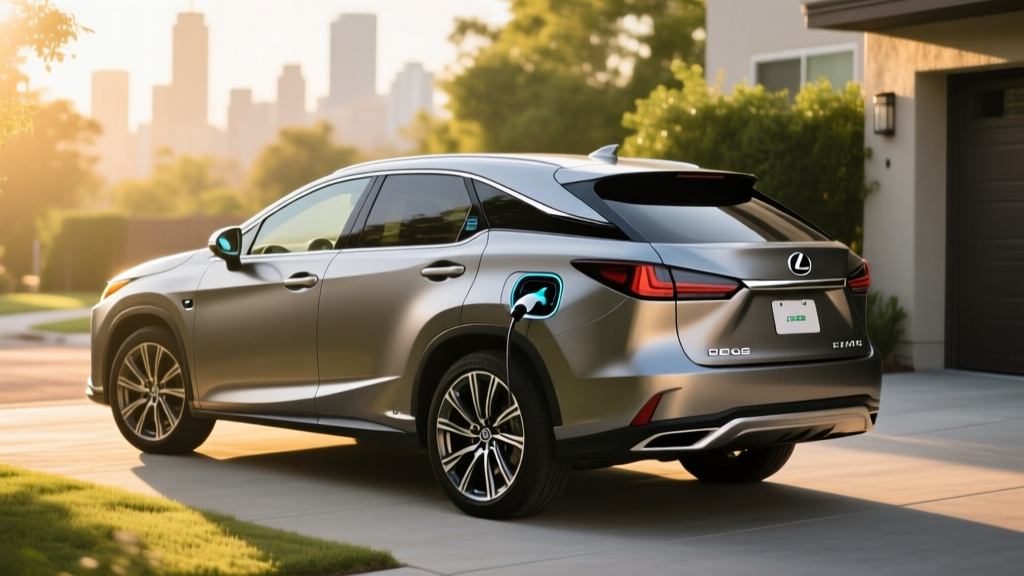
- RX 450h+ (Plug-In Hybrid / PHEV): It carries a much larger battery (18.1 kWh usable) that you charge via a plug — either a standard 120V outlet (Level 1) or a 240V home charger (Level 2). With a full charge, it drives up to 37 miles on electricity alone before the gas engine seamlessly starts. After the battery depletes, it operates as a conventional hybrid.
The practical implication: if you have a garage or driveway where you can install a Level 2 charger and your daily commute is under 35 miles round-trip, the RX 450h+ lets you drive most weekdays without burning a drop of gasoline. Weekend road trips use the hybrid system, so you're never stranded searching for a charger. If you can't charge at home — apartment dwellers, street parkers — the RX 350h delivers excellent efficiency with zero lifestyle change.
Fuel Economy: Real-World MPG vs EPA Estimates
| Metric | RX 350h (HEV) | RX 450h+ (PHEV, Hybrid Mode) |
|---|---|---|
| City MPG | 37 | 38 |
| Highway MPG | 34 | 33 |
| Combined MPG | 36 | 35 |
| MPGe (PHEV Electric Mode) | N/A | 83 MPGe |
| Total Range | ~580 miles | ~540 miles (gas) + 37 mi electric |
The EPA numbers for the RX 350h are strong for a midsize luxury SUV, and here's what experience with Toyota/Lexus hybrid systems tells us: real-world city MPG often exceeds the EPA sticker. Hybrids thrive in stop-and-go traffic where regenerative braking continuously recharges the battery and the electric motor handles low-speed propulsion. Expect 38-40 MPG in urban driving if you're not heavy-footed.
Highway driving is the opposite story. At sustained 70-80 mph speeds, the gasoline engine runs constantly and aerodynamic drag dominates. Expect 31-33 MPG on flat interstate runs, dropping to 28-30 MPG in mountainous terrain or when carrying a full load. Cold weather (below 35°F) knocks 2-4 MPG off combined figures because the engine runs longer to heat the cabin and the battery chemistry is less efficient.
For the RX 450h+, the 35 MPG combined applies after the battery is depleted. If you charge nightly and drive under 37 miles, your gasoline consumption could drop to near zero on weekdays. The 83 MPGe figure represents the combined efficiency when operating on stored electricity — useful for comparing against other electrified vehicles, though MPGe is an imperfect metric that equates 33.7 kWh of electricity to one gallon of gasoline.
For reference, see official EPA data at fueleconomy.gov.
RX 450h+ Electric-Only Range and Charging Details
The RX 450h+'s 18.1 kWh lithium-ion battery pack delivers an EPA-rated 37 miles of electric-only range. That's competitive with PHEVs in this class — the BMW X5 xDrive50e offers 38 miles, while the Volvo XC60 Recharge manages 35 miles.
Real-World Electric Range Reality: The 37-mile EPA figure assumes moderate temperatures, flat terrain, and speeds under 55 mph. In practice:
- Summer, city driving, moderate A/C: 34-37 miles
- Highway driving at 70 mph: 28-32 miles
- Winter (below 35°F) with cabin heat: 24-28 miles
The electric motor prioritizes cabin heating and battery thermal management in cold weather, which eats into driving range. Preconditioning the cabin while plugged in (using the Lexus app) helps preserve range.
Charging the RX 450h+:
- Level 1 (120V household outlet): ~10 hours from empty to full. Plugging in overnight works if your daily drive is short, but you won't reliably get a full charge in a single night if the battery is deeply depleted.
- Level 2 (240V home charger, 32A): ~2.5 hours from empty to full. This is the recommended setup. A hardwired 40-amp Level 2 unit (like a ChargePoint Home Flex or Emporia Level 2) costs $500-$700 for equipment plus $400-$1,200 for professional electrician installation, depending on your panel's proximity to the garage.
- DC Fast Charging: Not supported. The RX 450h+ uses a J1772 connector for Level 1 and Level 2 only. You cannot use CCS or NACS DC fast chargers to charge the PHEV battery. This is standard for nearly all PHEVs — their batteries are too small to justify the cost and weight of DC fast-charge hardware.
Powertrain, Performance, and Driving Dynamics
Both RX Hybrid models use Lexus's fourth-generation hybrid system built around a 2.5-liter Atkinson-cycle four-cylinder engine paired with electric motors front and rear (eAxle AWD). The difference is output and tuning.
RX 350h: The combined system output is 246 horsepower. The gas engine produces 184 hp and 168 lb-ft of torque, supplemented by a 134 kW front electric motor and a 40 kW rear motor. The result is smooth, linear acceleration that feels adequate rather than quick. The 7.4-second 0-60 time is respectable for a 4,600-pound luxury SUV focused on comfort, not sportiness. Passing power on the highway is confident, and the hybrid system's seamless engine-motor handoff is nearly imperceptible.
RX 450h+: Combined output jumps to 302 horsepower thanks to more powerful electric motors and the ability to draw heavily from the larger battery. The 0-60 time drops to 6.2 seconds — genuinely quick for this segment, and the instant electric torque makes the RX 450h+ feel more responsive around town than the 350h. In EV mode, acceleration is limited to gentler outputs to preserve range, but a firm throttle application wakes the gas engine for full power.
Both models use a continuously variable transmission (CVT) tuned for smoothness rather than sportiness. Lexus has improved CVT calibration in recent years to reduce the "rubber-band" effect, but enthusiastic drivers will notice the lack of fixed gear ratios during hard acceleration. The tradeoff is excellent efficiency and seamless power delivery in normal driving.
Pricing, Trims, and Tax Credit Eligibility
The 2026 Lexus RX Hybrid pricing starts at $53,200 for the RX 350h and $62,950 for the RX 450h+, both including destination charges.
| Trim | RX 350h MSRP | RX 450h+ MSRP |
|---|---|---|
| Premium | $53,200 | $62,950 |
| Premium+ | $55,800 | $65,550 |
| Luxury | $59,200 | $68,950 |
| F SPORT Handling | $57,400 | $67,150 |
Federal Tax Credit (§30D) Status:
The RX 350h (conventional hybrid) does not qualify for the federal §30D Clean Vehicle Credit. This credit applies only to plug-in electric vehicles (BEVs and PHEVs) meeting battery sourcing, MSRP, and buyer income requirements.
The RX 450h+ (PHEV) also does not currently qualify for the full §30D credit. The primary reason: the IRS's critical mineral and battery component sourcing requirements (per irs.gov) have tightened significantly, and the RX 450h+'s battery supply chain does not currently meet the thresholds for the full $7,500. Some partial credit may be available depending on the model year's specific sourcing compliance — check the latest IRS qualified vehicle list before purchasing.
The §30D credit also has buyer income caps ($150,000 single / $300,000 joint modified AGI), MSRP caps ($80,000 for SUVs), and requires the vehicle to be assembled in North America. The RX 450h+ is assembled in Cambridge, Ontario, Canada, which satisfies the assembly requirement. Always consult a tax professional and the current IRS qualified vehicle list before counting on any credit amount.
Some states offer additional hybrid or PHEV rebates (California, Colorado, and New York have programs that sometimes include PHEVs), but these vary by jurisdiction and change frequently. Check your state's energy or DMV website for current programs.
Reliability, Battery Warranty, and Long-Term Costs
Lexus Hybrid Battery Warranty: Both the RX 350h and RX 450h+ come with a hybrid battery warranty of 10 years or 150,000 miles (whichever comes first), transferable to subsequent owners. This is among the best in the industry and reflects Toyota/Lexus's deep experience with hybrid systems dating back to the 1997 Prius.
Battery Replacement Cost (Out of Warranty):
- RX 350h (1.6 kWh NiMH pack): $3,000 - $4,500 including labor
- RX 450h+ (18.1 kWh lithium-ion pack): $8,000 - $12,000 including labor
However, Lexus hybrid battery failures before 200,000 miles are rare. The company's hybrid system is arguably the most proven electrified powertrain on the market, with millions of units in service globally. Individual battery cells can often be replaced rather than the entire pack, reducing out-of-warranty costs.
Beyond the battery, Lexus consistently ranks at or near the top of J.D. Power dependability studies and Consumer Reports reliability surveys. The RX specifically has been a reliability benchmark for over two decades. The hybrid system adds complexity (electric motors, power electronics, regenerative braking), but these components have proven extremely durable in practice. Brake pad life is actually extended on hybrids because regenerative braking handles much of the deceleration, reducing friction brake wear.
Maintenance costs are lower than a comparable turbocharged gasoline SUV: no turbo to fail, no transmission fluid changes on the CVT under normal use, and the Atkinson-cycle engine runs under less stress than a performance-tuned powerplant. Expect annual maintenance costs of $400-$600 after the complimentary maintenance period expires (Lexus includes 1 year/10,000 miles of complimentary scheduled maintenance).
Pros
- RX 350h delivers 36 MPG combined without any plug-in requirement
- RX 450h+ provides 37 miles of electric-only range for daily commuting
- Industry-leading 10-year/150,000-mile hybrid battery warranty
- Proven reliability track record; low long-term maintenance costs
- Quiet, refined cabin with excellent ride quality
- Strong resale value — Lexus RX holds value better than most luxury SUVs
Cons
- RX 350h's 246 hp feels merely adequate; not a performance SUV
- RX 450h+ does not qualify for the full $7,500 federal tax credit
- No DC fast charging on the PHEV (limits public charging utility)
- Premium pricing: $10,000+ more than a Toyota Highlander Hybrid
- Infotainment system, while improved, still lags some competitors in responsiveness
- Third row not available (unlike the three-row TX Hybrid)
Who Should Buy the 2026 Lexus RX Hybrid?
Choose the RX 350h (HEV) if:
- You can't charge at home (apartment, street parking, no garage access)
- You want fuel savings with zero lifestyle change — just fill up less often
- Your daily driving is a mix of city and highway with no predictable charging windows
- You prioritize lower purchase price and proven simplicity
Choose the RX 450h+ (PHEV) if:
- You have home charging access (garage or driveway with a 240V outlet)
- Your daily commute is under 35 miles round-trip
- You want EV-like daily driving but need gas-engine flexibility for road trips
- You value the extra 56 horsepower and quicker acceleration
Consider a full BEV (like the Tesla Model Y, Hyundai Ioniq 5, or BMW iX) instead if:
- You have reliable home Level 2 charging
- Your daily driving is under 250 miles and you road-trip infrequently
- You want the lowest per-mile "fuel" cost (electricity is typically $0.03-$0.05/mile vs. $0.12-$0.15/mile for a 36 MPG hybrid on $3.50/gal gasoline)
- You want to qualify for the full $7,500 federal tax credit (available on qualifying BEVs like certain trims of the Tesla Model Y and Ford Mustang Mach-E)
Stick with a conventional gas SUV if:
- Your annual mileage is very low (under 8,000 miles) — the fuel savings won't offset the hybrid price premium
- You plan to keep the vehicle under 4 years — the reliability advantage matters less
For a five-year ownership horizon at 15,000 miles per year, the RX 350h saves approximately $2,800 in fuel compared to the non-hybrid RX 350 (26 MPG combined) at $3.50/gallon gasoline. The RX 450h+ saves even more if you charge nightly and drive within the electric-only range — potentially $4,000-$5,500 in fuel savings over five years, depending on your electricity rate and driving pattern.
Frequently Asked Questions
How many MPG does the 2026 Lexus RX Hybrid get?
The RX 350h (conventional hybrid) achieves an EPA-rated 37 city / 34 highway / 36 combined MPG. The RX 450h+ (plug-in hybrid) gets 38 city / 33 highway / 35 combined MPG when operating in hybrid mode after the battery is depleted, plus 83 MPGe when running on stored electricity. In real-world driving, expect city MPG to slightly exceed EPA estimates and highway MPG to fall 2-4 MPG below the sticker, especially at speeds above 70 mph.
How far can the RX 450h+ drive on electric only?
The EPA rates the RX 450h+ at 37 miles of electric-only range. Real-world range varies: expect 34-37 miles in mild weather city driving, 28-32 miles on the highway, and 24-28 miles in freezing temperatures with cabin heat running. The gasoline engine will start automatically if you demand hard acceleration or if the battery is depleted.
Does the 2026 Lexus RX Hybrid qualify for any tax credit?
The RX 350h (conventional hybrid) is not eligible for the federal §30D Clean Vehicle Credit — this credit applies only to plug-in vehicles. The RX 450h+ (PHEV) may qualify for a partial credit depending on current IRS battery sourcing requirements, which tighten periodically. Check the IRS qualified vehicle list before purchasing, and consult a tax professional. State-level incentives for hybrids and PHEVs vary by jurisdiction.
Is the Lexus RX Hybrid reliable? What does a battery replacement cost?
Lexus (and parent company Toyota) has the deepest hybrid experience in the industry, and the RX is one of their most dependable nameplates. The hybrid battery is covered by a 10-year/150,000-mile warranty. Out-of-warranty replacement costs approximately $3,000-$4,500 for the RX 350h's smaller NiMH pack and $8,000-$12,000 for the RX 450h+'s larger lithium-ion pack. Premature hybrid battery failures are uncommon — most last well beyond 200,000 miles.
Do I need to plug in the RX 350h?
No. The RX 350h is a conventional hybrid (HEV) that charges its own small battery through regenerative braking and the gasoline engine. You never plug it in — you simply refuel at a gas station like any other vehicle. Only the RX 450h+ (PHEV) requires plugging in to access its electric-only range.
How long does it take to charge the RX 450h+?
On a Level 2 home charger (240V, 32 amps), the RX 450h+ charges from empty to full in approximately 2.5 hours. On a standard 120V household outlet (Level 1), a full charge takes roughly 10 hours. The RX 450h+ does not support DC fast charging — this is typical for PHEVs, whose batteries are too small to benefit from high-power charging infrastructure.
Hybrid vs PHEV vs EV — which is right for me?
A conventional hybrid (RX 350h) is best if you can't charge at home and want better fuel economy with zero behavior change. A plug-in hybrid (RX 450h+) is ideal if you have home charging and a short commute but still need gas-engine range for long trips. A full battery-electric vehicle makes the most financial sense if you have reliable home charging, drive under 250 miles daily, and want the lowest per-mile operating cost — though you'll need to plan around charging on road trips.
Specifications based on 2026 model year data. Pricing excludes destination charges where noted. Tax credit eligibility is subject to change — verify current rules at irs.gov before purchasing. Fuel economy figures are EPA estimates; actual mileage will vary with driving conditions, weather, and vehicle configuration.