The Data-Driven Case for Hybrid Sedans
While fully electric vehicles dominate automotive headlines, hybrid sedans remain the most pragmatic, financially sound choice for millions of drivers. The modern hybrid powertrain has evolved far beyond the early 2000s era of sluggish acceleration and polarizing aesthetics. Today, hybrid sedans offer superior horsepower, seamless integration, and, most importantly, massive fuel savings. But does the upfront hybrid premium actually pay off at the pump? To answer this, we must look past the window sticker and analyze the long-term financial data.
In this comprehensive comparison, we rank the best hybrid sedans on the market by calculating their exact fuel savings versus their internal combustion engine (ICE) counterparts. By leveraging data from FuelEconomy.gov and applying a standardized five-year ownership model, we reveal which hybrid sedans offer the fastest return on investment (ROI) and the highest net savings.
Our Comparison Methodology
To ensure an apples-to-apples data-driven analysis, we established a strict baseline for our calculations. Real-world fuel costs fluctuate, but a standardized model allows us to measure the relative efficiency of each powertrain.
- Timeframe: 5 years of ownership.
- Annual Mileage: 15,000 miles per year (75,000 total miles), aligning with national averages.
- Fuel Price: $3.50 per gallon of regular unleaded (a conservative national average over the last 24 months).
- Driving Mix: EPA combined city/highway fuel economy estimates.
According to the U.S. Department of Energy's Alternative Fuels Data Center, hybrid electric vehicles utilize regenerative braking and electric motor assist to drastically reduce engine load, which is where our data shows the most significant financial divergence from traditional gas cars.
1. Toyota Prius vs. Toyota Corolla (Gas)
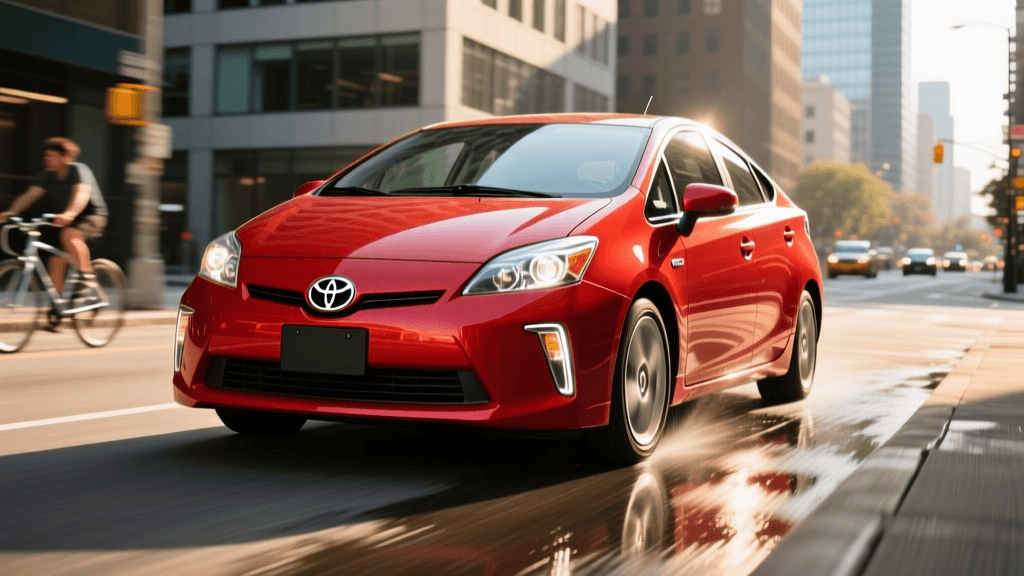
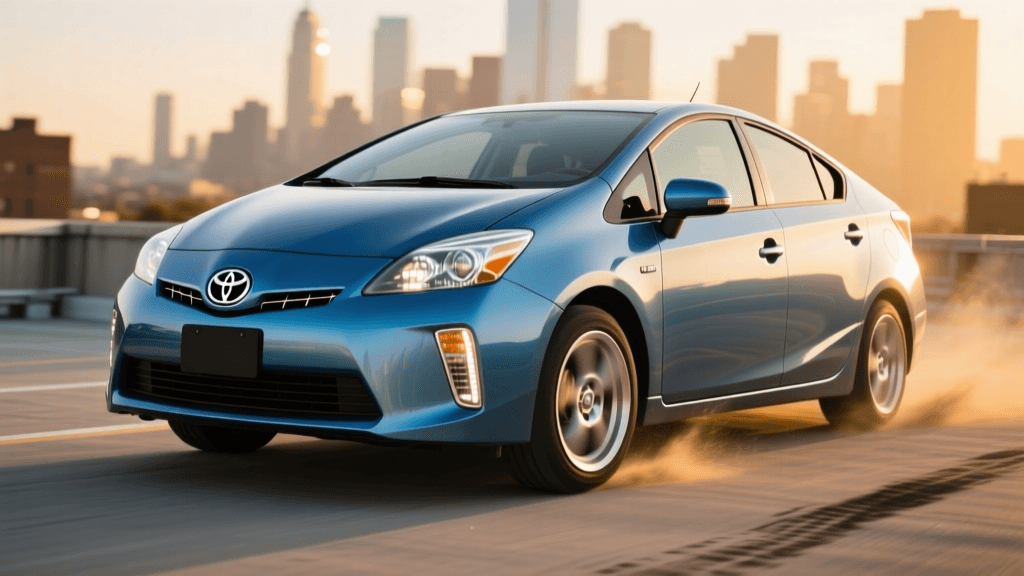
The Toyota Prius remains the undisputed benchmark for hybrid efficiency. With its latest generation, Toyota has paired a striking new design with a 196-horsepower powertrain that achieves an astonishing EPA-estimated 57 MPG combined. We compared this to the traditional gas-powered Toyota Corolla LE, which yields a respectable 35 MPG combined.
The Math
- Prius (57 MPG): 1,315 gallons used over 75,000 miles = $4,605 total fuel cost.
- Corolla Gas (35 MPG): 2,142 gallons used over 75,000 miles = $7,500 total fuel cost.
5-Year Fuel Savings: $2,895. Given that the Prius typically carries an MSRP premium of roughly $2,000 to $2,500 over a similarly equipped Corolla, the Prius pays for its hybrid premium in under 4.5 years, resulting in a net positive ROI before you even factor in depreciation advantages.
2. Hyundai Sonata Hybrid vs. Hyundai Sonata (Gas)
Hyundai has aggressively targeted the midsize sedan market with the Sonata Hybrid. Featuring a unique solar roof panel on top trims and a smooth 6-speed automatic transmission (avoiding the drone of a CVT), the Sonata Hybrid achieves 47 MPG combined. We compared it against the standard 2.5-liter gas Sonata, which manages 28 MPG combined.
The Math
- Sonata Hybrid (47 MPG): 1,595 gallons used = $5,585 total fuel cost.
- Sonata Gas (28 MPG): 2,678 gallons used = $9,375 total fuel cost.
5-Year Fuel Savings: $3,790. The Sonata Hybrid presents one of the most compelling financial arguments on this list. The hybrid premium is generally around $2,500, meaning the fuel savings alone will eclipse the initial purchase price difference in just over three years of average driving.
3. Honda Accord Hybrid vs. Honda Accord (Gas)
The Honda Accord Hybrid utilizes a brilliant two-motor hybrid system that operates primarily as a series hybrid, driving the wheels with the electric motor while the gas engine acts as a generator. This results in a 48 MPG combined rating. The standard 1.5L Turbo gas Accord achieves 32 MPG combined.
The Math
- Accord Hybrid (48 MPG): 1,562 gallons used = $5,468 total fuel cost.
- Accord Gas (32 MPG): 2,343 gallons used = $8,203 total fuel cost.
5-Year Fuel Savings: $2,735. Honda strategically prices the Accord Hybrid to be highly competitive, often requiring a premium of only $1,200 to $1,500 over the gas EX trim. The break-even point for the Accord Hybrid is remarkably fast—often less than two and a half years for the average commuter.
4. Toyota Camry Hybrid vs. Toyota Camry (Gas)
For the 2025 model year, Toyota made a massive data-driven pivot: the Camry is now exclusively available as a hybrid. However, comparing the new 46 MPG Camry Hybrid against the outgoing previous-generation 2.5L gas Camry (32 MPG) provides vital context for used car buyers and fleet managers weighing their options.
The Math
- Camry Hybrid (46 MPG): 1,630 gallons used = $5,706 total fuel cost.
- Camry Gas (32 MPG): 2,343 gallons used = $8,203 total fuel cost.
5-Year Fuel Savings: $2,497. The Camry Hybrid offers exceptional value, particularly when factoring in standard All-Wheel Drive (AWD) availability, which traditionally decimates fuel economy in gas-powered midsize sedans but only mildly impacts the hybrid system's efficiency.
Comprehensive 5-Year Fuel Savings Data Table
| Vehicle (Hybrid vs Gas) | Combined MPG | 5-Yr Fuel Cost | 5-Yr Savings | Est. Hybrid Premium | Break-Even Time |
|---|---|---|---|---|---|
| Toyota Prius (57 MPG) | 57 / 35 (Corolla) | $4,605 / $7,500 | $2,895 | ~$2,200 | ~4.0 Years |
| Hyundai Sonata (47 MPG) | 47 / 28 (Gas) | $5,585 / $9,375 | $3,790 | ~$2,500 | ~3.3 Years |
| Honda Accord (48 MPG) | 48 / 32 (Gas) | $5,468 / $8,203 | $2,735 | ~$1,400 | ~2.5 Years |
| Toyota Camry (46 MPG) | 46 / 32 (Gas) | $5,706 / $8,203 | $2,497 | ~$2,000* | ~4.0 Years |
*Note: Break-even times are estimates based on 15,000 miles driven annually and $3.50/gallon fuel costs. Actual results will vary based on regional fuel prices and individual driving habits.
Hidden Financial Variables: Maintenance and Depreciation
A purely fuel-based analysis only tells half the story. To truly rank the best hybrid sedans, we must incorporate secondary financial metrics: maintenance and depreciation.
1. The Maintenance Advantage
Hybrid vehicles inherently reduce wear and tear on several critical components. Regenerative braking utilizes the electric motor to slow the vehicle, significantly extending the life of mechanical brake pads and rotors. It is common for hybrid owners to reach 70,000 miles on their original factory brake pads. Furthermore, because the gas engine shuts off at idle and during low-speed coasting, engine oil degrades slower, and components like the alternator and starter motor are entirely eliminated from the parts list. According to the EPA Green Vehicles portal, the reduction in mechanical complexity regarding the drivetrain often leads to lower long-term maintenance costs compared to turbocharged gas engines.
2. The Depreciation Shield
Historically, hybrids depreciated faster due to consumer fears regarding battery replacement costs. Today, that narrative is dead. With federal mandates requiring hybrid battery warranties of at least 8 years/100,000 miles (and up to 15 years in states adopting CARB standards), consumer confidence has soared. Consequently, hybrid sedans currently experience some of the lowest depreciation rates in the automotive sector. A 5-year-old Prius or Accord Hybrid will consistently command a higher resale premium than its gas counterpart, effectively shrinking the initial hybrid premium even further when it is time to sell or trade in the vehicle.
Variables That Impact Your Real-World Savings
While our data provides a robust national baseline, your personal ROI will fluctuate based on three primary variables:
- Regional Fuel Costs: If you live in California, Hawaii, or the Pacific Northwest, where gas prices frequently exceed $4.50 to $5.00 per gallon, your break-even point will accelerate dramatically. Conversely, drivers in states with consistently cheap gas will take longer to recoup the hybrid premium.
- Driving Profile: Hybrids excel in stop-and-go city traffic where regenerative braking is maximized and the gas engine is frequently shut off. If your commute consists entirely of 80 MPH highway driving, the MPG gap between the hybrid and gas sedan will narrow, slightly extending your ROI timeline.
- Annual Mileage: The more you drive, the faster you save. Rideshare drivers, outside sales representatives, or long-distance commuters pushing 25,000+ miles a year will recoup the hybrid premium in less than 18 months.
Final Verdict: Which Hybrid Sedan Wins?
When ranking the best hybrid sedans strictly by the speed of financial return and overall fuel savings versus gas cars, the Honda Accord Hybrid takes the top spot. Its relatively low upfront premium combined with a massive 16 MPG advantage over the gas model yields the fastest break-even time (under 2.5 years) and an incredibly refined driving experience.
However, if maximum absolute fuel savings over a 5-to-10-year ownership cycle is your sole priority, the Hyundai Sonata Hybrid yields the highest raw dollar savings ($3,790) due to the stark contrast with its thirstier gas-only sibling. Meanwhile, the Toyota Prius remains the undisputed king of sheer efficiency, offering the lowest total cost of ownership and unmatched residual value retention. Ultimately, the data proves unequivocally that in the modern sedan segment, the hybrid is no longer just an eco-friendly statement—it is the superior financial decision.