The Truth About Toyota Hybrids: Separating Fact from Fiction
Toyota essentially invented the modern mass-market hybrid vehicle with the introduction of the Prius over two decades ago. Since then, the brand has refined its series-parallel hybrid architecture into one of the most reliable and efficient powertrains on the road. Yet, despite millions of successful units on the road, the internet is still rife with outdated myths, forum rumors, and common misconceptions that cause buyers to make costly mistakes.
At AutoEdgeView, we specialize in cutting through the noise. In this comprehensive guide, we are busting the most persistent myths surrounding Toyota hybrid reliability and efficiency. Afterward, we will rank the best Toyota hybrid models available today based on verifiable EPA Fuel Economy data, real-world reliability metrics, and overall value.
Myth Busting: 3 Common Toyota Hybrid Misconceptions
Myth 1: Hybrid Batteries Fail Early and Cost a Fortune to Replace
The Myth: Many used-car buyers avoid older Toyota hybrids, terrified that the high-voltage traction battery will fail at 100,000 miles and require a $5,000+ replacement.
The Reality: This is perhaps the most damaging myth in the EV and hybrid space. Toyota's hybrid battery technology is remarkably robust. According to the official Toyota Hybrid Battery Warranty, the traction battery is covered for 10 years or 150,000 miles (whichever comes first) in all 50 states. Furthermore, real-world data from fleet operators and taxi services shows that modern Toyota lithium-ion and nickel-metal hydride batteries frequently exceed 200,000 miles without needing major service. Even if a battery does degrade out of warranty, specialized hybrid shops can now replace individual bad cells for a fraction of the cost of a full pack replacement.
Myth 2: All-Wheel Drive (AWD) Destroys Hybrid Fuel Economy
The Myth: Adding AWD to a hybrid will drop your MPG by 10 to 15 percent, negating the entire purpose of buying a fuel-efficient vehicle.
The Reality: Traditional mechanical AWD systems use heavy driveshafts and power-robbing transfer cases. Toyota's electronic AWD (eAWD) system, however, uses a dedicated, independent electric motor mounted on the rear axle. This motor only engages during initial acceleration or when the front wheels slip. Because there is no mechanical connection to the engine, the parasitic drag is virtually zero. The MPG penalty for choosing eAWD on models like the RAV4 Hybrid or Prius is typically only 1 to 2 MPG combined—a negligible difference for the added all-weather safety.
Myth 3: You Should Always Buy the Plug-in Hybrid (Prime) Over the Standard Hybrid
The Myth: The RAV4 Prime or Prius Prime is universally better because it offers electric-only driving.
The Reality: Plug-in hybrids (PHEVs) are only superior if you can charge them daily and your commute falls within their electric range (usually 25-44 miles). If you frequently take long road trips or lack access to home charging, a PHEV becomes a standard hybrid carrying hundreds of pounds of dead battery weight. In those scenarios, the standard hybrid model actually delivers better highway fuel economy and represents a much smarter financial investment.
The Rankings: Best Toyota Hybrids by Efficiency and Reliability
Based on current EPA estimates, historical dependability data recognized by J.D. Power Automotive Awards, and overall utility, here is how the best Toyota hybrids stack up.
| Rank | Model | Combined MPG | Reliability Outlook | Best Use Case |
|---|---|---|---|---|
| 1 | Toyota Prius (LE FWD) | 57 MPG | Exceptional | Commuting & Rideshare |
| 2 | Toyota Camry Hybrid (LE) | 51 MPG | Exceptional | Midsize Family Sedan |
| 3 | Toyota RAV4 Hybrid | 39 MPG | Excellent | Compact SUV / Daily Driver |
| 4 | Toyota Highlander Hybrid | 35 MPG | Very Good | 3-Row Family Hauler |
#1: Toyota Prius (The Efficiency King)
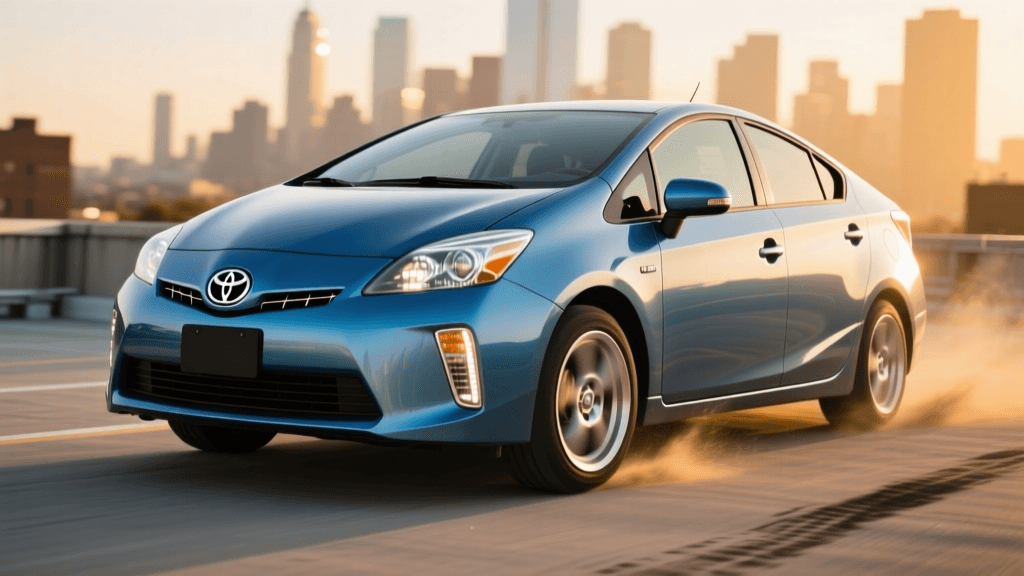
The completely redesigned Prius is a masterpiece of aerodynamic engineering and powertrain efficiency. Equipped with the fifth-generation Toyota Hybrid System and a 2.0-liter Atkinson-cycle engine, the base FWD LE model achieves an astonishing 57 MPG combined. The reliability of the Prius is legendary; it remains the gold standard for high-mileage drivers. The common mistake here is buying the top-tier Limited trim with 19-inch wheels, which drops the fuel economy to 52 MPG. Stick to the LE or XLE for maximum efficiency.
#2: Toyota Camry Hybrid (The Midsize Marvel)
For the 2025 model year, Toyota made the bold decision to make the Camry exclusively a hybrid. The Camry LE delivers an incredible 51 MPG combined while offering a spacious cabin, refined ride quality, and the option of electronic AWD. It shares much of its underlying hybrid architecture with the Prius and RAV4, meaning long-term reliability and parts availability are virtually bulletproof. It is the ultimate set-it-and-forget-it commuter car.
#3: Toyota RAV4 Hybrid (The SUV Standard)
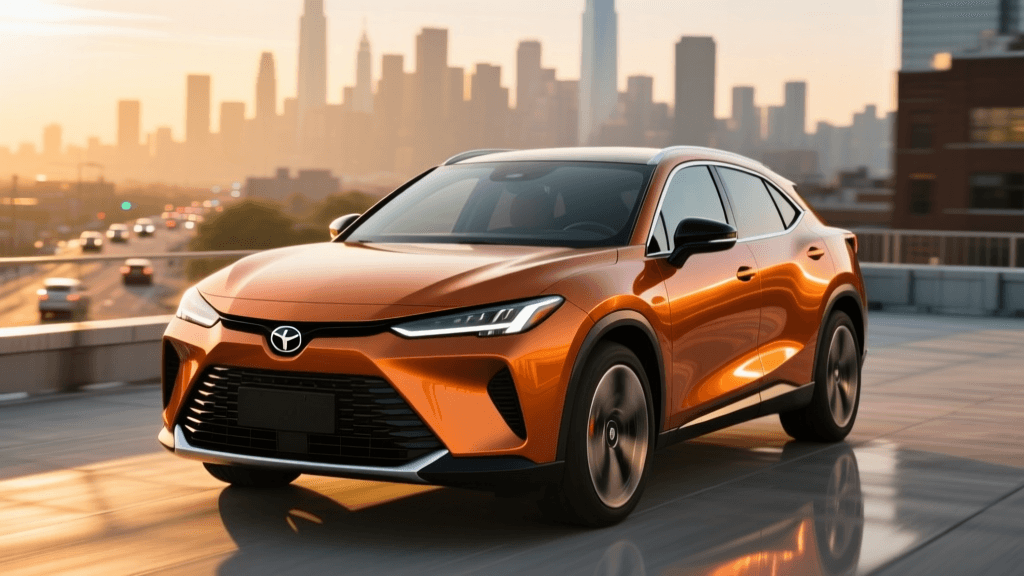
The RAV4 Hybrid proves that you do not need to sacrifice utility for efficiency. Returning 39 MPG combined, it outperforms many compact gas-only sedans while offering 37.6 cubic feet of cargo space and standard eAWD. The hybrid system actually provides more low-end torque than the gas-only RAV4, making it feel quicker off the line. It consistently ranks at the top of its segment for resale value and dependability.
#4: Toyota Highlander Hybrid (The Family Hauler)
Hauling a family of seven usually means accepting terrible fuel economy. The Highlander Hybrid shatters this norm, achieving 35 MPG combined. While it lacks the sheer power of the older V6 gas models, the 2.5-liter hybrid powertrain provides adequate passing power while saving owners thousands of dollars annually at the pump. Reliability is excellent, though buyers should note that third-row space is tighter than competitors like the Kia Telluride.
Common Buyer Mistakes to Avoid
Mistake 1: Neglecting the 12V Auxiliary Battery
While everyone obsesses over the massive high-voltage hybrid battery, the tiny 12-volt auxiliary battery is actually the most common point of failure. In a Toyota hybrid, the 12V battery is used to boot up the car's computers and close the relays to the main hybrid battery. If the 12V battery dies, the car will not start, even if the main hybrid battery is fully charged. Actionable Advice: Test your 12V battery annually after the 3-year mark, and keep a portable lithium jump-starter in your trunk. Replacing a 12V battery costs about $150; being stranded on a road trip costs much more.
Mistake 2: Overpaying for the RAV4 Prime
The RAV4 Prime (PHEV) is an incredible vehicle, offering 42 miles of electric range and 302 horsepower. However, dealer markups often push the price of a RAV4 Prime into the $55,000+ range. At that price, you are encroaching on luxury EV territory. Actionable Advice: If your local dealers are charging massive premiums for the Prime, pivot to the standard RAV4 Hybrid. The standard hybrid is readily available, costs thousands less, and will still yield over 400 miles of total range per tank of gas.
Mistake 3: Misusing 'B-Mode' on the Shifter
Many Toyota hybrid owners shift into 'B' (Brake) mode thinking it is a 'sport' or 'battery charging' mode that will save them fuel. In reality, B-mode simply increases regenerative braking drag to help slow the car down on steep mountain descents, preventing brake fade. Using it on flat highways forces the system to convert kinetic energy into heat and battery charge unnecessarily, which actually reduces overall aerodynamic coasting efficiency. Actionable Advice: Leave the shifter in 'D' for normal driving to maximize coasting distance and fuel economy.
Conclusion
Toyota's hybrid lineup remains the benchmark for the industry, offering an unmatched combination of fuel efficiency, long-term reliability, and everyday practicality. By ignoring outdated myths about battery degradation and avoiding common buyer mistakes like overpaying for PHEV markups or neglecting the 12V battery, you can secure a vehicle that will reliably serve you for hundreds of thousands of miles. Whether you choose the hyper-efficient Prius or the family-friendly Highlander Hybrid, Toyota's proven hybrid technology is an investment that pays for itself at the pump.