The Quick Answer
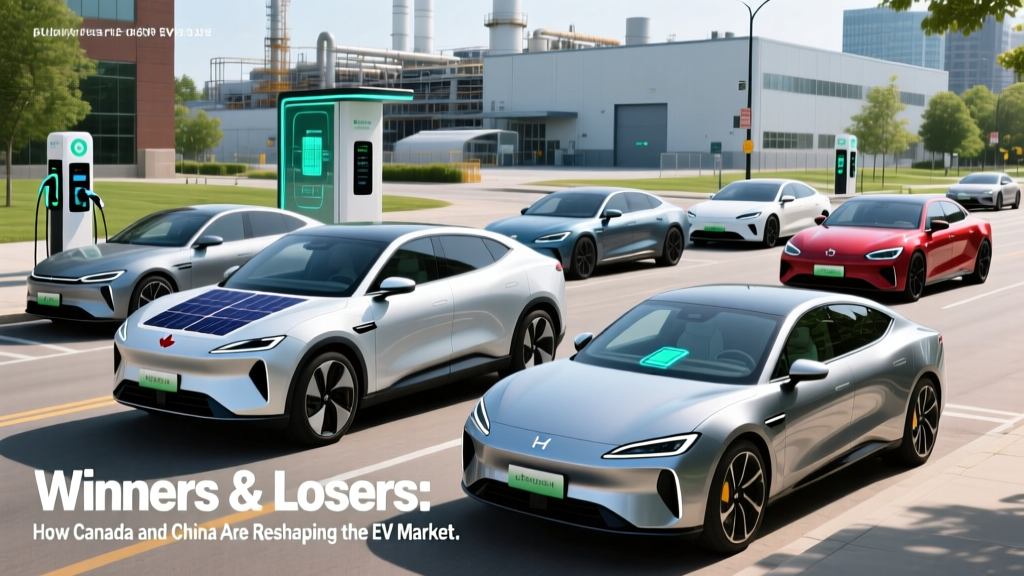
The winners in the Canada-China EV dynamic are North American buyers who get access to tariff-protected domestic and allied-nation EVs at increasingly competitive prices, plus legacy automakers like Hyundai, GM, and Ford who are scaling production without being undercut by subsidized Chinese imports. The losers are Chinese OEMs like BYD, NIO, and MG blocked from Canadian and U.S. markets by 100% tariffs, and budget-conscious buyers who would have benefited from sub-$25,000 Chinese EVs. Canada's 100% tariff on Chinese-made EVs (effective October 2024 and ongoing into 2026) and parallel U.S. tariffs have redrawn the global EV supply map — and the ripple effects hit your wallet, your charging network, and your next purchase decision.
What the Canada-China EV Tariff War Actually Means for Buyers
In August 2024, Canada announced a 100% surtax on all Chinese-manufactured electric vehicles, mirroring the U.S. Section 301 tariff increase on Chinese EVs that took effect the same year. By 2026, these tariffs remain firmly in place and have fundamentally reshaped which EVs are available — and at what price — in North America.
The policy logic is straightforward: Chinese EVs benefit from massive state subsidies, vertically integrated battery supply chains (CATL and BYD control over 60% of global LFP cell production), and manufacturing costs that let brands like BYD sell the Dolphin hatchback for under $15,000 USD in China. Without tariffs, those vehicles could flood North American markets, undercutting domestic production that is still scaling.
But tariffs have tradeoffs. Here's the concrete impact on your purchase:
- BYD, MG, NIO, Xpeng, Zeekr, and Leapmotor vehicles are effectively unavailable in both Canada and the United States as of 2026.
- Vehicles built in China by non-Chinese brands — such as the Tesla Model 3 Standard Range (Shanghai-built for export to some markets), Volvo EX30, and Polestar 2 — face the tariff if imported from Chinese factories, forcing those brands to shift production to Europe, South Korea, or North America.
- Prices on tariff-affected models have risen or been restructured. Volvo shifted EX30 production to Ghent, Belgium, but the North American launch was delayed and pricing moved from an anticipated ~$35,000 to $44,900+ MSRP at U.S. launch.
The Winners: Who Benefits from the Current EV Landscape
North American and Allied-Nation Automakers
Hyundai and Kia are among the biggest winners. The Hyundai Ioniq 5 (assembled in Ellabell, Georgia since early 2025) offers 311 miles of EPA range, a 84 kWh NMC battery, and 10–80% DC fast charging in approximately 18 minutes at a peak rate of 240 kW — all starting at $42,900 MSRP for the SEL trim. With U.S. production, it qualifies for the §30D federal tax credit of up to $7,500 (subject to income caps: $150K single / $300K joint, and MSRP caps: $55K sedans / $80K SUVs/trucks).
GM's Ultium-platform vehicles — the Chevrolet Equinox EV (319 mi EPA range, $33,600 MSRP base) and Blazer EV (324 mi, $44,600) — are similarly positioned as tariff-shielded domestic products. Ford's F-150 Lightning, assembled in Dearborn, Michigan, continues to anchor the electric truck segment with 320 mi EPA range and 563 hp.
Canadian Consumers (With Caveats)
Canada's federal iZEV rebate offers up to C$5,000 on eligible vehicles under C$55,000 base price (C$60,000 top trim). Combined with provincial incentives — British Columbia offers up to C$4,000, Quebec up to C$7,000 — a Canadian buyer purchasing a Hyundai Kona Electric (261 mi EPA, C$44,999 MSRP) could stack incentives to reduce effective cost by C$9,000–$11,000.
The tariff protects Canadian assembly jobs (GM Ingersoll, Honda Alliston) and ensures warranty service networks remain viable. But it also limits the cheapest options on the market.
The Battery Supply Chain
North American battery manufacturing is booming. LG Energy Solution, SK On, Samsung SDI, and Panasonic are operating or constructing plants in Michigan, Georgia, Tennessee, Kansas, and Ontario. These facilities produce NMC cells for GM, Ford, Hyundai, and Stellantis. LFP chemistry — where CATL dominates — is slowly being on-shored, with Ford licensing CATL technology for a Marshall, Michigan plant producing LFP cells for the F-150 Lightning and Mustang Mach-E standard-range models.
The Losers: Who Pays the Price
Budget-Conscious EV Buyers
This is the most consequential loser category. The BYD Seagull sells in China for approximately $10,000 USD. Even with shipping, compliance modifications, and a reasonable profit margin, it could potentially retail in North America for $18,000–$22,000 before incentives — making it the cheapest new EV on the market by a wide margin. The 100% tariff doubles that import cost, killing the business case entirely.
For buyers who cannot afford the $33,000+ entry point of current North American EVs (even after tax credits), the tariff wall means waiting longer for affordable options — or buying used.
Chinese OEMs Seeking Global Expansion
BYD sold over 4.2 million NEVs (new energy vehicles, including PHEVs) globally in 2025, making it the world's largest EV manufacturer by volume. But North America — the world's second-largest auto market — is functionally closed to them. BYD has pivoted aggressively to Southeast Asia, Latin America, Europe (though the EU has imposed its own countervailing duties of up to 35.3%), and the Middle East.
Volvo and Polestar (Transitional Pain)
Both brands, owned by China's Geely Holding, had planned to use Chinese manufacturing for affordable models targeting North America. The tariffs forced production re-shoring to Europe, causing delays, higher MSRPs, and margin compression. The Volvo EX30, a promising compact EV, arrived in North America later and more expensive than originally projected.
Cost Breakdown: Tariff-Protected EVs vs. What Chinese Imports Could Have Cost
| Metric | Hyundai Kona Electric (2026) | Chevy Equinox EV (2026) | BYD Atto 3 (Hypothetical Import) |
|---|---|---|---|
| Base MSRP | $32,975 | $33,600 | ~$22,000 (est. without tariff) |
| After 100% Tariff | N/A (U.S.-built) | N/A (U.S.-built) | ~$44,000 (with tariff) |
| EPA Range | 261 mi | 319 mi | ~260 mi (WLTP est.) |
| Battery (kWh / Chemistry) | 65.4 kWh / NMC | 85 kWh / NMC | 58.56 kWh / LFP |
| DC Fast Charge (Peak kW) | 100 kW | 150 kW | 88 kW |
| 10–80% Charge Time | ~43 min | ~35 min | ~40 min |
| §30D Tax Credit Eligible | Yes (up to $7,500) | Yes (up to $7,500) | No (Chinese battery/minerals) |
| Effective Price After Credit | ~$25,475 | ~$26,100 | ~$44,000 |
Sources: fueleconomy.gov, manufacturer spec sheets, IRS §30D guidance. BYD figures are estimates based on current Chinese-market specs and hypothetical North American pricing without tariff. Actual import cost would vary.
EV vs. Gas: The Ownership Math in a Tariff-Shaped Market
Even without access to the cheapest Chinese EVs, the total cost of ownership (TCO) for tariff-protected North American EVs still beats comparable gas vehicles for most drivers — but the math depends heavily on your situation.
| Factor | 2026 Hyundai Kona Electric | 2026 Honda CR-V (AWD Gas) |
|---|---|---|
| Purchase Price (MSRP) | $32,975 | $32,350 |
| Federal Tax Credit | –$7,500 (if eligible) | $0 |
| Effective Purchase | $25,475 | $32,350 |
| Energy Cost per 1,000 mi | ~$42 (at $0.14/kWh avg.) | ~$105 (at $3.50/gal, 28 MPG combined) |
| Annual Fuel/Energy (15K mi) | ~$630 | ~$1,575 |
| Maintenance (Annual Avg.) | ~$300 | ~$650 |
| 5-Year Energy + Maintenance | ~$4,650 | ~$11,125 |
| Estimated Insurance (Annual) | ~$1,650 | ~$1,400 |
| 5-Year Insurance | ~$8,250 | ~$7,000 |
| 5-Year Total Cost | ~$38,375 | ~$50,475 |
Assumes home Level 2 charging at national average electricity rate. Insurance estimates based on industry averages; actual rates vary by driver, location, and insurer. Gas prices and electricity rates fluctuate.
The Kona Electric saves roughly $12,100 over five years compared to the gas CR-V — but only if you qualify for the full §30D credit and have reliable home charging. Without the credit, the savings narrow to ~$4,600, driven primarily by lower fuel and maintenance costs.
Real-World Ownership: What First-Time Buyers Must Know
Home Charging Is the Make-or-Break Factor
Approximately 80% of EV charging happens at home. If you have a garage or driveway with access to a 240V circuit, a Level 2 home charger (typically 7.2–11.5 kW) adds 25–44 miles of range per hour of charging — more than enough to replenish a daily commute overnight. Installation costs range from $500–$2,500 depending on panel capacity and run length. If your electrical panel is already at capacity (common in older homes), a panel upgrade to 200A can add $1,500–$3,500.
If you live in an apartment, rely on street parking, or lack charging access at work, public DC fast charging becomes your primary fueling method. At Electrify America or EVgo stations, expect to pay $0.35–$0.55/kWh — which erases much of the cost advantage over gasoline. At $0.48/kWh, the Kona Electric's energy cost rises to ~$144 per 1,000 miles, nearly matching the gas CR-V.
Cold Weather Hits Range Hard
In sub-20°F testing, EVs lose 20–35% of their EPA-rated range due to battery chemistry limitations and cabin heating demands. The Kona Electric's 261-mile EPA rating could drop to 170–200 miles in a Canadian winter. Vehicles equipped with a heat pump (standard on the Ioniq 5, optional on some trims of others) mitigate this loss by 5–10 percentage points.
For buyers in Alberta, Manitoba, or northern U.S. states, plan for worst-case range and choose a vehicle with at least 30% more EPA range than your longest typical trip.
Charging Speed Matters More Than Peak kW
A common misconception: a 240 kW peak charge rate means you'll charge at 240 kW the entire session. In reality, DC fast charging follows a curve. The battery accepts peak power only between roughly 10–50% state of charge (SoC), then tapers progressively. A vehicle advertising 240 kW peak may average 130–150 kW over a 10–80% session. The Hyundai Ioniq 5's 800V architecture sustains higher rates longer than 400V competitors, which is why its 10–80% time of ~18 minutes is among the fastest in its class despite similar peak kW ratings.
Common Misconceptions About the EV Market
| Myth | Fact |
|---|---|
| "Chinese EVs would have been $10,000 cars in North America" | After shipping, compliance (FMVSS/NHTSA), dealer networks, and warranty infrastructure, the cheapest realistic price was $18,000–$22,000 — still a bargain, but not $10K. |
| "Tariffs protect me from unsafe Chinese vehicles" | All vehicles sold in the U.S. must meet NHTSA FMVSS standards regardless of origin. The tariff is an economic/trade policy, not a safety regulation. |
| "EVs are always cheaper to own than gas cars" | Without home charging, with high insurance premiums, or in states with high electricity rates ($0.25+/kWh), the TCO advantage narrows significantly or reverses for low-mileage drivers. |
| "The $7,500 tax credit applies to every EV" | §30D has strict requirements: MSRP caps ($55K cars / $80K SUVs), buyer income limits ($150K/$300K), and battery component/critical mineral sourcing rules that disqualify many models. Check the IRS eligible vehicle list before purchasing. |
| "Battery replacement will cost $20,000+" | Most 2026 EV batteries are warrantied for 8 years/100,000 miles (10 years/150,000 in CARB states) with a 70% capacity retention threshold. Average degradation at 5 years is 5–10%. Full pack replacement is rare and costs $5,000–$15,000 depending on the model. |
Decision Framework: What Should You Buy in This Market?
Choose a tariff-protected North American EV (Hyundai, GM, Ford, Tesla) if:
- You have home Level 2 charging or can install it
- You qualify for the §30D tax credit (income under $150K/$300K, vehicle under MSRP cap)
- You drive 10,000+ miles per year (maximizes fuel savings)
- You want full warranty support through an established dealer network
- You live in a region with reliable public DC fast-charging infrastructure
Choose a PHEV (Toyota RAV4 Prime, Hyundai Tucson PHEV) if:
- You lack reliable home charging but want some electric driving
- You regularly drive 300+ miles in a single trip (no charging stops needed)
- You live in extreme cold climates where EV range loss is punishing
- You want to reduce fuel consumption without full EV commitment
Wait or buy used if:
- You were counting on a sub-$25,000 new EV (the market doesn't offer one yet at scale)
- Your apartment or condo has no charging access and your workplace doesn't offer it
- You live in a charging desert (rural Great Plains, parts of the Mountain West)
- Your budget is under $25,000 total — the used EV market (Chevy Bolt, Nissan Leaf, early Model 3) offers better value until new affordable models like the next-gen Tesla Model 2 or GM's upcoming budget EV arrive
The Road Ahead: Will Tariffs Ease?
As of 2026, there is no indication that either the U.S. or Canadian government plans to reduce Chinese EV tariffs. The policy has bipartisan support in Washington and cross-party backing in Ottawa. The strategic goal — building a North American battery and EV supply chain independent of China — is a multi-decade project.
What could shift the landscape:
- Chinese OEMs building in tariff-exempt countries. BYD is constructing a factory in Mexico (though the USMCA trade agreement may eventually close this loophole) and operating plants in Thailand, Brazil, and Hungary. Vehicles from these facilities may eventually reach North America if they meet USMCA rules of origin.
- Technology licensing. Ford's partnership with CATL (licensing LFP battery technology for U.S. production) represents a workaround that lets North American automakers access Chinese battery expertise without importing finished vehicles.
- Trade negotiations. A broader U.S.-China trade deal could theoretically reduce EV tariffs, but geopolitical tensions make this unlikely in the near term.
Frequently Asked Questions
Can I import a BYD or NIO vehicle to Canada or the U.S. myself?
Technically, the tariff applies at import — meaning the 100% surtax would apply to your individual import just as it does to a manufacturer. Additionally, the vehicle must meet all FMVSS (U.S.) or CMVSS (Canada) safety standards, which Chinese-market vehicles typically do not without significant modification. The practical answer is no.
Do these tariffs affect EV parts and batteries, or just whole vehicles?
The 100% tariff targets complete EVs. Separate tariffs apply to battery cells (25% under Section 301 in the U.S.) and critical minerals. This is why automakers like Ford license Chinese battery technology for domestic production rather than importing cells directly — they pay licensing fees but avoid the highest tariff tiers.
Are Canadian and U.S. EV tariffs identical?
Both countries impose a 100% surtax on Chinese-manufactured EVs, but the surrounding incentive structures differ. Canada offers the federal iZEV rebate (up to C$5,000) plus provincial incentives, while the U.S. uses the §30D tax credit (up to $7,500) with different eligibility rules. A vehicle may qualify for incentives in one country but not the other depending on MSRP caps and assembly location.
Will affordable EVs (under $25,000) ever be available in North America?
Several models are in development: GM has announced a next-generation budget EV platform, Tesla has referenced a more affordable model, and the Hyundai/Kia group is exploring lower-cost options. However, reaching sub-$25,000 pricing with 250+ miles of range, DC fast charging, and profitability remains a significant engineering and economic challenge. Expect the first serious contenders to arrive in the 2027–2028 timeframe, likely with LFP batteries and 200–250 mile range.
How does this affect the used EV market?
Tariffs on new Chinese EVs indirectly support used EV values by limiting the supply of ultra-cheap new alternatives. However, used EV prices have generally declined since 2023 as lease returns flooded the market and new EV price cuts (led by Tesla) compressed the entire market. A used 2023 Chevy Bolt EV with 259 miles of range can be found for $15,000–$18,000 — effectively filling the budget gap that Chinese imports would have occupied.