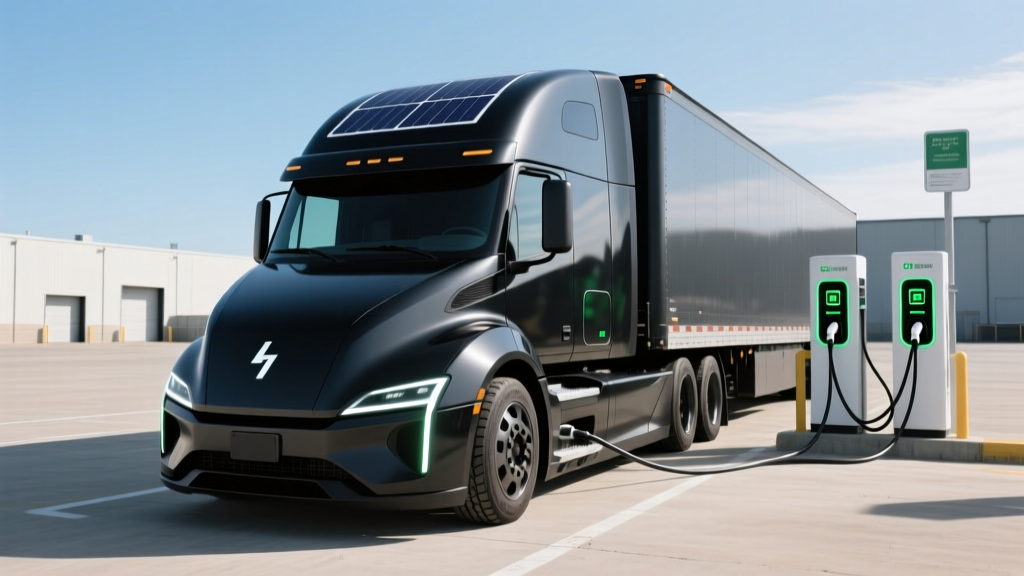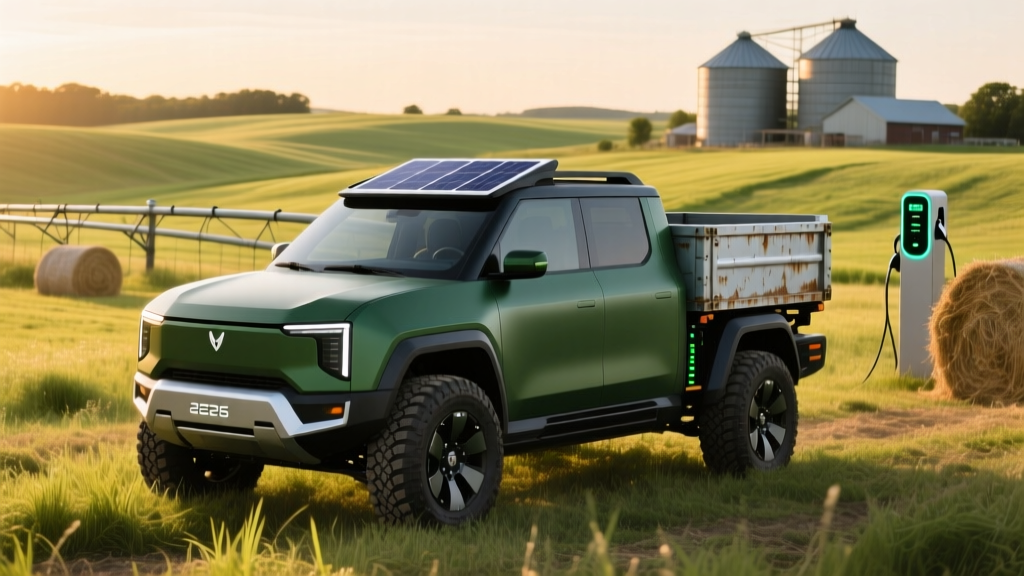
Quick Answer: Are Electric Vehicles Practical for Agriculture?
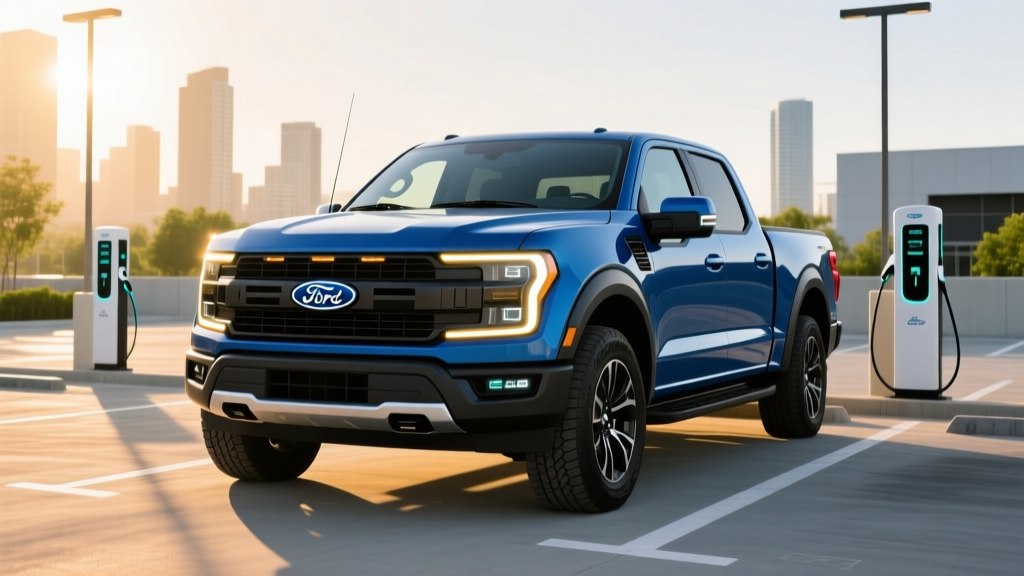
Yes — for light-to-medium farm duty, electric trucks and UTVs can cut fuel and maintenance costs by 40–60% compared to gas equivalents, provided you can install Level 2 charging at the barn or shop. For 2026, the strongest agriculture electric options include the Ford F-150 Lightning (EPA 230–320 mi, up to 7,700 lb towing), the Rivian R1T Dual-Motor (EPA 352 mi, 11,000 lb towing), and the Chevrolet Silverado EV (EPA 380+ mi on 4WT trim). Polaris and John Deere are expanding electric UTV and compact-tractor lineups, though availability remains limited. The biggest constraints are upfront cost ($55,000–$90,000+ before incentives), range loss under heavy towing (expect 40–50% reduction), and rural charging access away from the homestead.
Why Farms Are Looking at Agriculture Electric Vehicles
Farm and ranch operations burn through significant fuel budgets. A mid-size row-crop operation running three pickup trucks and two UTVs can easily spend $15,000–$25,000 annually on gasoline and diesel for light-duty tasks — checking fences, hauling feed, running to town for parts, moving equipment between fields. Electrification targets these lighter-duty vehicle cycles where daily mileage is predictable (typically 30–80 miles round-trip) and vehicles return to a central location each evening.
The economics have shifted meaningfully. With electricity averaging $0.12–$0.18/kWh in most rural co-ops (and solar-offset rates potentially dropping to near zero), the per-mile fuel cost for an electric truck falls to roughly $0.04–$0.06/mile. A comparable gas truck at 16 MPG combined and $3.40/gallon runs about $0.21/mile. Over 15,000 annual miles, that's a $2,400–$2,550/year fuel savings per vehicle.
Maintenance savings compound this: no oil changes, no transmission fluid, no spark plugs, no exhaust system repairs. Brake wear drops 50–70% thanks to regenerative braking. Ford estimates the F-150 Lightning saves owners roughly $1,200–$1,500 in maintenance over five years versus the gas F-150.
Top Agriculture Electric Vehicles for 2026: Specs at a Glance
| Vehicle | EPA Range | Battery (kWh, usable) | Chemistry | Max Tow | Payload | 0–60 mph | Base MSRP |
|---|---|---|---|---|---|---|---|
| Ford F-150 Lightning (Std Range) | 230 mi | 98 kWh, NMC | NMC | 7,700 lb | 2,235 lb | 4.5s | $54,995 |
| Ford F-150 Lightning (Ext Range) | 320 mi | 131 kWh, NMC | NMC | 7,700 lb | 1,952 lb | 4.5s | $69,995 |
| Rivian R1T Dual-Motor (Max Pack) | 352 mi | 141 kWh, NMC | NMC | 11,000 lb | 1,760 lb | 3.5s | $87,600 |
| Chevrolet Silverado EV 4WT | 380 mi (est.) | 200+ kWh, NMC | NMC | 10,000 lb | 1,800 lb | ~4.5s | $74,800 |
| Polaris Ranger XP Kinetic (UTV) | 45 mi (mixed use) | 14.9 kWh, NMC | NMC | 2,500 lb (towing) | 1,250 lb | N/A | $29,999 |
Sources: fueleconomy.gov, manufacturer spec sheets. Range figures are EPA estimates; real-world range varies with load, terrain, speed, and temperature.
Real-World Range on the Farm: What the EPA Sticker Doesn't Tell You
The EPA range number assumes a mix of city and highway driving at moderate temperatures with no payload or trailer. Farm use introduces variables that compress range significantly:
Range Expectations: F-150 Lightning Extended Range (EPA 320 mi)
- Light farm errands (empty bed, back roads, 45 mph): ~280–300 mi achievable
- Highway driving (70 mph, empty): ~240–260 mi
- 5,000 lb trailer, flat terrain, 55 mph: ~160–180 mi
- 5,000 lb trailer, hilly terrain, 55 mph: ~130–150 mi
- Winter (20°F), empty, highway: ~190–210 mi (30–35% loss)
- Winter + towing: ~100–130 mi
Bottom line: if your daily farm circuit is under 80 miles and you tow occasionally within a 60-mile radius, even the standard-range Lightning covers it comfortably. For longer hauling days, plan charging stops or stick to the extended-range pack.
The Polaris Ranger XP Kinetic faces a different calculus. Its 14.9 kWh battery delivers roughly 45 miles of mixed off-road use, but heavy hauling, steep terrain, and PTO accessory use can cut that to 25–30 miles. For most single-day farm tasks — fence checks, feeding runs, light material transport — that's sufficient, especially since the Kinetic charges from a standard 120V outlet in about 5–6 hours or a 240V outlet in roughly 2 hours.
Charging on the Farm: What You Actually Need
Most farm operations have a shop, barn, or equipment shed with existing 240V electrical service — often already wired for welders, grain dryers, or large air compressors. This is a significant advantage for agriculture electric adoption because the infrastructure cost is frequently lower than suburban residential installs.
| Level | Voltage / Amps | Power (kW) | Miles Added/Hour (F-150 Lightning) | Full Charge Time (Ext Range) | Typical Farm Install Cost |
|---|---|---|---|---|---|
| Level 1 | 120V / 12A | 1.4 kW | ~3 mi/hr | ~90+ hours | $0 (standard outlet) |
| Level 2 (basic) | 240V / 32A | 7.7 kW | ~18 mi/hr | ~17 hours | $800–$1,500 |
| Level 2 (full) | 240V / 48A | 11.5 kW | ~27 mi/hr | ~12 hours | $1,200–$2,500 |
| Level 2 (max) | 240V / 80A | 19.2 kW | ~45 mi/hr | ~7 hours | $2,000–$4,000 |
| DC Fast Charge | 480V+ DC | 150–250 kW | ~200+ mi in 20 min | 10–80% in ~40 min | Public stations only |
Key distinction: kW (kilowatts) measures charging power — how fast energy flows. kWh (kilowatt-hours) measures battery capacity — how much energy is stored. A 131 kWh battery charged at 11.5 kW takes roughly 11.4 hours from empty. Think of kW as the hose diameter and kWh as the bucket size.
Panel upgrade reality: Many older farm buildings have 100A or 200A panels already near capacity. Adding a 48A or 80A Level 2 charger may require a panel upgrade ($1,500–$3,500) or a dedicated sub-panel. However, if you're running the charger overnight when other heavy loads are off, a load-management device ($300–$600) can often avoid a full panel upgrade by throttling charger draw when other circuits are active. Always consult a licensed electrician for final specifications.
Solar synergy: Farms with existing or planned solar arrays can offset charging costs substantially. A 10 kW solar array in the Midwest produces roughly 12,000–14,000 kWh/year — enough to "fuel" an electric truck for 30,000–35,000 miles of driving annually at effectively zero marginal cost after the solar system is paid off.
Cost Breakdown: Agriculture Electric vs. Gas Over 5 Years
Let's compare a Ford F-150 Lightning Extended Range against a gas F-150 3.5L EcoBoost for a typical farm use case: 15,000 miles/year, moderate towing, rural electricity rates.
| Cost Category | F-150 Lightning Ext Range | F-150 Gas 3.5L EcoBoost | 5-Year Difference |
|---|---|---|---|
| Purchase Price (MSRP) | $69,995 | $52,500 | EV +$17,495 |
| Federal Tax Credit (§30D) | Up to -$7,500* | $0 | EV -$7,500 |
| Net Purchase | $62,495 | $52,500 | EV +$9,995 |
| Fuel (5 yrs, 75K mi) | $3,750 (at $0.15/kWh avg) | $15,940 (at 16 MPG, $3.40/gal) | EV -$12,190 |
| Maintenance (5 yrs) | $2,200 | $4,800 | EV -$2,600 |
| Insurance (5 yrs avg) | $11,500 | $9,000 | EV +$2,500 |
| Total 5-Year Cost | $79,945 | $82,240 | EV saves ~$2,295 |
*Federal §30D tax credit eligibility depends on buyer income caps ($150K single / $300K joint), vehicle MSRP caps ($80K for trucks), and battery critical-mineral and component sourcing requirements that tighten annually. Check current rules at irs.gov. The credit can be transferred to the dealer at point of sale as a purchase-price reduction.
The breakeven point typically arrives around year 3–4 for high-mileage farm use. If you have solar-offset charging, the fuel savings widen dramatically, and the EV pulls ahead by year 2. Insurance costs for electric trucks run 15–25% higher on average due to higher repair costs after collisions — factor this into your budget.
Towing, Payload, and Work Capability: Honest Limitations
Electric trucks deliver instant torque — the Lightning's 580 hp and 775 lb-ft of torque means it accelerates with a trailer better than most gas trucks. But there are real trade-offs:
- Range under tow: Towing 5,000+ lb cuts range by 40–50%. A 320-mile EPA truck becomes a 160-mile truck with a loaded livestock trailer. This is physics — moving mass at highway speed demands energy regardless of powertrain.
- Charging on the road: Rural DC fast-charging infrastructure remains sparse. If your farm is 80+ miles from the nearest 150 kW+ charger, long towing trips require careful planning. Electrify America, EVgo, and Tesla Supercharger networks are expanding into rural corridors, but coverage gaps persist in the Great Plains and Mountain West.
- Cold-weather towing: Below 30°F, battery resistance increases and cabin/trailer heating demands energy. Expect a combined 40–55% range loss in winter towing conditions.
- Pro Power Onboard (F-150 Lightning): The available 9.6 kW onboard generator system turns the truck into a mobile power source — running welders, grain augers, compressors, or lighting at remote job sites. This capability has no gas-truck equivalent without a towed generator and is a genuine agriculture electric advantage.
- Bed and ground clearance: The Lightning's independent rear suspension provides a smoother ride but sits slightly lower than a solid-axle gas F-150. For deep-rut field access, verify clearance for your specific terrain.
Common Misconceptions About Agriculture Electric Vehicles
| Myth | Fact |
|---|---|
| "Electric trucks can't tow anything useful." | The Lightning tows 7,700 lb; the Rivian R1T tows 11,000 lb; the Silverado EV targets 10,000+ lb. The limitation is range under tow, not capability. |
| "You need a special charger that costs $10,000." | A 48A Level 2 charger costs $500–$800 for the unit plus $700–$1,700 for professional installation in most farm buildings with existing 240V service. Total: $1,200–$2,500. |
| "The battery will die in 5 years and cost $20,000 to replace." | Modern NMC batteries retain 85–92% capacity after 100,000 miles based on fleet data. Federal warranty mandates require 8 years/100,000 miles minimum coverage for battery capacity below 70%. Full replacement is rare; module-level repair is increasingly available. |
| "You can't use EVs off-road or in dirt/mud." | The Rivian R1T and Polaris Kinetic are designed for off-road use. IP67-rated battery enclosures handle water crossings and dust. Farm-road use is well within design parameters. |
| "Electric trucks are worse in winter." | Range drops 25–35% in freezing weather — this is real. However, EVs start reliably in extreme cold (no cranking a frozen engine), and preconditioning while plugged in warms the battery and cabin using grid power, preserving range. |
Decision Framework: Is an Agriculture Electric Vehicle Right for Your Operation?
Choose an Electric Truck or UTV If:
- Your daily driving circuit is under 100 miles round-trip and predictable
- You have (or can install) 240V Level 2 charging at your shop or barn
- You tow under 5,000 lb for most trips, with occasional heavier hauls within 80 miles
- You want mobile power output (Pro Power Onboard or V2L) for field equipment
- You have solar capacity or access to cheap rural electric rates ($0.10–$0.15/kWh)
- You're replacing a gas truck primarily used for light/medium farm duty and town trips
Stick with Gas or Diesel (for now) If:
- You regularly tow 7,000+ lb over 100+ mile one-way trips
- Your operation is 100+ miles from the nearest DC fast charger and you need same-day long-distance towing
- You need a truck for continuous heavy PTO or implement work that demands 8+ hours of uninterrupted field operation
- Your electrical service cannot support Level 2 charging without a $5,000+ panel/transformer upgrade
- You operate in extreme cold (-20°F or below) with high daily mileage demands
Consider a PHEV (like the upcoming Ram 1500 Ramcharger) If:
- You want electric-range for daily light duty (~50 mi electric) but need unlimited gas range for long towing days
- You're not ready to commit to full electrification but want fuel savings on 70%+ of your driving
What First-Time Agriculture EV Buyers Should Know
Battery warranty is your safety net. All major manufacturers provide 8-year/100,000-mile battery warranties covering capacity loss below 70% of original. Ford, GM, and Rivian honor these warranties through their dealer networks. Keep records of charging habits and have the battery state of health (SoH) checked annually.
Charging etiquette at home matters. Set your charger to charge during off-peak hours (typically 10 PM–6 AM) when rural co-op rates are lowest. Most Level 2 chargers and EV apps support scheduled charging. This can cut your effective electricity cost by 20–40% compared to peak-rate charging.
Preconditioning is essential for DC fast charging. When navigating to a DC fast charger, the vehicle's thermal management system warms the battery to optimal temperature (typically 85–95°F internally), enabling peak charge rates. Without preconditioning, a cold battery may accept only 50 kW instead of its rated 150–250 kW peak, doubling your charge stop time. Always use the vehicle's built-in navigation to route to chargers — this triggers preconditioning automatically.
Understand the charge curve. DC fast charging is fastest between 10–80% state of charge. Above 80%, charge speed tapers dramatically to protect the battery — going from 80–100% can take as long as 10–80%. Plan to charge to 80% and go, unless you specifically need the full range for the next leg.
Insurance costs more. Get quotes before purchasing. EV insurance premiums run 15–25% higher on average. Shop multiple carriers — some now offer specific EV discounts or bundle rates for farm/ranch policies that include electric vehicles.
Can I charge an electric truck from a standard farm generator?
Yes, but slowly. A typical 8–10 kW portable generator can deliver Level 1 or low Level 2 charging (1.4–3.3 kW), adding 3–8 miles of range per hour. This works for emergency top-ups or remote job sites but is not practical as a daily charging solution due to generator fuel cost ($0.30–$0.50/kWh equivalent) and noise.
Are there federal tax credits for agriculture electric vehicles?
The §30D Clean Vehicle Credit offers up to $7,500 for qualifying new EVs, subject to buyer income limits, vehicle MSRP caps ($80,000 for trucks/vans), and battery sourcing requirements. Commercial-use vehicles may qualify under the separate §45W Commercial Clean Vehicle Credit instead. Consult a tax professional and check current rules at irs.gov — eligibility requirements change annually.
How do electric UTVs compare to gas UTVs for farm work?
The Polaris Ranger XP Kinetic delivers 110 hp, instant torque, and near-silent operation (an advantage around livestock). Range is 45 miles mixed use — sufficient for most single-shift farm tasks but limiting for all-day operations. Charging from a barn outlet takes 2–5 hours. Maintenance is minimal: no oil, no belts, no exhaust. The trade-off is range and a $29,999 price point versus $14,000–$18,000 for comparable gas UTVs.
Will an electric truck's battery survive dusty, muddy farm conditions?
EV battery packs are sealed to IP67 standards (submersible in 1 meter of water for 30 minutes). Dust, mud, rain, and creek crossings within normal farm operations are well within design tolerances. The battery enclosure is typically the most protected component on the vehicle. That said, repeated underbody impacts from deeply rutted terrain can damage the skid plate — inspect it periodically.
What happens if I need to tow a disabled electric truck?
Electric trucks must be flatbed-towed or towed with drive wheels off the ground. Towing an AWD electric truck with wheels on the pavement can spin the motors and generate uncontrolled electrical current, potentially damaging power electronics. Keep your roadside assistance plan current and specify flatbed towing.