Who Makes Lucid Auto? The Company Behind the Badge
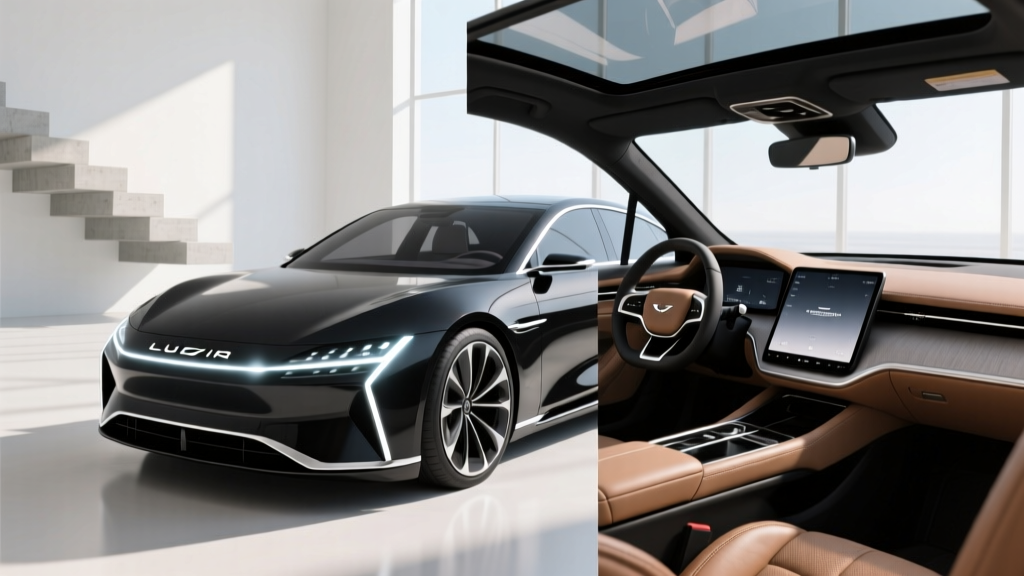
Lucid Motors — officially Lucid Group, Inc. — is an American electric vehicle manufacturer headquartered in Newark, California. Founded in 2007 as Atieva, a battery technology company focused on EV powertrains, the firm rebranded to Lucid Motors in 2016 when it pivoted to building its own luxury sedan. The company went public via a SPAC merger in July 2021 and delivered its first Lucid Air sedans later that year. As of 2026, Lucid produces the Air sedan lineup at its vertically integrated factory in Casa Grande, Arizona (branded AMP-1), with the midsize Gravity SUV joining production in late 2024 and ramping through 2025–2026.
Lucid's engineering DNA traces back to Formula E racing (the company supplied battery packs to all Gen2 Formula E cars from 2018–2022) and deep powertrain integration. CEO Marc Winterhoff and CTO Peter Rawlinson — formerly Tesla's VP of Vehicle Engineering and chief engineer of the Model S — have pushed a philosophy of miniaturized motors, high-voltage architectures, and obsessive efficiency. That engineering focus is exactly what separates Lucid from the crowd: the Air remains the most energy-efficient luxury EV sedan sold in the U.S., measured in miles per kWh.
But knowing who makes Lucid auto vehicles only matters if the cars deliver. Below, we break down the 2026 Lucid Air lineup with real-world data, not brochure fluff.
2026 Lucid Air Lineup: Range, Battery, and Efficiency
The 2026 Lucid Air is offered in four trims: Pure, Touring, Grand Touring, and Sapphire. Each uses a different battery and drivetrain configuration, and the range spread is dramatic — from 419 miles to 516 miles on the EPA cycle.
| Trim | Drivetrain | Battery (usable kWh) | Chemistry | EPA Range | MPGe (combined) | kWh/100 mi | 0–60 mph | HP | Base MSRP |
|---|---|---|---|---|---|---|---|---|---|
| Pure RWD | Rear-Wheel Drive | 88 kWh | NMC | 419 mi | 146 MPGe | 23 | 5.0 s | 430 | $69,900 |
| Touring AWD | Dual-Motor AWD | 88 kWh | NMC | 406 mi | 140 MPGe | 24 | 3.4 s | 620 | $87,400 |
| Grand Touring AWD | Dual-Motor AWD | 112 kWh | NMC | 516 mi | 131 MPGe | 26 | 3.0 s | 819 | $125,600 |
| Sapphire AWD | Tri-Motor AWD | 118 kWh | NMC | 427 mi | 116 MPGe | 29 | 1.89 s | 1,234 | $249,000 |
All Lucid Air trims use nickel-manganese-cobalt (NMC) lithium-ion cells. Lucid does not currently offer LFP (lithium iron phosphate) chemistry in the Air. NMC delivers higher energy density — critical for hitting 516 miles in the Grand Touring — but it requires more careful state-of-charge management for long-term longevity. Lucid recommends daily charging to 80% and reserving 100% fills for road trips.
The EPA figures above are impressive, but real-world results depend heavily on driving conditions:
- Highway (70–80 mph): Expect roughly 85–90% of EPA range. The Grand Touring achieves approximately 440–460 miles at sustained 75 mph in mild weather — among the best highway range of any production EV.
- Cold weather (below 32°F): All EVs lose range in the cold. The Air's available heat pump mitigates this somewhat, but expect 15–25% range reduction in sub-freezing conditions. A Grand Touring may deliver 380–420 miles in winter highway driving.
- City/commute: Regenerative braking and low-speed efficiency push real-world city range close to or slightly above EPA estimates, especially in the Pure RWD.
Bottom line: the Grand Touring is the only EV sedan that can realistically complete a 400-mile highway trip in mild weather without a charge stop. For most drivers, the Touring's ~350-mile real-world highway range is more than sufficient.
Charging Speed: DC Fast, Level 2, and the 900V Architecture
Lucid uses a 900-volt electrical architecture — one of the highest in production — which enables faster charging at lower current, reducing heat and cable weight. Here is what that means in practice:
| Charge Type | Pure / Touring | Grand Touring / Sapphire | Connector |
|---|---|---|---|
| DC Fast Charge (peak kW) | 220 kW | 300 kW | NACS (native, 2025+ models) / CCS1 adapter |
| 10–80% DC Fast Time | ~25 min | ~20 min | — |
| DC Miles Added in 15 min | ~200 mi | ~300 mi (peak curve) | — |
| Level 2 Home (kW) | 19.2 kW (80A) | 19.2 kW (80A) | NACS / J1772 adapter |
| Level 2 Miles per Hour | ~68 mi/hr | ~62 mi/hr (larger battery) | — |
| Level 1 (120V, 12A) | ~3 mi/hr | ~3 mi/hr | Standard outlet |
Charging curve reality: The 300 kW peak on Grand Touring models is sustained only between roughly 10–40% state of charge. Above 60%, the curve tapers significantly — typical of all NMC batteries to protect cell longevity. A 10–80% charge in ~20 minutes assumes a 350 kW-capable DC fast charger (such as Electrify America's latest stalls) and battery preconditioning, which the Air initiates automatically when a charger is set as your navigation destination.
Starting with 2025 production, Lucid switched to the NACS (North American Charging Standard) connector natively, granting direct access to Tesla's Supercharger network without an adapter. This was a significant practical upgrade over earlier CCS1-equipped models. If you are buying a 2024 or earlier used Air, confirm which port it has and whether Lucid has issued a retrofit adapter.
For home charging, the Air's onboard charger accepts up to 19.2 kW on a hardwired 80-amp Level 2 circuit — meaning a full overnight replenishment even for the 118 kWh Sapphire. Most owners install a 48-amp or 60-amp wall connector (11.5–14.4 kW), which still fully recharges any Air trim overnight. Consult a licensed electrician to determine your panel's capacity before committing to an 80-amp circuit; a panel upgrade may be required in older homes.
Performance, Drivetrain, and the Sapphire Halo
Even the base Air Pure hits 60 mph in 5.0 seconds — brisk for a 4,600-pound luxury sedan. But the real story is the Sapphire, Lucid's tri-motor flagship that produces 1,234 horsepower and reaches 60 mph in 1.89 seconds, making it one of the quickest-accelerating production cars ever built. The Sapphire uses two rear motors and one front motor, with torque vectoring across the rear axle for cornering agility that belies the car's 5,200-pound curb weight.
The dual-motor Touring and Grand Touring trims offer a more practical balance: all-wheel drive, 3.0–3.4 second 0–60 times, and strong passing power for highway merging. All Air models feature a single-speed direct-drive transmission (no multi-gear box), standard for EVs, and one-pedal driving via aggressive regenerative braking.
Ride quality is a highlight. The Air uses an adaptive air suspension (standard on Touring and above) that soaks up highway imperfections while firming up in Sport mode. Steering is precise but deliberately light — this is a grand tourer, not a track weapon (unless you opt for the Sapphire, which includes carbon-ceramic brakes and a track-oriented suspension tune).
Interior Space, Cargo, and Technology
The Air is a full-size luxury sedan, and its packaging reflects Lucid's "space concept" philosophy — pushing the wheels to the corners and minimizing powertrain intrusion to maximize cabin volume.
- Front headroom: 39.3 inches
- Rear legroom: 37.6 inches (class-leading; more than the Mercedes EQS and BMW i7)
- Trunk (rear): 22.1 cubic feet
- Frunk (front trunk): 10.0 cubic feet
- Total cargo: 32.1 cubic feet — enough for four roll-aboard suitcases plus soft bags
The interior features Lucid's "surreal display" — a curved 34-inch glass cockpit screen that floats above the dashboard, supplemented by a lower touchscreen for climate and media controls. The UI is responsive and visually clean, though some reviewers (and owners) note the absence of physical knobs for volume and climate, which can be distracting while driving. Wireless Apple CarPlay and Android Auto are standard.
Driver assistance: The Air ships with Lucid's DreamDrive ADAS suite, which includes adaptive cruise control, lane centering, automatic emergency braking, and blind-spot monitoring. DreamDrive uses a combination of cameras, radar, and lidar (on Grand Touring and Sapphire) — a sensor-rich setup. However, this is an SAE Level 2 system: the driver must remain attentive, hands on or near the wheel, at all times. Lucid does not currently offer a hands-free highway driving feature comparable to GM's Super Cruise or Ford's BlueCruise, though an over-the-air "DreamDrive Pro" update is anticipated for late 2026. Do not mistake this for self-driving capability.
Notable drawbacks:
- No physical volume knob or climate dials — all secondary controls are touchscreen.
- Rear-seat entertainment screens are not available (unlike competitors from BMW and Mercedes).
- Service center network is still limited outside major metro areas — owners in rural regions may face long tow distances for warranty work.
- The Surreal Display, while stunning, has a learning curve and can reflect sunlight in certain angles.
Pricing, Tax Credits, and Total Cost
The 2026 Lucid Air starts at $69,900 for the Pure RWD and climbs to $249,000 for the Sapphire. Destination charges add approximately $1,500. Options are limited by design — Lucid uses a simplified trim-and-package approach rather than an à la carte configurator.
| Trim | Base MSRP | As-Tested (typical) | §30D Credit Eligible? | Effective Price After Credit |
|---|---|---|---|---|
| Pure RWD | $69,900 | $71,400 | Potentially (see below) | ~$62,400 (if $7,500 applies) |
| Touring AWD | $87,400 | $91,000 | No — exceeds sedan MSRP cap | $87,400+ |
| Grand Touring AWD | $125,600 | $130,000 | No — exceeds sedan MSRP cap | $125,600+ |
| Sapphire AWD | $249,000 | $250,500 | No — exceeds sedan MSRP cap | $249,000+ |
Critical tax credit detail: Under IRS §30D clean vehicle rules, the federal tax credit for new EVs is up to $7,500, but sedans must have an MSRP at or below $55,000 to qualify. The Air Pure, at $69,900, exceeds this cap. As of early 2026, the Pure RWD does not qualify for the new-vehicle §30D credit based on MSRP alone. (SUVs, vans, and trucks have a higher $80,000 cap, which is why the Lucid Gravity SUV may fare differently.)
Additionally, §30D imposes buyer income limits (modified AGI: $150K single / $300K joint for new vehicles), critical-mineral sourcing thresholds, and battery-component manufacturing requirements that shift annually. The credit is now available as a point-of-sale transfer — meaning you can apply it as a down-payment reduction at the dealer, not just a tax-season refund — but only if the vehicle and buyer both qualify. Always verify current eligibility at fueleconomy.gov and consult a tax professional before relying on the credit in your purchase math.
For buyers priced out of the credit, the Air's value proposition rests on its efficiency (lowest kWh/100 mi in class), range, and interior space — not incentive arbitrage.
Ownership Costs: Warranty, Insurance, and Maintenance
Lucid provides a competitive warranty package:
- Basic vehicle: 4 years / 50,000 miles
- Battery and drive unit: 8 years / 100,000 miles (retains at least 70% capacity over the term)
- Roadside assistance: 4 years / 50,000 miles
The 8-year/100,000-mile battery warranty is standard for the luxury EV segment (matching BMW and Mercedes, trailing Hyundai's 10-year/100,000-mile coverage). Lucid's 70% capacity-retention threshold is typical; some competitors warrant to 70% while others use 65–68%. Real-world NMC degradation data from early 2022–2023 Air owners suggests approximately 3–5% capacity loss in the first 30,000 miles, after which the curve flattens — consistent with industry norms.
Insurance costs are a genuine consideration. The Air Pure averages $2,800–$3,400/year for a 40-year-old driver with a clean record, while the Grand Touring and Sapphire can exceed $4,500–$6,000/year. These premiums reflect the Air's high repair costs (aluminum and mixed-material body, lidar sensors, specialized glass) and limited collision-repair network. Always get an insurance quote before ordering.
Maintenance is minimal: cabin air filter replacement, brake fluid checks, tire rotation, and wiper fluid. There is no engine oil, transmission fluid, spark plugs, or emissions system. Expect annual maintenance costs of $200–$400, a fraction of a comparable BMW 5 Series or Mercedes E-Class.
Lucid Air vs. Key Competitors: Is It Worth Buying?
The Air competes against the Tesla Model S, Mercedes-Benz EQS, BMW i7, and Porsche Taycan. Here is how it stacks up on the metrics that matter:
- Class-leading EPA range (516 mi Grand Touring)
- Best efficiency (kWh/100 mi) in the luxury sedan segment
- Massive rear-seat legroom and 32 cu ft total cargo
- 900V architecture enables 300 kW DC fast charging
- NACS native (2025+) for Supercharger access
- Quiet, composed ride with adaptive air suspension
- Sapphire is one of the fastest production cars on Earth
- No federal §30D credit (MSRP exceeds $55K sedan cap)
- Touchscreen-only secondary controls — no physical knobs
- Limited service center network outside major cities
- Insurance premiums are high relative to competitors
- DreamDrive ADAS lags Tesla Autopilot and GM Super Cruise in hands-free capability
- Brand is young — long-term resale value is less proven than Mercedes/BMW
- Rear-seat entertainment not available
Who should buy the Lucid Air?
- Road-trip commuters who regularly drive 200+ miles and want to minimize charge stops — the Grand Touring's 516-mile range is unmatched.
- Efficiency-focused buyers who care about kWh/100 mi and want the most miles per dollar of electricity.
- Families needing rear-seat space — the Air's 37.6-inch rear legroom beats every German competitor.
- Performance enthusiasts who want Porsche Taycan Turbo S acceleration with twice the range (Sapphire trim).
Who should look elsewhere?
- Budget-conscious buyers — the Pure at ~$71K is still a premium price, and no tax credit softens the blow.
- Hands-free highway driving seekers — GM's Super Cruise on the Cadillac iQ or Ford's BlueCruise on the Mustang Mach-E offer verified hands-free operation that DreamDrive does not yet match.
- Rural owners far from a Lucid service center — consider the service logistics carefully.
Frequently Asked Questions
Who makes Lucid auto vehicles and where are they built?
Lucid Group, Inc., an American company headquartered in Newark, California, manufactures the Lucid Air at its AMP-1 factory in Casa Grande, Arizona. Lucid was founded in 2007 as Atieva and rebranded in 2016. The company also supplies battery technology to motorsports and is developing the Gravity SUV and future midsize platforms.
What is the real-world range of the 2026 Lucid Air?
The EPA rates the Grand Touring at 516 miles, the Pure at 419, the Touring at 406, and the Sapphire at 427. In real-world highway driving at 75 mph in mild weather, expect approximately 85–90% of EPA (roughly 440–460 miles for the Grand Touring). In cold weather below freezing, expect a 15–25% reduction from EPA figures.
How fast does the Lucid Air charge at home and on the road?
On a DC fast charger, the Grand Touring peaks at 300 kW and charges from 10–80% in approximately 20 minutes (with battery preconditioning on a 350 kW-capable stall). The Pure and Touring peak at 220 kW, reaching 10–80% in about 25 minutes. At home on a Level 2 hardwired 80-amp (19.2 kW) circuit, the Air adds roughly 62–68 miles of range per hour, fully replenishing overnight.
Does the Lucid Air qualify for the federal EV tax credit?
Under current IRS §30D rules, new sedans must have an MSRP at or below $55,000 to qualify for the up-to-$7,500 credit. The Air Pure starts at $69,900, so no Air trim currently qualifies for the new-vehicle federal credit based on MSRP. Buyer income caps, battery-sourcing requirements, and critical-mineral thresholds add further restrictions. Always check fueleconomy.gov for the latest eligibility data and consult a tax professional.
Is the Lucid Air worth buying over a Tesla Model S or Mercedes EQS?
If range and efficiency are your top priorities, the Air Grand Touring is objectively superior — 516 EPA miles vs. the Model S's ~402 and the EQS's ~390. The Air also offers more rear-seat legroom than either competitor. However, the Model S benefits from Tesla's Supercharger network maturity (though Lucid now has native NACS access), broader service infrastructure, and stronger resale data. The EQS offers a more traditional luxury interior with physical controls. Test-drive all three before deciding.
What battery chemistry does the Lucid Air use?
All 2026 Lucid Air trims use NMC (nickel-manganese-cobalt) lithium-ion cells. NMC offers higher energy density than LFP, which is necessary to achieve the Air's range targets, but it requires more careful charging habits for long-term health (daily charge to 80%, avoid extended periods at 100%). The battery is warranted for 8 years / 100,000 miles with a minimum 70% capacity retention.
Does the Lucid Air have self-driving capability?
No. The Air's DreamDrive system is classified as SAE Level 2 driver assistance — it provides adaptive cruise control and lane centering, but the driver must remain fully attentive and in control at all times. It is not a self-driving system. Lucid has signaled future over-the-air upgrades, but as of 2026, no hands-free highway feature is available.
Sources: fueleconomy.gov (EPA range and efficiency data), IRS §30D clean vehicle credit rules, Lucid Motors official specifications. Prices and credit rules reflect 2026 model-year data and are subject to change.