Quick Verdict: The Mach-E in 2025
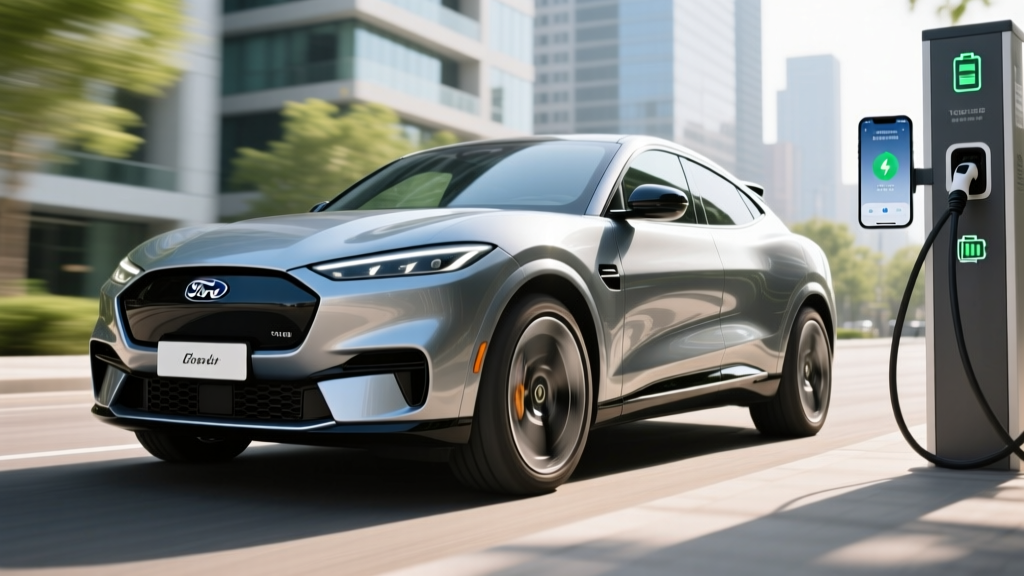
Ford's Mustang Mach-E enters the 2025 model year as one of the most well-rounded electric SUVs on the market. With EPA range spanning 250 to 320 miles depending on trim and battery, a newly standardized NACS charge port granting access to Tesla Superchargers, and a cabin that blends practicality with genuine driving engagement, the Mach-E makes a compelling case for buyers cross-shopping the Tesla Model Y, Hyundai Ioniq 5, and Kia EV6.
Its biggest strengths are highway composure, ride quality, and Ford's decision to adopt the North American Charging Standard (NACS) connector natively — eliminating the adapter hassle that plagued earlier CCS-equipped EVs. Its weaknesses remain a relatively flat DC fast-charging curve compared to Hyundai-Kia's 800V architecture and a base price that creeps above the federal tax credit's SUV MSRP cap on higher trims.
Range, Efficiency, and the Real-World Gap
- Select (Standard Range, RWD): EPA 250 mi — expect ~210–230 mi highway, ~180 mi in sub-30°F cold
- Premium (Extended Range, RWD): EPA 320 mi — expect ~270–290 mi highway, ~230–250 mi in cold
- GT (Extended Range, AWD): EPA 280 mi — expect ~235–255 mi highway, ~200 mi in cold
- Rally (Extended Range, AWD): EPA 265 mi — expect ~220–240 mi highway, ~190 mi in cold
The Mach-E's efficiency varies substantially by drivetrain. The RWD Extended Range model achieves approximately 101 MPGe combined (33 kWh/100 mi) per fueleconomy.gov, while the dual-motor GT drops to roughly 84 MPGe combined (40 kWh/100 mi). For context, the Hyundai Ioniq 5 Long Range RWD returns 114 MPGe combined — a meaningful efficiency edge that translates to lower charging costs over time.
Cold-weather impact is real and should factor into your purchase decision if you live north of the 37th parallel. The Mach-E uses a liquid-cooled and heated battery thermal management system with a heat pump (standard on Extended Range trims), which mitigates but does not eliminate the 20–30% range loss typical of lithium-ion packs in freezing temperatures. Preconditioning the battery while plugged in — a feature accessible through the FordPass app — recovers roughly half of that loss.
Battery, Charging Speeds, and the NACS Advantage
The 2025 Mach-E offers two lithium-ion NMC (nickel manganese cobalt) battery packs:
- Standard Range: ~70 kWh usable capacity
- Extended Range: ~91 kWh usable capacity
Ford does not offer an LFP (lithium iron phosphate) option in the Mach-E lineup, unlike the Tesla Model Y Standard Range. NMC chemistry provides higher energy density — critical for fitting 91 kWh into the Mach-E's footprint — but carries a slightly faster long-term degradation curve than LFP. In practice, Mach-E owners report approximately 5–8% capacity loss over the first 60,000 miles based on fleet data, which is within normal NMC expectations.
| Charging Level | Connector | Max Power | Rate / Time |
|---|---|---|---|
| Level 1 (120V) | NACS (J3400) | 1.2 kW | ~3 mi/hr |
| Level 2 (240V, 48A) | NACS (J3400) | 11.5 kW | ~30 mi/hr (full charge ~9 hr ER) |
| DC Fast Charge | NACS (J3400) | 150 kW peak | 10–80% in ~40 min (ER) |
The Mach-E's peak DC fast-charge rate of 150 kW is where the vehicle shows its most notable limitation relative to competitors. The Hyundai Ioniq 5 and Kia EV6, built on 800V architecture, sustain up to 235–240 kW and complete a 10–80% charge in approximately 18 minutes — nearly half the Mach-E's time. The Mach-E's charge curve tapers gradually rather than holding peak power, averaging closer to 110–120 kW across the full 10–80% session.
However, the 2025 Mach-E's native NACS port is a significant practical advantage. Owners gain direct access to Tesla's Supercharger network — over 25,000 stalls in North America — without requiring the CCS-to-NACS adapter that earlier model-year owners must carry. This dramatically improves road-trip charging reliability and reduces friction at the plug.
For home charging, the 11.5 kW onboard charger is competitive. A full Level 2 session from 10% to 100% on the Extended Range pack takes roughly 9 hours, meaning overnight charging easily replenishes even a near-depleted battery. Installation of a 240V/60A circuit with a hardwired NACS wall connector typically runs $800–$2,000 depending on panel proximity and local permitting — a cost most EV buyers should budget for upfront.
Performance, Drivetrain, and Ride Quality
| Trim | Drivetrain | HP | 0–60 mph | EPA Range |
|---|---|---|---|---|
| Select SR | RWD (single motor) | 266 hp | 6.1 sec | 250 mi |
| Premium ER RWD | RWD (single motor) | 290 hp | 5.6 sec | 320 mi |
| Premium ER AWD | AWD (dual motor) | 346 hp | 4.8 sec | 290 mi |
| GT ER AWD | AWD (dual motor) | 480 hp | 3.5 sec | 280 mi |
| Rally ER AWD | AWD (dual motor) | 480 hp | 3.6 sec | 265 mi |
The GT trim's 3.5-second 0–60 mph time puts it in genuine sports-car territory, and the instant torque delivery makes it feel even quicker in real-world merging and passing situations. The Rally trim adds raised suspension, underbody protection, and rally-tuned dampers for light off-road and gravel-road use — a niche but appealing differentiator in the EV SUV segment.
Ride quality across the lineup is a Mach-E strength. The suspension tuning strikes a balance between compliance and body control that outclasses the stiffer-riding Model Y. Road noise is well-managed at highway speeds, and the steering — while electrically assisted and somewhat numb — is precise enough for confident lane changes. The Mach-E's low center of gravity (battery pack mounted under the floor) keeps body roll minimal through corners.
Regenerative braking offers two modes: a mild coasting mode and a stronger one-pedal driving mode that can bring the vehicle to a complete stop without touching the brake pedal. The transition is smooth, and the brake-blending feels natural — a common complaint in lesser EV implementations.
Interior, Cargo, and Technology
The Mach-E's cabin is dominated by a vertically oriented 15.5-inch touchscreen running Ford's SYNC 4A infotainment system. The interface is responsive, supports wireless Apple CarPlay and Android Auto, and includes over-the-air (OTA) update capability for continuous feature improvements. A 10.2-inch digital instrument cluster sits behind the steering wheel, providing speed, range, and navigation information without requiring the driver to glance at the center stack.
Passenger space is generous for the compact SUV segment:
- Front legroom: 43.3 inches
- Rear legroom: 38.9 inches
- Cargo (behind rear seats): 29.7 cu ft
- Cargo (rear seats folded): 59.7 cu ft
- Front trunk (frunk): 4.7 cu ft (drainable, useful for wet gear or groceries)
The frunk is smaller than the Model Y's 4.1 cu ft front trunk (combined with its larger rear), but the Mach-E's drainable design is a practical touch for outdoor use. Rear-seat comfort accommodates two adults on longer trips without complaint, though the center position is best reserved for children due to the floor hump created by the battery tunnel.
Driver-Assistance Technology
Ford's BlueCruise hands-free driving system is available on the Mach-E (standard on GT, optional on Premium). BlueCruise operates on over 130,000 miles of pre-mapped divided highways in the U.S. and Canada, allowing hands-off operation while the driver's eyes remain monitored by an infrared camera.
BlueCruise is a Level 2 driver-assistance system. The driver must remain alert, keep eyes on the road, and be prepared to take over at any time. This is not autonomous or "self-driving" capability. Only Level 4 robotaxi services (Waymo, Zoox) operate without a human driver.
In practice, BlueCruise performs well on interstate highways — lane centering is stable, adaptive cruise responds smoothly to traffic, and lane-change assist is competent. However, it disengages on unmapped roads, in construction zones, and during heavy rain or snow. The system requires a subscription after the initial trial period (typically 90 days free, then approximately $75/month or $800/year).
Pricing, Trims, and Federal Tax Credit Eligibility
| Trim | Base MSRP | §30D Credit Eligible? | Est. After-Credit Price |
|---|---|---|---|
| Select SR RWD | $42,995 | Yes (below $80K cap) | ~$35,495* |
| Premium ER RWD | $48,995 | Yes (below $80K cap) | ~$41,495* |
| Premium ER AWD | $52,995 | Yes (below $80K cap) | ~$45,495* |
| GT ER AWD | $59,995 | Yes (below $80K cap) | ~$52,495* |
| Rally ER AWD | $61,995 | Yes (below $80K cap) | ~$54,495* |
*Credit amount varies ($3,750 or $7,500) based on battery-sourcing and critical-minerals requirements. Destination charges ($1,895) not included. Prices reflect 2025 MSRP; verify current pricing with your dealer.
The Mach-E qualifies as an SUV under IRS classification, which means it benefits from the higher $80,000 MSRP cap (versus $55,000 for sedans). Every current Mach-E trim falls below that threshold, making the full lineup potentially eligible for the federal §30D clean vehicle credit.
Tax Credit Eligibility Checklist
- MSRP cap: Must be ≤ $80,000 (SUV classification — all Mach-E trims qualify)
- Buyer income cap: AGI ≤ $150,000 (single), $225,000 (head of household), $300,000 (joint)
- Battery sourcing: Must meet critical-minerals and battery-component requirements (phase-in thresholds increase annually; verify current-year compliance on IRS.gov)
- Point-of-sale transfer: Eligible buyers may transfer the credit to the dealer at purchase for an immediate price reduction rather than claiming it on their tax return
- Assembly: Must be assembled in North America (Mach-E is built in Cuautitlán, Mexico — this satisfies the requirement)
Critical caveat: The credit amount — either $3,750 or the full $7,500 — depends on whether the vehicle meets critical-minerals sourcing thresholds, battery-component sourcing thresholds, or both. These thresholds tighten annually. Consult a tax professional and verify current-year eligibility on IRS.gov before finalizing your purchase.
Warranty and Long-Term Ownership
Ford provides competitive warranty coverage for the Mach-E:
- Battery: 8 years / 100,000 miles (whichever comes first), covering capacity loss below 70% of original
- Electric powertrain components: 8 years / 100,000 miles
- Bumper-to-bumper: 3 years / 36,000 miles
- Roadside assistance: 5 years / 60,000 miles
The 70% capacity-retention threshold is industry-standard and matches Tesla, Hyundai, and Kia. If the battery drops below 70% State of Health (SoH) within the warranty period, Ford will repair or replace it at no cost. In practice, very few Mach-E owners have reported warranty claims for battery degradation — NMC packs in liquid-cooled systems tend to degrade slowly and predictably when not routinely charged to 100%.
Long-term ownership costs are favorable compared to gas-powered equivalents. Electricity costs average $0.13–$0.17/kWh nationally (home charging), translating to roughly $0.04–$0.05 per mile in the RWD Extended Range model. A comparable gas SUV at 25 MPG and $3.50/gallon runs approximately $0.14 per mile — a savings of $0.09–$0.10 per mile, or roughly $1,350–$1,500 annually at 15,000 miles/year.
Insurance premiums for the Mach-E tend to run 15–25% higher than equivalent gas SUVs, a common EV pattern driven by higher repair costs and parts pricing. Get a quote from your insurer before purchasing to avoid surprises.
How the Mach-E Stacks Up Against Competitors
- You prioritize ride comfort and highway composure over maximum charging speed
- You want native NACS access to Tesla Superchargers without an adapter
- You value a traditional SUV driving feel with strong acceleration (GT trim)
- You need BlueCruise hands-free highway driving
- DC fast-charging speed is your top priority (18 min 10–80% vs. 40 min)
- You want maximum efficiency (114 MPGe vs. 101 MPGe)
- Vehicle-to-load (V2L) capability matters for camping or backup power
- You want the lowest starting price in the segment
- You value the Supercharger network and Tesla's software ecosystem
- Maximum cargo volume is a priority (76 cu ft with seats folded)
- Native NACS port — direct Supercharger access
- Excellent ride quality and highway composure
- Up to 320 mi EPA range (ER RWD)
- Strong GT performance (3.5s 0–60)
- BlueCruise hands-free driving on 130K+ miles of highway
- Drainable frunk for practical use
- All trims below $80K SUV MSRP cap for tax credit
- 150 kW peak DC charging — slower than 800V competitors
- 40-minute 10–80% charge time on DC fast charger
- BlueCruise requires ongoing subscription
- Rear center seat compromised by battery tunnel hump
- No LFP battery option for maximum longevity
- Insurance premiums 15–25% higher than gas equivalents
Frequently Asked Questions
What is the real-world range of the 2025 Mach-E?
The EPA rates the Extended Range RWD at 320 miles, but real-world highway driving at 70–75 mph typically yields 270–290 miles. In freezing temperatures (below 30°F), expect 230–250 miles with preconditioning, or as low as 200 miles without it. City driving with regenerative braking can match or slightly exceed the EPA estimate.
How fast does the Mach-E charge at home and on DC fast chargers?
At home on a Level 2 (240V/48A) charger, the Mach-E adds approximately 30 miles of range per hour, fully charging the Extended Range pack in about 9 hours. On a DC fast charger, it peaks at 150 kW and completes a 10–80% charge in approximately 40 minutes — slower than the 18-minute times of 800V competitors like the Ioniq 5.
How much does the 2025 Mach-E cost after the federal tax credit?
With the full $7,500 §30D credit, the Select SR RWD starts around $35,495 (before destination), and the GT drops to approximately $52,495. Actual credit amount ($3,750 or $7,500) depends on battery-sourcing compliance and your income. Point-of-sale transfer is available, reducing the purchase price at the dealer rather than requiring a tax-return claim.
Does the 2025 Mach-E qualify for the $7,500 federal EV tax credit?
All Mach-E trims fall below the $80,000 SUV MSRP cap and are assembled in North America (Mexico), satisfying two key requirements. However, the full $7,500 credit depends on critical-minerals and battery-component sourcing thresholds that tighten annually. Check the current IRS eligible vehicle list before purchasing. Buyer income must also fall below $150K (single), $225K (HOH), or $300K (joint filing).
Is the 2025 Mach-E worth buying over the Tesla Model Y or Ioniq 5?
The Mach-E wins on ride quality, highway comfort, and native NACS Supercharger access. The Ioniq 5 wins on charging speed and efficiency. The Model Y wins on price, cargo space, and software. If you value driving refinement and don't frequently DC-fast-charge on road trips, the Mach-E is an excellent choice. If you road-trip often and want the shortest charging stops, the Ioniq 5's 800V architecture is hard to beat.
What is the Mach-E's towing capacity?
The 2025 Mach-E is rated to tow up to 2,200 pounds with the available towing package (Extended Range trims). This is sufficient for a small utility trailer or a pair of jet skis but falls short of the Ford F-150 Lightning or Rivian R1S for serious towing needs. Note that towing reduces range by approximately 30–40%.