Introduction: The MEB Platform in the Real World
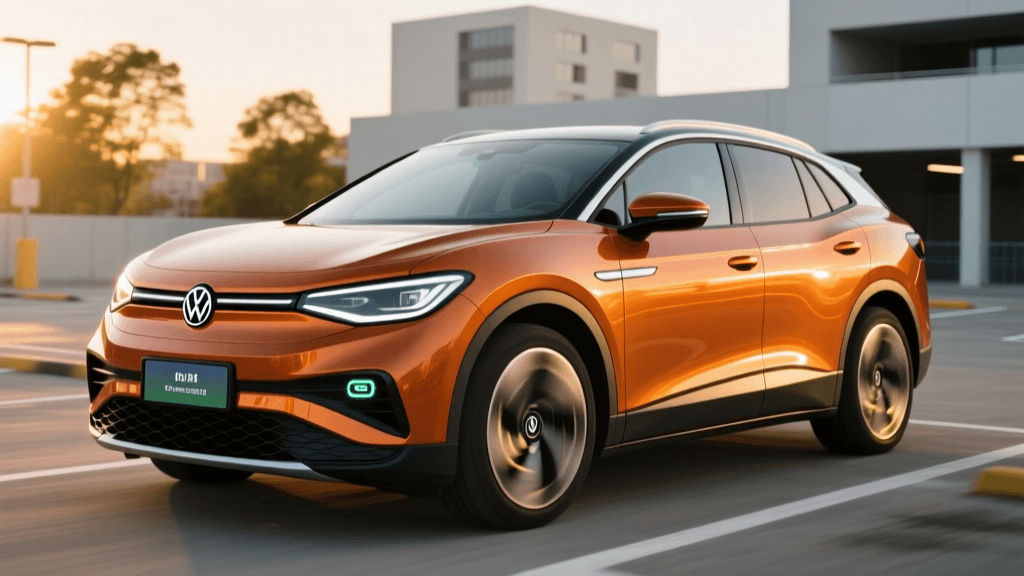
When Volkswagen launched the ID.4, it was heralded as the cornerstone of the brand's electric future, built upon the highly modular MEB (Modularer E-Antriebs-Baukasten) platform. Now, after twelve months of daily driving, highway road trips, and seasonal weather changes, the mechanical brilliance of the ID.4's chassis and suspension is undeniable. However, the true ownership experience of a modern electric vehicle is defined just as much by its software stack and electronic architecture as it is by its physical components. This one-year technology deep dive explores the real-world digital ownership experience of the Volkswagen ID.4, analyzing its infotainment evolution, over-the-air (OTA) updates, battery management systems, and advanced driver assistance technologies.
Infotainment and the Capacitive Conundrum
At the center of the ID.4's dashboard sits a 12-inch touchscreen running Volkswagen's Discover Pro infotainment system. From a hardware perspective, the display is crisp, vibrant, and responsive to basic inputs. However, the one-year ownership experience reveals the lingering frustrations of Volkswagen's user interface (UI) design choices. The most notorious of these is the implementation of capacitive touch sliders for volume and climate control. Unlike physical knobs or even backlit touch buttons, these sliders lack physical feedback and, in earlier software builds, lacked backlighting, making them nearly impossible to use at night without taking your eyes off the road.
Furthermore, the underlying processing hardware in the initial MEB vehicles occasionally struggles with the graphical demands of the UI. While navigating maps or switching between Apple CarPlay and native apps, users may experience micro-stutters or a delayed response to swipe gestures. Volkswagen has acknowledged these hardware limitations, and while software optimizations have improved the fluidity over the past year, it still lags behind the blistering responsiveness found in Tesla's Ryzen-powered infotainment systems or the newer Qualcomm Snapdragon-based setups in Hyundai's E-GMP vehicles.
Software Evolution: From Version 3.0 to 4.0
The most critical aspect of the ID.4's first year has been its software evolution. Early adopters took delivery of vehicles running Software ID.2.x or 3.0, which were plagued by slow boot times, erratic voice recognition, and a lack of native navigation features for optimal EV routing. The turning point in the ownership experience came with the rollout of Software 3.2. This major over-the-air update introduced 'Plug & Charge' functionality, allowing the vehicle to automatically authenticate and initiate billing at compatible Electrify America stations simply by plugging in the cable—a massive leap forward for road-trip convenience.
More recently, the transition to Software 4.0 has addressed several core UI complaints. Volkswagen redesigned the home screen to feature larger, more customizable tiles and, crucially, moved the climate control functions to a persistent, always-visible bar at the bottom of the screen. This eliminated the need to dig through sub-menus to adjust the cabin temperature or activate the heated seats while driving. The voice assistant, branded as 'Hello ID.4', has also seen significant backend improvements in natural language processing, allowing commands like 'I am cold' to reliably trigger the climate control system without requiring rigid, pre-programmed phrasing.
Battery Management and DC Fast Charging Tech
Beneath the floorboards, the ID.4 Pro S utilizes an 82 kWh gross (77 kWh net usable) lithium-ion battery pack composed of NMC (Nickel Manganese Cobalt) pouch cells. The MEB platform operates on a 400-volt architecture, which dictates its charging capabilities. According to independent testing and reviews, the ID.4's thermal management system is highly effective at preserving battery health, but the DC fast charging curve requires strategic management by the owner.
The rear-wheel-drive Pro S models peak at around 135 kW, while the AWD Pro S models can push up to 170 kW under optimal conditions. However, the 'peak' is a narrow window. The vehicle holds maximum charging speed only up to roughly 20-25% State of Charge (SOC). Once the battery crosses the 30% threshold, the battery management system (BMS) aggressively tapers the charging speed to protect the cell chemistry, dropping to roughly 90 kW, and eventually stepping down to 50 kW as it approaches 80%. For the daily owner, this means the advertised '10-80% in 30 minutes' is only achievable if the battery is properly pre-conditioned using the built-in navigation system to route to the charger. Arriving at a fast charger with a cold battery in winter will easily double your charging time.
Regenerative Braking: A Point of Contention
From a software and driving dynamics perspective, the ID.4's regenerative braking logic remains a polarizing topic among EV enthusiasts. Unlike the Nissan Leaf or Chevrolet Bolt, the ID.4 does not offer true one-pedal driving that brings the vehicle to a complete, held stop. Instead, Volkswagen's software engineers programmed the regen to taper off below 5 mph, handing over to the physical friction brakes to bring the car to a halt. This is done to ensure a smooth, traditional stop without the abrupt 'jerk' often associated with heavy regen at low speeds. While the 'B' (Brake) mode increases the regenerative drag significantly on highways and winding roads, city drivers who prefer the one-pedal EV experience often find themselves transitioning back and forth between the accelerator and the brake pedal more than they would in competing EVs.
IQ.DRIVE and Travel Assist: ADAS in Daily Commuting
Volkswagen's IQ.DRIVE suite, specifically the Travel Assist feature, combines Adaptive Cruise Control (ACC) with active Lane Keeping Assist. Over a year of mixed highway and suburban driving, the system proves to be highly capable but distinctly conservative. The lane centering algorithm is smooth and rarely 'ping-pongs' between lane markers, a common issue in older ADAS systems. However, the system's object recognition software can be overly cautious when vehicles cut into your lane, often applying the brakes earlier and more aggressively than a human driver would. Furthermore, the capacitive touch steering wheel, which requires the driver to apply slight pressure or a touch to prove they are engaged, can be finicky, occasionally triggering 'Hands Off Wheel' warnings even when the driver's hands are resting on the rim.
One-Year Tech & Performance Data Log
| Tech Category | Specification / Observation | One-Year Owner Verdict |
|---|---|---|
| Infotainment Display | 12-inch Touchscreen (Discover Pro) | Excellent clarity; UI lag improved but still trails class-leaders. |
| Software Version | Upgraded to ID.Software 4.0 | Massive improvement; persistent climate bar is a game-changer. |
| DC Fast Charging | 135 kW Peak (400V Architecture) | Fast up to 25% SOC; heavy tapering requires trip planning. |
| Plug & Charge | Electrify America Integration | Flawless execution; eliminates app fatigue on road trips. |
| Regenerative Braking | B-Mode / Coast Mode (No One-Pedal) | Smooth for passengers; frustrating for one-pedal EV converts. |
| ADAS (Travel Assist) | Level 2 Lane Centering + ACC | Reliable and smooth; capacitive steering wheel is annoying. |
Final Verdict: Is the Tech Catching Up to the Chassis?
After a full year of ownership, the Volkswagen ID.4 presents a fascinating dichotomy. Mechanically, it is a triumph: the ride quality is supple, the cabin is remarkably quiet, and the MEB platform's turning radius makes it incredibly maneuverable in urban environments. The official specifications only tell half the story; the real-world comfort is where the ID.4 truly shines. However, the technology stack requires patience. The early software growing pains have been largely mitigated by aggressive OTA updates, specifically the leap to Software 4.0 and the addition of Plug & Charge. While the infotainment hardware and capacitive controls remain a weak point compared to industry benchmarks, the ID.4's underlying battery management, charging ecosystem integration, and ADAS capabilities have matured into a highly competent, if slightly conservative, daily companion. For buyers who prioritize ride comfort and traditional automotive ergonomics over bleeding-edge digital interfaces, the ID.4's tech stack, warts and all, is more than capable of supporting a seamless EV lifestyle.