The VW ID.Buzz: Nostalgia Meets Modern Family Hauling
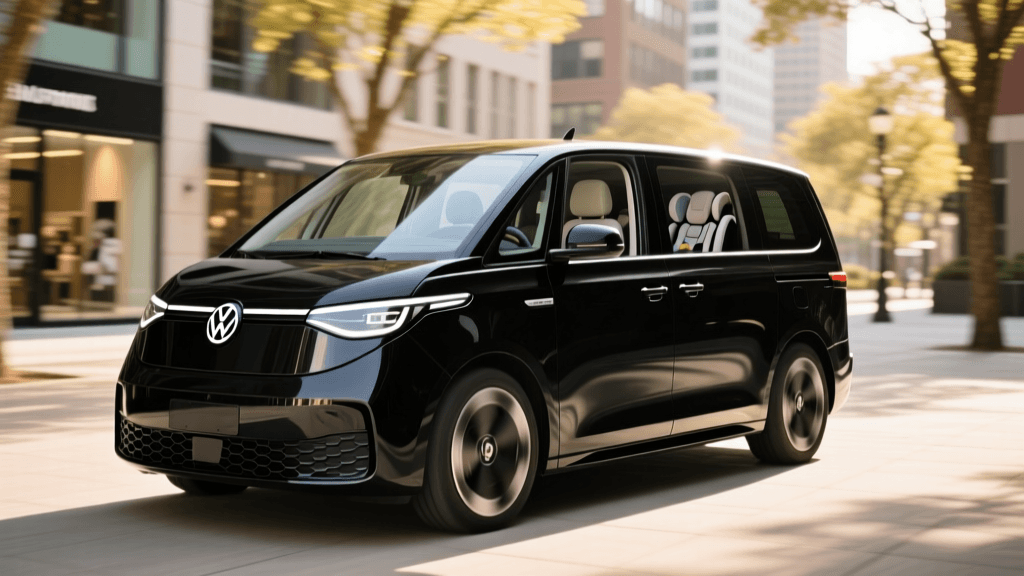
When Volkswagen announced the return of the Microbus as the all-electric ID.Buzz, the internet erupted with nostalgia. But beyond the retro two-tone paint and the smile-inducing front fascia lies a serious piece of family transportation built on VW's modular MEB platform. Priced starting around $59,995 for the Pro S trim and climbing past $70,000 for the Long Wheelbase (LWB) 1st Edition, it commands a significant premium over internal combustion minivans. But does the math and the daily usability actually work for modern families? As a senior reviewer at AutoEdgeView, I have spent weeks testing the ID.Buzz with car seats, strollers, and road-trip luggage. Along the way, I have encountered a barrage of misinformation from both EV skeptics and overly zealous fans. Let us separate fact from fiction by busting five pervasive myths about the VW ID.Buzz as a daily family vehicle.
Myth 1: The 238-Mile Range is a Dealbreaker for Family Road Trips
The Reality: Route Planning and Thermal Management Beat Raw Range
The EPA rates the rear-wheel-drive ID.Buzz at 238 miles of range, while the all-wheel-drive version drops slightly to 231 miles. Critics immediately point to the Toyota Sienna's 520-mile range as the ultimate victory. However, this ignores the reality of modern family travel and EV infrastructure. According to data from the U.S. Department of Energy's Alternative Fuels Data Center, the vast majority of daily family driving falls well under 40 miles, meaning the ID.Buzz can handle weeks of school runs and grocery trips on a single charge.
For longer road trips, the ID.Buzz features an advanced heat pump system that mitigates the severe range loss typically seen in EVs during freezing winter weather—a crucial factor for family ski trips. Furthermore, the 175 kW DC fast-charging capability means you can add roughly 150 miles of range in just 15 minutes. Families with young children already stop every two to three hours for bathroom breaks, snacks, and to let the kids burn off energy. Aligning these necessary biological stops with fast-charging stations neutralizes the range disadvantage for 95% of trips.
Myth 2: It Replaces the Chrysler Pacifica or Toyota Sienna 1:1
The Reality: The Cargo Compromise is Real
The most common mistake families make is assuming the ID.Buzz offers the exact same interior volume and layout as a traditional minivan. While the LWB ID.Buzz stretches to 213 inches, its upright, retro-styled tailgate and high load floor eat into usable cargo space. Unlike the Sienna or Pacifica, the ID.Buzz does not feature a deep rear cargo well. If you are a family of five who regularly hauls a double stroller, three suitcases, and a week's worth of groceries simultaneously, the ID.Buzz will require you to fold down the third row or invest in a roof box. Additionally, the lack of a front trunk (frunk) means charging cables must share space with your luggage in the back.
Furthermore, installing three wide child safety seats across the second row is a tight squeeze compared to the wider cabin of a Pacifica. Always consult the National Highway Traffic Safety Administration (NHTSA) guidelines for proper LATCH system usage and spacing to ensure your specific car seats will fit safely without overlapping seat boundaries.
Family Van Comparison Chart
| Feature | VW ID.Buzz (LWB AWD) | Toyota Sienna (Hybrid) | Chrysler Pacifica (PHEV) |
|---|---|---|---|
| Starting MSRP | ~$69,995 | ~$37,685 | ~$49,995 |
| Max Seating | 7 Passengers | 8 Passengers | 7 Passengers |
| Cargo (Behind 3rd Row) | 18.2 cu ft | 33.5 cu ft | 32.3 cu ft |
| Powertrain | Electric (AWD) | Hybrid (FWD/AWD) | Plug-in Hybrid (FWD) |
| Est. Total Range | 231 Miles | 520+ Miles | 520+ Miles (32mi EV) |
Myth 3: Charging a Massive, Brick-Shaped Van Takes Forever
The Reality: Home and DC Fast Charging are Highly Optimized
Aerodynamics matter for highway efficiency, and the ID.Buzz's flat front end certainly hurts its miles-per-kWh metric at 75 mph. However, charging speed is dictated by battery architecture and thermal management, not drag coefficients. The ID.Buzz utilizes a 91 kWh battery pack (86 kWh usable) and supports peak charging rates of 175 kW. In real-world testing, charging from 10% to 80% takes roughly 26 minutes under optimal conditions.
More importantly for families, home charging is where the ID.Buzz shines. By installing a Level 2 smart charger like the ChargePoint Home Flex on a 240V/48A circuit, you can replenish the battery from empty to full in about 9 to 10 hours. This means you simply plug in when you get home from soccer practice, and the van is ready to go by morning. Additionally, VW has embraced the North American Charging Standard (NACS), granting ID.Buzz owners access to the Tesla Supercharger network via adapters, vastly expanding road-trip reliability.
Myth 4: The Tech Interface is Too Distracting for Parents
The Reality: Setup is Key to a Smooth Drive
Volkswagen drew heavy criticism for the capacitive touch sliders used for climate and volume control in early ID models, which were unlit and overly sensitive. The ID.Buzz features an updated iteration of the infotainment system (version 4.0) on a massive 12.9-inch center screen. While the sliders remain touch-capacitive, the software responsiveness and illumination issues have been vastly improved.
For parents, the secret is utilizing the IQ.DRIVE suite and setting up multi-zone climate control presets before hitting the road. The Travel Assist system combines adaptive cruise control and lane centering, taking the edge off stop-and-go highway traffic. By utilizing the steering wheel controls and the improved voice commands for minor adjustments, you can keep your eyes on the road and avoid fumbling with the center screen while managing a chaotic backseat.
Myth 5: EV Vans Are Too Expensive for the Average Family Budget
The Reality: Look at Total Cost of Ownership (TCO)
Sticker shock is real. An ID.Buzz can easily cross the $70,000 mark when fully optioned. Compared to a $45,000 hybrid minivan, the initial gap is massive. However, families must evaluate the Total Cost of Ownership over a five-year period. Electricity costs a fraction of premium gasoline. Furthermore, EVs eliminate the need for oil changes, transmission fluid flushes, and frequent brake pad replacements thanks to regenerative braking doing the heavy lifting during stop-and-go school drop-offs.
When factoring in potential federal, state, and local incentives—detailed comprehensively on the U.S. Department of Energy's EV Tax Credit page—alongside the steep depreciation curve that traditional minivans often suffer from, the financial gap narrows significantly. Add in the time saved by skipping gas station visits and the ability to charge at home overnight, and the ID.Buzz becomes a viable financial proposition for households looking to reduce their carbon footprint without sacrificing daily utility.
The Final Verdict: Who is the ID.Buzz Actually For?
The VW ID.Buzz is not a direct, 1:1 replacement for a Toyota Sienna. If you regularly max out eight seats, tow a boat, or need massive hidden cargo wells, look elsewhere. But if you are a family of four or five who prioritizes driving dynamics, zero-emission school runs, camping with built-in bidirectional power capabilities, and unparalleled curb appeal, the ID.Buzz is a triumph. By ignoring the myths and understanding its specific cargo and charging parameters, families can confidently embrace the electric microbus revolution.