Introduction: Nostalgia Meets Modern Family Hauling
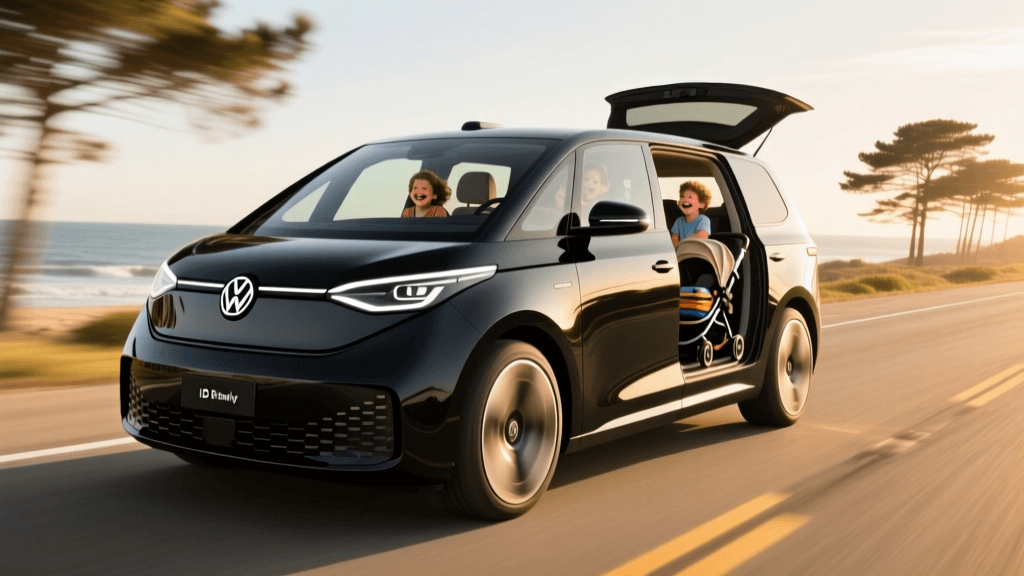
The Volkswagen ID.Buzz is more than just a retro-styled homage to the classic Microbus; it is a serious contender in the highly competitive family hauler segment. As the first electric minivan to hit the North American market, it brings a wave of excitement, but also a tide of skepticism. Families need reliability, space, and efficiency, and transitioning from a gas-powered Toyota Sienna or Honda Odyssey to an electric vehicle (EV) can feel daunting.
In this comprehensive review, we are separating fact from fiction. We will bust the most pervasive myths surrounding the US-spec Long Wheelbase (LWB) VW ID.Buzz and highlight the common mistakes buyers make when integrating this EV into their daily family routines.
Myth 1: The ID.Buzz Doesn't Have Enough Range for Family Road Trips
The Myth: With an EPA-estimated range of around 234 miles for the rear-wheel-drive (RWD) model, critics argue the ID.Buzz is unfit for the traditional American family road trip.
The Reality: While 234 miles is less than what a gas minivan achieves on a single tank, it is more than sufficient for 90% of family driving. According to data from the Federal Highway Administration, the average American drives roughly 37 miles per day. Even on road trips, families with young children naturally require stops every 2 to 2.5 hours for bathroom breaks, meals, and stretching. The ID.Buzz aligns perfectly with these natural rest intervals. Furthermore, the Car and Driver's ID.Buzz Review notes that the 91 kWh usable battery provides highly predictable power delivery, meaning you won't be caught off guard by sudden range drops during highway cruising.
Myth 2: It’s Too Big and Cumbersome to Drive Daily
The Myth: The ID.Buzz's boxy, upright design and minivan footprint make it a nightmare to park and navigate through tight school drop-off lines.
The Reality: Despite its commanding presence, the ID.Buzz is remarkably easy to drive. The US-spec LWB model is 192.4 inches long, which is actually shorter than the Toyota Sienna (203.7 inches) and the Kia Carnival (203 inches). Because it is built on Volkswagen's dedicated MEB EV platform, the wheels are pushed to the absolute corners, yielding a surprisingly tight turning radius of just 35.4 feet. Combined with an excellent 360-degree camera system and standard IQ.DRIVE driver assistance features, maneuvering this electric van in tight suburban environments is effortless.
Myth 3: Charging Takes Too Long for Impatient Kids
The Myth: Plugging in an EV minivan takes hours, leaving families stranded at charging stations while kids melt down in the back seat.
The Reality: The North American ID.Buzz features an upgraded electrical architecture capable of accepting up to 200 kW of DC fast charging power. When plugged into a high-speed Electrify America or Tesla Supercharger (via NACS adapter in the future), the battery can sprint from 10% to 80% in approximately 26 minutes. Volkswagen USA emphasizes that this charging curve is optimized to deliver maximum speed precisely when the battery is in the most common state of charge for road trips. Pair a 25-minute charge with a fast-food stop and a bathroom break, and the downtime becomes virtually unnoticeable.
Myth 4: The Interior Space is Compromised by Battery Packaging
The Myth: Because the massive battery pack sits under the floor, the interior cabin feels cramped, and cargo space is severely limited compared to internal combustion engine (ICE) minivans.
The Reality: The absence of a bulky engine and transmission tunnel allows the ID.Buzz to offer a remarkably flat floor and generous headroom. Behind the third row, you get 18.7 cubic feet of cargo space—enough for several grocery runs or a few carry-on suitcases. Fold and tumble the third row, and you unlock up to 75.5 cubic feet of space. While it doesn't feature the in-floor storage of a Chrysler Pacifica, the modular seating and vast vertical space make it incredibly practical for hauling bulky items like bicycles or large dog crates.
Common Mistakes Families Make When Buying the ID.Buzz
Busting myths is only half the battle. To truly succeed with the ID.Buzz, families must avoid these common ownership mistakes:
Mistake 1: Skipping the Home Level 2 Charger Installation
Relying on a standard 120V household outlet (Level 1) to charge a 91 kWh battery is a recipe for frustration. It would take several days to fully replenish the battery. Actionable Advice: Before taking delivery, hire a licensed electrician to install a 240V NEMA 14-50 outlet in your garage. Pair it with a high-quality Level 2 smart charger like the ChargePoint Home Flex, which can deliver up to 11 kW of power, ensuring your van is fully charged and ready to go every morning.
Mistake 2: Ignoring the AWD Option for Winter Climates
The standard RWD model offers 282 horsepower and excellent efficiency. However, families living in regions with heavy snow and ice often make the mistake of skipping the 4Motion All-Wheel-Drive (AWD) variant. The AWD model bumps output to 335 horsepower and provides the necessary traction for slippery school runs and mountain ski trips. The slight penalty to EPA range (dropping to roughly 231 miles) is a worthy trade-off for year-round safety.
Mistake 3: Overestimating Towing Impact on Range
The ID.Buzz is rated to tow up to 3,500 pounds, making it capable of pulling a small pop-up camper or a pair of jet skis. However, a common mistake is assuming you will maintain your 234-mile range while towing. Towing near max capacity at highway speeds increases aerodynamic drag exponentially, which can cut your real-world range by 40% to 50%. Always plan towing routes with charging stations spaced no more than 100 miles apart.
Comparison Chart: VW ID.Buzz vs. Traditional Family Minivans
| Feature | VW ID.Buzz (LWB RWD) | Toyota Sienna (Hybrid) | Kia Carnival (Gas) |
|---|---|---|---|
| Starting MSRP | ~$59,995 | ~$37,685 | ~$33,600 |
| EPA Range / MPG | 234 Miles | 36 MPG Combined | 22 MPG Combined |
| Cargo (Behind 3rd Row) | 18.7 cu ft | 33.5 cu ft | 41.1 cu ft |
| Max Cargo Space | 75.5 cu ft | 101.0 cu ft | 145.1 cu ft |
| Fuel/Charge Time | 26 mins (10-80% DC) | ~10 mins (Gas Tank) | ~10 mins (Gas Tank) |
| Estimated Annual Fuel Cost | ~$650 (Electricity) | ~$1,850 (Gas) | ~$2,950 (Gas) |
Note: Pricing and estimates based on data aggregated by Kelley Blue Book and the EPA. Annual fuel costs vary heavily by local electricity and gas rates.
Conclusion: Should Your Family Make the Switch?
The Volkswagen ID.Buzz is not merely a novelty act; it is a highly capable, comfortable, and technologically advanced family vehicle. By busting the myths surrounding its range, size, and charging capabilities, it becomes clear that the ID.Buzz is tailor-made for the modern family routine. While the upfront MSRP is higher than its gas-powered rivals, the dramatic savings in fuel and maintenance costs, combined with the sheer joy of a quiet, vibration-free cabin, make it a compelling choice. Avoid the common mistakes of inadequate home charging preparation and unrealistic towing expectations, and the ID.Buzz will likely become the most beloved vehicle in your driveway.