Introduction to the 91 kWh Extended Range Pack
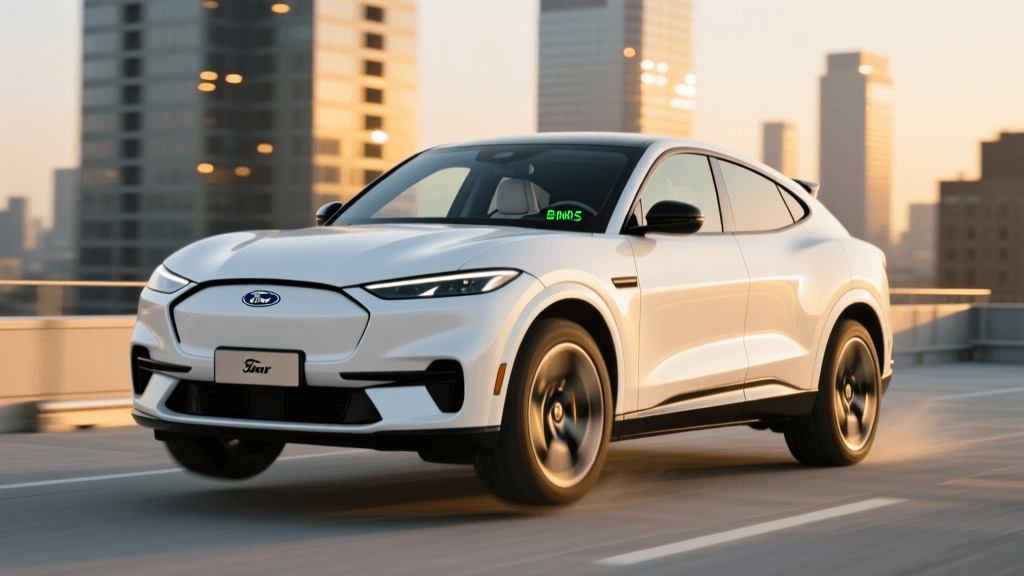
The Ford Mustang Mach-E has established itself as a formidable contender in the electric SUV market, largely thanks to its versatile battery options. For buyers prioritizing maximum distance, the Extended Range (ER) battery is the go-to choice. Featuring a 98 kWh total capacity (with roughly 91 kWh usable), this nickel-manganese-cobalt (NMC) lithium-ion pack delivers an EPA-estimated range of up to 314 miles in Rear-Wheel Drive (RWD) configurations. However, as with any complex high-voltage system, real-world ownership often introduces variables that the sticker on the window simply cannot predict.
From phantom 12V battery drains to DC fast charging bottlenecks, Mach-E ER owners frequently find themselves searching for solutions to maximize their vehicle's efficiency and reliability. In this comprehensive troubleshooting guide, we dive deep into the most common issues affecting the Mustang Mach-E Extended Range battery and provide actionable, step-by-step solutions to keep your EV performing at its peak.
Troubleshooting Real-World Range Discrepancies
One of the most frequent complaints on owner forums is the dreaded 'Guess-O-Meter'—the dashboard range estimator that often displays numbers significantly lower than the EPA's 314-mile estimate, especially during highway cruising or cold weather. While the U.S. Department of Energy notes that EV range is highly susceptible to environmental factors and driving habits, severe range drops often point to a confused Battery Management System (BMS) or improper vehicle configuration.
Actionable Fix: The BMS Calibration Routine
The BMS calculates state-of-charge (SoC) based on voltage curves and historical usage. If you frequently charge to 80% and rarely let the pack drop below 20%, the BMS loses track of the true top and bottom of the battery's capacity, artificially limiting your displayed range.
- Step 1: Drive the vehicle down to a 10% SoC. Avoid aggressive acceleration during this phase to prevent voltage sag from skewing the BMS reading.
- Step 2: Plug into a Level 2 charger (such as a 48-amp ChargePoint Home Flex or Ford Connected Charge Station).
- Step 3: Charge uninterrupted to 100%. Leave the vehicle plugged in for an additional 2 hours after the charger indicates completion. This allows the BMS to perform cell balancing across the 12 battery modules.
- Step 4: Check and adjust tire pressure. The Mach-E ER requires a stiff 43 PSI (cold) to minimize rolling resistance. Dropping to 35 PSI can cost you 15-20 miles of range.
Solving DC Fast Charging Bottlenecks
The Extended Range battery supports a peak DC fast charging rate of 150 kW. Under ideal conditions, Ford claims a 10-80% charge takes approximately 45 minutes. However, many owners report charging speeds plateauing at 50-70 kW, turning a quick road-trip pitstop into an hour-long ordeal.
Actionable Fix: Mastering Battery Preconditioning
Lithium-ion chemistry restricts fast charging when the battery is cold to prevent lithium plating. If you pull up to an Electrify America or Tesla Supercharger station without preconditioning, the car will limit current to protect the cells.
- Always use the FordPass App: Enter your DCFC destination into the FordPass app or the vehicle's native navigation (powered by Android Automotive). This triggers the thermal management system to actively heat or cool the 91 kWh pack using grid power or pack energy before you arrive.
- The 80% Cliff: The Mach-E's charging curve tapers aggressively after 80% SoC. To save time on road trips, unplug at 80% and drive. Charging from 80% to 100% on a DCFC can take as long as charging from 10% to 80%.
The 12V Battery Drain Dilemma: Fixes and Prevention
Perhaps the most notorious issue plaguing early model year (2021-2022) Mustang Mach-Es is the premature death of the 12V lead-acid auxiliary battery. As Car and Driver's long-term coverage of the Mach-E has highlighted, if the 12V battery dies, the high-voltage contactors cannot close, effectively 'bricking' the vehicle even if the main 91 kWh pack is fully charged.
Actionable Fix: The Lithium 12V Upgrade
The root cause often stems from early software bugs in the DC-DC converter logic, which failed to wake up and top off the 12V battery during long periods of inactivity. While Ford has issued over-the-air (OTA) Power-Up updates to address the software side, the physical lead-acid battery remains a weak point.
- Immediate Action: Ensure your vehicle is connected to Wi-Fi and has received the latest Ford Power-Up software update, which includes revised 12V battery maintenance algorithms.
- Hardware Upgrade: Replace the OEM lead-acid 12V battery with a lightweight 12V Lithium Iron Phosphate (LiFePO4) battery from brands like Ohmmu or Antigravity. These cost between $250 and $350 but feature built-in BMS systems that prevent deep discharge and last up to four times longer than lead-acid equivalents.
- Emergency Override: Keep a portable 12V lithium jump-starter in the frunk. If the 12V dies, you can pop the hood, connect the jumper to the designated terminals, and wake the DC-DC converter to get you to a dealer.
Mach-E ER Battery Specs & Troubleshooting Matrix
Use the table below as a quick-reference diagnostic tool for common Extended Range battery anomalies.
| Issue / Symptom | Probable Root Cause | Actionable Fix / Solution |
|---|---|---|
| Range drops 20%+ suddenly | BMS desynchronization or low tire pressure | Perform 10-100% L2 calibration; inflate tires to 43 PSI cold. |
| DCFC speeds capped at 50 kW | Cold battery pack; no preconditioning | Route to charger via FordPass Nav to trigger thermal prep. |
| Vehicle won't start / 'Bricked' | 12V auxiliary battery failure | Jump 12V terminals; upgrade to LiFePO4 12V battery. |
| High-Voltage System Warning | HVBJB contactor welding (Recall 22V412) | Check NHTSA VIN; dealer must replace junction box & update SW. |
| Excessive cold-weather range loss | Using cabin heater instead of heat pump/seat warmers | Use Scheduled Departure to pre-heat cabin while plugged in. |
Thermal Management and Cold Weather Degradation
The Extended Range pack utilizes a sophisticated liquid cooling and heating system. However, in sub-freezing temperatures, EVs can lose up to 30% of their range due to the energy required to keep the battery in its optimal operating window (roughly 70°F to 90°F internally) and to heat the cabin.
Actionable Fix: Scheduled Departure Optimization
To prevent the battery from draining itself to stay warm while parked, always use the Scheduled Departure feature in the Ford vehicle settings. By plugging into your Level 2 home charger and setting a departure time, the Mach-E will draw power from the grid to warm the battery coolant and heat the cabin. This means you step into a warm car with a 100% charged, thermally primed 91 kWh battery, completely bypassing the cold-weather range penalty for the first 30 miles of your commute.
A Note on the High-Voltage Contactor Recall
Troubleshooting the Mach-E ER battery is incomplete without addressing the high-voltage battery main contactor recall. Ford discovered that under repeated full-throttle acceleration or frequent DC fast charging, the electrical arcing could cause the contactors inside the High-Voltage Battery Junction Box (HVBJB) to weld open or closed. If they weld open, the car loses power; if they weld closed, the car cannot be turned off.
Actionable Fix: Enter your VIN on the NHTSA recall database. If your vehicle is affected, Ford's OTA software update limits the maximum torque and adjusts the thermal monitoring to prevent arcing. However, if the diagnostic codes indicate existing damage, the dealer must replace the entire HVBJB under warranty. Do not attempt to clear these codes yourself, as it involves the 400V+ architecture.
Final Verdict: Is the ER Battery Reliable?
When properly maintained, the Ford Mustang Mach-E's 91 kWh Extended Range battery is a highly capable and durable piece of engineering. The vast majority of 'battery issues' reported by owners are actually software miscommunications, 12V ancillary failures, or a lack of understanding regarding EV thermal preconditioning. By taking a proactive approach—calibrating the BMS quarterly, upgrading the 12V battery to lithium, and strictly utilizing navigation-based preconditioning for DCFC—you can ensure your Mach-E delivers its promised 300+ mile range reliably for years to come.