The Short Answer: Can You Buy a Volkswagen Golf Electric in 2026?
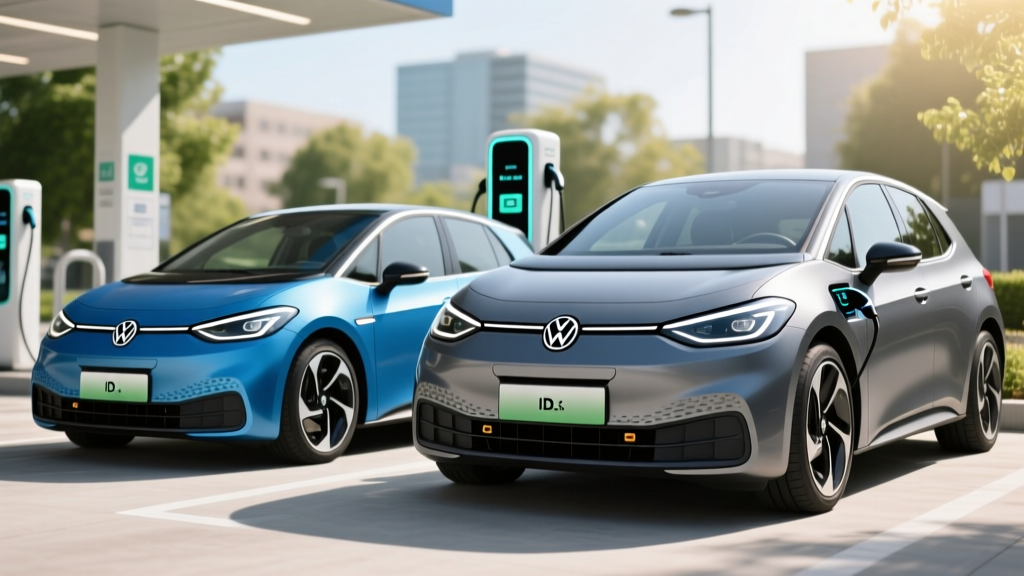
If you're searching for a Volkswagen Golf electric in the United States, here's the practical reality: VW does not sell an electric Golf hatchback in the US market. The global Volkswagen ID.3—the spiritual electric successor to the Golf—remains a Europe/China-only model as of 2026. However, American buyers seeking the VW electric experience closest to the Golf's practical hatchback ethos have two realistic options: the Volkswagen ID.4 compact SUV (the only VW EV sold stateside) and the upcoming ID.2all, which VW has confirmed for global markets but has not committed to US delivery before late 2027 at the earliest.
This guide covers the ID.4 as the closest available VW electric, the ID.3 for context and import-curious buyers, and a full cost-versus-gas breakdown so you can decide whether a VW EV fits your budget and driving life.
Volkswagen's Electric Golf Successors: What's Actually Available
The original e-Golf (produced 2015–2019 in the US) offered just 125 miles of EPA range and has been fully discontinued. VW replaced it globally with the MEB-platform ID family. Here's where each model stands for American buyers in 2026:
| Model | Body Style | US Status | EPA Range | Battery (usable) | Starting MSRP |
|---|---|---|---|---|---|
| ID.3 | Hatchback | Not sold in US | N/A (WLTP ~263 mi) | 58 kWh (Pro) / 77 kWh (Pro S) | ~€36,000 (Europe) |
| ID.4 | Compact SUV | Available now | 275 mi (Pro S RWD) | 77 kWh net, NMC | $40,790 (Pro) |
| ID.2all | Subcompact hatch | Announced, not US-confirmed | Estimated ~280 mi (WLTP) | ~58 kWh (est.) | ~€25,000 (Europe target) |
| e-Golf (used) | Hatchback | Discontinued, used market only | 125 mi (2017–2019) | 35.8 kWh gross | $12,000–$18,000 (used) |
The ID.4 is assembled at VW's Chattanooga, Tennessee plant, which matters for federal tax-credit eligibility. The ID.3 is built in Zwickau, Germany, and would not qualify for the §30D credit even if imported.
2026 VW ID.4: The Closest Thing to an Electric Golf You Can Buy
While it rides higher than a Golf, the ID.4 occupies a similar price bracket and serves the same daily-commuter-and-grocery-hauler role. Here are the numbers that matter:
| Spec | Pro (RWD) | Pro S (RWD) | Pro S AWD |
|---|---|---|---|
| EPA Range | 275 mi | 275 mi | 255 mi |
| Battery (usable / chemistry) | 77 kWh / NMC | 77 kWh / NMC | 77 kWh / NMC |
| Horsepower | 282 hp | 282 hp | 335 hp |
| 0–60 mph | 7.3 sec | 7.3 sec | 5.4 sec |
| Peak DC Fast Charge | 175 kW | 175 kW | 175 kW |
| 10–80% DC Charge Time | ~30 min | ~30 min | ~30 min |
| Level 2 Charge Rate | 11 kW | 11 kW | 11 kW |
| MPGe (combined) | 107 MPGe | 104 MPGe | 98 MPGe |
| Starting MSRP | $40,790 | $45,290 | $48,790 |
Real-World Range Expectations
The EPA rates the ID.4 Pro S RWD at 275 miles. In real-world highway testing at 70–75 mph in mild weather, expect 235–250 miles. In freezing temperatures (below 32°F), range drops to approximately 190–215 miles due to battery resistance and cabin-heating load. The ID.4 uses a resistive PTC heater rather than a heat pump in most US trims, which increases cold-weather energy consumption compared to rivals like the Hyundai Ioniq 5.
EV vs Gas: How the ID.4 Compares to the Golf GTI and Tiguan
Buyers cross-shopping a Volkswagen Golf electric often compare it to the Golf GTI (still sold in the US as a gas hatchback) or the Tiguan compact SUV. Here's a five-year cost snapshot assuming 15,000 miles/year, $3.50/gallon regular unleaded, and $0.14/kWh national-average electricity:
| Cost Factor | ID.4 Pro S RWD | Golf GTI (2.0T) | Tiguan (2.0T AWD) |
|---|---|---|---|
| Base MSRP | $45,290 | $32,440 | $32,000 |
| Est. Federal Tax Credit (§30D) | Up to $7,500* | $0 | $0 |
| Effective Purchase Price | ~$37,790 | $32,440 | $32,000 |
| 5-Year Fuel/Energy Cost | $3,150 (electricity) | $8,750 (gasoline) | $9,625 (gasoline) |
| 5-Year Maintenance (est.) | $1,200 | $2,800 | $3,100 |
| 5-Year Insurance (avg) | $7,800 | $6,500 | $6,200 |
| 5-Year Total Cost | $50,940 | $50,490 | $50,925 |
*§30D credit eligibility depends on buyer income caps (AGI ≤$150K single / $300K joint), MSRP caps ($55K for SUVs, $80K for SUVs/vans/pickups per IRS rules), and battery-component/critical-mineral sourcing requirements. Verify current-year rules before purchasing. Point-of-sale transfer is available through registered dealers.
The ID.4 reaches near-cost-parity with gas VW models within five years when the tax credit applies. Without the credit—due to income phase-outs or sourcing-rule changes—the ID.4 costs roughly $7,500 more over the same period. Fuel savings of ~$5,600–$6,500 over five years are the primary economic advantage, partially offset by higher insurance premiums common to EVs.
Real-World Ownership: Charging, Climate, and Daily Life
Owning any VW electric—whether the ID.4 today or a potential future Golf-sized EV—hinges on your charging situation and driving patterns. Here's what first-time buyers need to understand:
Home Charging Is Non-Negotiable for Most Owners
The ID.4 accepts 11 kW on Level 2 (240V), adding roughly 35–40 miles of range per hour. A full 0–100% charge takes about 8 hours. Installation of a home Level 2 charger (like a ChargePoint Home Flex or Emporia Level 2) typically costs $800–$2,200 including a 50-amp dedicated circuit and electrician labor, according to industry averages. If your electrical panel is at capacity or you need a 200-amp service upgrade, add $1,500–$3,500.
Without reliable home or workplace charging, EV ownership becomes significantly less convenient. Public DC fast charging at $0.35–$0.55/kWh erases most of the fuel-cost advantage versus gasoline.
Cold-Weather Considerations
If you live in the upper Midwest, Northeast, or Mountain West, plan for 20–30% range loss in sustained sub-freezing temperatures. The ID.4's lack of a standard heat pump (available only on certain trims/markets) means cabin heating draws directly from the traction battery. Preconditioning the battery while plugged in—using the VW Car-Net app to warm the cabin and battery on grid power—mitigates some of this loss.
Driving Patterns That Favor an EV
- Ideal: Daily commute under 60 miles, home charging access, moderate climate
- Manageable: Frequent 150–200 mile highway trips, DC fast-charging corridor access
- Challenging: Regular 300+ mile road trips in winter, apartment living without charging, rural areas with sparse public infrastructure
Tax Credit and Incentive Reality Check
The federal §30D clean vehicle credit offers up to $7,500 for qualifying new EVs, but the rules are specific and subject to change. As of 2026, the ID.4 (built in Tennessee) has historically met the battery-assembly requirement, but critical-mineral sourcing thresholds tighten annually. Check the fueleconomy.gov tax credit tracker for the latest eligibility by VIN.
| §30D Eligibility Checklist — 2026 Rules | |
|---|---|
| Vehicle MSRP Cap | ≤$80,000 for SUVs/vans/pickups; ≤$55,000 for sedans/hatchbacks |
| Buyer AGI Cap | ≤$300K joint / ≤$225K head of household / ≤$150K single |
| Battery Assembly | Final assembly in North America required |
| Critical Minerals | Increasing % must be sourced from US or FTA partners (rises annually) |
| Battery Components | Increasing % must be manufactured in North America |
| Transfer Option | Credit can be transferred to dealer as point-of-sale discount |
| Used EV Credit | Up to $4,000 for qualifying used EVs (≤$25,000 sale price, separate income caps) |
Many states offer additional incentives—California's CVRP, Colorado's innovative motor vehicle credit, and others—but amounts and eligibility vary by jurisdiction. Consult your state's energy office or a tax professional for specifics.
Common Misconceptions About VW Electrics
| Myth | Fact |
|---|---|
| "The electric Golf is available in the US" | The e-Golf was discontinued in 2019. The ID.3 hatchback is not sold in the US. The ID.4 SUV is the only current VW EV available stateside. |
| "EV batteries need replacing every 5 years" | VW covers the ID.4 battery for 8 years/100,000 miles against degradation below 70% capacity. Industry data from Recurrent shows most modern NMC packs retain 90%+ capacity at 100K miles. |
| "Charging takes hours on road trips" | At a 175 kW DC fast charger, the ID.4 adds ~150 miles in 20 minutes (10–80%). Plan charging stops around rest breaks; total trip time adds ~15–25 minutes per 200 miles vs. a gas stop. |
| "EVs are more expensive to insure" | Partially true. EV insurance averages 15–25% higher than comparable gas cars due to repair costs and battery replacement risk. Shop quotes before purchasing. |
| "I can charge on a regular outlet" | Level 1 (120V) adds only ~3–4 miles per hour on the ID.4. A full charge would take 3+ days. Level 2 (240V) home installation is strongly recommended. |
Decision Framework: Should You Buy a VW Electric?
Choose the VW ID.4 If:
- You want a VW-badged EV available today with strong build quality and a comfortable ride
- Your daily driving is under 200 miles and you have home Level 2 charging
- You qualify for the §30D credit (bringing effective price near $33,000–$38,000)
- You value a quiet, low-maintenance daily driver over sporty handling dynamics
- You live in a moderate climate or can precondition in cold weather
Look Elsewhere If:
- You specifically need a hatchback form factor — consider the Chevrolet Equus EV (upcoming), Hyundai Ioniq 5, or wait for the VW ID.2all US confirmation
- You lack home charging access and your area has sparse public DC infrastructure
- You regularly drive 300+ miles in winter — a PHEV like the Toyota RAV4 Prime (42 mi electric + gas backup) may suit better
- You want the fastest-charging EV in this price range — the Ioniq 5 peaks at 240 kW (10–80% in ~18 min) vs. the ID.4's 175 kW (~30 min)
- You need third-row seating — the ID.4 is strictly a five-seater
What About the Used e-Golf?
If budget is tight and you want a genuine VW electric hatchback, the 2017–2019 e-Golf appears on the used market for $12,000–$18,000. With 125 miles of EPA range and a 35.8 kWh battery, it works as a city commuter but falls short for highway trips. Battery degradation on 6–8 year-old packs typically shows 8–15% capacity loss. The used-EV tax credit (§25E) offers up to $4,000 (30% of sale price, max $4,000) on vehicles sold for ≤$25,000 through a dealer, subject to buyer income caps. Verify battery state-of-health via an OBD-II scan tool or dealer diagnostic before purchasing.
Frequently Asked Questions
Will Volkswagen ever sell an electric Golf in the US?
VW has not confirmed US availability for the ID.3 hatchback. The ID.2all (a smaller, more affordable EV targeting ~€25,000 in Europe) has been announced globally but no US timeline exists. VW's American strategy currently centers on the ID.4, ID.7 sedan (expected), and ID.Buzz van.
How long does it take to charge the ID.4 at home?
On a Level 2 (240V, 11 kW) home charger, a full 0–100% charge takes approximately 8 hours. Most owners charge overnight, waking to a full battery each morning. On a standard 120V outlet (Level 1), the same charge would take roughly 70+ hours—impractical for daily use.
What's the real-world highway range of the ID.4?
Expect approximately 235–250 miles at 70–75 mph in 65–75°F weather. In cold conditions (below freezing), plan for 190–215 miles. These figures assume no preconditioning; warming the cabin and battery while plugged in can recover 10–20 miles of range in winter.
Is the ID.4 eligible for the full $7,500 federal tax credit?
Eligibility depends on the specific model year, your income, and current battery-sourcing rules. The ID.4's US assembly satisfies the final-assembly requirement, but critical-mineral and component thresholds change annually. Check IRS.gov or ask your dealer to run the VIN through the IRS eligibility tool before finalizing a purchase.
How does the ID.4 compare to the Hyundai Ioniq 5 or Tesla Model Y?
The ID.4 prioritizes ride comfort and a traditional driving feel. The Ioniq 5 charges faster (240 kW peak, 10–80% in ~18 min) and offers V2L capability. The Model Y has more range (up to 320 mi EPA) and access to the Supercharger network. The ID.4's advantage is VW build quality, a lower starting price after credit, and a less polarizing design.
What's the battery warranty on the ID.4?
Volkswagen covers the high-voltage battery for 8 years or 100,000 miles (whichever comes first) against capacity loss below 70% of original. The powertrain (motor, reduction gear) is also covered for 8 years/100,000 miles. The basic vehicle warranty is 4 years/50,000 miles.