The Short Answer: Where Is the Fisker Car Made?
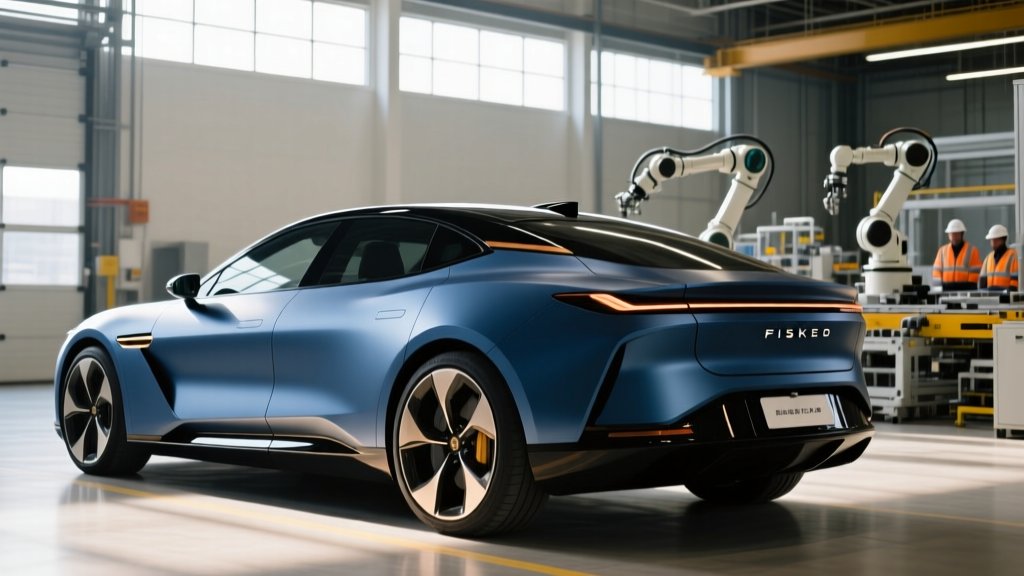
The Fisker Ocean was manufactured by Magna Steyr at its contract-assembly plant in Graz, Austria — the same facility that builds the Mercedes-Benz G-Class, Jaguar I-PACE, and BMW 5 Series Touring. Fisker Inc. never owned a vehicle factory; instead, the California-headquartered startup partnered with the Austrian engineering giant to handle full vehicle production, a capital-light strategy borrowed from Apple's manufacturing playbook. The first customer deliveries rolled out of Graz in late 2022, with volume production ramping through 2023.
However, as of mid-2024, Fisker Inc. filed for Chapter 11 bankruptcy and ceased production of the Ocean. By 2026, the Fisker Ocean is no longer in production and is not available for new purchase from Fisker. Remaining new-old-stock and pre-owned examples continue to circulate on the used market, making this review essential context for buyers evaluating a pre-owned Ocean or comparing it against current-production rivals like the Hyundai Ioniq 5, Tesla Model Y, and Ford Mustang Mach-E.
| Specification | Ocean Sport (FWD) | Ocean Ultra / Extreme (AWD) |
|---|---|---|
| EPA Range | 250 miles | 360 miles (Extreme w/ Hyper Range) |
| Battery Capacity (Usable) | ~71 kWh (Touring) | ~113 kWh (Hyper Range, NMC) |
| Battery Chemistry | LFP (Sport/Touring) | NMC (Ultra/Extreme) |
| Max DC Fast Charge | ~170 kW (est.) | ~250 kW (peak) |
| 10–80% DC Charge Time | ~34 min (est.) | ~30 min (claimed) |
| Level 2 Home Charging | 11 kW onboard (~36 mi/hr) | 11 kW onboard (~36 mi/hr) |
| 0–60 mph | 6.9 sec | 3.7 sec (Extreme Boost) |
| Horsepower | 275 hp | 550 hp (Extreme Boost) |
| Drivetrain | Single-motor FWD | Dual-motor AWD |
| MPGe (Combined) | ~102 MPGe | ~95 MPGe |
| Cargo Volume (rear seats up) | ~25.3 cu ft (behind 2nd row) | |
| Cargo Volume (rear seats folded) | ~58.3 cu ft | |
| Battery Warranty | 6 yr / 60,000 mi (original — now uncertain post-bankruptcy) | |
| Original Base MSRP | $37,499 | $61,499 (Ultra) / $68,999 (Extreme) |
Real-World Range: What to Expect Beyond the EPA Sticker
EPA Estimated Range: 250 miles (Sport/Touring FWD) | 360 miles (Extreme AWD w/ Hyper Range pack)
Real-World Expectation: On the Fisker Ocean Extreme with the 113 kWh Hyper Range battery, the 360-mile EPA figure was among the highest of any production SUV at launch. In mixed driving with moderate highway speeds (65–70 mph), expect approximately 300–320 miles. At sustained 80 mph highway speeds or in cold weather (below 32°F), range can drop to 250–280 miles due to aerodynamic drag and battery heating demands. The Sport/Touring trims with the smaller LFP pack deliver closer to 200–220 miles in real-world highway use.
The Ocean Extreme's 360-mile rating was achieved partly through a large battery rather than exceptional efficiency. At roughly 3.0–3.2 kWh/mile (or ~31–33 kWh/100 mi), the Ocean is less efficient than the Tesla Model Y Long Range (~28 kWh/100 mi) or the Hyundai Ioniq 5 Long Range (~30 kWh/100 mi). That means more energy consumed per mile, which matters for long-term charging costs — especially if you rely on public DC fast charging at $0.35–$0.50/kWh.
The LFP (lithium iron phosphate) pack in the Sport and Touring trims trades range for longevity and lower cost. LFP chemistry tolerates regular 100% charging without accelerated degradation, which is an advantage for daily commuters who can charge at home. However, LFP packs lose a larger percentage of capacity in freezing temperatures — expect 25–35% range reduction in sub-freezing conditions versus 15–25% for the NMC pack.
Charging Speed: DC Fast, Level 2, and the Curve Reality
Charging speed was one of the Ocean's weaker competitive points, particularly against Hyundai-Kia's 800V architecture (Ioniq 5, EV6), which sustains high charge rates deeper into the state-of-charge curve.
| Charging Level | Power / Rate | Speed (Approx.) | Notes |
|---|---|---|---|
| Level 1 (120V) | 1.4 kW | ~4–5 miles/hour | Emergency/trickle only |
| Level 2 (240V, 48A) | 11 kW | ~36 miles/hour | Full charge in ~10–11 hours (Hyper Range) |
| DC Fast Charge (Peak) | ~250 kW (Extreme) | 10–80% in ~30 min | Peak rate not sustained; tapers significantly above 60% SoC |
| DC Fast Charge (Sport) | ~170 kW (est.) | 10–80% in ~34 min | LFP chemistry allows higher SoC charging without degradation concern |
Charging curve reality: The Ocean Extreme's ~250 kW peak is a headline number, but independent testing showed the charge rate tapers to roughly 100–120 kW by 50% SoC and drops further above 70%. On a typical 350 kW Electrify America or Tesla Supercharger stall, a 10–80% session takes approximately 30–35 minutes. That's competitive but not class-leading — the Ioniq 5 achieves 10–80% in roughly 18 minutes thanks to its 800V system sustaining higher power longer.
For home Level 2 charging, the 11 kW onboard charger is adequate. With a 48-amp hardwired wall connector on a 60-amp circuit, you'll add roughly 36 miles of range per hour, fully replenishing the Hyper Range pack overnight. Installation costs for a Level 2 home charger typically run $800–$2,500 including equipment, electrician labor, and permits, depending on panel capacity and run length from your breaker box to the garage.
Performance, Ride, and Interior Technology
The Ocean Extreme's dual-motor AWD powertrain produces up to 550 hp in Boost mode, launching the 5,400-lb SUV to 60 mph in 3.7 seconds. That's genuinely quick, though the Ocean prioritizes comfort over sportiness — body roll is noticeable in corners, and the steering is light and numb compared to a Porsche Macan EV or BMW iX.
The Sport/Touring trims with 275 hp and single-motor FWD are adequate for commuting and highway merging (0–60 in ~6.9 seconds) but won't thrill anyone coming from a performance sedan.
Interior highlights:
- 17.1-inch rotating center touchscreen (Revolve display on Extreme) — switches between landscape "Control" and portrait "Hollywood" modes
- Solar roof panel (Fisker Intelligent Solar Roof on Extreme) — adds up to ~1,500 miles/year of range in optimal sunny conditions, though real-world gain is typically 500–800 miles
- California Mode — drops all windows simultaneously including the rear hatch glass for an open-air experience
- Recycled and vegan interior materials throughout, consistent with Fisker's sustainability branding
- Flat floor with no transmission tunnel; rear legroom is generous at ~38.2 inches
Notable drawbacks:
- Infotainment software was widely criticized at launch for lag, bugs, and an unintuitive menu structure. OTA updates improved it somewhat, but it never matched Tesla or Hyundai in responsiveness.
- No frunk (front trunk) — the space is occupied by HVAC and power electronics
- Build quality inconsistencies reported by early owners (panel gaps, trim rattles)
- Driver-assist system (Fisker Intelligent Pilot) is a basic Level 2 ADAS with adaptive cruise and lane centering — functional but behind Ford BlueCruise and GM Super Cruise in hands-free capability
Pricing, Tax Credits, and the Bankruptcy Factor
| Trim | Original MSRP | Federal Tax Credit (§30D) | Est. Used Price (2026) |
|---|---|---|---|
| Ocean Sport | $37,499 | Not eligible (Fisker did not meet North American final-assembly requirement) | $18,000–$24,000 |
| Ocean Ultra | $61,499 | Not eligible (Austria assembly) | $28,000–$36,000 |
| Ocean Extreme | $68,999 | Not eligible (Austria assembly) | $32,000–$42,000 |
Critical tax-credit detail: The Fisker Ocean did not qualify for the IRS §30D federal EV tax credit (up to $7,500) because it was assembled in Graz, Austria — not in North America. Under the Inflation Reduction Act's final-assembly requirement, only vehicles assembled in the U.S., Canada, or Mexico are eligible. This was a significant competitive disadvantage against the U.S.-built Tesla Model Y, Ford Mustang Mach-E, and GM Blazer EV, all of which can qualify for the full or partial credit depending on battery sourcing and buyer income.
Additionally, the §30D credit imposes MSRP caps ($80,000 for SUVs, $55,000 for sedans) and adjusted gross income limits ($150,000 single / $300,000 joint filers). Even if the Ocean had been assembled in North America, buyers above those income thresholds would be ineligible. Always verify current-year rules at IRS.gov §30D before purchasing any EV.
Used-market reality in 2026: Fisker's bankruptcy has cratered residual values. Ocean Extremes that stickered near $69,000 now sell for $32,000–$42,000 on the used market — a staggering depreciation that makes them potentially attractive bargains, but with major caveats around warranty support, parts availability, and long-term software maintenance.
Warranty, Ownership Risk, and Post-Bankruptcy Support
Fisker's original warranty covered the battery and powertrain for 6 years / 60,000 miles — notably shorter than the industry-standard 8 years / 100,000 miles offered by Hyundai, Kia, Tesla, and Ford. The limited vehicle warranty was 6 years / 60,000 miles as well.
Following Fisker's June 2024 bankruptcy filing, warranty support became uncertain. Some warranty claims have been handled through third-party administrators, and Magna Steyr retains certain production records, but there is no factory-backed service network comparable to established automakers. Parts availability — particularly for proprietary components like the Revolve screen, solar roof, and California Mode mechanisms — is a genuine concern for 2026 buyers.
If you're considering a used Fisker Ocean, factor in:
- Limited authorized service centers (many former Fisker service partners have wound down)
- Potential difficulty sourcing body panels, glass, and proprietary electronics
- No guarantee of continued OTA software updates or connectivity services
- Possible third-party extended warranty options, though availability is limited post-bankruptcy
How the Fisker Ocean Compares to Current Alternatives
For buyers drawn to the Ocean's blend of range, sustainability branding, and distinctive design, here's how it stacks up against 2026-production competitors:
| Metric | Fisker Ocean Extreme (used) | Hyundai Ioniq 5 (2026) | Tesla Model Y LR (2026) | Ford Mustang Mach-E ER AWD (2026) |
|---|---|---|---|---|
| EPA Range | 360 mi | 320 mi | 330 mi | 312 mi |
| DC Fast Charge 10–80% | ~30 min | ~18 min | ~25 min | ~32 min |
| Base Price (new / used) | ~$35K (used) | ~$45K (new) | ~$48K (new) | ~$46K (new) |
| Federal Tax Credit | Not eligible | Up to $7,500 | Up to $7,500 | Up to $7,500 |
| Battery Warranty | 6/60K (uncertain) | 10/100K | 8/120K | 8/100K |
| Charging Network | CCS (EA, etc.) | NACS (Tesla + others) | NACS (Tesla Supercharger) | NACS (Tesla + others) |
The Ioniq 5 and Model Y both offer faster charging, active warranty support, full tax-credit eligibility, and access to the Tesla Supercharger network (now open to NACS-equipped non-Tesla vehicles). The Ocean's 360-mile range is its strongest differentiator, but that advantage narrows when you account for real-world highway and cold-weather losses.
Who Should (and Shouldn't) Buy a Used Fisker Ocean in 2026
Consider the Fisker Ocean if:
- You want maximum EPA range at a steep discount and accept the warranty/service risk
- You charge primarily at home and rarely road-trip (where the slower DC charging matters less)
- You value distinctive design and sustainability credentials over mainstream brand support
- You live in a mild climate where cold-weather range loss is minimal
Look elsewhere if:
- You need a reliable warranty and established service network
- You want federal tax-credit eligibility (the Ocean does not qualify)
- You road-trip frequently and need the fastest DC charging and broadest network access
- You depend on OTA updates and connected services for long-term vehicle functionality
Pros
- Class-leading 360-mile EPA range (Extreme trim)
- Distinctive design with solar roof and California Mode
- Spacious interior with flat floor and generous rear legroom
- Steep used-market depreciation creates value opportunity
- Vegan/recycled interior materials
Cons
- Fisker bankrupt — warranty and parts support uncertain
- No federal tax-credit eligibility (Austria assembly)
- DC charging speed trails 800V competitors
- Infotainment software criticized for lag and bugs
- No frunk; shorter battery warranty than rivals
- Build quality inconsistencies reported
Frequently Asked Questions
Where is the Fisker car made?
The Fisker Ocean was manufactured by Magna Steyr in Graz, Austria. Fisker Inc. was headquartered in Manhattan Beach, California, but did not operate its own vehicle assembly plant. Production ran from 2022 until Fisker's bankruptcy in mid-2024.
What is the real-world range of the Fisker Ocean?
The Ocean Extreme's 360-mile EPA rating translates to roughly 300–320 miles in mixed driving and 250–280 miles at sustained highway speeds or in freezing temperatures. The Sport/Touring trims with the smaller LFP battery deliver approximately 200–220 miles on the highway.
How fast does the Fisker Ocean charge?
The Ocean Extreme peaks at approximately 250 kW on a DC fast charger, achieving a 10–80% charge in about 30 minutes. However, the charge rate tapers significantly above 60% SoC. Home Level 2 charging at 11 kW adds roughly 36 miles of range per hour.
Does the Fisker Ocean qualify for the federal EV tax credit?
No. The Fisker Ocean was assembled in Austria and does not meet the IRS §30D requirement for North American final assembly. It is ineligible for the up-to-$7,500 federal tax credit regardless of buyer income or battery sourcing. See IRS.gov for current eligibility rules.
Is the Fisker Ocean worth buying in 2026?
A used Ocean Extreme at $32,000–$42,000 offers exceptional range for the money, but buyers accept significant risk around warranty support, parts availability, and software continuity. If you prioritize peace of mind and long-term support, a new Hyundai Ioniq 5, Tesla Model Y, or Ford Mach-E with full warranty and tax-credit eligibility is a safer choice.
Will Fisker release new vehicles?
As of 2026, Fisker Inc. has ceased operations following its Chapter 11 bankruptcy. The previously announced Fisker Pear (a smaller, more affordable crossover planned for production by Magna) was canceled. No new Fisker vehicles are in production or available for order.
What charging connector does the Fisker Ocean use?
The Fisker Ocean uses a CCS1 (Combined Charging System) connector for DC fast charging and a J1772 connector for Level 1 and Level 2 AC charging. It does not have a native NACS (Tesla) port, though CCS-to-NACS adapters may provide access to some Tesla Supercharger stalls — verify compatibility before relying on this.
Sources: EPA fuel-economy data via fueleconomy.gov; IRS §30D clean vehicle credit rules via irs.gov; Fisker Inc. original specification sheets and Magna Steyr production records.