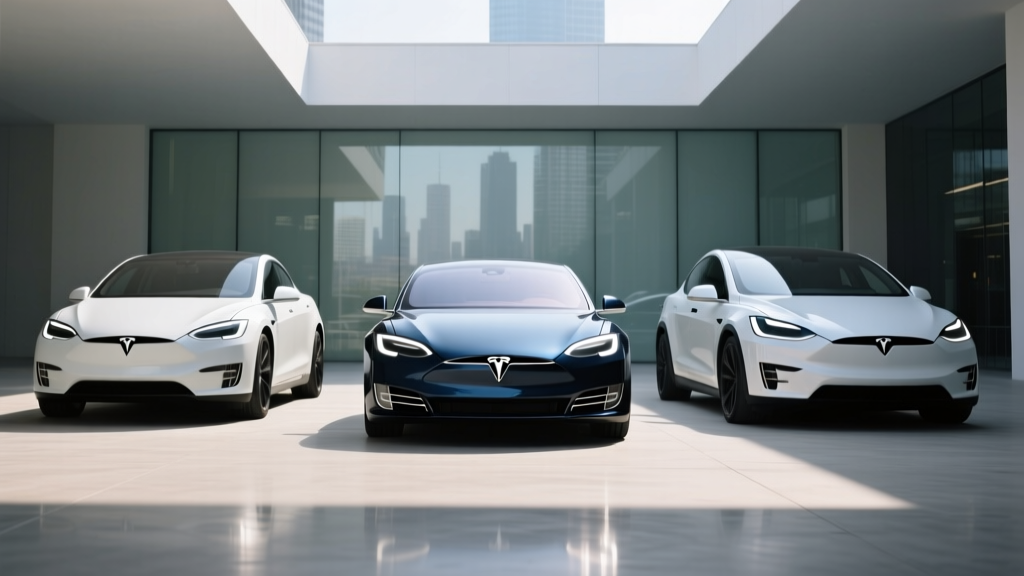
The Tesla Plaid badge represents the automaker's ultimate performance tier — tri-motor all-wheel-drive powertrains producing over 1,000 horsepower, sub-2-second 0-60 mph times, and track-capable thermal management. But with pricing that pushes well past six figures once options and fees are added, buyers need a precise picture of what they're actually paying for. This guide answers the core question: how much does a Tesla Plaid cost in 2026, and what do you get for the money?
As of the 2026 model year, Tesla offers the Plaid powertrain in two vehicles: the Model S Plaid sedan and the Model X Plaid SUV. Both share the same tri-motor architecture but diverge significantly in range, utility, and final pricing. Below, we dissect every cost factor — from base MSRP to tax credit eligibility to real-world ownership economics.
2026 Tesla Plaid Pricing: Model S vs. Model X at a Glance
| Specification | Model S Plaid | Model X Plaid |
|---|---|---|
| Base MSRP | $89,990 | $94,990 |
| Destination Fee | $1,990 | $1,990 |
| As-Tested (w/ FSD + Paint) | ~$101,980 | ~$106,980 |
| Federal Tax Credit (§30D) | Not Eligible (MSRP cap) | Not Eligible (MSRP cap) |
| Tri-Motor AWD Horsepower | 1,020 hp | 1,020 hp |
| 0-60 mph | 1.99 seconds | 2.5 seconds |
| EPA Range | 396 miles (19" wheels) | 320 miles (20" wheels) |
| Battery (usable) | ~95 kWh, NMC | ~95 kWh, NMC |
| MPGe (combined) | 116 MPGe | 101 MPGe |
| Battery Warranty | 8 yr / 150,000 mi | 8 yr / 150,000 mi |
The numbers tell a straightforward story: the Model S Plaid starts at $89,990 before destination, while the Model X Plaid commands a $5,000 premium at $94,990. However, neither vehicle qualifies for the federal §30D clean vehicle credit — both exceed the $55,000 MSRP cap for sedans and the $80,000 cap for SUVs/vans/pickups. This is a critical cost factor that distinguishes Plaid models from Tesla's more affordable lineup.
Real-World Range: What the EPA Numbers Don't Tell You
EPA Estimated: 396 miles (19" wheels) | 359 miles (21" Arachnid wheels)
Real-World Highway (75 mph): ~310-330 miles
Cold Weather (below 32°F): ~260-290 miles
EPA vs. Reality — Model X Plaid
EPA Estimated: 320 miles (20" wheels) | 311 miles (22" Turbine wheels)
Real-World Highway (75 mph): ~250-270 miles
Cold Weather (below 32°F): ~210-230 miles
The Model S Plaid's EPA-estimated 396 miles is genuinely impressive for a 1,020-hp performance sedan, and according to fueleconomy.gov, it achieves 116 MPGe combined. But the EPA test cycle includes substantial low-speed and city driving where regenerative braking recaptures energy. At sustained highway speeds of 75 mph, expect to use roughly 310-330 miles before needing a charge — a 17-22% reduction from the sticker number.
The Model X Plaid suffers a larger penalty. Its taller, heavier, less aerodynamic body means highway efficiency drops more sharply. Plan for 250-270 real-world highway miles, which makes route planning on longer road trips more important. Cold weather compounds the issue: lithium-ion batteries lose efficiency in low temperatures, and cabin heating draws significant power. Tesla's heat pump helps mitigate this, but expect a 25-30% range reduction in sub-freezing conditions for both models.
Wheel choice matters enormously. The Model S Plaid's optional 21" Arachnid wheels reduce EPA range by 37 miles — a 9.3% penalty that directly affects daily usability and road-trip flexibility.
Charging Speed: DC Fast Charging and Home Level 2
Charging speed is where the Plaid platform demonstrates its engineering depth. Both models support a peak DC fast-charge rate of 250 kW on Tesla's V3 Superchargers and compatible CCS/NACS stations.
| Charging Method | Model S Plaid | Model X Plaid |
|---|---|---|
| Max DC Fast Charge | 250 kW peak | 250 kW peak |
| 10-80% DC Fast Charge | ~27 minutes | ~30 minutes |
| Miles Added in 15 min (DC) | ~187 miles | ~155 miles |
| Level 2 Home Charging (kW) | 11.5 kW (48A) | 11.5 kW (48A) |
| Level 2 Miles per Hour | ~34 mi/hr | ~28 mi/hr |
| Level 1 (120V) Miles per Hour | ~3 mi/hr | ~3 mi/hr |
| Connector | NACS (native) | NACS (native) |
The 10-80% charge time of roughly 27 minutes for the Model S Plaid is competitive but not class-leading. Tesla's charge curve is well-managed: the car pulls close to peak kW through approximately 40-50% State of Charge (SoC), then tapers progressively. Above 80%, charging slows dramatically to protect battery longevity — a 80-100% top-off can add another 25+ minutes. For road trips, the practical strategy is charging in the 10-80% window and planning shorter stops.
At home, both Plaid models accept up to 11.5 kW on a Level 2 wall connector (48 amps on a 60-amp circuit). The Model S Plaid recovers about 34 miles of range per hour of Level 2 charging, meaning an overnight session (8-10 hours) easily replenishes a full battery. The Model X Plaid, with its lower efficiency, adds roughly 28 miles per hour at the same rate. A full home install with a Tesla Wall Connector typically runs $1,200-$2,500 depending on panel capacity and conduit distance — factor this into your total cost of ownership.
Performance and Drivetrain: The 1,020-HP Tri-Motor System
The Plaid powertrain uses three permanent-magnet synchronous reluctance motors — one on the front axle, two on the rear — producing a combined 1,020 horsepower and an estimated 1,050 lb-ft of torque. Tesla's carbon-sleeved rotors enable the motors to spin beyond 20,000 RPM without structural failure, which is what sustains power delivery at high speeds rather than tapering off like many single- or dual-motor EVs.
The Model S Plaid's 1.99-second 0-60 mph time (with rollout subtracted) makes it one of the quickest production cars ever built. The Model X Plaid, carrying approximately 500 additional pounds, achieves 0-60 in 2.5 seconds — still supercar territory from a three-row SUV. Both models feature torque vectoring across the rear axle, enabling precise cornering behavior that belies their weight.
The ~95 kWh (usable) NMC (nickel-manganese-cobalt) battery pack is shared across both models. NMC chemistry offers higher energy density than LFP (lithium iron phosphate), which is necessary to achieve these range figures in performance-oriented vehicles. The trade-off is that NMC batteries are more sensitive to sustained 100% SoC storage — Tesla recommends daily charging to 80-90% for longevity, using 100% only for trips requiring maximum range.
Tax Credit Eligibility and True Cost of Ownership
This is where the "how much does a Tesla Plaid cost" question gets complicated. Under current IRS §30D rules, new clean vehicle credits are subject to MSRP caps: $55,000 for sedans and $80,000 for SUVs, vans, and pickup trucks. Neither the Model S Plaid ($89,990) nor the Model X Plaid ($94,990) qualifies for the federal $7,500 credit — both exceed their respective category caps by a wide margin.
Additionally, buyer income caps apply ($150,000 single / $300,000 joint modified AGI), and battery component and critical mineral sourcing requirements must be met. Even if the MSRP were within limits, these sourcing rules can disqualify vehicles. For the Plaid lineup, the MSRP cap alone is the disqualifying factor.
| Base MSRP | $89,990 |
| Destination Fee | $1,990 |
| FSD (Supervised) Package | $8,000 |
| Ultra Red Paint | $2,000 |
| 21" Arachnid Wheels (no cost) | $0 |
| Federal Tax Credit | $0 (MSRP exceeds cap) |
| Estimated Out-of-Pocket | ~$101,980 + tax/title |
Some state-level incentives may partially offset the cost. States like California, Colorado, and Massachusetts offer additional rebates or tax credits that are not bound by the federal MSRP caps, though amounts and eligibility vary by jurisdiction and are subject to change. Consult your state's energy or DMV agency for current programs.
On the ownership-cost side, Plaid owners benefit from lower fueling costs (electricity vs. premium gasoline for comparable ICE performance cars), fewer moving parts (no oil changes, no transmission fluid), and Tesla's over-the-air update model. However, insurance premiums for the Plaid variants tend to run 20-40% higher than standard Long Range trims due to the power output and repair costs associated with carbon-sleeved motors and specialized components.
Interior, Cargo, and Daily Livability
The Model S Plaid interior centers on a 17" touchscreen with a 22-speaker audio system, active noise cancellation, and a yoke-style steering wheel (a conventional round wheel is available at no extra charge). Rear passengers get a secondary 8" touchscreen for climate and entertainment. Legroom measures 42.7" front / 35.4" rear, and the hatchback trunk provides 28.4 cu ft of cargo space behind the rear seats, expanding to 79.7 cu ft with seats folded. The front trunk (frunk) adds approximately 3.1 cu ft.
The Model X Plaid offers substantially more utility. With its falcon-wing rear doors and available six- or seven-seat configuration, it accommodates families the sedan cannot. Cargo volume behind the third row is 15.8 cu ft, expanding to 88.1 cu ft with both rear rows folded. Front legroom matches the sedan at 42.7", while second-row legroom is 37.1". The Model X Plaid is also rated to tow up to 5,000 pounds, making it a legitimate performance tow vehicle for boat or trailer use.
Both models include Tesla's basic Autopilot (SAE Level 2 driver assistance) as standard, featuring Traffic-Aware Cruise Control and Autosteer. The optional Full Self-Driving (Supervised) package adds Navigate on Autopilot, Auto Lane Change, Autopark, and Smart Summon — but it remains a Level 2 system requiring continuous driver supervision. It is not autonomous driving.
Warranty Coverage and Battery Longevity
Tesla provides the following warranty coverage for both Plaid models:
- Basic Vehicle Limited Warranty: 4 years / 50,000 miles
- Battery & Drive Unit Warranty: 8 years / 150,000 miles (whichever comes first), with minimum 70% battery capacity retention over the warranty period
- Restraint System: 5 years / 60,000 miles
The 8-year/150,000-mile battery warranty is more generous than the Long Range trims' 120,000-mile threshold, reflecting Tesla's confidence in the Plaid pack's thermal management. Real-world degradation data from Tesla's fleet suggests NMC packs in the Model S/X platform retain approximately 88-92% capacity after 100,000 miles, with the steepest drop occurring in the first 10,000-15,000 miles before leveling into a gradual linear decline. The active liquid thermal management system — which conditions the battery during Supercharging — is key to this longevity.
Out-of-warranty battery replacement for the Plaid pack is estimated at $15,000-$22,000 depending on service center and labor, a figure worth considering for buyers planning to keep the vehicle beyond 150,000 miles.
Tesla Plaid vs. Key Competitors: Is It Worth It?
- Sub-2-second 0-60 mph — among the fastest production cars ever
- 396-mile EPA range is class-leading for a performance sedan
- Access to Tesla Supercharger network (now with NACS standard)
- Over-the-air updates continuously add features
- Hatchback cargo versatility (28.4 cu ft + frunk)
- No federal tax credit eligibility (MSRP cap)
- Interior materials don't match Porsche/Audi at this price point
- Yoke steering polarizing; conventional wheel late-availability
- 250 kW peak charge rate trails 800V competitors (Porsche Taycan: 350 kW)
- Insurance premiums significantly higher than Long Range trim
The Model S Plaid's closest rival is the Porsche Taycan Turbo GT (~$185,000 MSRP), which offers superior interior quality, an 800V architecture enabling 350 kW DC charging (10-80% in ~18 minutes), and more communicative chassis dynamics. However, the Taycan Turbo GT's EPA range tops out around 280 miles, and its price is roughly double the Plaid's. The Lucid Air Sapphire ($249,000) produces 1,234 hp and offers 427 miles of range, but at nearly three times the cost.
For the Model X Plaid, the competitive set is thin. The BMW iX M60 (~$112,000) offers comparable luxury and a similar performance envelope but cannot match the Plaid's 2.5-second 0-60. The Rivian R1S Tri-Motor is more off-road capable but slower and less refined on pavement. The Model X Plaid occupies a unique niche: a three-row, 1,020-hp, falcon-wing SUV with no direct equivalent.
Choose the Model X Plaid if: You need three rows of seating, towing capability, and family utility without sacrificing supercar acceleration.
Look elsewhere if: You require the $7,500 federal tax credit, prefer traditional luxury craftsmanship, or need 350 kW+ DC fast charging for frequent long-distance travel.
Frequently Asked Questions
How much does a Tesla Plaid cost in 2026?
The 2026 Model S Plaid starts at $89,990 before destination ($91,980 delivered). The Model X Plaid starts at $94,990 ($96,980 delivered). Adding FSD ($8,000) and premium paint ($2,000-$2,500) pushes typical as-tested prices above $100,000.
Does the Tesla Plaid qualify for the federal EV tax credit?
No. Under IRS §30D rules, the Model S Plaid exceeds the $55,000 sedan MSRP cap, and the Model X Plaid exceeds the $80,000 SUV cap. Neither vehicle is eligible for the $7,500 federal clean vehicle credit. State incentives may still apply depending on your jurisdiction.
What is the real-world range of the Model S Plaid?
The EPA rates the Model S Plaid at 396 miles on 19" wheels. In real-world highway driving at 75 mph, expect approximately 310-330 miles. In cold weather below 32°F, range drops to roughly 260-290 miles. Choosing the 21" Arachnid wheels reduces EPA range to 359 miles.
How fast does the Tesla Plaid charge?
Both Plaid models support a peak 250 kW DC fast charge, achieving a 10-80% charge in approximately 27 minutes (Model S) or 30 minutes (Model X). At home on a Level 2 Wall Connector (11.5 kW), the Model S adds about 34 miles of range per hour and the Model X adds about 28 miles per hour.
Is the Tesla Plaid worth buying over a Porsche Taycan or Lucid Air?
The Model S Plaid offers the best acceleration-per-dollar ratio in the industry. At $89,990, it delivers 1,020 hp, a 1.99-second 0-60, and 396 miles of range — figures that require spending $185,000+ on a Porsche Taycan Turbo GT or $249,000 on a Lucid Air Sapphire. If interior luxury and faster DC charging matter more than outright value, the Porsche or Lucid may be preferable.
What is the battery warranty on the Tesla Plaid?
Tesla covers the Plaid battery and drive units for 8 years or 150,000 miles (whichever comes first), guaranteeing a minimum of 70% capacity retention. Out-of-warranty battery replacement is estimated at $15,000-$22,000.
Is Tesla Autopilot or FSD self-driving?
No. Both Autopilot and Full Self-Driving (Supervised) are SAE Level 2 driver-assistance systems. The driver must remain fully attentive, keep hands on the wheel, and be prepared to take over at any moment. Only Level 4 services like Waymo operate without a human driver — Tesla does not currently offer this capability.