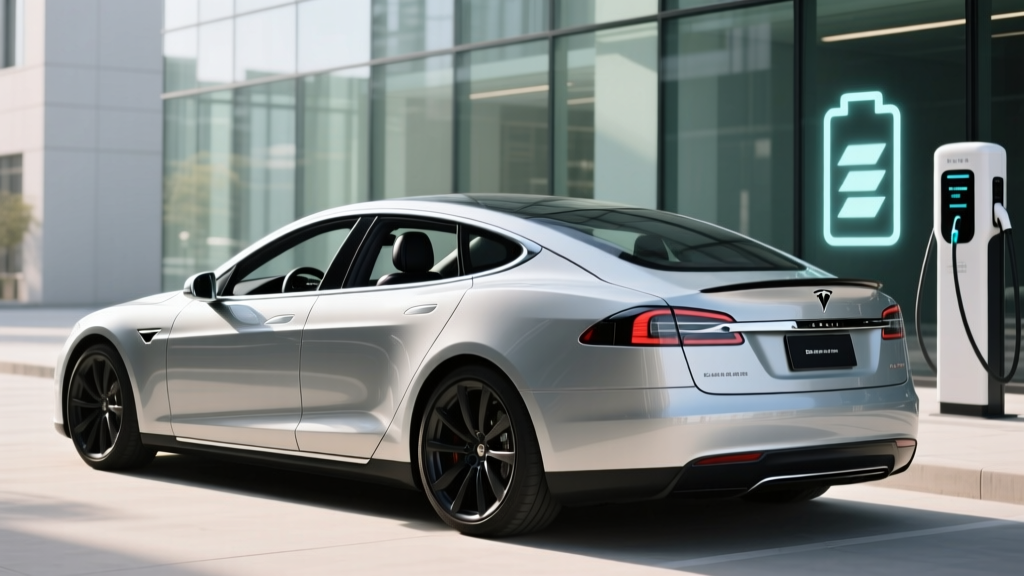
Acceleration is the first number shoppers Google when they consider an electric vehicle, and for good reason: instant torque reshapes how a car feels in daily driving. But Tesla's lineup now spans five distinct models, and the gap between the slowest and fastest 0-60 times is wider than most buyers expect. This guide ranks every current Tesla by acceleration, then pairs each sprint time with the specs that actually matter once the adrenaline fades — EPA range, charging speed, battery chemistry, cargo space, and whether the 2026 IRS §30D tax credit applies.
Full Tesla 0-60 mph Times: Every 2025-2026 Model Ranked
| Model & Trim | 0-60 mph | HP | Drivetrain | EPA Range | Base MSRP |
|---|---|---|---|---|---|
| Model S Plaid | 1.99s | 1,020 | Tri-Motor AWD | 396 mi | $108,490 |
| Model 3 Performance | 2.89s | 510 | Dual-Motor AWD | 315 mi | $52,990 |
| Model X Plaid | 2.50s | 1,020 | Tri-Motor AWD | 326 mi | $118,490 |
| Model Y Performance | 3.50s | 456 | Dual-Motor AWD | 285 mi | $51,490 |
| Model S Long Range | 3.10s | 670 | Dual-Motor AWD | 402 mi | $89,990 |
| Model X Long Range | 3.80s | 670 | Dual-Motor AWD | 335 mi | $98,490 |
| Model 3 Long Range AWD | 4.20s | 346 | Dual-Motor AWD | 341 mi | $45,240 |
| Model Y Long Range AWD | 4.80s | 384 | Dual-Motor AWD | 320 mi | $46,630 |
| Model 3 RWD (Standard) | 5.80s | 271 | Rear-Wheel Drive | 272 mi | $38,990 |
| Cybertruck Beast (Tri) | 2.60s | 845 | Tri-Motor AWD | 320 mi | $99,990 |
The spread is dramatic: a Cybertruck Beast hits 60 mph in 2.6 seconds — faster than a base Model 3 RWD completes the quarter-mile. But acceleration alone doesn't tell the ownership story. Below, we break each model down by what matters after the launch: range, charging, and total cost.
Real-World Range vs. EPA: What You'll Actually Get
Tesla's EPA range numbers are among the most accurate in the industry, but real-world efficiency depends heavily on speed, temperature, and terrain. Here's what to expect from each model line:
| Model | EPA Range | Highway (75 mph) | Cold Weather (20°F) | MPGe |
|---|---|---|---|---|
| Model 3 RWD | 272 mi | ~230 mi | ~195 mi | 132 MPGe |
| Model 3 LR AWD | 341 mi | ~290 mi | ~245 mi | 131 MPGe |
| Model 3 Perf. | 315 mi | ~265 mi | ~225 mi | 124 MPGe |
| Model Y LR AWD | 320 mi | ~270 mi | ~230 mi | 122 MPGe |
| Model Y Perf. | 285 mi | ~240 mi | ~200 mi | 117 MPGe |
| Model S LR | 402 mi | ~340 mi | ~290 mi | 124 MPGe |
| Model S Plaid | 396 mi | ~335 mi | ~285 mi | 120 MPGe |
| Model X LR | 335 mi | ~280 mi | ~240 mi | 111 MPGe |
| Model X Plaid | 326 mi | ~275 mi | ~235 mi | 109 MPGe |
| Cybertruck Beast | 320 mi | ~260 mi | ~220 mi | 79 MPGe |
Cold-weather note: Tesla's heat pump (standard on all current models) mitigates battery heating losses significantly compared to older resistive-heater EVs, but 20°F ambient temps still reduce range 25–30%. Preconditioning the battery while plugged in recovers roughly 5–8% of that loss. Source: fueleconomy.gov EV technology guide.
Battery Chemistry, Capacity, and Longevity
Tesla uses two distinct battery chemistries across its lineup, and the choice affects everything from daily charging habits to long-term degradation:
| Spec | LFP (Lithium Iron Phosphate) | NMC (Nickel Manganese Cobalt) |
|---|---|---|
| Found in | Model 3 RWD, Model Y RWD | All Long Range, Performance, Plaid trims |
| Usable capacity | ~57.5 kWh (Model 3) | 75–100 kWh depending on model |
| Daily charge limit | 100% recommended | 80% recommended (100% for trips only) |
| Cycle life | 3,000–5,000+ cycles | 1,000–2,000 cycles |
| Energy density | Lower (heavier pack) | Higher (more range per kg) |
| Cold-weather performance | Reduced regen, slower cold charging | Better cold-weather tolerance |
| Degradation (5yr/60k mi) | ~5–8% | ~8–12% |
If you charge at home every night and want the simplest ownership routine, the LFP-equipped Model 3 RWD is arguably the most hassle-free Tesla you can buy — plug in, charge to 100%, and don't think about it. For maximum range or performance, NMC is required, and it demands more mindful charging habits.
Charging Speed: DC Fast Charging and Home Level 2
Peak kW ratings don't tell the full charging story. Tesla's charge curve typically peaks for 5–10 minutes, then tapers as the battery warms and state of charge (SoC) climbs. Here are the real-world charging numbers:
| Model | Max DC kW | 10-80% Time | Level 2 Home (kW) | L2 Mi/Hr |
|---|---|---|---|---|
| Model 3 RWD (LFP) | 170 kW | ~25 min | 11.5 kW | ~37 mi/hr |
| Model 3 LR / Perf. | 250 kW | ~22 min | 11.5 kW | ~44 mi/hr |
| Model Y LR / Perf. | 250 kW | ~24 min | 11.5 kW | ~41 mi/hr |
| Model S LR / Plaid | 250 kW | ~27 min | 11.5 kW | ~41 mi/hr |
| Model X LR / Plaid | 250 kW | ~29 min | 11.5 kW | ~36 mi/hr |
| Cybertruck (all) | 350 kW | ~20 min | 11.5 kW | ~30 mi/hr |
Charging curve reality check: The 250 kW peak on Model 3/Y/S/X is typically sustained from roughly 10–40% SoC. From 40–60% it drops to ~150 kW, and above 80% it falls below 50 kW. That's why the 10–80% metric matters more than the peak number. The Cybertruck's 350 kW peak is achievable at V4 Superchargers, but most existing V3 stations cap at 250 kW. Tesla's native NACS connector is now the industry standard, with Ford, GM, Rivian, and others accessing Superchargers via adapter or built-in NACS ports.
For home charging, a Tesla Wall Connector on a 60A circuit delivers 11.5 kW (48A continuous). A full overnight charge from 20% to 100% takes 6–8 hours for most models — more than adequate for daily use.
Pricing, Trims, and Federal Tax Credit Eligibility
The §30D federal EV tax credit remains at up to $7,500 for qualifying new EVs in 2025–2026, but Tesla's eligibility is model-dependent due to MSRP caps, buyer income limits, and battery-sourcing requirements. Here's the current landscape:
| Model & Trim | MSRP | §30D Eligible? | Effective Price |
|---|---|---|---|
| Model 3 RWD | $38,990 | ✅ Yes ($7,500) | $31,490 |
| Model 3 LR AWD | $45,240 | ✅ Yes ($7,500) | $37,740 |
| Model 3 Performance | $52,990 | ✅ Yes ($7,500) | $45,490 |
| Model Y LR AWD | $46,630 | ✅ Yes ($7,500) | $39,130 |
| Model Y Performance | $51,490 | ✅ Yes ($7,500) | $43,990 |
| Model S LR / Plaid | $89,990+ | ❌ Over MSRP cap | Full MSRP |
| Model X LR / Plaid | $98,490+ | ❌ Over MSRP cap | Full MSRP |
| Cybertruck (all) | $79,990–$99,990 | ❌ Over MSRP cap | Full MSRP |
- MSRP cap: Sedans ≤ $55,000; SUVs/trucks/vans ≤ $80,000
- Buyer income cap (MAGI): $150K single / $225K HOH / $300K joint
- Battery sourcing: Critical minerals + battery components must meet escalating domestic/FATB-sourced thresholds (check IRS §30D guidance for current-year percentages)
- Point-of-sale transfer: You can transfer the credit to the dealer at purchase for an immediate price reduction — no need to wait until tax filing
- VIN verification: Confirm eligibility at fueleconomy.gov before purchasing — sourcing rules change
Key insight: Model 3 and Model Y are the only Teslas that qualify for the full $7,500 credit. Model S, Model X, and Cybertruck all exceed the §30D MSRP caps. If tax-credit eligibility is a dealbreaker, your choice narrows to the 3 and Y lineups.
Cargo, Passenger Space, and Daily Practicality
Acceleration fades into the background after the first week. Cargo room, rear-seat comfort, and visibility define daily ownership. Here's how the lineup compares on utility:
| Model | Cargo (rear seats up) | Cargo (seats folded) | Rear Legroom | Seating |
|---|---|---|---|---|
| Model 3 | 23 cu ft (trunk) | ~56 cu ft | 35.3 in | 5 |
| Model Y | 30 cu ft | 72 cu ft | 41.6 in | 5 (opt. 7) |
| Model S | 28 cu ft (hatch + frunk) | ~63 cu ft | 35.4 in | 5 |
| Model X | 42 cu ft | 85 cu ft | 38.4 in | 5/6/7 |
| Cybertruck | 67 cu ft (bed + vault) | N/A | 38.0 in | 5 |
The Model Y dominates on interior volume relative to its price and footprint, which is precisely why it has been America's best-selling EV for three consecutive years. The Model 3's trunk is adequate for a couple's road trip but tight for a family of four with strollers. The Model X offers SUV-class space with falcon-wing doors that are dramatic but occasionally finicky in tight garages.
Pros, Cons, and Who Should Buy What
✅ Tesla Lineup Pros
- Supercharger network: 17,000+ stalls in North America — still the most reliable DC fast-charging ecosystem
- Over-the-air updates continuously add features post-purchase
- Best-in-class energy efficiency (kWh/100mi) across most segments
- Class-leading 0-60 times at nearly every price point
- LFP batteries in base trims allow daily 100% charging without degradation worry
- Minimal moving parts = low scheduled maintenance costs
❌ Tesla Lineup Cons
- Panel gaps and interior finish still lag legacy luxury brands at Model S/X price points
- No Apple CarPlay or Android Auto — Tesla's native infotainment only
- FSD (Supervised) remains SAE Level 2 — driver must stay engaged at all times
- LFP batteries lose more range in sub-freezing temps than NMC
- Insurance premiums 20–40% higher than segment averages (repair cost data)
- Model S/X/Cybertruck excluded from §30D tax credit due to MSRP caps
- Single 15.4" screen controls nearly everything — distracting while driving for some users
Which Tesla Fits Your Use Case?
- Daily commuter on a budget: Model 3 RWD — $31,490 after credit, LFP battery for worry-free nightly charging, 272 mi EPA range covers virtually any commute
- Family needing space + range: Model Y LR AWD — $39,130 after credit, 320 mi range, 30 cu ft cargo, optional third row for young kids
- Enthusiast who wants supercar acceleration: Model 3 Performance — 2.89s 0-60, adaptive dampers, track mode, $45,490 after credit
- Luxury road-tripper: Model S Long Range — 402 mi EPA (longest of any Tesla), 3.1s 0-60, hatchback practicality, but $89,990 with no tax credit
- Large family / towing: Model X LR — up to 7 seats, 335 mi range, 5,000-lb tow rating, but $98,490 with no credit and falcon-wing door quirks
- Truck buyer / off-road: Cybertruck — stainless exoskeleton, 320 mi range, 11,000-lb tow (AWD), but polarizing styling and no credit eligibility
How Teslas Compare to Key Competitors on 0-60 and Value
Tesla's acceleration advantage has narrowed as competitors have caught up. Here's how the closest rivals stack up:
| Vehicle | 0-60 mph | EPA Range | Max DC kW | MSRP |
|---|---|---|---|---|
| Tesla Model 3 Perf. | 2.89s | 315 mi | 250 kW | $52,990 |
| Hyundai Ioniq 5 N | 3.25s | 221 mi | 240 kW | $66,000 |
| BMW i4 M50 | 3.70s | 245 mi | 200 kW | $69,700 |
| Porsche Taycan 4S | 3.80s | 246 mi | 270 kW | $90,900 |
| Tesla Model Y Perf. | 3.50s | 285 mi | 250 kW | $51,490 |
| Ford Mustang Mach-E GT | 3.50s | 280 mi | 150 kW | $59,995 |
Tesla still wins on price-to-acceleration ratio in nearly every segment. The Model 3 Performance delivers a sub-3-second 0-60 for under $53K — a figure that requires $66K+ from Hyundai and $70K+ from BMW with less range. Where competitors close the gap: interior materials quality (BMW, Porsche), charging curve consistency (Hyundai/Kia's 800V architecture), and dealer service networks (Ford, Hyundai).
Warranty, Driver-Assist Tech, and Standout Features
Warranty: Tesla covers the battery and drive units for 8 years / 100,000 miles on Model 3/Y (120,000 miles on Model S/X/Cybertruck), with a guaranteed minimum 70% capacity retention over that period. The basic vehicle warranty is 4 years / 50,000 miles. This is competitive but not class-leading — Hyundai offers 10yr/100K mi on the battery. Source: Tesla warranty documentation.
Autopilot & FSD (Supervised): All Teslas ship with Basic Autopilot (adaptive cruise + lane centering). Enhanced Autopilot ($6,000) adds auto lane-change, autosteer on highways, and Smart Summon. Full Self-Driving (Supervised) at $8,000 adds traffic light/stop sign control and city street autosteer. These are all SAE Level 2 systems — you must keep hands on the wheel and eyes on the road. Tesla's camera-only "Tesla Vision" approach has no lidar or radar backup.
Standout tech: Tesla's 15.4" touchscreen runs a proprietary OS with built-in navigation, streaming (Netflix/YouTube while parked), Sentry Mode dashcam recording, Dog Mode climate control, and over-the-air software updates that regularly add features. The phone-as-key system works via Bluetooth and eliminates the need for a fob. Unique to Tesla: the Supercharger network integration shows real-time stall availability and automatically preconditions the battery for the fastest possible charge on route.
Frequently Asked Questions
What is the fastest Tesla you can buy in 2025-2026?
The Model S Plaid at 1.99 seconds 0-60 mph. It uses a tri-motor AWD powertrain producing 1,020 horsepower and carries an MSRP of $108,490. The Cybertruck Beast is close at 2.6 seconds for $99,990.
Does the base Model 3 RWD feel slow at 5.8 seconds?
No. 5.8 seconds to 60 mph is quicker than a Toyota Camry V6 and most turbocharged compact sedans. Instant electric torque means it feels responsive at any speed, especially in city driving. For most commuters, the RWD model's acceleration is more than adequate.
How much does it cost to charge a Tesla at home?
At the US average electricity rate of ~$0.16/kWh, a full Model 3 LR charge (~75 kWh usable) costs roughly $12 for 341 miles of range — about $0.035 per mile. Compare that to a 30 MPG gas car at $3.40/gallon: $0.113 per mile. Home charging saves most owners $1,200–$1,800 annually versus gasoline. Source: fueleconomy.gov.
Is Tesla insurance really that expensive?
Yes, relative to competitors. Average Tesla insurance runs 20–40% above the segment average due to high repair costs (especially body panels and sensor recalibration after collisions) and elevated total-loss rates. Tesla offers its own insurance product in many states, priced on real-time driving data via the Tesla app, which can be competitive for careful drivers.
Can I use non-Tesla chargers with a Tesla?
Yes. Tesla vehicles use the NACS (North American Charging Standard) connector natively. With a CCS adapter (sold by Tesla for ~$250), you can use Electrify America, EVgo, and other CCS networks. CHAdeMO adapters exist but are increasingly unnecessary as that standard fades.
Which Tesla holds its value best?
The Model Y has shown the strongest resale retention in the Tesla lineup, losing roughly 35–40% of value over 3 years / 36,000 miles as of late 2024 data. The Model 3 follows closely. Model S and X depreciate more steeply (50%+ over 3 years), consistent with luxury sedan trends. Frequent Tesla price cuts on new vehicles remain a wildcard that can accelerate used-value declines.
Acceleration numbers make headlines, but the right Tesla for your garage depends on range, charging routine, cargo needs, and whether you can access the $7,500 federal credit. The Model 3 RWD and Model Y LR AWD remain the value sweet spots — fast enough for any real-world scenario, eligible for the full §30D credit, and backed by the most mature charging network in North America. The Plaid models exist for those who want hypercar numbers and can absorb the premium. Whichever you choose, test-drive in the conditions you'll actually drive in — cold mornings, highway merges, parking garages — and let those experiences, not just a 0-60 time, guide your decision.