Introduction to Tesla Model Y Long-Term Ownership
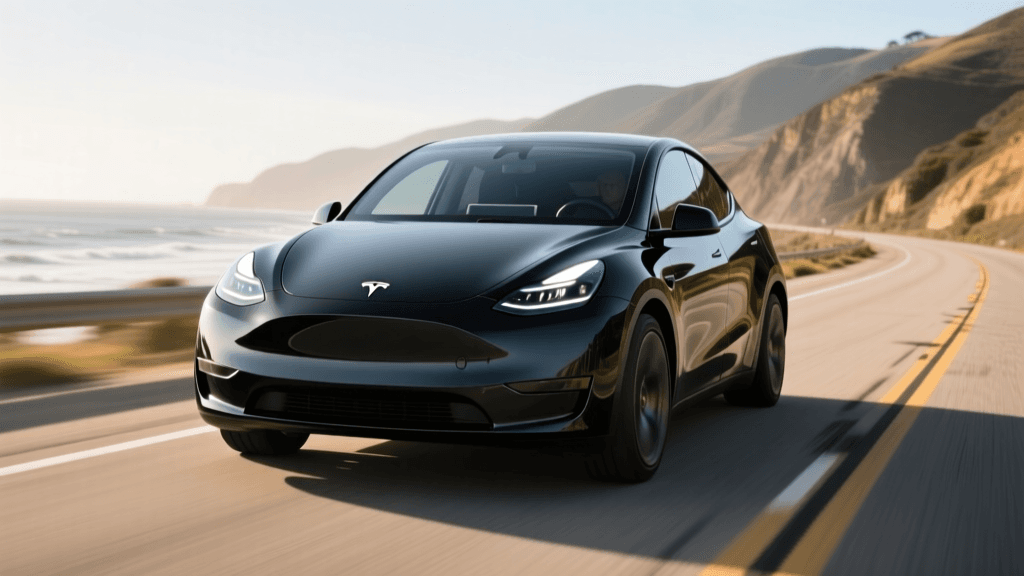
The Tesla Model Y has fundamentally redefined the compact electric SUV segment, becoming one of the best-selling vehicles globally. However, transitioning from an EV-curious buyer to a long-term owner requires a deep understanding of battery chemistry, real-world range variables, and maintenance nuances. While the EPA estimates provide a baseline, real-world long-term ownership reveals how factors like weather, driving habits, and battery degradation truly impact your daily life. This comprehensive how-to guide is designed for current and prospective Tesla Model Y owners who want to conduct their own real-world range tests, maximize battery longevity, and accurately track long-term ownership costs.
How to Conduct a Real-World Range Test on Your Model Y
Relying solely on the vehicle's projected range gauge can be misleading, as it often calculates estimates based on recent, high-energy driving habits. To truly understand your Model Y's capabilities, you need to conduct a controlled, real-world range test. Here is a step-by-step guide to doing it accurately.
Step 1: Vehicle Preparation and Tire Calibration
Before beginning your test, ensure your vehicle is optimized for efficiency. The most critical, yet frequently overlooked, factor is tire pressure. According to the official Tesla Model Y Owner's Manual, the recommended cold tire pressure is typically 42 PSI for the standard 19-inch Gemini wheels. Under-inflated tires can increase rolling resistance, reducing your range by up to 5%. Check your tire pressure in the morning before driving, and ensure your wheel alignment is within factory specifications. Additionally, remove any unnecessary cargo or roof racks that increase aerodynamic drag.
Step 2: Route Selection and Environmental Baseline
For a standardized test, select a route that mirrors your actual daily commute or a specific highway loop. If you are testing highway efficiency, choose a flat, 50-mile stretch of interstate where you can maintain a constant speed of 65 MPH using Autopilot or Traffic-Aware Cruise Control. Speed is the enemy of EV range; driving at 75 MPH can reduce your total range by 15% to 20% compared to driving at 65 MPH due to the exponential increase in aerodynamic drag. Note the ambient temperature, as lithium-ion batteries operate most efficiently between 70°F and 80°F. In colder weather, expect a 10% to 20% reduction in range due to battery conditioning and cabin heating demands.
Step 3: Data Logging and Analysis
Instead of relying on the main battery percentage, use the Tesla Trip Meter. Go to Controls > Trips, and reset 'Trip B' specifically for your range test. Drive your route until you reach your destination, then record the average Wh/mi (Watt-hours per mile). To calculate your real-world range, divide your total battery capacity (approximately 75 kWh for the Long Range model) by your average Wh/mi. For example, if your trip meter reads 260 Wh/mi, your real-world range is roughly 288 miles (75,000 / 260). Third-party apps like TeslaFi can provide even more granular data, tracking phantom drain and charging curves over months of ownership.
Long-Term Battery Health: Best Practices for Model Y Owners
Maintaining your battery's State of Health (SOH) is the most crucial aspect of long-term EV ownership. Tesla uses two primary battery chemistries in the Model Y, and your charging habits must adapt to your specific vehicle.
Managing LFP vs. NCA Battery Chemistries
If you own a Rear-Wheel Drive (Standard Range) Model Y, your vehicle is likely equipped with a Lithium Iron Phosphate (LFP) battery. LFP batteries are incredibly durable and tolerate high states of charge well. Tesla recommends charging LFP batteries to 100% at least once a week to allow the Battery Management System (BMS) to calibrate the cells accurately.
Conversely, if you own a Long Range or Performance Model Y, your vehicle uses a Nickel Cobalt Aluminum (NCA) battery. NCA cells degrade faster when held at 100% state of charge for extended periods. For daily driving, set your charge limit to 80%. Only charge to 100% immediately before embarking on a long road trip. According to extensive battery degradation research by Recurrent Auto, Tesla vehicles that frequently charge to 80% show significantly less long-term capacity loss compared to those routinely charged to 100%. Furthermore, the U.S. Department of Energy emphasizes that avoiding extreme states of charge (below 10% and above 90%) and minimizing exposure to extreme heat are the best ways to prolong the lifespan of any EV battery pack.
Tesla Model Y Long-Term Ownership Cost Breakdown
Understanding the financial reality of owning a Model Y requires looking beyond the initial purchase price. Below is an estimated cost breakdown for the first three years of ownership, assuming 12,000 miles driven annually and an average electricity cost of $0.16 per kWh.
| Cost Category | Year 1 | Year 2 | Year 3 |
|---|---|---|---|
| Depreciation (Estimated) | $6,500 | $5,200 | $4,500 |
| Electricity (Home Charging) | $550 | $550 | $550 |
| Maintenance (Tires, Fluids, Filters) | $150 | $450 | $250 |
| Insurance (Average Premium) | $2,100 | $1,950 | $1,800 |
| Total Annual Cost | $9,300 | $8,150 | $7,100 |
As illustrated in the table, the most significant expense is depreciation, followed by insurance. However, the fuel and maintenance savings compared to a comparable internal combustion engine (ICE) SUV, such as a BMW X3 or Audi Q5, often offset these costs, making the Model Y highly competitive over a five-year ownership cycle.
Mitigating Phantom Drain and Optimizing Efficiency
One of the most common complaints among new Tesla owners is 'phantom drain'—the loss of range while the vehicle is parked. In extreme cases, owners report waking up to 15 fewer miles of range. This is rarely a defect; it is usually the result of specific software features running in the background.
Managing Sentry Mode and Cabin Overheat Protection
Sentry Mode is a fantastic security feature, but it keeps the vehicle's computers and cameras active, consuming roughly 1 mile of range per hour. If you park in a secure garage at home or work, disable Sentry Mode to save up to 20 miles of range per day. Similarly, 'Cabin Overheat Protection' uses the air conditioning to keep the interior below 105°F when parked in the sun. While beneficial for comfort, it can severely impact your battery if the car is parked outside in the summer heat for hours. Consider setting it to 'No A/C' (which only uses the fans) or disabling it entirely if you live in a mild climate.
Mastering Regenerative Braking
The Model Y's regenerative braking system is a powerful tool for extending range and reducing brake pad wear. By anticipating stops and lifting off the accelerator early, you can recapture kinetic energy and feed it back into the battery. In city driving with frequent stop-and-go traffic, aggressive use of regen braking can improve your efficiency by 10% to 15% compared to highway driving. Utilize the 'Hold' mode for one-pedal driving in urban environments, but switch to 'Roll' or 'Creep' on the highway to maintain momentum without accidental deceleration.
Conclusion
Long-term ownership of the Tesla Model Y is a highly rewarding experience, provided you understand the mechanics of EV efficiency and battery care. By conducting your own controlled range tests, adhering to chemistry-specific charging guidelines, and managing background software features, you can maximize your vehicle's lifespan and daily utility. The Model Y remains a benchmark in the EV space, and mastering these long-term ownership strategies ensures you get the absolute most out of your investment for years to come.